


 12/05/2026
  252 views
Analyzing and building customer profiles is a crucial and mandatory activity in every business or marketing campaign, but this analysis often stops at a general overview, focusing on basic needs and demographic characteristics. Therefore, customer 360 helps businesses “draw” every detail and deeply describe each customer’s personality.
Mục lục
1. What is Customer 360 (360-Degree Customer Profile)?
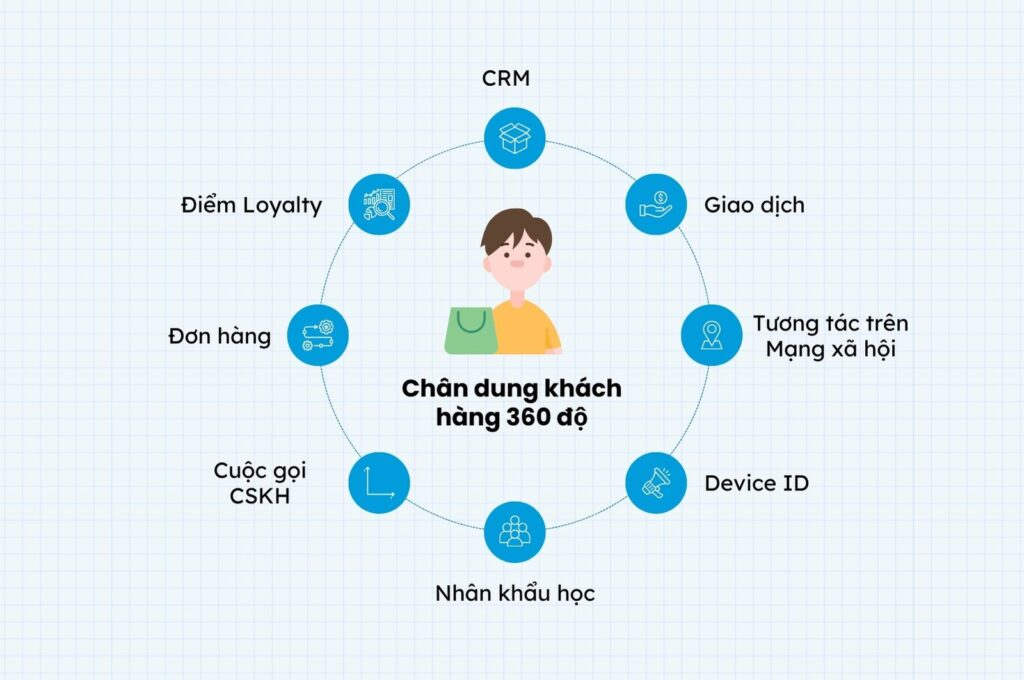
Customer 360 (360-Degree Customer Profile) is a comprehensive, unified method for understanding and managing customers within an organization. This approach includes not only the customer’s personal information (such as name, age, address) but also:
- Relationships: Information about people related to the customer, such as family members (for individual customers) or branches (for business customers).
- Activities: The customer’s purchase history and interactions with the brand across various channels (online transactions, calls to the customer care hotline, etc.).
- Inferred Attributes: Information inferred from existing data, such as customer satisfaction levels, important anniversaries (birthdays, company founding dates, etc.), and the customer’s lifecycle stage (potential customer, new customer, loyal customer, etc.).
A 360-degree customer profile helps businesses gain a complete and accurate view of their customers, understand their desires, and thereby provide suitable personalized experiences and enhance customer satisfaction.
2. Benefits of a Customer 360 System
Customer 360 not only helps businesses get a comprehensive view of their customers but also integrates and synchronizes customer data from various systems, creating a single, accurate source of information. As a result, every employee in the company can access the same customer data, ensuring consistency in approaching and serving customers.
Increase Revenue Through Cross-selling and Up-selling
When a customer has purchased a product, the system can identify complementary products they haven’t used or services that could enhance their experience with the current product. Additionally, understanding related family or business relationships allows the company to recommend suitable products for the entire group of connected customers. This helps expand sales from a single customer to multiple customers within the same ecosystem.
Increase Customer Retention and Loyalty
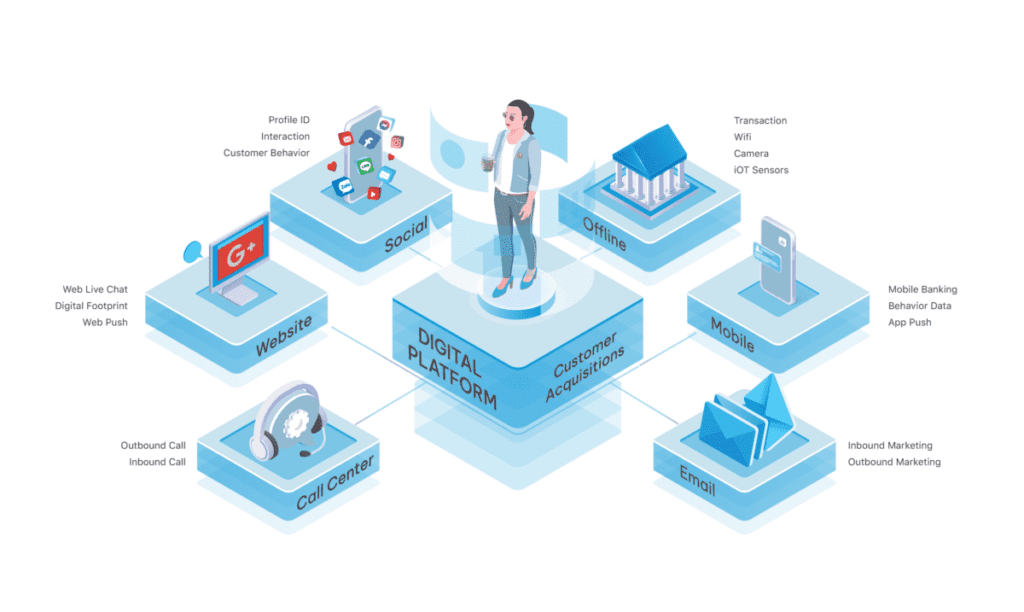
By linking data on customers, product usage levels, behavior, activities, support, and satisfaction levels, businesses can leverage this information to:
- Accurately segment customers
- Predict customer behavior
- Personalize the experience for each customer
- Provide relevant product recommendations, promotions, and content
For example, as a Marketing employee, you can define who your target audience is, how to personalize the message (which is crucial!), and what offers to provide based on the customer’s purchase history and loyalty level.
Thus, by implementing Customer 360 analytics, businesses can increase customer retention rates and enhance their loyalty.
Accelerate Business Innovation
By finding, managing, accessing, and trusting sales, operational, and financial data, businesses can use this data to enhance scenario analysis and AI models, while optimizing the launch process for new products or services.
Furthermore, using data also helps businesses segment customers, predict behavior, and develop effective business strategies.
Automate and Streamline Business Processes
Data accessed from the outset helps support processes such as new customer onboarding, self-service, service scheduling, and other customer-related or logistical activities. This allows businesses to automate manual tasks, save time and costs, while improving operational efficiency, increasing productivity, and optimizing business processes.
Enhance the Customer Experience

Through a comprehensive and complete customer data profile, you will grasp extremely valuable information such as
- What products they have purchased,
- The total value,
- Their most recent purchase
- Purchase frequency,
- Interaction and support history, etc.
From this information, conduct analytical activities to make assessments and predictions, such as:
- What product lines do customers (potentially) prefer?
- What are their shopping habits?
- Level of brand loyalty.
- …
The more detailed and in-depth the analysis, the more accurate the predictions will be, and the preparation for the company’s future campaigns will become more thorough and well-invested.
When customers feel heard, understood, and receive recommendations tailored to their needs, their experience will be increasingly enhanced. Over time, the relationship between the customer and the business will become stronger and more connected. This is what every business strives for.
Unifying customer data across departments within the business
Using support tools like a CDP, businesses can build a 360-degree customer profile by gathering all data from various sources and tools into a single platform. This provides the business with a comprehensive and unified view of the customer.
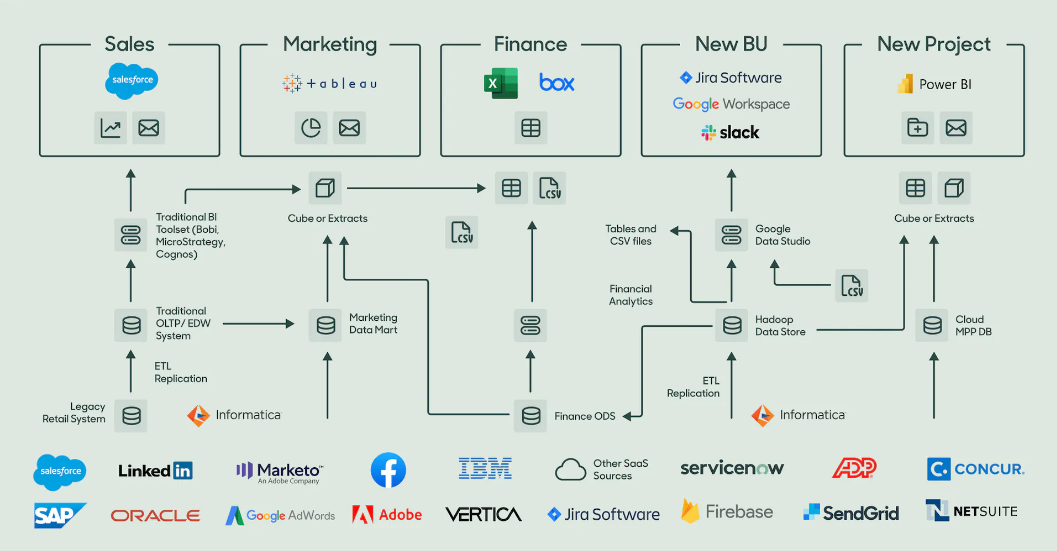
Previously, data might have been scattered and disorganized in many places, but now all information is scientifically organized and synchronized, helping departments within the business access and understand a single, unified version of the data.
In particular, all departments can easily access 360-degree customer profiles and share important information with each other, ensuring smooth coordination between departments and delivering a seamless customer experience across all touchpoints with the business.
For example, when the customer care team identifies an opportunity to upsell or cross-sell products during post-transaction support, they can update the customer’s profile by adding tags or notes and notify the sales staff to re-engage that customer. For the Marketing department, when using filters and noticing that potential customers share certain common characteristics (such as age, location, purchased products), they can adjust their marketing campaigns by personalizing messages, targeting ads more specifically, and offering special promotions.
3. Challenges in Implementing a Customer 360 System
Although Customer 360 offers many benefits, implementing this solution can present several major challenges, including:
Data Fragmentation / Siloed Approach
Departments often build their own “360-degree” view based on fragmented data or focus only on the information they collect. This hinders the creation of a unified customer profile, leading to inefficient decision-making and a reduced ability to personalize the customer experience. At the same time, the business cannot fully leverage the potential of multi-source data, resulting in business strategies that fall short of expectations.
Increasing Data Volume
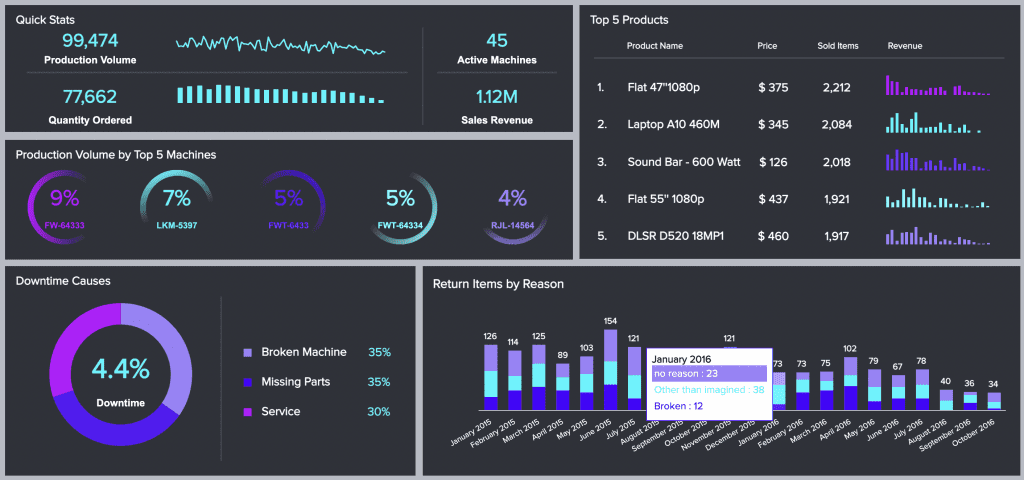
The explosion of data from multiple sources and in various formats, combined with separate applications, increases the complexity of data management and synchronization. Duplicate, erroneous, or inconsistent data can reduce information quality, thereby hindering strategic decisions and prolonging implementation time.
Constraints from Security and Privacy Regulations
Regulations like GDPR or PDPA are becoming increasingly strict, limiting a business’s ability to collect and use data. Compliance with these regulations requires complex data management systems and significant investment, making the implementation of Customer 360 more difficult.
Inaccurate or Incomplete Data
Inaccurate, outdated, or incomplete data makes it difficult to build an accurate customer profile. This not only affects the quality of analysis and decision-making but also creates a poor customer experience when they receive irrelevant messages or recommendations.
4. Successful Customer 360 Application Case Studies
4.1. TP Bank
TPBank’s comprehensive 360-degree customer ecosystem pioneers the market with modern technology solutions. Here, financial products are personalized according to the unique habits and needs of each customer, delivering a trendy lifestyle through banking services.
TPBank customers can not only easily perform cashless transactions through the app or connect to various other payment methods, but they can also experience fast and convenient facial recognition payments at convenience stores, affirming their position as a technology leader.
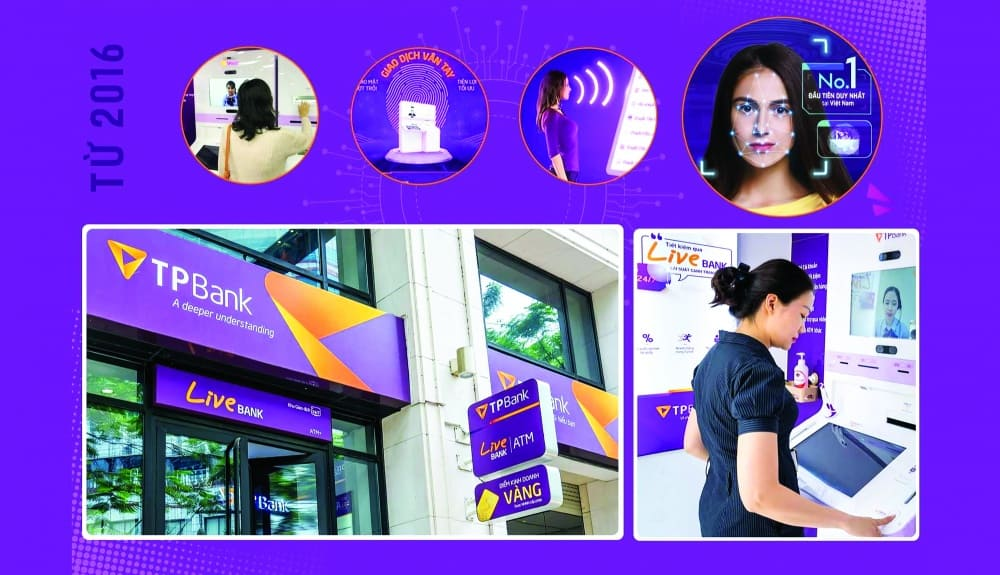
TPBank also enhances personalization through services like using a nickname or phone number as an account. With just a fingerprint, face, or voice, customers can perform transactions easily, securely, and conveniently.
4.2. VIB
VIB is a pioneering bank in Vietnam to implement a Customer Data Platform (CDP), marking a strategic step forward in data management and the development of banking applications on a multi-cloud platform.
CDP helps build a comprehensive, 360-degree view of the customer, thereby supporting the automation of Marketing and sales campaigns and analyzing operational efficiency. This is a groundbreaking solution that helps the bank optimize data to increase operational efficiency and create differentiation.
Through CDP, VIB has built a centralized customer database system, integrating information from all products, services, and distribution channels. Modern analytics technology is applied to predict behavior, segment customers, and gain a deeper understanding of their needs.
VIB also optimizes the customer journey by providing relevant product and content recommendations, increasing engagement and personalizing the experience. Through integration with digital platforms like social media and e-commerce, VIB delivers a top-tier digital banking experience, fully meeting the expectations of each customer.
——————-
The Customer 360 system is not just a customer data management tool but also the key to helping businesses comprehensively transform their customer approach. The above is all the information you need to know about Customer 360. We hope the information in this article is useful for your business as you implement a Customer 360 system. We wish you success!
















