10/05/2026
  153 views
In a landscape where technology changes daily, understanding and leveraging technology to optimize business processes is a decisive factor in a company’s competitiveness. The CIO (Chief Information Officer) is not just a manager of technology systems but also an IT strategist who helps the business achieve sustainable development, protect data, and lead digital transformation initiatives. This article will help you better understand what a CIO is, the roles and responsibilities of a CIO, as well as the skills needed to become one.
Mục lục
- 1. What is a CIO?
- 2. Specific Roles and Responsibilities of a CIO
- 2.1. Developing Technology Strategy
- 2.2. Managing Information Technology Infrastructure
- 2.3. Ensuring Data Security and Privacy
- 2.4. Digital Transformation and Innovation
- 2.5. Managing Technology Projects
- 2.6. Collaborating with Other Departments
- 2.7. Strategic consulting for the leadership team
- 2.8. Managing the technology budget
- 2.9. Ensuring legal compliance
- 3. The Difference Between CIO and CTO
- 4. Skills and Qualities a CIO Needs
- 5. CIO Career Path and Advancement Opportunities
- 6. CIO Income
- 7. The CIO Landscape and Trends in Vietnam
- 8. Support Tools for CIOs
- 9. Common Challenges of Being a CIO
- 9.1. Balancing Business Strategy and Technology Strategy
- 9.2. Shortage of High-Quality Tech Talent
- 9.3. Ensuring Cybersecurity Amidst Increasing Attack Risks
- 9.4. Managing Legacy Systems and Infrastructure Complexity
- 9.5. Technology Budget Constraints
- 9.6. Communication Gap Between the CIO and Leadership
- 9.7. Leading a Digital Culture Across the Enterprise
- 9.8. Legal Compliance and Risk Management
- 9.9. Keeping Pace with Technological Change
- 9.10. Balancing daily operations and strategic direction
1. What is a CIO?

The CIO (Chief Information Officer) is a senior-level position in a company’s organizational structure, primarily responsible for the information technology strategy and management of the company’s IT systems. This position is seen as the bridge between business operations and technology, playing a crucial role in helping the business leverage technology to enhance operational efficiency and achieve strategic goals.
A CIO is not just a manager of technology systems but is also responsible for developing and implementing long-term technology strategies, while ensuring the company’s technology systems and IT infrastructure operate efficiently, stably, and securely. This includes developing new technology initiatives and improving work processes through the application of advanced technology solutions.
In addition, the CIO frequently works with other departments within the company, from finance, human resources, and marketing to sales and production, to ensure that technology supports and drives the growth of the entire organization. In many businesses, the CIO also plays a significant role in shaping the company’s technological direction, ensuring that technology strategies align with the company’s development goals and long-term strategy.
2. Specific Roles and Responsibilities of a CIO

The Chief Information Officer (CIO) is not just a manager of technology systems within the business but also a technology strategist, ensuring that information technology effectively serves the organization’s business goals. Below are some of the specific roles and responsibilities of a CIO:
2.1. Developing Technology Strategy
The CIO plays a crucial role in developing the company’s long-term information technology strategy. They must stay abreast of new technology trends and assess the impact of these technologies on business operations. The CIO needs to ensure that the technology strategy is aligned with the company’s development goals, helping the organization maintain its competitive edge and adapt to the rapidly changing market.
2.2. Managing Information Technology Infrastructure
The CIO is responsible for managing the entire information technology infrastructure of the business, including hardware, software, networks, and other IT systems. They ensure that these technology systems operate stably, efficiently, and are regularly maintained to meet the company’s growing needs. This includes investing in new technologies and improving existing systems to optimize performance.
2.3. Ensuring Data Security and Privacy
Information security is one of the most critical responsibilities of a CIO. They must ensure that the company’s IT systems are protected from security threats such as cyberattacks, viruses, or information leaks. The CIO needs to develop and enforce security policies, manage risks, and ensure data integrity. This not only helps protect the company’s assets but also safeguards its reputation and customer trust.
2.4. Digital Transformation and Innovation
The CIO plays a key role in the company’s digital transformation process. They help the business apply technology to improve processes, optimize operational efficiency, and enhance the customer experience. Additionally, the CIO also leads innovation initiatives, seeking and applying new technologies such as artificial intelligence (AI), Big Data, and Cloud Computing so the business can achieve sustainable growth in the digital era.
2.5. Managing Technology Projects
The CIO is responsible for managing and overseeing technology projects within the company. They must ensure that these projects are completed on schedule, within budget, and achieve their set objectives. This includes selecting appropriate technology, collaborating with vendors, and supervising technology teams to ensure the quality and effectiveness of the project.
2.6. Collaborating with Other Departments
A CIO does not work in isolation within the IT department but needs to coordinate closely with other departments such as finance, marketing, human resources, and sales to ensure that technology strategies support company-wide business goals. The CIO needs to communicate effectively with other department heads to ensure that technology is integrated into all areas of the business and helps improve overall operational efficiency.
2.7. Strategic consulting for the leadership team
The CIO also acts as a strategic advisor to the company’s senior leadership. They need to provide information related to technology and market trends to help the leadership make sound strategic decisions. The CIO may participate in strategic meetings with the CEO, CFO, and other directors to discuss how technology can support the company’s growth.
2.8. Managing the technology budget
Managing the technology budget is a key responsibility of the CIO. They must ensure that technology costs are tightly controlled and that technology investments deliver real value to the business. The CIO must carefully balance cost savings with investing in advanced technology solutions to ensure the company’s long-term growth and competitiveness.
2.9. Ensuring legal compliance
The CIO needs to ensure that the company’s technology activities fully comply with legal regulations and industry standards. This includes adhering to regulations on data security, privacy, and international technical standards. Compliance with these regulations not only helps protect the business from legal risks but also enhances its reputation with customers and partners.
3. The Difference Between CIO and CTO
| Criteria | CIO (Chief Information Officer) | CTO (Chief Technology Officer) |
| Description | Chief Information Officer, responsible for managing the information technology strategy and IT systems within the enterprise. | Chief Technology Officer, focused on the development of the enterprise’s technology and products, including research and development (R&D). |
| Responsibilities |
|
|
| Scope of Work |
|
|
| Relationship with Departments | Connects technology with other departments such as finance, human resources, and marketing to support common goals. | Focuses on developing technology products, with less direct connection to non-product-related departments. |
| Importance | The CIO plays a strategic role in helping the enterprise optimize technology, reduce costs, and protect data. | The CTO plays a crucial role in creating and maintaining products and technologies that help the enterprise grow and sustain innovation. |
| Focus | Internal IT infrastructure. | Product technology and innovative technology solutions. |
| Technology Used | Focuses on software, network systems, databases, security, and management support technologies. | Uses the latest technology to develop products and technology solutions for the enterprise. |
| Role in the Enterprise | Drives digital transformation within the enterprise, applying technology to optimize operations and achieve sustainable development. | Transforms the enterprise’s products and services through technological innovation and creative product development. |
| Interaction with Leadership | Participates in strategic meetings with the CEO, CFO, and other directors to set the technology direction for the entire enterprise. | Works with the CEO and R&D departments to ensure that technology and products align with market needs. |
| Personnel Management | Manages the internal IT team, including system administrators, software engineers, and security specialists. | Manages the product development team and technical experts in the product research and development departments. |
In summary:
- CIO: Focuses on technology strategy and managing the company’s internal information technology systems, ensuring that the IT infrastructure supports business operations and data security. The CIO helps the business optimize technology and undergo digital transformation.
- CTO: Focuses on developing and improving the company’s technology products and services. The CTO is responsible for researching and developing new, innovative technologies to create advanced tech products that meet market demands.
4. Skills and Qualities a CIO Needs

To become a successful CIO (Chief Information Officer), an individual needs not only solid technical expertise but also many other important skills and qualities. Here are the skills and qualities a CIO needs:
4.1. Leadership and Management Skills
- Team Management: A CIO needs strong leadership abilities to manage the IT team, including engineers, programmers, security experts, and other specialists. The ability to build and maintain an effective team, motivate them, and create an innovative work environment is crucial.
- Communication Skills: A CIO must be able to communicate clearly and effectively with members of the organization, especially with executives and non-technical departments like finance, marketing, and sales.
4.2. Technical Expertise
- In-depth Knowledge of IT Systems: A CIO must have a solid understanding of information technology systems, including software, hardware, networks, and databases. The ability to evaluate, implement, and maintain IT systems is crucial.
- Understanding of New Technologies: A CIO needs to keep up with the development of new technologies such as artificial intelligence (AI), blockchain, cloud computing, Big Data, and the Internet of Things (IoT). This helps them apply these technologies to optimize business operations.
4.3. Strategic and Analytical Skills
- Strategic Thinking: A CIO must be able to develop long-term technology strategies that align with the organization’s business goals. They need to understand the importance of technology in helping the company achieve its strategic objectives and must be able to anticipate and prepare for changes in the tech industry.
- Analytical Skills: A CIO needs the ability to analyze and make decisions based on data and technology trends. They must know how to assess the risks and potential of new technologies and work with other departments to apply technology effectively to business operations.
4.4. Project Management Skills
- Project Management and Implementation: A CIO needs the ability to lead complex technology projects from inception to completion, ensuring they are delivered on time, within budget, and meet their stated goals.
- Technology Budget Management: A CIO must manage the organization’s technology budget, from spending on IT infrastructure to investing in new technology initiatives. They must ensure that technology is applied effectively and cost-efficiently.
4.5. Problem-Solving and Decision-Making Abilities
- Solving Technology Issues: A CIO must be able to quickly identify and resolve technology issues within the company’s IT system, from system failures to security problems. This requires the ability to analyze situations and provide timely and effective solutions.
- Making Sound Decisions: A CIO needs to make strategic decisions about technology, weighing costs against benefits, and assessing the risks and opportunities associated with implementing new technologies.
4.6. Security and Risk Management Abilities
- Information Security: With the rise of security threats, a CIO must ensure that the company’s IT system is protected from cyber-attacks, data leaks, and other threats. They must establish strong security policies and maintain effective data protection measures.
- Risk Management: A CIO needs the ability to assess technology-related risks and ensure the company has strategies to mitigate them, especially in the areas of security and regulatory compliance.
4.7. Creativity and Innovation
- Innovation Ability: A CIO must be a driver of innovation within the organization, seeking creative technology solutions to improve processes and enhance operational efficiency. They need the ability to come up with creative ideas for applying technology to various aspects of the business.
- Adaptability: Technology changes rapidly, and a CIO needs to be flexible and able to adapt to changes and improvements to maintain the company’s competitive edge.
4.8. Collaboration and Teamwork Skills
- Working with other departments: CIOs need to coordinate closely with other departments in the business, such as finance, marketing, human resources, and sales, to ensure that technology meets the needs and goals of the entire organization.
- Leading cross-functional projects: CIOs often lead large technology projects that require collaboration between different departments within the organization. They need the ability to build good collaborative relationships and coordinate work among different functional teams.
5. CIO Career Path and Advancement Opportunities
5.1. Starting with technical positions
To advance to the CIO position, you typically start your career in technical roles within the information technology field. During this stage, you will learn and build technical expertise, as well as develop important skills such as programming, network system management, and data security.
Basic positions:
- Software Engineer: Develop, test, and maintain software.
- System Administrator: Manage computer systems, networks, and hardware.
- Security Specialist: Ensure network security and protect the organization’s information systems.
- Developer: Build applications and software to support business operations.
Objective: Build a solid technical foundation and understand how information technology systems operate within a business.
5.2. Developing management and leadership skills
After working in technical positions for some time, you need to develop management and leadership skills to take on higher roles. This is the stage where you begin to take on greater responsibilities, including leading technical teams and managing large technology projects.
Mid-level management positions:
- IT Team Leader: Manage technical teams, ensuring technology projects and activities are completed on schedule and to quality standards.
- IT Project Manager: Supervise and coordinate technology projects from initiation to completion.
- Technology Director: Make technology decisions and oversee the implementation of technology strategies within the business.
Objective: Develop leadership, communication, project management, and technology strategy skills. You will begin to be exposed to strategic technology decisions and develop coordination and management skills.
5.3. Taking on senior director roles
Once you have accumulated sufficient experience and strong leadership skills, you can advance to senior director positions, where you are responsible for technology strategy and making important technology-related decisions for the entire organization.
Senior director positions:
- IT Director: Lead IT strategies for the entire business, ensuring technology meets business objectives.
- Chief Information Security Officer (CISO): Responsible for protecting the business’s data and information systems from security threats.
Objective: Strengthen senior-level leadership capabilities and begin making strategic decisions related to information technology for the entire enterprise. You need to develop the ability to assess and manage technology risks while building long-term technology plans.
5.4. Achieving the CIO (Chief Information Officer) position
The CIO position is the pinnacle of a career in the information technology field. The CIO is responsible for building and implementing the technology strategy for the entire organization, ensuring that technology supports and drives business goals. The CIO works closely with members of the senior leadership team (CEO, CFO, CMO) to develop a technology plan that aligns with the company’s overall strategy.
CIO responsibilities:
- Guiding technology strategy: Create long-term plans and make strategic technology decisions for the business.
- Managing technology systems: Ensure information technology systems operate efficiently and securely.
- Leading digital transformation: Drive digital transformation initiatives within the business.
- Optimizing business operations: Apply technology to improve efficiency and sustainable growth for the business.
Objective: The CIO must have a comprehensive view of technology within the business, make strategic decisions, and drive innovation for continuous growth and improvement. This is a position that requires a combination of leadership, strategy, and extensive technological knowledge.
5.5. Advancement opportunities and role expansion
A CIO’s advancement opportunities can continue to expand, especially if you are working in large enterprises or multinational organizations. Some career opportunities after achieving the CIO position include:
- Transition to higher senior leadership positions: Some CIOs can advance to positions such as Chief Digital Officer (CDO), Chief Innovation Officer (CIO), or even CEO if they possess comprehensive leadership skills and a deep understanding of both technology and business.
- Technology consulting: With years of experience and extensive knowledge, CIOs can also transition into consulting roles for organizations or technology companies, providing technology strategies and solutions for other businesses.
- Founding a technology enterprise: Some CIOs, with experience in technology management and product development, may start their own technology companies, offering innovative solutions to the market.
6. CIO Income
The income of a CIO (Chief Information Officer) directly reflects the strategic importance of this position within a business. Salaries are typically high and vary depending on the organization’s size, leadership capabilities, experience in implementing digital transformation, and the complexity of the IT infrastructure managed by the CIO. This section will provide a comprehensive overview of the income, benefits, and factors influencing compensation for a CIO.
6.1. CIO Income at Large Enterprises
- Base salary: At large corporations, especially multinational companies, a CIO’s base salary can range from $100,000 to $250,000 per year, depending on the company’s size and market of operation.
- Bonuses and benefits: CIOs at large companies often receive performance bonuses, stock options, health benefits, and other allowances. Bonuses and benefits can significantly increase a CIO’s total income, sometimes by as much as 30% – 50% of their base salary.
6.2. CIO Income at Small and Medium-Sized Enterprises
- Base salary: At small and medium-sized companies, a CIO’s base salary typically ranges from $70,000 to $150,000 per year, depending on the company’s size and specific characteristics.
- Bonuses and benefits: Bonuses and benefits may be less substantial than at large companies but still include basic benefits like health insurance, paid time off, and sometimes performance-based bonuses.
6.3. CIO Income at Startups
- Base salary: At startups, a CIO’s salary may be lower than at large enterprises, ranging from $50,000 to $120,000 per year. However, many CIOs at startups may receive stock options or other benefits for participating in the company’s growth.
- Stock and equity: CIOs in startups often receive stock or other long-term benefits, such as a percentage of future profits. This can increase the overall value of their income if the company grows successfully.
6.4. Factors Affecting CIO Income
- Experience and education: CIOs with extensive experience and advanced professional certifications, such as an MBA or IT-related certifications, will have higher incomes.
- Company size and industry: Technology companies, banks, and industries requiring technological innovation typically offer higher salaries than other sectors.
- Geographic location: A CIO’s income varies significantly depending on the country or region of employment. Developed regions like North America, Western Europe, and East Asia generally offer higher salaries than other areas.
7. The CIO Landscape and Trends in Vietnam
The role of the CIO in Vietnam is undergoing a significant shift, moving from technical infrastructure management to leading technology strategy and innovation. Amidst comprehensive digital transformation across all industries, the demand for CIOs with a business mindset and expertise in data and new technologies is increasing. This section will analyze the current market situation, career trends, and new requirements for CIOs in Vietnam today.
7.1. The State of CIO Development in Vietnam
- High demand for CIOs: With the growing trend of digital transformation, Vietnamese businesses are seeking technology leaders capable of spearheading technology initiatives to optimize processes and expand markets.
- CIOs at large enterprises: Large enterprises and multinational corporations in Vietnam have begun to recognize the importance of the CIO role more clearly. They are proactively building robust technology strategies to maintain their competitive edge, enhance data security, and apply new technologies like AI, Big Data, and cloud computing.
- CIOs at small and medium-sized enterprises: The recruitment of a professional CIO is still uncommon, especially in smaller companies. However, in the context of digital transformation, the demand for high-level technology experts like CIOs is gradually increasing as businesses realize that technology can improve management, optimize costs, and enhance productivity.
7.2. Development Trends for CIOs in Vietnam
- Digital transformation and new technology application: Cloud Computing, Artificial Intelligence (AI), Big Data, and blockchain are increasingly becoming important tools that CIOs use to enhance the company’s competitive advantage.
- Strengthening information security and cybersecurity: With the rise of cybersecurity threats and businesses increasingly relying on technology systems to store and process critical data, information security has become a crucial element in the technology strategy of CIOs in Vietnam. CIOs need to build robust data security policies and train staff to deal with potential risks.
- The growth of technology companies: In recent years, technology companies in Vietnam have been growing strongly. CIOs in these companies must constantly innovate and be creative to maintain their competitive position and expand their operations.
- Application of artificial intelligence and automation: CIOs in Vietnam are increasingly focusing on applying AI and automation technologies to business processes to reduce costs, improve work efficiency, and enhance the customer experience.
- Strengthening the strategic advisory role: CIOs in Vietnam are gradually transforming from being just technology managers to strategic partners, advising leadership on aligning technology with long-term business goals. They are not only technology implementers but also help executives and other departments understand the impact of technology on the entire business.
7.3. Challenges for CIOs in Vietnam
- Shortage of high-quality human resources: Although Vietnam is developing strongly in the technology sector, there is still a shortage of IT experts with the right experience and strategic management skills. This makes it difficult for CIOs to implement complex and necessary technology initiatives.
- Difficulty in changing corporate culture: In some businesses, changing and applying new technology still faces many cultural barriers. CIOs must work to change traditional ways of working and persuade other leaders and employees to accept new technologies and digital work methods.
- Security and cyber threats: Security remains a significant issue, especially for businesses with sensitive data. CIOs face the challenge of protecting the company’s IT systems from cyberattacks and data loss.
7.4. The Future of CIOs in Vietnam
- Stronger digital transformation: With the Vietnamese government promoting the national digital transformation plan, CIOs will play a key role in implementing national technology strategies and helping businesses adapt to digitalization trends.
- Application of new technologies: CIOs will continue to play an important role in applying new technologies such as 5G, AI, IoT, and blockchain to drive innovation in the business and create new products and services.
- The CIO as a strategic partner: The future of the CIO in Vietnam is not just as a technology manager, but as a strategic partner to the leadership, helping the business build long-term, technology-based strategies.
8. Support Tools for CIOs
In their strategic and technology management role, CIOs need to use tools and software to optimize processes, improve work efficiency, and enhance decision-making capabilities. These tools support CIOs in various areas, from project management and security to data analysis and digital transformation. Here are some important tools that CIOs can use:
8.1. All-in-one business management software: 1Office
1Office is a comprehensive business management software that integrates multiple features to help CIOs manage technology, optimize processes, and improve business operational efficiency. In particular, with its AI integration feature, this software can assist CIOs in the following areas:
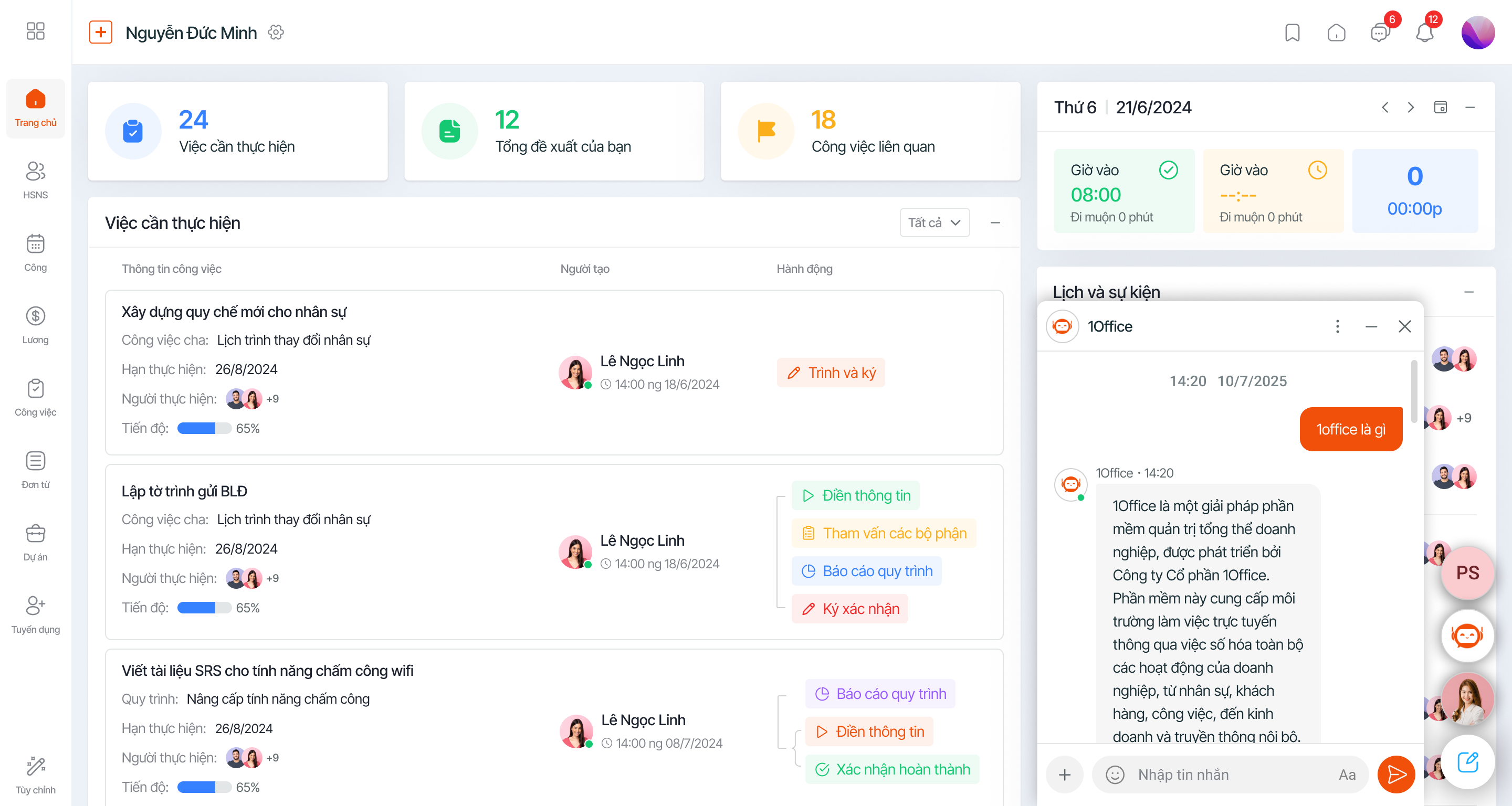
Register for a free feature Demo!
- Automate workflows: With integrated AI, 1Office can automate workflows, helping to minimize manual work and save time. For example, tasks such as generating reports, tracking work performance, and analyzing data can be performed automatically, allowing CIOs to focus on important strategic decisions.
- Data management and analysis: 1Office software helps CIOs manage and analyze business data effectively. AI integration helps analyze Big Data and provide valuable predictions and insights to improve business strategy. CIOs can use this data to make faster and more accurate decisions.
- Project and task management: 1Office provides powerful project management tools, helping CIOs track work progress, allocate resources, and assign tasks to departments. AI’s smart features help analyze and optimize project plans based on performance and influencing factors.
- System and technology integration: 1Office can integrate with other software in the business, creating a seamless technology ecosystem. This helps CIOs manage IT systems effectively and ensures that all departments in the company can connect and share data easily.
8.2. Information Security and Risk Management Tools
Security tools are a crucial part of a CIO’s toolkit, especially in the context of increasing security threats.
- Security Management Tools: Tools like Palo Alto Networks, Fortinet, and Check Point help CIOs protect the company’s network systems and data from threats such as hackers, viruses, and other cyberattacks. These tools provide features like firewalls, intrusion detection, and data encryption.
- Risk Management: Risk Management Software (e.g., LogicManager and RiskWatch) helps CIOs monitor and manage technology risks, from assessing threats to creating risk mitigation plans. These tools support CIOs in making strategic decisions about information security.
8.3. Data Analysis and Reporting Software
Data analysis is a critical part of supporting CIOs in making strategic decisions. Data analysis software helps CIOs identify trends, optimize processes, and improve business efficiency.
- Tableau and Power BI: These are two popular tools that help CIOs analyze and visualize data to make timely decisions. These tools allow for data integration from various sources and analyze it to create detailed reports on business performance.
- AI in Data Analysis: Integrating AI into data analysis software like SAS, Google Cloud AI, or 1Office helps CIOs not only analyze data but also predict future trends, thereby creating more effective technology strategies. AI can learn from past data and make forecasts, helping CIOs make more accurate decisions.
9. Common Challenges of Being a CIO
As businesses become increasingly dependent on technology, the role of the CIO (Chief Information Officer) is more important than ever. However, this position comes with a series of complex challenges, requiring the CIO to have both a strategic vision and the ability to handle issues in real-time. Below are the most common challenges a CIO typically faces while managing and directing a company’s technology.
9.1. Balancing Business Strategy and Technology Strategy
The CIO must ensure that technology decisions always serve business objectives. This is a major challenge because businesses often expect rapid growth, but budgets and human resources are limited.
Common difficulties:
-
Proving the ROI (Return on Investment) of technology projects.
-
Translating business requirements into clear technology solutions.
-
Ensuring the IT infrastructure is robust enough to support expansion strategies.
-
Maintaining stable operations while implementing innovations.
9.2. Shortage of High-Quality Tech Talent
The pool of skilled IT personnel is becoming increasingly scarce, especially for positions related to Cloud, Data, Cybersecurity, or system architecture.
Common situation:
-
Difficulty in recruiting engineers with deep experience.
-
Talent is easily attracted by Big Tech or startups.
-
The in-house IT team is strong in operations but lacks strategic thinking.
What the CIO needs to address:
-
Building an attractive environment for skilled engineers.
-
Creating a clear career development path.
-
Combining in-house and outsourced models to optimize resources.
9.3. Ensuring Cybersecurity Amidst Increasing Attack Risks
Businesses constantly face security threats such as data theft, ransomware attacks, email phishing, or internal information leaks.
The CIO’s key responsibilities:
-
Building a multi-layered security system.
-
Periodically conducting risk assessments and penetration testing.
-
Establishing clear incident response procedures.
-
Train employees on cybersecurity awareness.
Poor cybersecurity not only causes financial damage but also directly affects the company’s reputation.
9.4. Managing Legacy Systems and Infrastructure Complexity
Many businesses still use systems that have been in operation for 5–15 years. These platforms are often slow, difficult to scale, and incompatible with new technologies.
Common limitations:
-
High maintenance costs.
-
Lack of experts to support legacy systems.
-
Difficulty integrating with Cloud or AI solutions.
The CIO needs to build a suitable upgrade roadmap, ensuring legacy systems remain stable during the transition to new infrastructure.
9.5. Technology Budget Constraints
Although businesses increasingly understand the importance of technology, IT budgets are often limited.
Challenges in cost management:
-
Departments want many tools, but the budget is limited.
-
Cloud costs and software licenses increase with scale.
-
Implementing new systems requires training and transition costs.
The CIO needs to optimize spending, eliminate redundant tools, and focus investment on projects that create long-term value.
9.6. Communication Gap Between the CIO and Leadership
CIOs often come from a technical background, so explaining technology issues in an easy-to-understand way to the CEO, CFO, or board of directors can be a challenge.
CIOs need to improve:
-
Storytelling skills when presenting technology solutions.
-
Business acumen to interpret costs and benefits.
-
The ability to simplify complex issues.
The business can only make the right decisions when the CIO communicates clearly and persuasively.
9.7. Leading a Digital Culture Across the Enterprise
Digital transformation is not just about buying new software; it’s about changing the way the entire staff works.
Common challenges:
-
Employees are reluctant to change old processes.
-
Lack of discipline in using the new system.
-
Some departments do not cooperate when implementing technology solutions.
The CIO needs to coordinate closely with HR, Marketing, and other functional leaders to build a clear and unified digital culture.
9.8. Legal Compliance and Risk Management
Businesses must comply with many standards related to data and security, such as:
-
Cybersecurity Law
-
Personal Data Protection Act (PDPA)
-
ISO 27001 or PCI-DSS (for electronic payments)
Challenges:
-
Legacy systems do not meet new requirements.
-
Regulations change constantly.
-
High penalties for violations, especially concerning customer data.
The CIO must ensure that the entire system and all operational processes comply with regulations.
9.9. Keeping Pace with Technological Change
Technology is evolving faster than ever. New standards are constantly emerging for AI, Machine Learning, Big Data, Cloud, Low-code, and more.
Pressure on the CIO:
-
Continuously update with trends to avoid falling behind.
-
Choose appropriate technology instead of following trends.
-
Assess the risks of adopting new technology.
The CIO must ensure that all innovations bring real value and do not disrupt operations.
9.10. Balancing daily operations and strategic direction
CIOs are often caught up in operational issues such as system errors, security incidents, or support requests from departments.
This can easily leave CIOs with little time to focus on long-term strategy, including:
-
Building an overall technology architecture.
-
Proposing a 3–5 year plan.
-
Optimizing data, AI, and automation.
An effective CIO must know how to delegate appropriately and dedicate time to strategic tasks.