10/05/2026
  9222 views
In today’s competitive market, marketing is the door that opens directly to the customer’s world. Simply put, there is an invisible gap between customers and businesses that only marketing can bridge. Effective marketing strategies play a crucial role in a company’s growth. What types of marketing strategies are there, and which ones are right for your business? Let’s find out!

Mục lục
1. General information about types of marketing strategies
What is a Marketing Strategy?
Types of marketing strategies are essentially a company’s overall advertising methods, used to introduce its products and services to customers. The goal of all marketing strategies is to reach customers as closely as possible, letting them know who we are, what our products/services are, and what offers we have. This encourages customers to learn about our products/services, leading them to make purchasing decisions, use our services, or establish business partnerships.
The core of a company’s marketing strategies includes:
- The company’s core value proposition
- The key message the company wants to convey.
- Information related to customers.
- Methods for marketing to customers.
Why is building a Marketing Strategy important?
Social media is an important and effective marketing channel for businesses to build their marketing strategies with customers. Blogs, websites, SEO writing, Facebook/Google Ads, Social Media, etc., are all key priorities in online marketing.
- A marketing strategy is like a blueprint for a house, where communication channels are the points of contact with customers. For example, which social channel works best for a specific customer segment? What is a reasonable amount to spend?
- The role of marketing is crucial for a business. Without an effective strategy, customers won’t know about your products, and you can’t compete in the market. Marketing even shapes customers’ perception of the company. Effective marketing strategies both build customer trust and boost sales, bringing products to the market effectively.
- Building a well-structured and logical marketing strategy allows the marketing team to perform at its full potential, from allocating resources reasonably to distributing funds effectively across planned campaigns.
See more: What is Market Segmentation? 5 Steps to the Most Accurate Market Segmentation
2. Basic Types of Marketing Strategies for Businesses
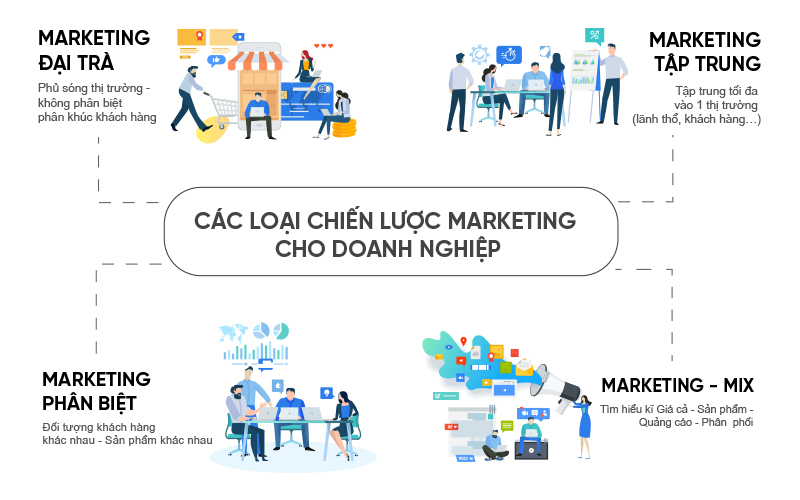
To build an effective Marketing strategy, managers need to understand the popular types of Marketing strategies for businesses today, including:
- Mass Marketing Strategy: This is a strategy that covers the entire market, without differentiating customer segments, and focuses on increasing sales. Its advantages are minimizing risk, covering the entire market, and low costs.
For example: Viettel’s Viettel++ advertising campaign applies to all users of their mobile network (a large market, with no customer differentiation).
- Differentiated Marketing Strategy: This strategy focuses on different customer segments, offering distinct product lines for each. A company can sell multiple different products to various target audiences simultaneously, but this means higher marketing costs and more time spent on market research.
For example, the perfume house Dior has fragrance lines for specific age groups: Miss Dior is suitable for the 20-24 age range, while J’adore targets the 25+ age group. For each customer segment, the brand engages different brand ambassadors with distinct advertising campaigns.
- Marketing Mix Strategy: 4 key elements are combined in this type: Price – Product – Promotion – Place.
This strategy requires businesses to have a thorough understanding of their products/services in terms of: What advantages does this product have over others on the market? Is the selling price competitive? What is a reasonable sales location, and what is the most effective way to approach customers?
For example, for the same mooncake product, manufacturers need to consider all four factors above to get their product to consumers.
- Concentrated Marketing Strategy: As the name suggests, concentrated marketing focuses entirely on one market (usually a region or territory). This helps the business establish a strong foothold there and continue on the journey of creating a unique monopoly and influence.
For example, the phone company Oppo launched a limited edition of 10,000 units of the Reno 6 Pro+ Detective Conan phone exclusively for the Chinese market.
Read more:
- Vinfast’s Marketing Strategy: What Creates Success?
- Apple’s Marketing Strategy: The “Big Player” of the Tech Industry
- Top 7 Effective Digital Marketing Strategies
- What is a Niche Market? Steps to Identify a Potential Niche Market for Your Business
3. How to Build Effective Marketing Strategies
To build an effective marketing strategy, a business not only needs to clearly understand its business goals but also grasp customer behavior, analyze competitors, and choose appropriate approach channels. A successful strategy helps increase brand awareness, boost sales, and create a sustainable competitive advantage. This process typically includes several important steps
3.1. Customer Research
Choosing the consumer market and target audience is the top priority when devising a marketing strategy. Answer these questions: Who is the target audience? What is their age range? Gender? Education level? What are their interests? What are their habits? All these factors are important. It’s no coincidence that Gucci released a collaboration with Doraemon in the Asian market, especially in Japan.
You must clearly understand customer habits, from shopping needs and trends to even payment trends, to build an effective marketing strategy.
3.2. Competitor Analysis
“Know your enemy and know yourself, and you can fight a hundred battles without disaster” – the lesson from Coca Cola and Pepsi is a classic example, or more recently, the well-known case of Beamin and Gojek. What needs to be done is to find out what competitors are doing, exploit opportunities they haven’t seized or encountered, and directly survey their customers to understand the strategies they use.
3.3. Set SMART Goals
The SMART goals you need to set include:
S – Specific: specific, detailed
M – Measurable: can be measured, has data for assessment
A – Attainable: can be achieved
R – Relevant: related to the business’s mission, products, and services
T – Time-bound: has a timeframe for implementation
Any type of marketing strategy must meet the above requirements for the business. The more specific the goal, the better. Having a timeframe for implementation, aligning with the company’s mission, and having data to measure feasibility are top priorities.
3.4. Choose Suitable Marketing Channels
There are many ways to convey your marketing message to potential customers. Traditional marketing always has its place, even though people are now leaning towards online marketing strategies.
Traditional methods include advertising in newspapers or on TV, as was done in the past. However, their limitation is that not everyone can be reached, as fewer and fewer people read print newspapers and watch TV. The trend is for users to spend more time on online newspapers and various social networks like Youtube and Facebook, or searching for information on Google and through Email marketing.
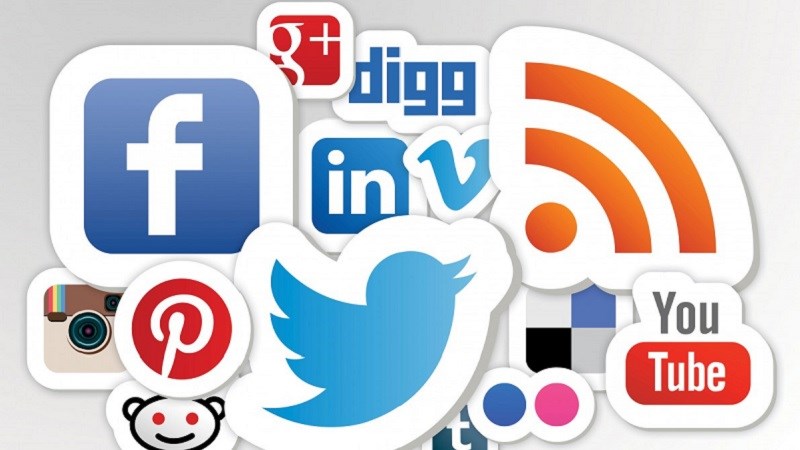
You should research your customers and choose marketing channels that correspond to suitable marketing strategies. For example, medicinal products for the elderly should be advertised on online news sites or TV because this target audience frequently uses these two channels. For younger customers, you can prioritize running ads on Facebook and Youtube. Business customers can be reached through Google Ads, SEO content, or blogs, as they tend to search for specific information carefully.
4. Types of Marketing Strategies by Business Model
Marketing strategy is not a “one-size-fits-all” approach; it needs to be customized based on the business model, scale, goals, and specific customer characteristics. Each type of business will have its own approach, channels, and tactics to optimize results. Below are common models and their corresponding marketing strategies:
B2B Businesses
Businesses that sell products or services to other businesses often have long sales cycles, purchasing decisions based on thorough research, and large contract values. Effective strategies include:
-
-
Account-Based Marketing (ABM) focusing on key potential customers.
-
In-depth content such as whitepapers, case studies, and industry reports to build credibility.
-
Seminars, webinars, and sales enablement to support the sales team.
-
Measuring ROI based on Annual Contract Value (ACV) instead of the number of leads.
-
B2C Businesses
B2C businesses aim to sell products or services directly to end consumers. The main focus is on the frequency of customer contact, building brand awareness, and creating a positive emotional experience to foster customer loyalty and repeat purchases. Effective strategies include:
-
Omnichannel marketing: Combining multiple channels such as social media, paid advertising, email marketing, and collaborating with KOLs/KOCs to reach customers at various touchpoints.
-
Optimizing the purchase funnel: Dividing the customer journey into stages awareness → consideration → conversion, and applying appropriate tactics for each stage, such as content marketing for awareness, product demos/reviews for consideration, and promotions/point-of-sale offers to drive conversion.
-
Loyalty and customer care programs: Building point-based programs, offering loyal customer incentives, and providing post-purchase care to increase retention rates and customer lifetime value (CLV).
Startups
Startups often have limited resources but need to grow quickly and validate their product’s feasibility. Marketing strategies should focus on efficiency and measuring results from the very beginning:
-
Growth hacking: Finding low-cost marketing channels, rapidly testing small campaigns, and optimizing ROI and customer feedback.
-
Testing product-market fit: Using an MVP (Minimum Viable Product) and feedback loops to assess the product’s suitability for the market.
-
Tracking key metrics: CAC (Customer Acquisition Cost), LTV (Lifetime Value), and unit economics to ensure that marketing decisions and product development costs deliver sustainable results.
SMEs (Small and Medium-sized Enterprises)
Small and medium-sized enterprises often prioritize cost optimization and efficiency in marketing. Strategies should focus on low-cost channels that deliver a high ROI:
-
Low-cost digital marketing: Local SEO, Google Ads, Facebook Ads, email marketing.
-
Using CRM and automation: To automate customer care, send personalized messages, and track the customer journey.
-
Focusing on 1-2 main channels: Avoid spreading the budget too thin, while leveraging referral marketing and evergreen content to maintain long-term engagement.
D2C Businesses
D2C (Direct-to-Consumer) businesses sell directly to customers and focus heavily on the digital experience:
-
Investing in website UX/UI: Optimizing the interface for a seamless and easy purchasing experience.
-
Remarketing: Using email, SMS, and sales livestreams to remind customers to complete their purchases and to increase return rates.
-
Community building and subscriptions: Create subscription programs, cross-sell opportunities, and loyal customer communities to increase customer lifetime value (LTV).
Traditional businesses undergoing digital transformation
Traditional businesses need to combine offline and online channels to expand their market:
-
Omni-channel migration: Integrate POS, e-commerce, and CRM to synchronize customer data and manage sales effectively.
-
Digital marketing: Capture leads from offline stores and launch online advertising campaigns targeting the right potential customer groups.
-
Measure effectiveness: Track online-to-offline results, evaluate campaign effectiveness, and optimize the sales process.
SaaS & technology companies
SaaS and technology companies often prioritize inbound marketing and automated customer care, as digital products are easily accessible and require long-term customer retention:
-
In-depth content and freemium/trial: User guides, case studies, and trial versions to let customers experience the product before making a purchase decision.
-
Automation & nurturing: Automatically send emails, onboarding messages, and push notifications to maintain engagement and reduce churn.
-
Track key metrics: Churn rate, CAC payback period, and unit economics to optimize business performance.
Manufacturing companies
Manufacturing companies focus on technical capabilities, product quality, and the supply chain:
-
Catalogs, trade shows, industry PR: Promote products, demonstrate technical capabilities, and enhance reputation.
-
Technical content and case studies: Demo videos, user guides, and quality certifications.
-
Build credibility: Use certificates, test reports, and quality standards to build trust with B2B and B2C customers.
Service-based businesses
Service-based businesses sell experiences and intangible value, requiring strong testimonials and referrals:
-
Testimonials & case studies: Use customer feedback, reviews, and expert personal branding.
-
CRM & service packages: Automated customer management and retainer packages to maintain long-term relationships.
-
Measure effectiveness: Use NPS, retention rate, and CLV to optimize services and enhance loyalty.
E-commerce businesses
E-commerce focuses on optimizing conversions and customer return rates:
-
Conversion Rate Optimization (CRO): A/B testing, improving landing pages, and optimizing the checkout process.
-
Remarketing and AI personalization: Product recommendations, abandoned cart reminders, flash sales & bundles to increase revenue.
-
Margin and logistics management: Control operating costs, optimize checkout UX, and manage the supply chain to ensure profitability.
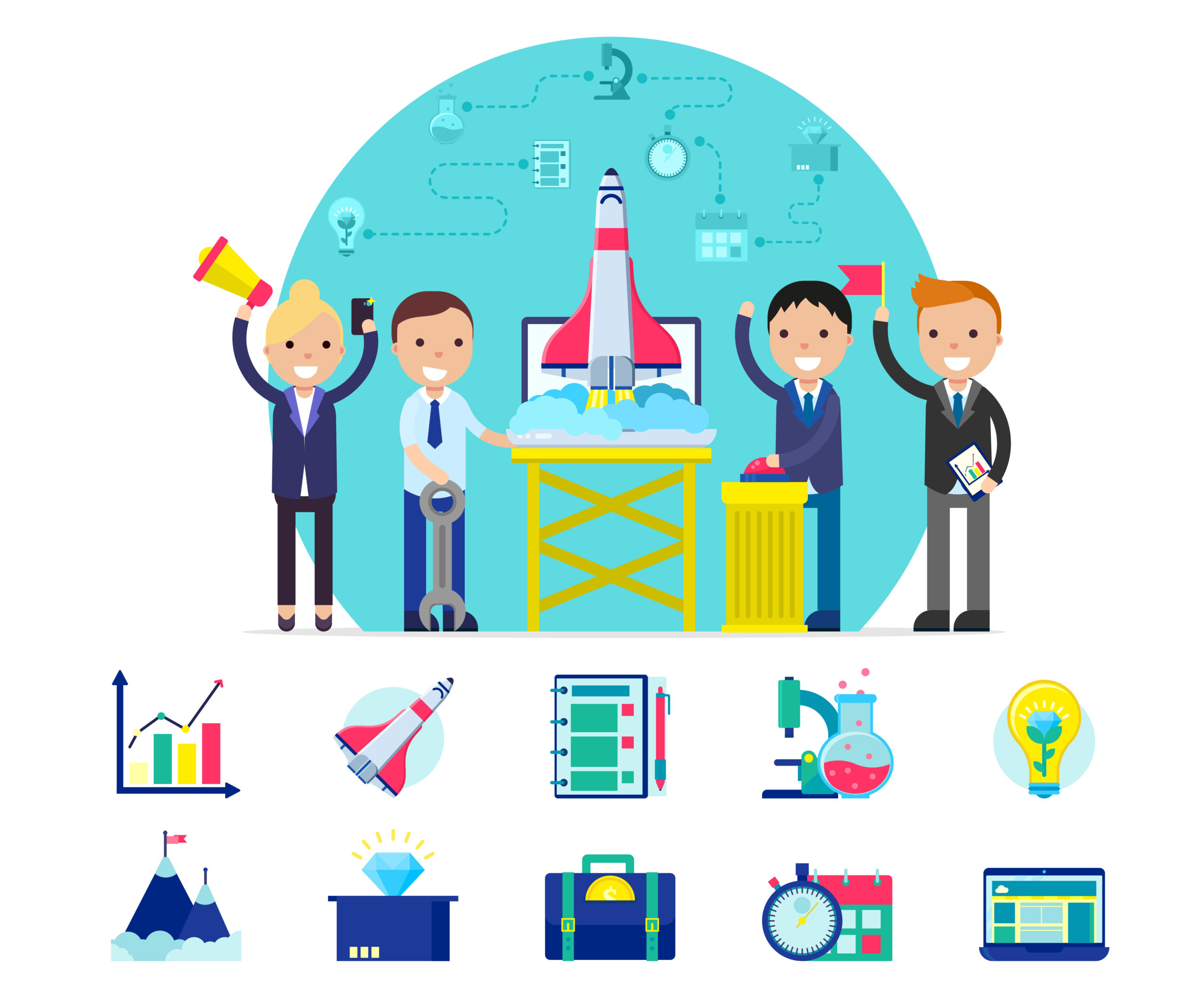
Each model requires businesses to choose appropriate tactics, channels, messages, and KPIs. Common mistakes include: deploying too many channels at once, not measuring KPIs, copying competitors’ strategies, and neglecting Sales–Marketing integration. Businesses should start with small experiments, measure results, continuously optimize, and build a scaling process once a strategy proves effective.
| Read more: What is Customer Insight? How to determine customer insight effectively and accurately |
Customer relationship management software is a central hub for all information on existing and potential customers—a place where you can effectively research your business’s customer segments. From there, businesses can develop marketing methods in the form of images, audio, videos, and articles.
Currently, image and video formats are quite popular in various marketing strategies. The steps for building a video marketing strategy are similar to those for conventional images, but their reach is much stronger because they combine both sound and visuals, preventing viewers from getting bored. Therefore, they also have higher content requirements. Nearly 100% of successful brands on the market invest in video marketing in the form of advertisements and short films, such as Downy, Shopee, Lazada, etc.
Additionally, the way to apply marketing automation in a business to automate marketing processes such as customer segmentation, integrating customer data, nurturing customers with pre-set scripts, and determining scale, while also improving brand engagement, conversion rates, and conversion value, is an effective tool for managing marketing activities within your strategy.
With the Industry 4.0 digital transformation trend, marketing also needs to be updated and adapted to keep up with customer demands. Effective types of marketing strategies can deliver results beyond expectations for a business. Understanding your business and building effective marketing strategies is a challenge that leaders contemplate day and night.