


 10/05/2026
  157 views
The emergence of Big data, the Industry 4.0 revolution, and artificial intelligence (AI) are major breakthroughs in the new era. Big data plays a significant role in helping businesses understand, analyze, and collect detailed customer information, enabling managers to make accurate business decisions and strategies. So, what is Big data and how can it be applied to business operations? Let’s explore the details with 1Office in the article below!
Mục lục
- 1. What is Big data?
- 2. What are the characteristics of Big data?
- 3. Types of Big data
- 4. What is the role of Big data in business?
- 5. How does Big Data work?
- 6. Practical applications of Big Data across industries
- 7. Challenges of Applying Big Data in Business
- 8. Popular Big Data Tools and Platforms
- 9. Conclusion
1. What is Big data?
Big data is a term for massive and complex data sets that are difficult to process using traditional methods. Examples include personalized content recommendations on platforms like Spotify, Netflix, YouTube, and e-commerce platforms such as Shopee, Lazada, etc.
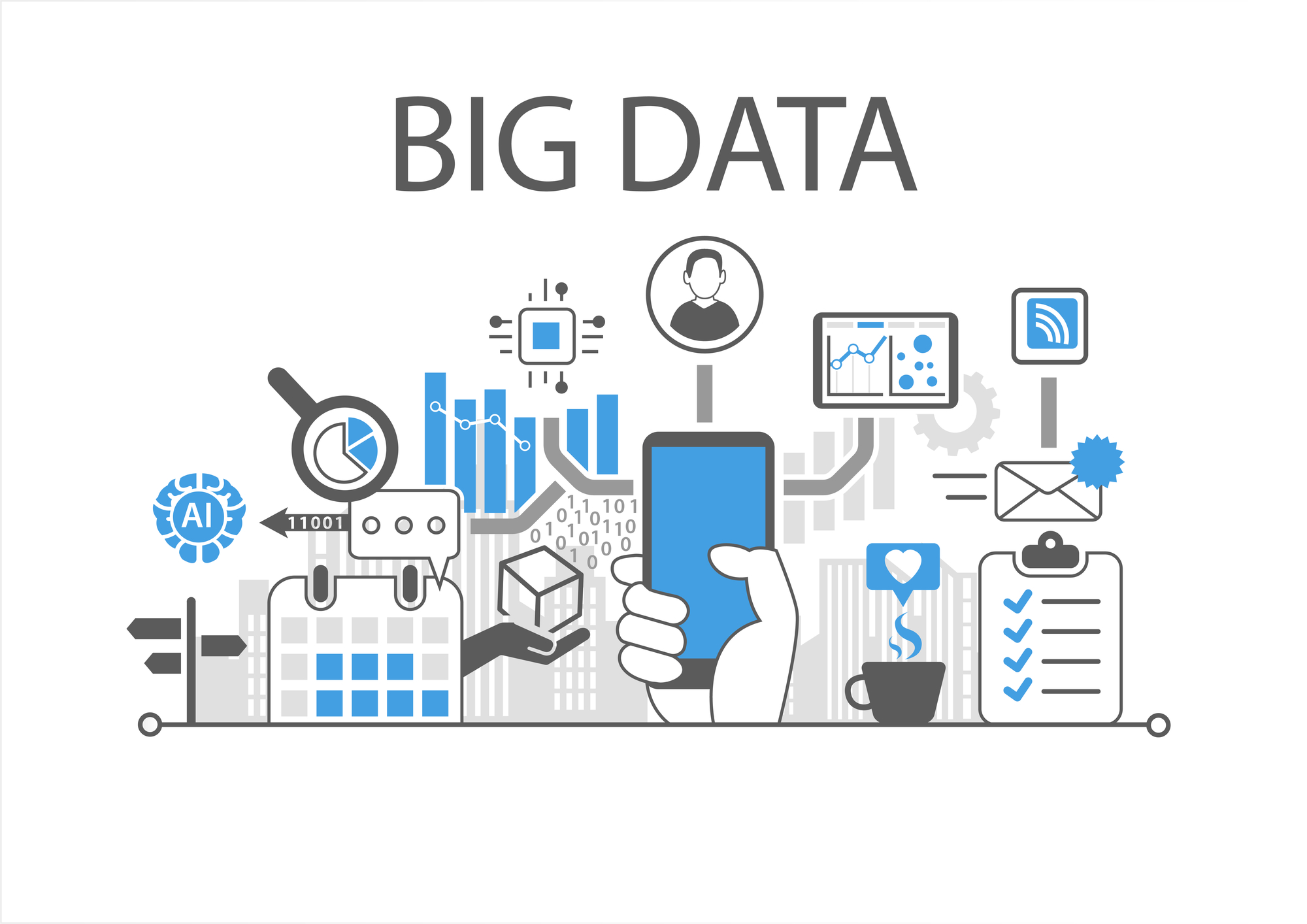
Big data, both now and in the near future, is a technology with the potential to profoundly impact many areas of life, not only for consumers but also for the way businesses operate. The effective development and application of big data will help managers solve complex problems and create new opportunities for growth and digital transformation.
2. What are the characteristics of Big data?
Big data has three main characteristics, known as the “3Vs of Big data“: Volume – Velocity – Variety:
2.1. Volume – Data Volume
When we talk about Big data, we are referring to enormous volumes of data. Determining the value and size of this data is crucial. Therefore, data collected by businesses from various sources such as IoT (Internet of Things), videos, business transactions, and social media needs to be analyzed and dissected.
In the early stages of technology, storing large amounts of big data was a significant challenge. However, today, with the emergence of low-cost storage platforms like Hadoop and Data Lakes, the data storage process has become much easier and more convenient.
2.2. Velocity – Processing Speed
Typically, the speed of the data stream directly affects memory and is often higher compared to writing to a disk. Especially in today’s era, with the growth of IoT, data streams are transmitted at extremely high speeds, requiring timely processing.
For example: On social media platforms like Facebook, old notifications such as statuses, tweets, etc., receive less user attention and are quickly forgotten. Data is now often updated in near real-time, and the information update speed can be as fast as milliseconds.
2.3. Variety – Diversity and Flexibility
Variety is another key characteristic of Big Data, featuring a wide range of structured and unstructured data, including numerical data, emails, videos, audio, financial transactions, and more. This diversity affects performance and is one of the main challenges that the Big Data field needs to address.
3. Types of Big data
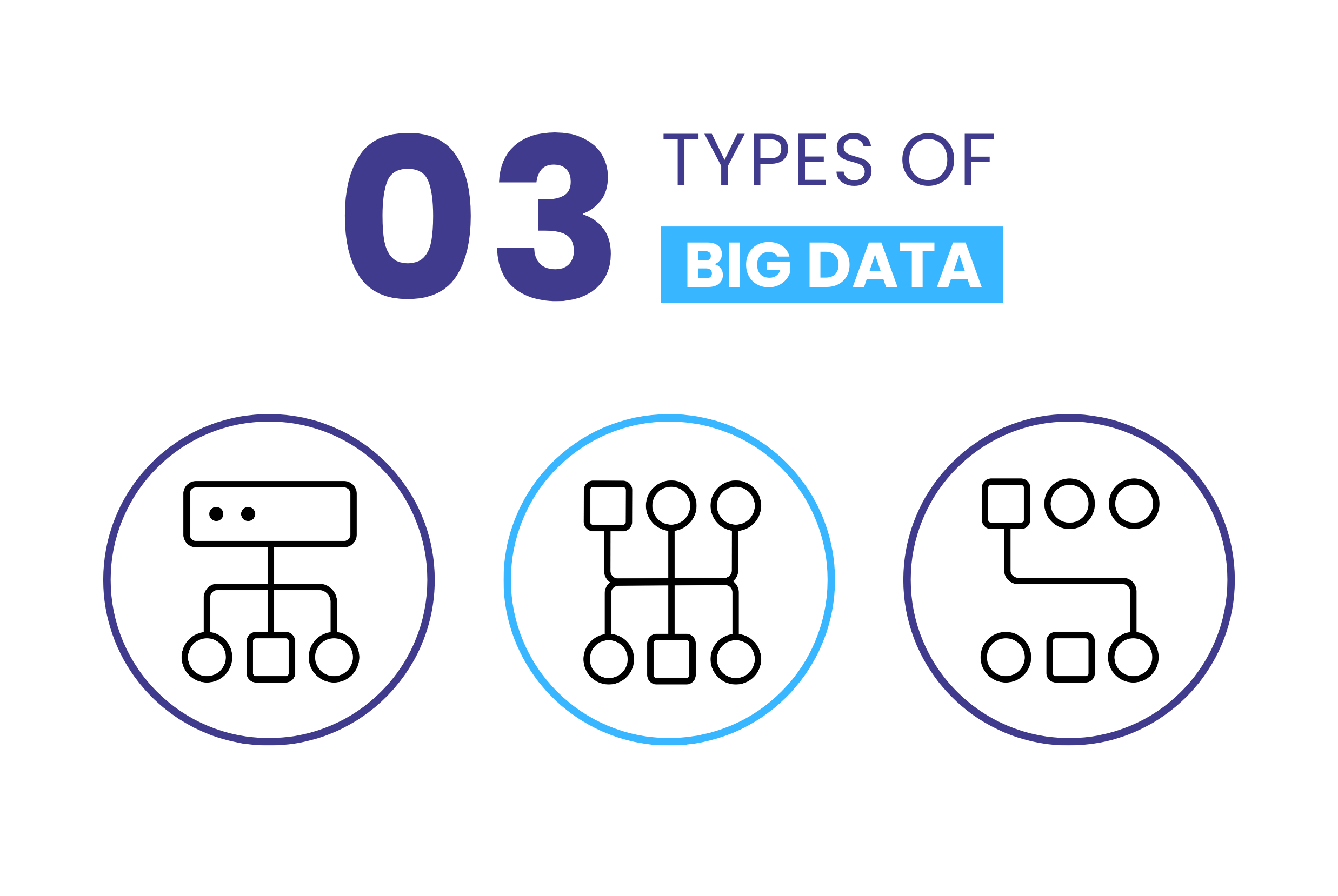
Big data is divided into 3 data types, based on 3 common data factors:
- Structured data
- Unstructured data
- Semi-structured data.
3.1. Structured data
Structured data is often considered the simplest type of data to manage and search. This is data that can be accessed, stored, and processed in a fixed format. The components of structured data are easily categorized, which helps database designers and administrators define simple algorithms for searching and analysis.
3.2. Unstructured data
Unstructured data is any data set that has no organization or clear definition. This type of data is often chaotic, difficult to process, understand, and evaluate. It does not follow a fixed structure and can change over time. Unstructured data includes opinions, tweets, shares, social media posts, YouTube videos that users watch, etc.
3.3. Semi-structured data
Semi-structured data is a combination of structured and unstructured data. Email is a typical example because it contains unstructured data in the message body, as well as many other structured attributes like sender, recipient, subject, and date. Devices can use geotagging and timestamps to provide structured data alongside unstructured content.
4. What is the role of Big data in business?
Big data plays a crucial role in business decision-making and strategy development. By analyzing large volumes of data, managers can gain important insights to increase their competitive edge in the market and achieve greater success for their business.
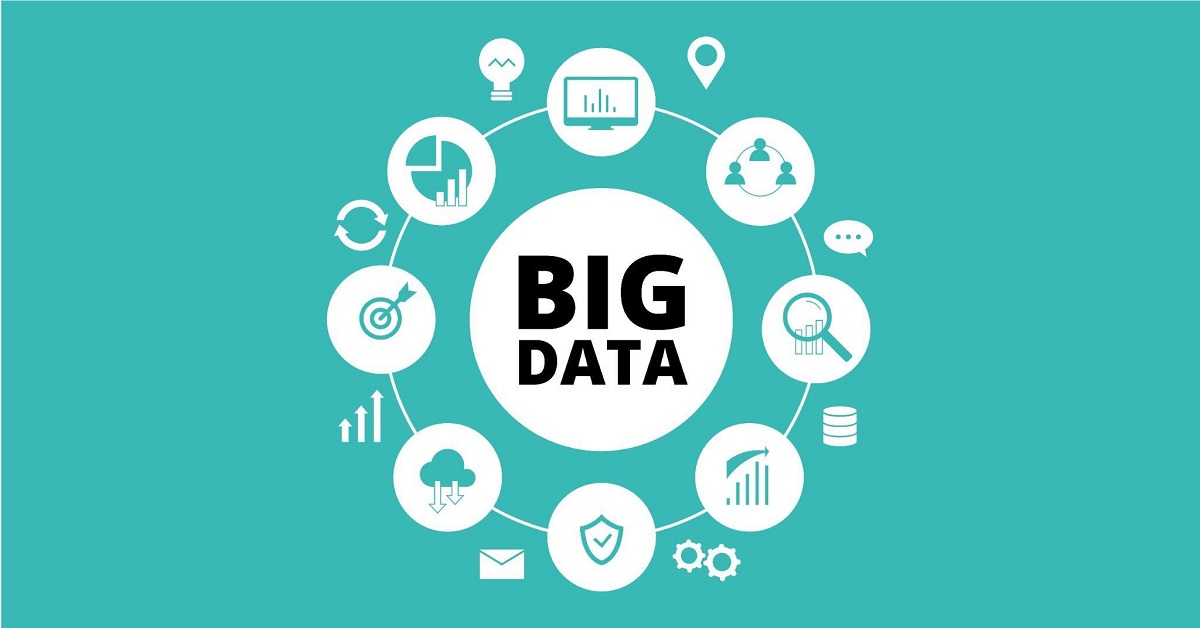
With the remarkable advancement of technology and the prevalence of data digitization, businesses today can collect and store vast amounts of data. This dataset includes information about customers, sales figures, website traffic, social media interactions, and much more. With the diversity and scale of this Big Data, it becomes a valuable resource, offering a significant competitive advantage to businesses.
4.1. Big Data supports decision-making
Data-driven decision-making has become a mandatory and crucial practice for successful entrepreneurs. Big data analysis helps businesses make informed decisions based on clear evidence rather than intuition. By analyzing customer data, businesses can identify patterns and trends, helping them tailor their products and services to effectively meet customer needs.

For example, a retail company can analyze customer purchase history to identify which products are most popular and which are underperforming. This information can be used to make data-driven decisions about product development, marketing strategies, inventory management, and consumer promotions. By leveraging big data, businesses can optimize their decision-making processes and increase their chances of success.
Furthermore, big data allows businesses to optimize their operations. By analyzing operational data, companies can identify bottlenecks, reduce costs, and improve efficiency. For example, analyzing supply chain data can help identify areas for improvement, leading to optimized processes and reduced waste. Additionally, by using big data analytics, businesses can gain a better understanding of their operations and make data-driven decisions that can lead to increased productivity and profitability.
4.2. Predicting market trends
A key benefit of big data is its ability to detect market trends and predict future consumer behavior. By analyzing data from social media channels, customer reviews, and shopping patterns, businesses can identify emerging market trends and adjust their strategies accordingly. This helps businesses stay ahead of the competition and seize opportunities as they arise.

For instance, a fashion retailer can analyze social media conversations and customer reviews to identify popular fashion trends. By leveraging this information, the store can stock up on trending products and tailor its marketing campaigns to target the right audience. This proactive approach to market trends can give the business a competitive edge and increase its chances of success.
Moreover, big data analysis can also help businesses identify potential risks and challenges in the market. By analyzing historical data and market indicators, businesses can make informed predictions about market fluctuations and adjust their strategies accordingly. This helps businesses mitigate risks and make proactive decisions to protect their profitability.
Overall, Big Data is a powerful tool that can revolutionize how businesses operate. By leveraging the vast amounts of available data, businesses can improve their decision-making processes, optimize operations, and predict market trends. Embracing big data analytics can give businesses a competitive advantage and position them for long-term success in today’s data-driven world.
5. How does Big Data work?
Big data analytics is the process of collecting, processing, cleaning, and analyzing large datasets to help businesses operationalize their big data. This process consists of 4 main steps: data collection, data processing, data cleaning, and data analysis.
Step 1: Data Collection
The data collection process varies for each business. With current technology, businesses can gather both structured and unstructured data from various sources, from cloud storage to mobile applications, in-store IoT sensors, and more.
Some data will be stored in data warehouses so that business intelligence tools and solutions can easily access it. Raw or unstructured data that is too diverse or complex for a data warehouse can be assigned metadata and stored in a data lake.
Step 2: Data Processing
Once data is collected and stored, it needs to be processed correctly to achieve accurate results for analytical queries, especially as the data becomes more extensive and unstructured. The available data is increasing rapidly, making data processing a challenge for businesses.
Another way to process big data is through batch processing. This method queries large blocks of data over time, processing them in individual batches. The benefit of processing individual data blocks is that it saves analysis time when there is a waiting period between data collection and analysis. Stream processing can look at small batches of data continuously, shortening the waiting time between collection and analysis and enabling quick decision-making. However, stream processing is more complex and often more expensive.
Step 3: Clean the data
Data, whether big or small, needs to be cleaned to improve data quality and achieve more robust results; all data must be formatted correctly, and any duplicate or irrelevant data must be removed or accounted for. Dirty data can obscure insights and lead to misleading conclusions.
Step 4: Analyze the data
Getting big data into a usable state takes a significant amount of time. Once it’s ready, advanced analytics processes can turn big data into deep insights. Some methods for analyzing big data include:
- Data mining sorts through large datasets to identify patterns and relationships by identifying anomalies and creating data clusters.
- Predictive analytics uses a business’s historical data to make predictions about the future, identifying upcoming risks and opportunities.
- Deep learning simulates human learning patterns by using artificial intelligence and machine learning to build algorithms that identify patterns in the most complex and abstract data.
6. Practical applications of Big Data across industries
Big data and analytics can be applied to a wide variety of business problems and use cases. Big data is being widely applied in many economic sectors, creating notable innovations and helping to improve business efficiency and productivity.
6.1. Big data applications in the banking industry
In the banking system, Big Data has been and is being applied effectively, demonstrating its important role in all banking activities, from cash collection to financial management.

Specifically, banks apply Big Data as follows:
- Using clustering techniques to make important decisions. The analysis system can identify branch locations with high concentrations of potential customer demand, thereby suggesting the opening of new branches.
- Combining multiple rules from various banking domains to predict the amount of cash needed at a branch at specific times of the year.
- Data science plays a key role in the digital banking system.
- Machine learning and artificial intelligence are technologies used by many banks to detect fraudulent activities and report them to the relevant specialists.
- Data science assists in processing, storing, and analyzing vast amounts of data from daily operations while ensuring the security of the banking system.
6.2. Big data applications in the education industry

In the education industry, processing secure data, information about pupils, students, lecturers, documents, etc., needs to be done quickly and efficiently. Therefore, applying Big Data in the education sector offers many useful functions, including:
- Analyzing, storing, and managing large datasets, including student and pupil records.
- Using a Big Data management system with hierarchical extraction capabilities to maintain security.
- Providing necessary information about classroom activities and supporting decision-making for teachers and teaching staff.
- Helping to keep exam papers confidential and prevent leaks.
For example: The National Economics University, with nearly 30,000 students across various disciplines, has implemented a Management and Learning System. This big data analysis system helps teachers track the time students spend using resources within the system, and summarize their learning processes and results.
6.3. Applications of Big Data in E-commerce

E-commerce not only benefits from online transactions but also faces many challenges in achieving its business goals. This is because businesses, whether large or small, need to invest heavily in improving technology once they enter this market. Big Data can create a competitive advantage for businesses by providing in-depth information and reports analyzing consumer trends.
E-commerce applies Big Data as follows:
- Can collect data and requests from customers even before they actually start a transaction.
- Build a high-performance marketing model.
- E-commerce site managers can identify the most viewed products and optimize the display time of these product pages.
- Evaluate customer behavior and recommend similar products, thereby increasing sales potential and generating higher revenue.
- If any product is added to the cart but ultimately not purchased by the customer, Big Data can automatically send a promotional code to that specific customer.
- Big Data applications can also create custom reports based on criteria such as age, gender, location of visitors, and more.
- Identify customer requirements, what they want, and focus on providing the best service to meet their needs.
- Analyze customer behavior and interests according to their trends to create customer-oriented products.
- Provide better products at a lower cost.
- Can collect extensive data on customer behavior to design an optimal marketing model customized for specific audiences or audience groups, increasing sales potential.
- Find similarities between customers and their needs. From there, targeting advertising campaigns can be done more easily based on previous analyses.
6.4. Applications of Big Data in Digital Marketing
Digital Marketing is considered a crucial key to success for every business. Nowadays, not only large companies can implement advertising and marketing strategies, but even small entrepreneurs can run successful advertising campaigns on social media platforms to promote their products. Big Data has played a significant role in shaping the strong development of Digital Marketing, making it an indispensable part of any business.
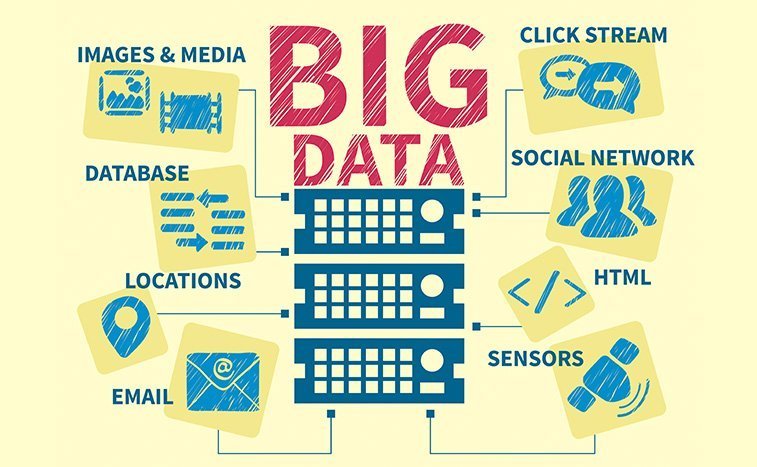
The Digital Marketing field applies Big Data as follows:
- Market analysis, competitor analysis, and business goal evaluation. This helps businesses better understand opportunities to proceed with subsequent business plans.
- Identify users on social media and target them based on demographics, gender, income, age, and interests.
- Generate reports after each advertising campaign, including performance, audience engagement, and actions needed to achieve better results.
- Data science is used to target and nurture the customer lifecycle.
- Focus on highly searched topics and advise businesses to implement them in their content strategy to improve the business website’s ranking on Google (SEO).
- Can create lookalike audiences using existing audience databases to target similar customers and optimize profits.
6.5. Applying Big Data in Customer Care
What is the application of Big Data in customer care? Besides product quality, providing excellent customer care is a factor that customers have high expectations for. In the early stages of market entry, Big Data plays a crucial role in helping business owners find optimal solutions and proposals to understand customers and identify competitive advantages.
How to apply Big Data in customer care:
- Identifying customer needs: Focus on understanding customer needs and expectations to provide the best possible service and care.
- Analyzing customer behavior and interests: Use Big Data to analyze customer behavior and interests, create products and services that meet specific customer needs, and design optimal marketing models to reach the right audience and enhance engagement.
- Understanding the similarities between customers and their needs: Assess the similarities between customer characteristics and their needs to build precise and effectively targeted advertising campaigns.
7. Challenges of Applying Big Data in Business
Although Big Data offers many benefits, the actual implementation process faces numerous obstacles. Many businesses make large investments but fail to derive value due to a lack of strategy, a shortage of skilled personnel, or the selection of inappropriate technology. Below are the most common challenges.
7.1. Lack of Personnel with Data Analysis Expertise
Big Data requires a team with deep knowledge of data science, analytics, programming, and statistics—for positions such as Data Engineer, Data Analyst, Data Scientist. However:
-
The talent pool with these skills in Vietnam is limited
-
High recruitment costs
-
New personnel struggle to understand internal data if the company lacks a standardized system
As a result, businesses have data but don’t know how to leverage it, failing to generate useful insights.
7.2. High Investment Costs for Systems and Data Infrastructure
To handle “big data,” businesses must invest in:
-
Servers, storage systems, Data Lakes, Data Warehouses
-
Data analytics platforms, ETL tools
-
Security and backup services
-
Technical personnel costs
Many SMEs/Startups give up midway because they underestimate the Total Cost of Ownership (TCO).
7.3. What are the security risks of Big Data?
Big data means big risks. If the system is not encrypted and access is not strictly controlled:
-
Customer data can be leaked
-
Hackers can penetrate through server vulnerabilities
-
The business may violate personal data protection regulations
For industries like banking, insurance, and healthcare, this risk is even more severe.
7.4. Poor Data Quality and Data Fragmentation
One of the biggest problems is:
-
data scattered across multiple locations (CRM, ERP, HRM, Excel, POS, etc.)
-
duplicate data
-
missing or incorrectly formatted data
-
non-standardized data
When data quality is low, the analysis results will be inaccurate, leading to poor decision-making.
7.5. Underdeveloped Data Culture within the Organization
Big Data is not just technology — it is a culture of using data to make decisions. However:
-
many managers still rely on intuition
-
employees do not proactively update data according to standards
-
there is no end-to-end data control process
If the data culture is weak, businesses invest in technology but cannot fully exploit its value.
8. Popular Big Data Tools and Platforms
To process big data effectively, businesses often combine multiple tools for each stage: storage, processing, analysis, querying, and visualization. Below are the most popular platforms in the world.
8.1. Hadoop – Distributed Data Processing System
Hadoop is an open-source platform that helps process massive amounts of data by breaking down and distributing tasks across multiple computers.
Strengths:
-
handles extremely large data (petabytes) well
-
low cost due to using commodity servers
-
suitable for Data Lakes
Hadoop is often used for storage and batch processing tasks (large volumes, not requiring real-time).

8.2. Apache Spark – High-Speed Data Analytics Tool
Spark is considered a “high-speed upgrade” to Hadoop due to its ability to process data in-memory.
Advantages:
-
extremely fast for real-time analytics
-
supports MLlib (Machine Learning library)
-
can be used for AI, prediction, and big data simulation
Spark is a top choice for businesses that need real-time analytics, such as banks and e-commerce companies.

8.3. Elasticsearch – Real-Time Data Search and Analytics
Elasticsearch excels at:
-
<li data-
-
runs SQL queries extremely fast
-
tightly integrated with the Google ecosystem (GA4, Ads…)
-
suitable for e-commerce and marketing businesses
-
low cost
-
suitable for all scales
-
integrates well with business data
-
strong in visualization
-
creates interactive dashboards quickly
-
suitable for high-level management reporting
Both follow a cloud model, so businesses don’t need to worry about physical server costs.

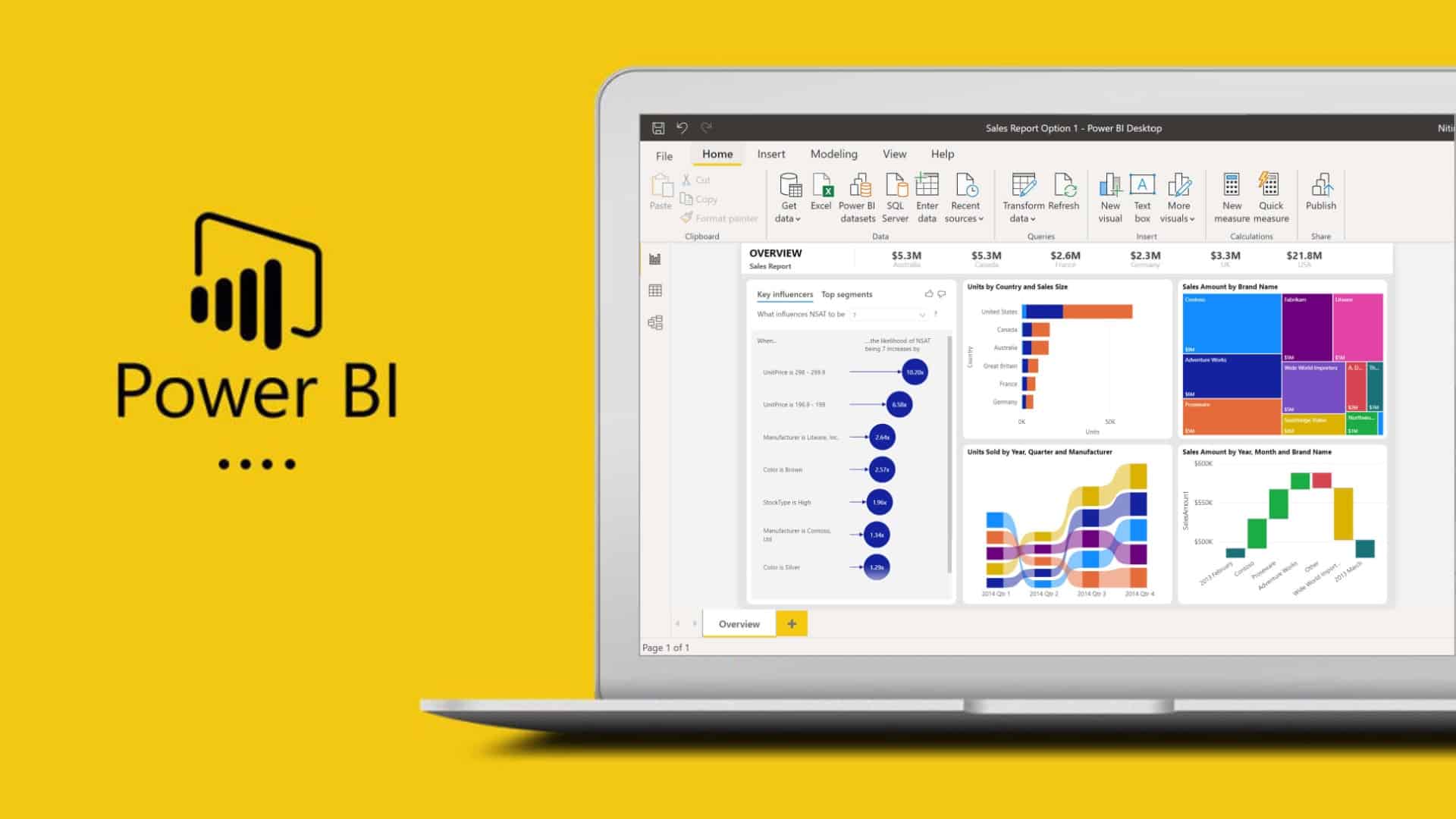
8.5. Power BI, Tableau – Data Visualization Tools
These are popular BI (Business Intelligence) tools:
Power BI
Tableau
They help turn complex data into easy-to-understand charts to support decision-making.
9. Conclusion
Big data offers many useful applications, contributing to the development of human life. However, if humans cannot control it, many challenges will arise. Therefore, understanding big data is a crucial step to approach this technology more favorably. We hope this article from 1Office has helped you better understand what big data is, how it works, and its applications in business operations across various industries.
















