10/05/2026
  10866 views
Hire the right person for the right job with 12+ recruitment criteria compiled in detail in the article below. Specifically: work experience, adaptability, professional knowledge, job-related skills, and more. Check it out now!
Mục lục
1. Recruitment criteria for assessing candidate competency
This is the core set of criteria that helps recruiters determine a candidate’s ability to perform the job. It includes factors such as experience, expertise, and practical work skills—elements that directly impact performance and work quality.
Work experience
Work experience refers to the knowledge and understanding a candidate uses to perform their job. Candidates with experience equal to or greater than the level set by the employer are often highly regarded and considered potential candidates for interviews. All businesses want to hire experienced personnel to save on employee training costs and time. Additionally, the process of onboarding and handling tasks is faster and more efficient for experienced individuals.
Positions that require extensive experience and high professional qualifications include: director, department head, leader, accountant, engineer, etc.
Positions that require less experience: intern, sales staff, salesperson, administrative staff, etc.

To assess a candidate’s work experience, recruiters can rely on the following main characteristics:
- Length of time worked in a previous corresponding position.
- Tasks performed and responsibilities held + Accompanying results achieved
- Ability to complete tasks: performance and quality of work
- Achievements
Example: When recruiting for a Content Marketing position, Company A has the following work experience requirements:
- Over 2 years of experience in a similar position.
- The job requires proficiency in 6 areas: Keyword research, creating article outlines, writing SEO-standard articles, optimizing articles, building backlinks for articles, monitoring website performance
- SEO articles of around 4000 words or more in the technology and software field. An average of about 5 articles/week.
Adaptability
Adaptability is a recruitment criterion that refers to a candidate’s ability to integrate into the environment, corporate culture, job, or adapt to impacts from the environment, economy, etc. A candidate with good adaptability is a plus in the eyes of recruiters. This is because the business will not have to spend too much time and effort helping the new employee adapt to the work environment. The employee can also quickly leverage their abilities, creating a foundation for them to be creative and develop.

Example: A recruiter might ask questions like, “When working at your previous company, how long did it take you to get used to the environment and the job?” Through this question, the recruiter can easily gauge the candidate’s adaptability in a new environment.
Professional Knowledge
Professional knowledge is the in-depth understanding and expertise a candidate has in a specific field. Different job positions will have specific requirements and demands regarding professional knowledge. A solid grasp of professional knowledge is the most basic condition for an employee to understand and perform their job easily.
Recruiters can test and evaluate a candidate’s professional knowledge through various methods such as interviews, Q&A sessions, IQ & EQ tests, etc.

Example: For positions at Vinamilk, once a candidate meets all the initial requirements, they will have to go through 6 specific evaluation rounds as follows:
- Screening candidate applications
- Assess the candidate’s leadership qualities
- Test language skills and conduct a standard IQ test
- Interview and directly assess personality
- Test and evaluate the candidate’s strengths
- Second direct interview and presentation
Skills are the ability, knowledge, and capacity to perform a specific task or job. Recruiters can evaluate this recruitment criterion through the following two main skill groups:
- Professional skills: Leadership skills, management skills, market research skills, design skills, writing skills, research skills, etc.
- Soft skills: Communication skills, presentation skills, memory skills, problem-solving skills, negotiation skills, etc.

To accurately determine the necessary job skills that the company wants to recruit for, the recruitment department needs to coordinate with relevant departments. Then, recruiters will screen CVs, assess candidate skills through interviews, and during the probationary period (if the candidate is hired).
2. Recruitment criteria for assessing candidate attitude
Attitude determines how a candidate integrates into the work environment and reacts to pressure. This group of criteria focuses on the willingness to learn, responsibility, honesty, and discipline—values that help businesses build a stable and sustainable team.
Confidence
A candidate’s confidence is how they demonstrate certainty about their experience, knowledge, and skills. Recruiters can use this factor as a basis for evaluating candidates. Some signs of a candidate’s confidence include:
- A relaxed demeanor
- The candidate’s fluent answers
- Proactively asking questions to the recruiter
All the words and actions that the recruiter observes through this approach will help them determine if the candidate is confident.

Note: Recruiters need to clearly distinguish between confidence and arrogance to evaluate candidates more accurately. Arrogance is an excessive display of confidence. Arrogant people often overestimate their own abilities and disregard the opinions of others.
Listening skills
A good listener is someone who is patient, perseverant, and knows how to improve themselves based on feedback from others. They have the ability to understand and build good relationships. Therefore, candidates who meet the listening skill criterion are highly sought after by businesses.
Recruiters can assess a candidate’s listening skills during the interview through their attitude and reactions by:
- Asking questions. (Example: When working in a team, have you ever encountered a situation where members had conflicting opinions? What did you do in that situation?)
- Presenting hypothetical situations. (Example: Suppose you are in an important meeting, and another member has a different opinion from yours. What would you do?)
Willingness to learn
A willingness to learn is the spirit of being eager to learn, hardworking, and actively training skills and knowledge for self-development. Businesses often use this criterion to assess a candidate’s growth potential. Especially in the current context of globalization, a willingness to learn is prioritized by recruiters to ensure the quality of the workforce. Such individuals proactively seek out and update their knowledge and values.

This quality in a candidate will be most evident during their actual work at the company. However, recruiters can still assess a candidate’s willingness to learn through:
- Information provided by the candidate in their CV: Regarding supplementary jobs/skills, other skills, career orientation and goals, hobbies, etc.
- The candidate’s way of answering and receiving information during exchanges and interviews: Replying to confirm email information, a receptive attitude, etc.
- The famous people the candidate follows, the groups the candidate participates in, etc.
Discipline
Discipline is the practice of carrying out activities properly, adhering to clearly defined rules and procedures. Ensuring discipline within an organization is a necessity that all candidates must follow. Therefore, the “discipline” criterion is used by businesses to evaluate and select candidates. This can include:
- How candidates manage their time and work.
- How they complied with the rules, procedures, and policies at their previous company.
- The level of completion and execution of assigned tasks.

Activities that businesses can use to assess a candidate’s discipline include:
- Direct interviews
- Background checks
- Q&A sessions or presenting hypothetical situations
Honesty
Honesty is a recruitment criterion that refers to a candidate’s ethics. Simply put, honesty means the candidate does not lie, is straightforward, and always tells the truth. Having every employee in the company be honest helps build a fair and positive work environment. Therefore, the criterion of honesty is emphasized by many businesses.
Recruiters can gauge a candidate’s honesty by paying attention to small signs. Specifically: consistency in their statements, confidence in their words, consistent behavior, etc. At the same time, recruiters should also observe carefully and ask questions to gather more basis for evaluation.
3. Top-priority recruitment and candidate evaluation criteria
Some criteria can give candidates a special advantage during the selection process, such as qualities suitable for the position, foreign language skills, or professional certifications. This group of criteria helps businesses quickly identify personnel with long-term development potential.
Qualities suitable for each job position
Besides recruitment criteria for attitude and competence, recruiters also set priority criteria for specific qualities for each position. Depending on the specific nature of the job and the position, these qualities will differ. For example:

- Manager/Director positions: Leadership qualities, teamwork skills, decisiveness, etc.
- Designer/Media/Marketing positions: Creativity, proficiency with technology and software, aesthetic sense, etc.
- Communications/Public Relations positions: Communication skills, flexibility, organizational skills, etc.
Degrees and certifications
Many businesses often have specific criteria regarding candidates’ degrees and certifications. These are the metrics recruiters use to assess the competence and knowledge of candidates for the position they are applying for. From there, managers can filter out unsuitable candidates if they come from an unrelated field or do not have the required major.

- For positions that do not require experience: A university degree in the required major / a college diploma in the required major / a high school diploma
- For positions that require experience: Degrees or certifications as required, such as: IELTS 6.5 or higher, Master’s/PhD degree, honors degree, etc.
Example: For the Sales Consultant position at FPT Digital Retail JSC, the specific degree requirement is a high school diploma or higher.
>> See more: TOP 9 factors affecting employee performance and how to improve them
Foreign Language
Currently, the demand for employees who are proficient in two or more languages is increasing. Therefore, foreign language proficiency is a top criterion for many businesses. This is especially true for specialized positions such as interpreters, external relations officers, tour guides, partnership managers, international program lecturers, etc.
Furthermore, in the current era of international integration, personnel who can use multiple languages are an advantage for businesses to expand cooperation and business relationships with countries around the world. Moreover, thanks to the ability to quickly search for and access information from abroad, businesses can create more opportunities and competitive advantages.

Therefore, the “foreign language” recruitment criterion is often included by many businesses. Depending on the purpose and need for human resources with professional expertise and bilingual abilities, recruiters can evaluate through:
- Degrees or certificates evaluated by reputable organizations
- Direct bilingual interviews
- Taking practical tests
For example: The international education organization Langmaster is recruiting a communicative English teacher with the following specific foreign language requirements:
- TOEIC score ≥ 900 or IELTS score ≥ 7.5 (mandatory)
- A degree in English Language or English Pedagogy is an advantage
Besides competence and attitude, businesses also need to consider supporting factors such as marital status, geographical distance, or the ability to commit long-term. Although not decisive, this information helps ensure stability and longevity in the employment relationship.
Marital Status
Some companies are also interested in a candidate’s marital status. This is quite understandable as many jobs have characteristics and specific requirements that are only suitable for single people or only suitable for married people. Through marital status, recruiters can gauge the candidate’s availability and flexibility in the work process. However, to ensure the most accuracy, businesses should discuss the nature of the job and their expectations specifically with the candidate.

For example: Travel company A needs to recruit 1 tour guide for international tours. After the search and interview process, company A finds two equally qualified potential candidates, where:
- Candidate B is married and has a young child
- Candidate C is not married
Company A prioritized choosing candidate C because candidate C is not married. Candidate C would be able to meet the job’s flexibility requirements without being constrained by family and family responsibilities compared to candidate B. Specifically: Candidate B would have a higher rate of taking unexpected leave for typical issues like a sick child.
Geographical Distance
The suitability of the geographical distance between the workplace and the candidate’s residence is also a recruitment criterion that many recruiters focus on.
- Fixed work location: The candidate only needs to work at one fixed location for positions. For example: office staff, teachers, etc.
- Non-fixed work location: The candidate constantly has to work at various different locations. For example: tour guides, market researchers, event organizers, photographers, etc.
Geographical distance relates to the candidate’s ability to commute, travel time, and travel costs. This will affect the candidate’s level of commitment to the company. Therefore, recruiters must discuss thoroughly with the candidate to reach an agreement and understand the candidate’s readiness.
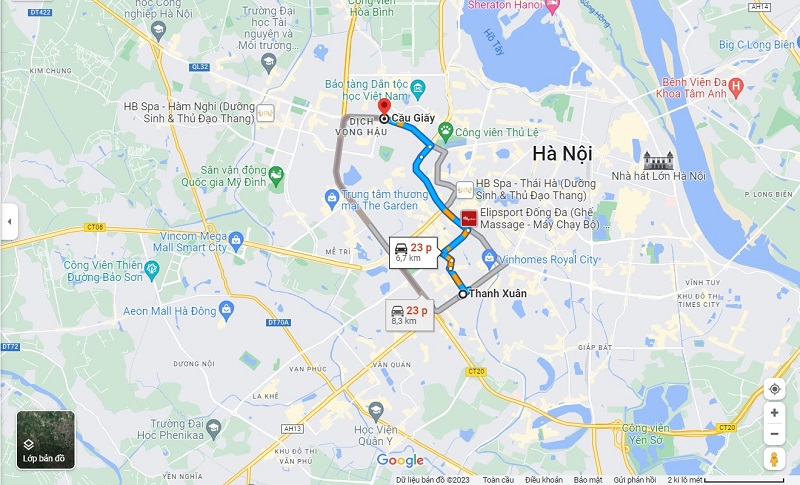
For instance: The distance between employee A’s home and his company is about 20km. The route employee A takes to work frequently experiences traffic congestion, making the commute more difficult. Therefore, every day, he has to spend 1 to 2 hours commuting to the workplace. As a result, employee A’s personal time is significantly reduced, and the long commute also affects his health and morale.
Candidate’s Long-term Commitment
A crucial recruitment criterion for any business is the candidate’s potential for long-term commitment. A successful hire is one who not only meets the job requirements but also stays with the company long-term. Otherwise, the business will incur significant costs and time in training and searching for new employees due to low retention.
Therefore, from the moment they receive a resume, recruiters should carefully examine the candidate’s tenure at previous companies. If a candidate has job-hopped frequently within a year, their potential for long-term commitment is likely very low.

Additionally, during the interview, recruiters should remember to further explore the candidate’s potential with questions like:
- What are your future goals?
- Why did you choose our company for this… position?
- What are your expectations for the work environment or the job itself when working at our company?
- Why did you leave your previous company?
5. Common mistakes when evaluating based on recruitment criteria
Even with a clear set of criteria, many businesses still make mistakes during the candidate evaluation process. The causes often stem from emotional factors, personal biases, or a non-standardized evaluation process. Recognizing these mistakes early helps recruiters improve accuracy and fairness in every hiring decision. Below are 4 common mistakes that most businesses have made.
Subjective, non-standardized evaluation
Many recruiters are influenced by first impressions—the candidate’s attire, voice, or temporary attitude. Not using a standard scoring scale or evaluation form makes the results subjective and difficult to compare between candidates.
Overemphasizing degrees, overlooking soft skills
Degrees only reflect a part of academic ability and do not guarantee actual work performance. Many businesses are now shifting towards “Behavioral Competency” assessments to measure adaptability, communication, and problem-solving skills.
Failing to distinguish between “culture fit” and “like me”
“Culture fit” means the candidate shares the company’s values and vision, while “like me” is an evaluation based on personal feelings or similarities. Confusing these two concepts can easily cause an organization to miss out on bright candidates simply because of stylistic differences.
Not updating criteria according to market needs and trends
The labor market changes quickly; criteria from 3 years ago may already be outdated. Recruitment criteria need to be reviewed periodically to add new elements such as digital skills, agile thinking, or the ability to work across multiple platforms.
In summary, an effective set of recruitment criteria not only needs to be comprehensive and specific but must also be applied flexibly and continuously updated. Recruiters need to combine competency assessment with practical experience and avoid falling into the trap of bias to select the “best fit” rather than just the “most perfect” candidate.
Thus, this article has compiled over 12+ highly detailed recruitment criteria. Apply them to your recruitment activities now to find the brightest and most suitable candidates. We wish you success!