


 11/05/2026
  994 views
Shopee is one of the leading e-commerce (e-commerce) platforms in Vietnam and Southeast Asia. In recent years, Shopee has continuously grown and achieved many significant milestones, becoming the most valuable technology company in Southeast Asia. Shopee’s success stems from many factors, with its business strategy being the most influential. In this article, let’s join 1Office to explore Shopee’s business strategy to learn and apply it effectively!
Mục lục
- 1. Overview of the Shopee e-commerce platform
- 2. SWOT Analysis of Shopee
- 3. Overview of Shopee’s Business Strategy
- 4. Detailed analysis of Shopee’s business strategy
- 5. What is Shopee’s successful business strategy?
- 6. Conclusion: Lessons from Shopee’s Business Strategy
- 7. What are the challenges in Shopee’s business strategy?
- 8. Frequently Asked Questions
1. Overview of the Shopee e-commerce platform
Shopee was founded in 2015 by Forrest Li’s SEA Group, headquartered in Singapore. It is an online e-commerce platform operating on a C2C (Customer to Customer) and B2C (Business to Consumer) model, allowing users to sell and shop online.
The platform provides users with an easy, secure, and fast online shopping experience through a robust payment and operational support system. Currently, Shopee is present in 7 countries, including Indonesia, Malaysia, the Philippines, Singapore, Thailand, Vietnam, and Taiwan. With many milestones marking its development in 2023, such as:
- Over 1.6 billion downloads and 1.5 billion monthly active users.
- The most popular e-commerce platform in Vietnam with over 100 million monthly users.
- Became one of the most valuable technology companies in Southeast Asia with a market capitalization of over $100 billion.
In Vietnam, Shopee is currently the “leader” of the e-commerce industry, with exponential growth and capturing up to 73% of the domestic e-commerce market share in the first half of 2023. The platform features over 7,000 leading brands and distributors, offering a diverse range of products and services from fashion and electronics to stationery and home appliances at competitive prices.
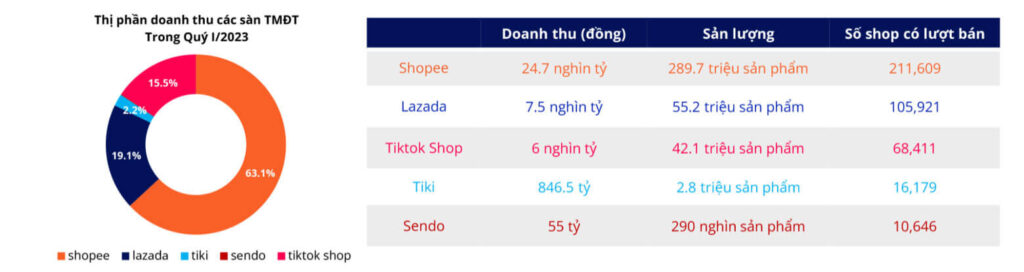
Some of the brand’s key reports in 2023 include:
- Monthly Active Users (MAU): 100 million
- Annual Revenue (GMV): 91 trillion VND
- Daily Active User (DAU) engagement rate: 50%
Shopee is a leading e-commerce platform in Vietnam. The platform offers a wide range of products and services with many shopping features and attractive promotional programs. Shopee has contributed to promoting the development of the e-commerce industry in Vietnam and has given Vietnamese consumers more shopping options.
2. SWOT Analysis of Shopee
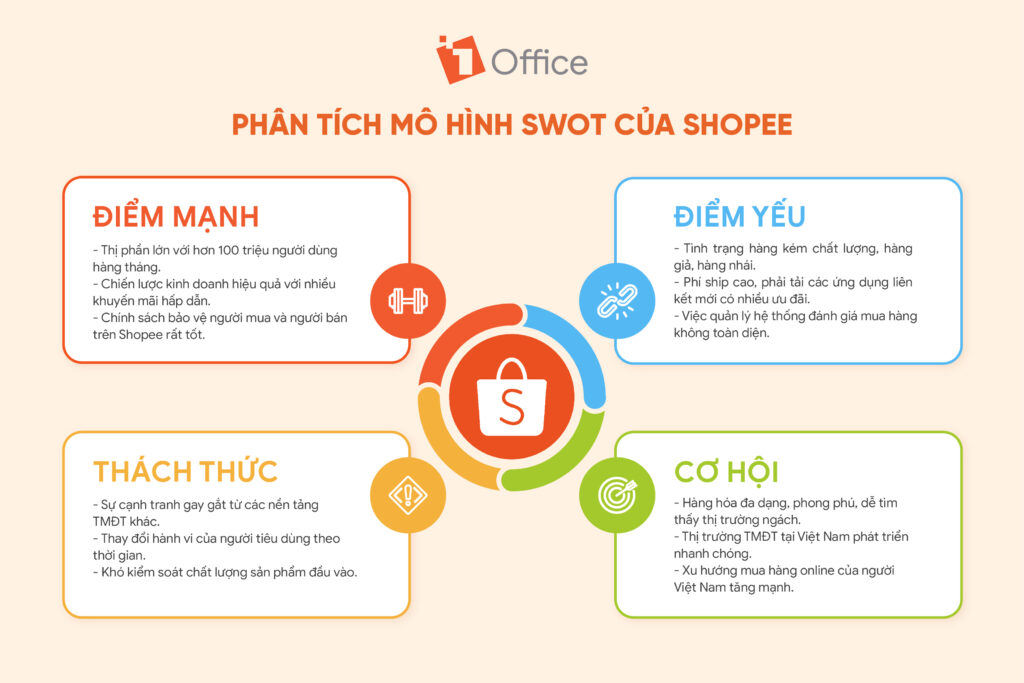
Strengths
- Strong financial resources: Shopee is backed by the SEA Group, one of the leading technology companies in Southeast Asia. This provides Shopee with abundant financial resources to invest in developing and promoting the platform.
- Effective business strategy: The platform focuses on users, sellers, and marketing. By building close partnerships with sellers, it offers a diverse range of products and services at competitive prices. Shopee also implements creative and effective marketing campaigns to attract users and increase brand awareness.
- Large market share: Shopee is the leading e-commerce platform in Vietnam with a market share of about 73%, giving it a significant competitive advantage over other rivals.
Weaknesses
- Incomplete buyer protection policy: For returns, the buyer must bear the shipping fee, and the buyer protection policy is not robust, leading to instances of fraud on the platform.
- Prevalence of counterfeit and fake goods: Shopee still has issues with low-quality products, goods of unknown origin, and items not matching their descriptions. This affects the platform’s reputation and makes users wary of shopping on Shopee.
- Poorly managed review system: Sellers can easily delete negative comments or reviews from users or can hire services to post positive reviews.
Opportunities
- Vietnam’s e-commerce market is growing rapidly: According to a report by Statista, Vietnam’s e-commerce market is expected to reach $134 billion by 2025.
- Technological advancements: The development of technology will help Shopee improve its features and services, providing the best shopping experience for users.
- Vietnamese consumer trends: Vietnamese people are increasingly inclined to shop online, especially for low-cost products and fast-moving consumer goods.
Threats
- Intense competition from other e-commerce platforms: Other e-commerce platforms like Lazada and Tiki are also striving to gain market share in Vietnam.
- Changes in consumer behavior: Consumer shopping habits can change over time, requiring Shopee to continuously innovate to meet user needs.
- The emergence of new e-commerce platforms: New e-commerce platforms with emerging features and services could threaten Shopee’s position.
3. Overview of Shopee’s Business Strategy

3.1. Shopee’s Business Strategy Objectives
Shopee’s core objective is to ensure convenience, reliability, and a good fit between online buyers and sellers. They aim to create a comprehensive e-commerce platform to connect millions of buyers and sellers across the region.
3.2. Shopee’s Business Strategy Model
Shopee applies C2C (Customer to Customer) and B2C (Business to Customer) e-commerce models.
- Shopee’s C2C business model allows anyone who wants to buy or sell products to become a buyer and a seller. This brings a wide variety of goods to the platform, making it easier for buyers to search, compare, and choose products/services.
- Shopee’s B2C business model operates in the form of Shopee Mall, offering genuine product lines from famous brands. This model has helped Shopee enhance its credibility and reputation, giving buyers more peace of mind and bridging the gap in online shopping.
3.3. Shopee’s Development Direction
Shopee has been expanding its operations into many countries in the Southeast Asian region. The brand continuously invests in research and development to improve the shopping experience and better serve customers. Its clear development direction includes:
- Expanding its market operations to other countries in the Southeast Asian region.
- Developing new products and services to meet all consumer needs.
- Strengthening partnerships to provide users with the best shopping experience.
Looking at the global market, Amazon’s business model is a prime example of how an e-commerce platform expands into a massive ecosystem of retail, logistics, and technology services. Analyzing Amazon’s business strategy helps businesses clearly see the difference between the approach of a global ‘giant’ and how Shopee is developing in the Southeast Asian market.
3.4. Shopee’s Business Strategy Activities
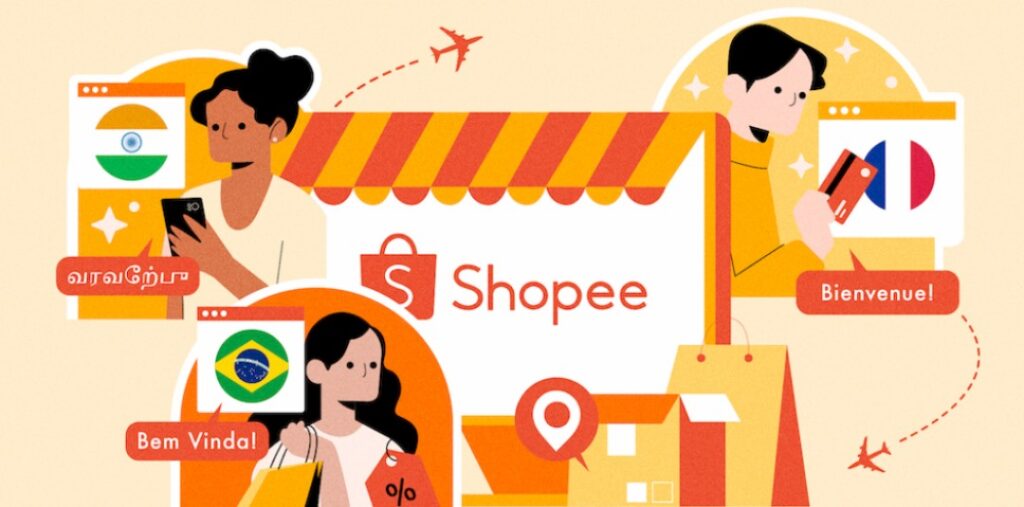
1. Continuous research and development:
Shopee understands that to maintain competitiveness and drive growth, they must constantly research and develop new features and services. Shopee was the first e-commerce platform in Vietnam to have both a Mobile App and an Online Website version. It is also a pioneering platform in promoting mobile commerce (M-Commerce & Mobile Commerce).
Additionally, Shopee has used an affiliate marketing strategy – Affiliate Marketing – to increase reach and capture the market. This includes collaborating with affiliate partners, e-commerce blogs, and product review websites to introduce products/services to a large number of potential users.
2. Application of modern technology:
Shopee has invested heavily in technology to build a convenient and reliable online shopping platform. They use technology to optimize the user experience on their mobile app and website, while also improving the delivery and payment processes. For example, the platform recently launched Apple Pay and SPayLater payment methods, which have shown outstanding effectiveness with the total number of orders paid via e-wallets increasing fourfold.
3. Human resource management to enhance productivity:
Human resources are a crucial element in Shopee’s business strategy. Shopee always focuses on recruiting and training employees with the skills and knowledge to serve their development goals. Enhancing productivity through time management, ensuring optimal work performance, and creating a positive work environment are key factors.
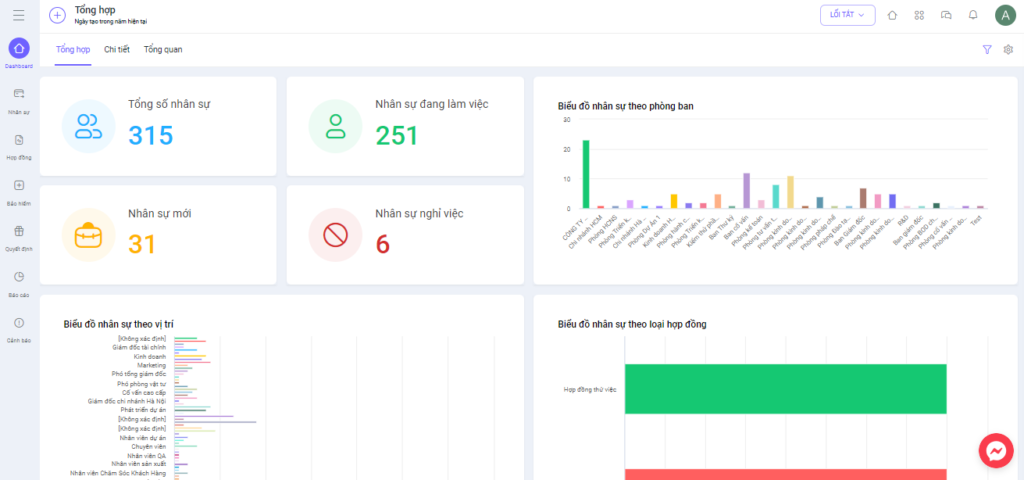
Explore the comprehensive 1Office HRM human resource management software, covering everything from employee profile information, contracts, leave requests, timekeeping, to payroll, all on a single platform.
4. Focus on managing Marketing campaigns:
Shopee has created breakthrough marketing campaigns and compelling advertisements to build strong brand recognition. They use online and television advertising channels, as well as collaborations with famous celebrities and sporting events, to attract users’ attention and create exciting shopping opportunities.
| Product | Price |
| Shopee offers a wide range of diverse products and services, including fashion, electronics, home appliances, etc. The platform also provides exclusive products and services, such as Shopee Mall and Shopee Freeship Xtra. | Shopee offers competitive prices for users. The platform also frequently runs promotional programs to help users shop at more affordable prices. |
| Place | Promotion |
| Shopee is available in many countries and territories in the Southeast Asia region. The platform also partners with many shipping providers to offer users fast and convenient delivery services, such as Shopee Express, J&T Express, Vietnam Post, etc. | Shopee implements creative and effective marketing campaigns to attract users and increase brand awareness by frequently using KOLs, hosting major sale events like 10/10, 11/11, 12/12, etc., and offering discount codes and free shipping. |
Analysis of Shopee’s 4P model
4. Detailed analysis of Shopee’s business strategy
4.1. Shopee’s Vision and Mission
Vision: “Connecting users and businesses across Southeast Asia through e-commerce, making it easier than ever for everyone to shop and sell online.”
Mission: “Creating a safe, reliable, and convenient online shopping experience for everyone.”
4.2. Shopee’s Business Philosophy
Shopee has a very clear business philosophy, specifically: “Shopee was created with the desire to provide users with a simple, easy, and safe online shopping experience. The platform provides a robust payment and operational support system to ensure the best possible user shopping experience.”
4.3. Shopee’s Target Customers
Shopee’s target customer base is very diverse, including online buyers and sellers, and businesses ranging from small to large. The brand also targets young, dynamic, and tech-savvy consumers in both urban and rural areas. Currently, Shopee is focusing on a multi-platform approach to best serve each customer segment.
4.4. Shopee’s Competitive Advantages
Below are 6 competitive advantages of the Shopee brand:
- Extensive network: Shopee is present in many countries and territories in the Southeast Asia region, helping the platform reach more users.
- Diverse products and services: Offers a wide range of products and services including fashion, electronics, home appliances, etc., along with exclusive products/services like Shopee Mall and Shopee Freeship Xtra.
- Competitive pricing: The platform offers competitive prices to users by collaborating with suppliers and implementing promotional programs.
- Effective marketing programs: Shopee implements creative and effective marketing campaigns to attract users and increase brand awareness.
- Powerful mobile application: By building a powerful and convenient mobile application, it meets the needs of mobile users in this region.
- Good shopping experience: Shopee continuously improves and upgrades features and utilities to provide users with the best shopping experience.
4.5. Shopee’s Business Model Canvas
The Business Model Canvas helps describe the overall picture of how Shopee creates, delivers, and captures value in the competitive e-commerce market. For Shopee, the Canvas is an “operational map” that shows the combination of technology, logistics, marketing strategy, and partner ecosystem, consistent with Shopee’s business goals. Analyzing this model helps businesses understand why Shopee can grow rapidly, expand its market share, and maintain its leading position in Southeast Asia.
| Canvas Block | Summary |
|---|---|
| 1. Customer Segments | – Individual buyers (especially Gen Z, Millennials).
– Individual sellers, small online shops. – Small and medium-sized enterprises (SMEs). – Major brands on Shopee Mall. – Service partners: logistics, payment. |
| 2. Value Propositions | – Convenient shopping, competitive prices.
– Promotions, vouchers, free shipping. – Wide variety of products. – Easy-to-use app, optimized for mobile. – Buyer protection, clear return policy. |
| 3. Channels | – Shopee app & website.
– Social media, online advertising. – Push notifications, email marketing. – Logistics ecosystem and shipping carriers. |
| 4. Customer Relationships | – 24/7 multi-channel customer support.
– Product rating and review system. – Buyer protection policy. – Membership program & personalized offers. |
| 5. Key Resources | – Technology & data infrastructure.
– Shopee app + AI/ML product recommendation system. – Logistics network. – Operations, marketing, and technical teams. – Ecosystem of partners & sellers. |
| 6. Key Activities | – Technology development, app optimization.
– Marketing, promotions, creating major sales campaigns. – Marketplace management: seller and product control. – Order fulfillment, delivery. – Customer care. |
| 7. Key Partnerships | – Shipping carriers (GHN, GHTK, Shopee Express…).
– Payment partners: e-wallets, banks, COD. – Individual & business sellers. – Advertising service providers, KOLs/KOCs. |
| 8. Cost Structure | – Technology operating costs.
– Marketing and promotion costs. – Logistics costs. – Personnel & marketplace operation costs. – Partner & payment maintenance costs. |
| 9. Revenue Streams | – Commission fees from sellers.
– Service fees: shipping, COD, payment. – Revenue from Shopee Ads. – Value-added service packages for sellers. |
Customer Segments
Shopee demonstrates outstanding capabilities in identifying and analyzing its target customer groups. The platform prioritizes focusing on young users, especially Millennials and Gen Z, who are familiar with technology, prefer online shopping, and are always on the lookout for good deals.
The main segments Shopee targets include:
-
By age: Primarily 18–35 years old
-
By region: Prominently in large cities and urban areas
-
By need: Users who want convenience, competitive prices, and a wide selection
-
By product category: Focusing on fashion, electronics, cosmetics, and household products
Core Values
The values Shopee delivers are built on a harmonious combination of technology and creative marketing activities.
The components of its core values:
-
Optimal online shopping experience
-
Continuous system of deals and promotional campaigns
-
Flexible shipping policies, many free shipping programs
-
Commitment to protecting buyer rights
-
Integrated entertainment features like livestreams and reward-hunting games
In the context of fierce e-commerce competition, Shopee has succeeded in developing a core value that goes beyond the concept of a “trading platform,” becoming a comprehensive shopping and entertainment ecosystem. Shopee continuously researches consumer behavior to improve its interface and features, aiming to provide an intuitive, user-friendly experience.
Shopee’s marketing campaigns are not just about discounts; they are also organized as major media events, creating a strong viral effect on social media. Incorporating entertainment elements helps Shopee maintain high engagement levels and effectively retain users.
Distribution Channels
Shopee builds its distribution system as a cohesive multi-channel network, allowing users to access the platform from various touchpoints.
The main distribution channels include:
-
Mobile application
-
Website
-
Social media channels
-
Online advertising
-
Logistics partner system
The mobile application plays a central role, serving not only as a shopping tool but also as a digital entertainment environment. Smart recommendation algorithms help connect buyers and sellers more effectively. Shopee’s multi-channel strategy on Facebook, TikTok, etc., creates a dynamic user community, helping to boost interaction and purchase conversions.
Customer Relationships
Shopee manages customer relationships with a philosophy of “putting the user experience at the center”.
The main forms of customer care:
-
24/7 support
-
Multi-channel inquiry system
-
Offers based on membership level
-
Seller rating and feedback mechanism
-
Direct interaction via chat and livestream
Shopee’s customer service system is operated based on both people and technology. By applying AI, chatbots can quickly handle common requests, helping to optimize response times and increase user satisfaction.
Revenue Streams
Shopee has a diverse revenue model, not relying on a single source of income.
The main revenue sources are:
-
Transaction commissions
-
Seller service fees
-
Advertising revenue
-
Financial ecosystem – Shopee Pay
-
Value-added services
Shopee Pay is not just a payment method; it also opens up a revenue stream from digital financial services. This multi-dimensional revenue system allows Shopee to be flexible in its expansion strategy, maximize net profit, and maintain its competitive edge.
Key Resources
Shopee places people and technology at the center of its development strategy.
Key resources include:
-
Team of technology engineers
-
Modern IT infrastructure
-
Strong capital from SEA Group
-
Extensive partnerships
-
Large-scale user data
Data and technology enable Shopee to analyze market trends, thereby optimizing recommendation algorithms and enhancing the experience for both buyers and sellers.
Key Activities
Shopee’s core activities are aimed at continuously improving the platform and expanding its ecosystem.
Key activities include:
-
Developing and optimizing the technology platform
-
Attracting and supporting sellers
-
Researching new products and features
-
Marketing and advertising activities
-
Comprehensive user experience management
Every new feature is tested and adjusted by Shopee based on real feedback, helping to improve quality and maintain a competitive advantage.
Partnerships
Shopee builds its partnership system as a mutually supportive network to create comprehensive value for users.
Key partner groups include:
-
Shipping and logistics companies
-
Banks and payment units
-
Advertising partners
-
Brands and manufacturers
-
Technology companies
This collaboration helps Shopee optimize costs, expand services, and ensure a consistent quality experience for users.
Cost Structure
Shopee manages costs with the goal of optimization while still ensuring resources for long-term growth.
Major expenses include:
-
Technology investment
-
Marketing – advertising
-
Personnel
-
Logistics and operations
-
Research and development
Instead of making drastic cuts, Shopee focuses on optimizing the efficiency of each expense, especially technology and marketing costs – two strategic factors that determine the platform’s position in the e-commerce market.
5. What is Shopee’s successful business strategy?
This platform has achieved resounding success over the years by implementing effective business strategies. Here are some of Shopee’s successful business strategies:
5.1. Internationalization Business Development Strategy
Shopee has implemented an internationalization business development strategy since its inception. The platform is present in 7 countries and territories in the Southeast Asian region, including Vietnam, Indonesia, Malaysia, the Philippines, Thailand, Singapore, and Taiwan. This strategy helps Shopee reach more users and expand its market share.
5.2. Market Penetration Business Strategy
Shopee is very smart in researching its target market. At the time, Southeast Asia had a high rate of mobile device usage. While competitors were building website platforms, Shopee pioneered the development of a mobile platform to penetrate the market and was very successful. Shopee was also a pioneer in developing diverse entertainment utilities within a shopping app. Typical examples include features like online games, livestreaming, and online chat, which help consumers connect more easily with sellers.
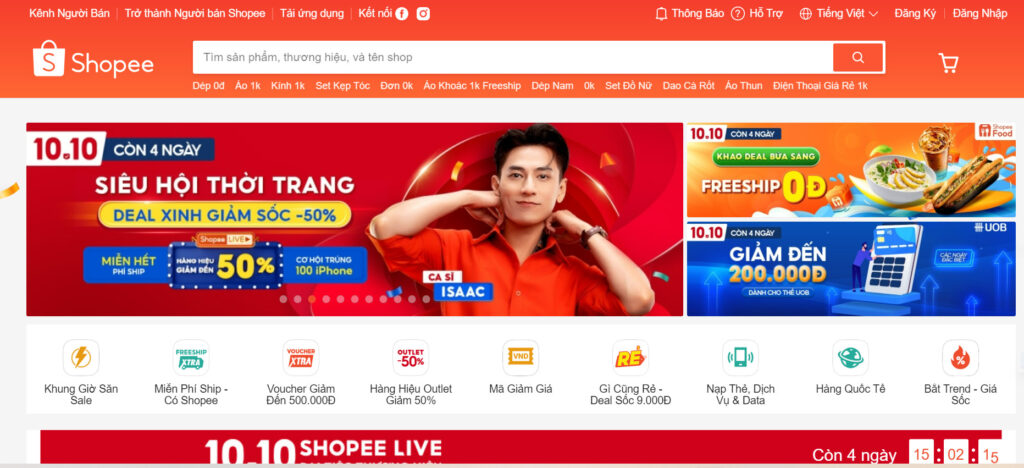
As the trend of online shopping continues to grow, electronic payment methods are becoming increasingly popular. Shopee has actively promoted this trend within its application. Many payment methods have been introduced to the market, such as e-wallets like Momo, Airpay, VNPT Pay, Apple Pay, etc.
5.3. Unique Selling Point Strategy – Unbeatably Cheap
With the message “Unbeatably Cheap“, Shopee resonated with the majority of consumers in Southeast Asia – a developing region. Shopee offers competitive prices to users by partnering with suppliers and implementing promotional programs. This strategy helps Shopee attract many users, especially young consumers.
5.4 Strategy to Enhance User Experience
Shopee continuously improves and upgrades its features and utilities to provide users with the best shopping experience. The platform offers features such as secure payments, fast delivery, buyer protection policies, and more. This strategy helps Shopee retain users and increase customer loyalty.
5.5. Strategy of Using the C2C Model to Drive B2C
Shopee started with the C2C model as a foundation, which helped the brand rapidly expand its market share. This model allows anyone to buy or sell products in any quantity. Subsequently, Shopee continued to develop its B2C model by partnering with businesses and offering genuine products from famous brands. This strategy helps Shopee meet the diverse needs of users, building trust and credibility.
5.6. Appealing and Modern Marketing Strategy
Shopee implements creative and effective marketing campaigns to attract users and increase brand recognition. Shopee spared no expense in collaborating with famous KOLs and Influencers of international stature like Cristiano Ronaldo, Blackpink, etc. In Vietnam, these include Son Tung MTP, Bao Anh, Bui Tien Dung, and more. Organizing many events and major promotional programs like Shopee 9.9, Shopee 10.10, Shopee 11.11, etc., has helped Shopee increase its influence and attract many users.
6. Conclusion: Lessons from Shopee’s Business Strategy
Shopee’s business strategy is a source of inspiration and valuable lessons for other businesses. Here are some important lessons that businesses can learn from Shopee:
- Focus on User Experience: Shopee has proven that focusing on providing a convenient and reliable online shopping experience for users is crucial. Businesses should prioritize putting customers first and continuously improving their experience.
- Continuous Innovation: Shopee constantly researches and develops to adapt to market changes. Businesses should also maintain a spirit of creativity and adaptability to survive and grow.
- Thorough Market and Competitor Research: To get an overview and devise timely competitive strategies, businesses must research the market and their competitors. Effectively leveraging advantages and easily identifying customer needs and wants will help in quickly formulating the most appropriate business strategies.
- Creative and Unique Marketing Strategy: Shopee often organizes unique marketing and advertising campaigns to create strong brand recognition. Businesses should find ways to create excitement and make an impression in their marketing.
Not just Shopee, many large domestic enterprises are also implementing strong digital transformation strategies to expand their ecosystems. A prime example is the Viettel business strategy, with a vision for comprehensive digital business development, from telecommunications infrastructure and technology to data services. The way Viettel builds its multi-layered business model also offers many practical lessons for Vietnamese businesses.
7. What are the challenges in Shopee’s business strategy?
Despite leading the e-commerce market, Shopee still faces many challenges in its growth strategy. The first issue is the enormous operational and marketing costs. Promotional programs like 9.9, 11.11, 12.12, and the “free shipping” policy help Shopee achieve explosive user growth, but they weigh heavily on profitability, causing the company to continuously record huge losses.
Another difficulty is the fierce competition from rivals. Lazada has the advantage of financial backing from Alibaba, Tiki focuses on fast delivery services in Vietnam, and TikTok Shop is creating a new trend with shoppertainment. Shopee is forced to innovate continuously to retain users, or it could easily lose market share.
Additionally, logistics and legal issues are also major hurdles. The shipping system must handle a huge volume of orders, which can easily lead to late deliveries and high return rates. At the same time, regulations on e-commerce, taxes, and data security are becoming increasingly strict, requiring Shopee to invest heavily to comply and maintain its reputation.
7.1. The Financial and Profitability Problem
Shopee applies a “cash-burning” strategy to expand its market share, with a series of subsidy policies, free shipping, and continuous mega sales. This approach helped Shopee quickly become the regional leader in user numbers. However, the price to pay is enormous operational and marketing costs, causing the company to continuously lose billions of dollars annually. The biggest challenge is transitioning from rapid growth to sustainable profitability; otherwise, it will remain dependent on foreign capital.
7.2. Increasingly Fierce Competition
The e-commerce market is no longer just a game between Shopee and Lazada. Lazada is backed by Alibaba, Tiki maintains trust through fast and quality delivery services, and TikTok Shop has emerged with the social commerce trend, strongly attracting the youth. The emergence of many rivals forces Shopee to innovate continuously to retain customers. Fierce competitive pressure also means that marketing and market share retention costs are continuously increasing.
7.3. Logistics and Operational Challenges
Shopee processes millions of orders daily, with surges during mega sales, often overloading its logistics system. This leads to delayed deliveries and a high rate of returns, diminishing the customer experience. Additionally, Shopee still relies on third-party logistics partners, as its own warehousing infrastructure is not yet robust enough to reduce costs and control quality. This is an inherent weakness that Shopee must overcome for sustainable growth.
7.4. Stricter Legal and Regulatory Management
Southeast Asian countries are increasingly tightening e-commerce regulations, including taxes, cross-border goods management, and personal data security. Operating across multiple countries, Shopee must comply with a variety of different regulations, resulting in significant legal and administrative costs. A minor oversight in one market could affect its reputation throughout the entire region. This is an underlying yet strategic challenge that requires Shopee to continuously invest in its compliance systems.
From Shopee’s story, we can see the power of a cohesive ecosystem and a consistent user experience strategy. This is also the direction many large tech corporations, such as Apple, have taken. Referring to Apple’s business strategy will help businesses better understand how to build a sustainable competitive advantage based on experience and long-term value
7.5. Customer Trust and Experience
Shopee has faced numerous complaints about counterfeit and low-quality goods on its platform. Despite control efforts, the massive volume of transactions makes absolute oversight impossible. Once customers lose trust, they can easily switch to competitors, causing long-term damage. Additionally, the user experience is affected by a heavy app, intrusive notifications, and a customer service that is not always responsive.
7.6. Revenue Diversification Is Not Easy
To reduce its dependence on e-commerce, Shopee has expanded into ShopeePay, ShopeeFood, and on-platform advertising. However, each of these sectors already has established giants with significant market share: MoMo and ZaloPay in e-wallets, GrabFood and Baemin in food delivery, and Google and Facebook in advertising. Breaking into these markets requires Shopee to continue making substantial investments, while its core business is not yet profitable. The difficult challenge is to turn these ancillary segments into sustainable sources of profit rather than cost burdens.
7.7. HR and Multinational Management Challenges
Shopee operates in many Southeast Asian countries, where each market has a different consumer culture and legal framework. Maintaining a synchronized yet flexible strategy for each country is a major management challenge. Furthermore, in 2022, Shopee had to implement mass layoffs to optimize costs, which affected its brand image and internal morale. Managing a regional workforce—while saving costs and maintaining team engagement—is a significant pressure for Shopee.
8. Frequently Asked Questions
—————————————-
The Shopee brand is a prime example of a successful business that has applied effective business strategies. The lessons from Shopee’s business strategy can help other businesses achieve growth and success in the increasingly competitive e-commerce environment. We wish your business success
















