11/05/2026
  368 views
What is B2B is a definition many people are looking for. B2B (Business to Business) is a form of commercial transaction between businesses, not directly with individual consumers. In this article, 1Office will help you better understand what B2B means, its key features, common B2B models, and the development trends of B2B business in the digital age.
Mục lục
- I. Overview of the B2B Model: What is it? Features of the B2B Model
- II. What is the Buyer’s Journey in the B2B Marketing Model?
- III. Steps to Implement an Effective B2B Marketing Campaign for Your Business
- IV. What are the 7 most prominent B2B Marketing trends for 2025?
- IV. Building an Effective B2B Marketing Strategy with 1Office CRM
I. Overview of the B2B Model: What is it? Features of the B2B Model
1. What is the concept of B2B?
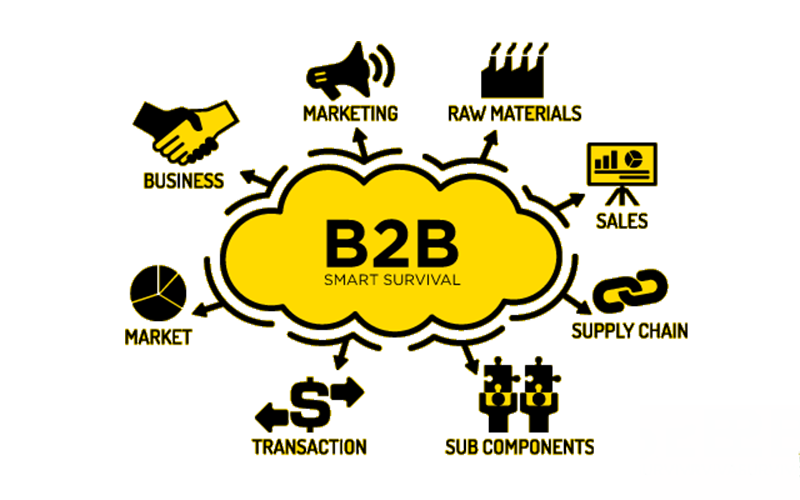
B2B (Business to Business) is a business model where transactions occur between two businesses, rather than between a business and an individual consumer. This model is common in sectors such as manufacturing, distribution, wholesale, and service provision.
Example of a B2B model: One of the real-world examples of the B2B model is e-commerce platforms like Shopee, Lazada, etc., in the Vietnamese market, or Alibaba, Tmall, Amazon, etc., in the international market.
2. Features of the B2B Model
Since it is a business model between companies, the features of the B2B sales model will include the following factors:
- Smaller customer base: Compared to the other two business models, B2C and C2C, the customer base for B2B is smaller because it only targets a specific set of businesses with a need for certain products or services.
- Larger order sizes, long-term contracts: Because transactions are conducted between businesses, orders will have a higher value and long-term validity.
Some other features of the B2B model:
- Easy to identify potential customer segments.
- Multiple people are involved in the purchasing decision.
- Professional purchasing process, based on information and rational decisions.
- Focus on cost.
- Cost savings.
3. What is the B2B Marketing Model?
- Definition of the B2B Marketing model:
B2B marketing is any marketing strategy or content used by one business to target and sell to another business. For example, companies that sell services, products, or SaaS to other companies or organizations often use B2B marketing.
- Which businesses should use the B2B business model
Any company that sells to other companies. B2B can take many forms: software as a service (SaaS) subscriptions, security solutions, tools, accessories, office supplies, etc.
B2B marketing campaigns target any individual who has control or influence over a company’s purchasing decisions, including employees tasked with finding support tools for the business or the C-suite.
Reference: Case study: 6 successful Marketing campaigns in Vietnam, latest 2025
II. What is the Buyer’s Journey in the B2B Marketing Model?
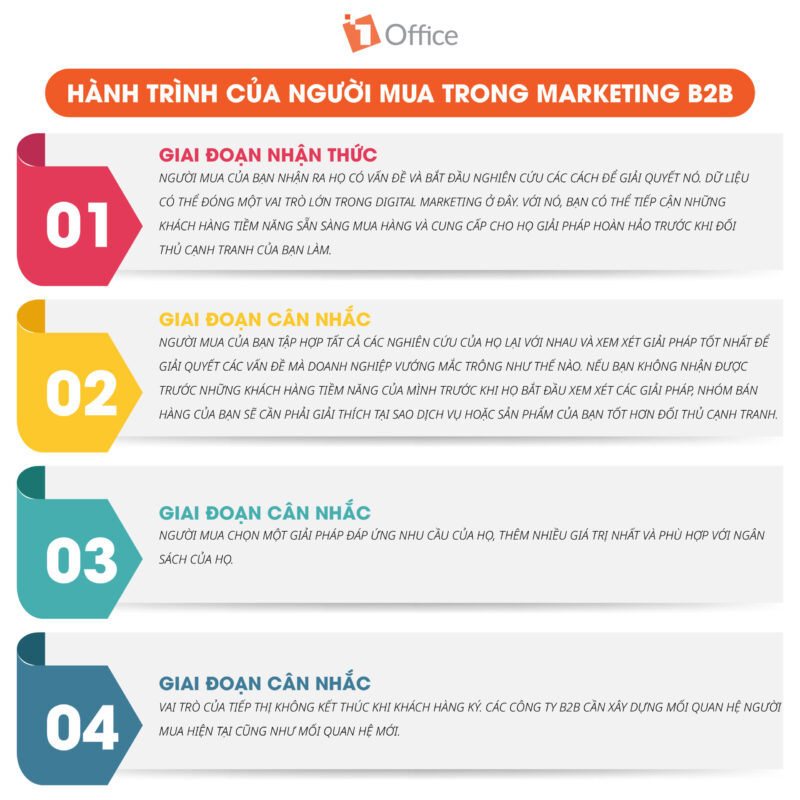
The B2B buyer’s journey goes through the stages shown in the image below:
III. Steps to Implement an Effective B2B Marketing Campaign for Your Business
1. Set Goals for the Business
To build an effective marketing strategy, a business needs to clearly define its business goals. Some factors that represent the goals a business aims for include:
- Long-term goals: The desires and plans that the leadership wants the organization to achieve over a long period, typically 5-10 years. Some common goals include: Economic goals, Social goals, etc.
- Vision: The ideal future, image, and standards that the business aims for and wishes to achieve.
- Mission: The organization’s reason for existence, serving as the driving force for the business’s development process.
In practice, when determining B2B business objectives, managers can use several models such as:
- SWOT analysis
- SMART model
2. Define the market and specific customer segments
This is a particularly important step for businesses operating under the B2B model. While B2C goods often have a broader and more general target audience, products and services in B2B business activities are typically marketed to a distinct group of customers with specific challenges and needs.
The more narrowly your business can define this audience, the more directly you can speak to them with the right message, and the marketing campaigns you build will be more effective.
To identify the customer segment that best fits the product your business provides, the company can research the following factors:
- Demographic research
- Interviewing people in the industry
- Analyzing your best customers
The factors above will be used to compile a set of attributes that you can match with potential customers to qualify leads.
| Read more: What is Market Segmentation? 5 Steps to Segment Your Market Most Accurately |
3. Identify channels and tactics for the marketing process
Once your business has collected a specific, accurate set of information about your target audience, the next step is to determine how you will approach them. The knowledge you gained in the previous step will help guide this one. You will want to answer the following questions about your ideal and potential customers:
- Where do they spend their time online?
- What questions are they asking search engines? What are the customer insights for B2B clients?
- Which marketing channels are suitable for the company’s product?
- What differentiates you from your competitors?
4. Create content and implement marketing campaigns
The key components of effective campaigns include a creative approach, useful insights, sophisticated targeting, and a strong call to action. For a business’s B2B marketing campaign, various forms of content can be created, such as:
- Blog:
As one of the earliest forms of content, regularly updated blogs provide organic visibility and drive traffic to your website. Your blog can contain any type of content and various formats.
- Social media:
Social media allows you to reach and engage potential customers where they are active. B2B buyers increasingly use these channels to research potential suppliers to make purchasing decisions. Content delivered via social media can be organic or paid to build brand awareness, collect information from customers interested in the service, etc.
- Ebook:
Standalone content containing valuable information, downloadable ebook materials are gated, requiring users to provide contact information or perform another action to access them. They are often used as a lead generation tool.
- Email:
Although its effectiveness is somewhat declining in the age of spam filters and inbox overload, email is not disappearing anytime soon. Research has shown that 62% of consumers have ranked email among their top preferred communication channels with small businesses.
- Video:
This type of content can be applied in several of the categories previously mentioned here (blogs, social media, email), and it is currently quite popular due to its brevity, which helps consumers easily grasp information, etc.
- Case study:
Establishing and affirming credibility is mandatory for the B2B business model in general and B2B marketing strategy in particular. Typically, case studies can be presented through blogs, short social media posts, or videos. The case studies a business creates will help potential customers understand the company’s strengths in specific business areas.
5. Measure and improve
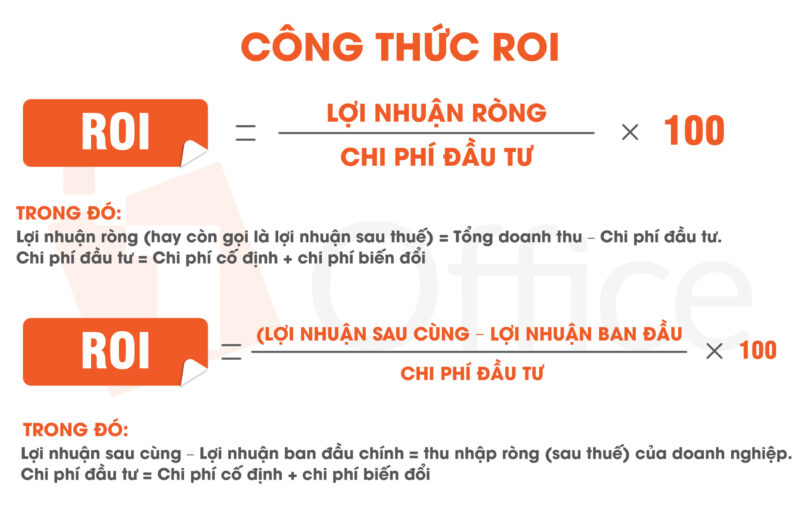
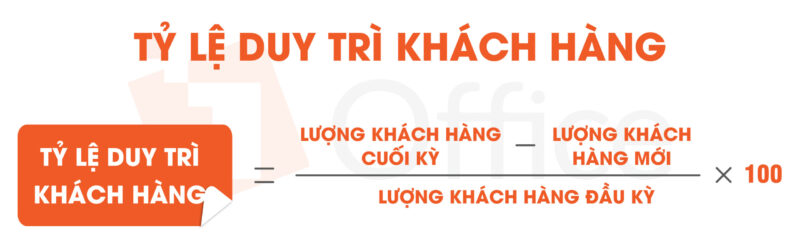
Refer to metrics to identify the channels, topics, and media that resonate most and are most effective for the organization’s marketing campaign. To determine the factors for measuring the effectiveness of a marketing campaign, your business can refer to some of the following metrics:
- ROI metric
- Customer retention rate
IV. What are the 7 most prominent B2B Marketing trends for 2025?
Compared to B2C, B2B marketing is more difficult because there are more decision-makers and a certain level of professionalism must be maintained. With the continuous expansion of B2B businesses, having a unique brand voice is more important than ever.
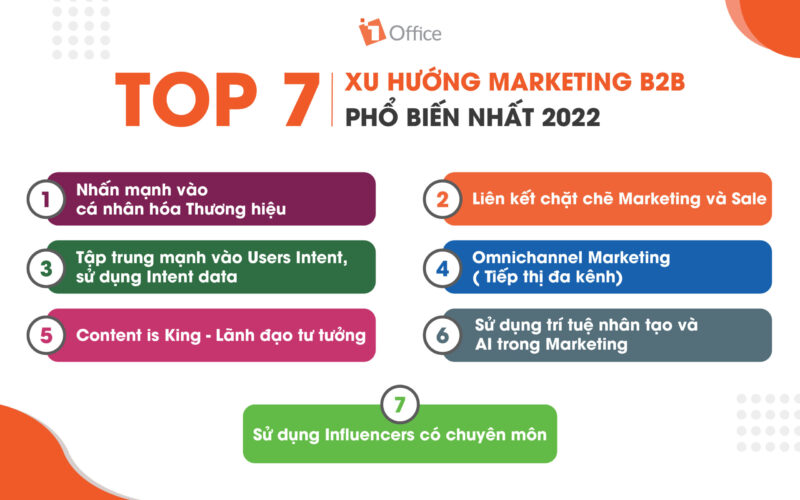
1. Emphasize Brand Personalization
Brand personalization is one of the key B2B marketing trends for 2025. It allows your company to stand out from the competition and have a distinct brand positioning.
When customizing your brand promotion campaigns, it’s essential to keep the voice of your target audience in mind. You will have a better chance of capturing the attention of your target customer base and connecting with them on a deeper level if your organization reflects their style and way of speaking.
Brand personalization is a key driver of long-term growth and profitability, significantly outperforming short-term marketing activities. It’s important to understand the brand characteristics of your target market if you want to reach your audience easily. During the process of building your brand image, clearly identify what your partners need and what your organization must provide for them.
2. What is Marketing and Sales Alignment in B2B?
Research by Marketo and ReachForce shows that sales teams often ignore 80% of the leads generated by marketing. A report by HubSpot indicated that misaligned sales and marketing costs businesses about $1 trillion annually.
Additionally, nearly one-third of sales and marketing teams believe their teams do not have a good relationship, and only 2% of these teams consider their working relationship to be excellent. Therefore, it’s no surprise that businesses should strengthen the relationship between these two departments, which will boost marketing’s impact on the bottom line, increase productivity, and help achieve better KPIs.
3. Strong Focus on User Intent, Using Intent Data
According to Forrester, 68% of B2B customers today prefer conducting business online over the traditional method of buying through a salesperson. Based on activities such as keyword searches and the content buyers look for on your or your competitors’ websites, buyer intent data helps discover who is actively searching online for your solutions.
Clearly, understanding buyer intent and the buyer experience will support marketing decision-making, and this is a long-term trend in the B2B business model. As Forrester predicts, 75% of efforts to create personalized engagement will fail to meet ROI goals due to insufficient buyer insights.
However, this can be avoided by analyzing buyer triggers, which will provide valuable insights into the behavior of potential customers and allow for implementing marketing efforts tailored to their preferences.
| Read more: What is Data-Driven Marketing? 5 Latest Data-Driven Marketing Trends for 2025 |
4. Omnichannel Marketing
Many companies are adopting an omnichannel approach to marketing and customer service in response to digital acceleration and the growing demands of B2B customers. Omnichannel marketing is a cross-channel, customer-centric approach that provides a seamless customer experience and improves connections between channels and touchpoints. B2B customers are increasingly accustomed to B2C-style brands and customer experiences.
Furthermore, according to a survey by TechRepublic, 75% of B2B customers will buy from their supplier again if they have omnichannel capabilities. In fact, data collected from Think with Google shows that an omnichannel strategy drives an 80% higher incremental store visit rate.
5. Content is King – Thought Leadership
You may have heard the phrase “Content is King.” Bill Gates said it in 1996, and it still holds true today. However, many businesses today fail to understand their customers’ needs and identify their demands, which is why they cannot build a strong strategy.
Although there is a lot of content online, not all of it is good, and businesses must ensure they have the right content to build a solid foundation. Therefore, creating content based on customer intent is extremely important.
6. Using Artificial Intelligence and AI in Marketing
AI assists marketers by providing key insights that help them develop personalized and SEO-optimized content. It can also be used for other tasks, such as analyzing data points and improving automation features to generate quality leads and conversions.
7. Using Influencers with Expertise
The use of influencers in B2B marketing strategies is likely to be around for a long time. Professionals respect the opinions and perspectives of their peers, making this type of B2B influencer marketing highly valuable. Because influencers in the B2B model build their following through their expertise, it is likely that the lifecycle of content created from these relationships will last longer than that of B2C influencers.
IV. Building an Effective B2B Marketing Strategy with 1Office CRM
1Office is a comprehensive business management software with a customer base of over 5000+ businesses. When using the 1Office CRM module, you will receive the following benefits:
<iframe title="
- Store customer data directly on the system
- Generate automatic sales reports and marketing campaign reports in various formats: Kanban, Gantt chart, etc.
- Standardize the marketing implementation process: Project progress is displayed directly on the system, helping both managers and employees track work progress
- Assigning tasks has never been easier: With just one click, a manager can assign tasks to their subordinates, and the system will automatically notify the authorized individual of the tasks to be performed.
For all inquiries, please contact:
- Hotline: 083 483 8888
- Fanpage: https://www.facebook.com/1officevn/
- Youtube: https://www.youtube.com/channel/UCeTIRNqxaTwk0_kcTw6SxmA