


 11/05/2026
  241 views
Recruitment is always a top priority for every HR professional. For an effective recruiter, skills are just as crucial as knowledge and experience. Among these, recruitment interview skills are particularly important, as they largely determine the effectiveness of hiring personnel. In this article, we will explore effective Recruitment Interview Skills for HR.
Mục lục
Introduction
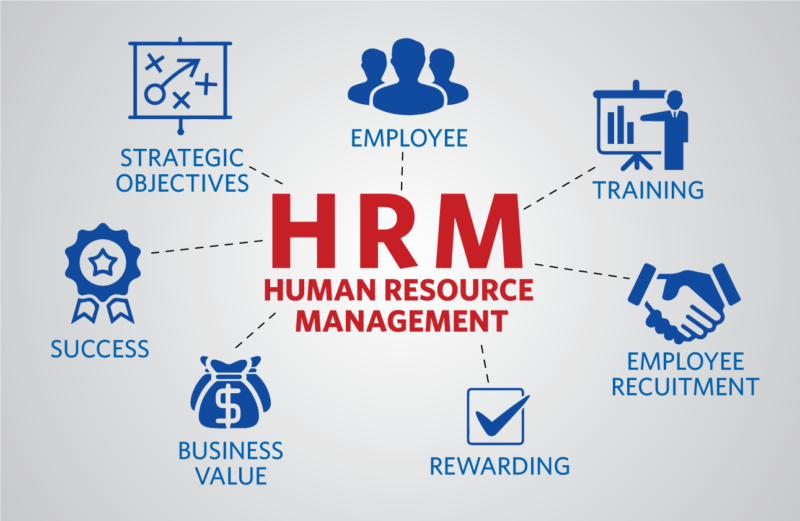
Every business needs to have its own Human Resources department. This is the department responsible for managing personnel for the entire enterprise. Some of the main tasks that the HR department will have to perform include:
- Recruiting and training.
- Maintaining personnel records.
- Implementing internal communications for the organization.
- Developing plans and regulations to improve employee performance.
- …
As you can see, recruitment is one of the primary goals and tasks that HR must carry out. Therefore, in this article, we will explore the recruiter interview skills that HR professionals need to know to improve their effectiveness.
| Read more: A Summary of HR Skills for Managers That Businesses Need to Know |
Common Types of Recruitment Interviews
Online Interviews
Phone interviews are often used to narrow down the pool of candidates who will be invited for an in-person interview. During this pre-screening stage, the interviewer should prepare questions carefully to determine if the candidate is a viable option for the position. This format also requires specific interviewing skills from the recruiter, as they must be tech-savvy and create a suitable set of questions, because online interviews are a more challenging form of information exchange compared to face-to-face interviews.
Preliminary phone interviews can help recruiters:
- Assess the candidate’s general communication skills.
- Clarify any unclear items on the candidate’s resume.
- Ask about frequent job changes or gaps in employment.
- Have a frank conversation with the candidate about salary requirements.
One-on-One In-Person Interviews
This is the most commonly used interview format. Depending on the candidate and the specific position, HR must have specific skills to interview and evaluate the candidate. In-person interviews reveal the interviewee’s capabilities and can give the interviewer a sense of the candidate’s work performance and attitude toward the job.
In-person interviews will help recruiters:
- Determine if the candidate possesses certain attributes or skills.
- Assess if the candidate’s attitude and work performance are a good fit for the company.
Group Interviews
There are two common types of group interviews: Candidate group interviews and panel interviews.
In a candidate group interview, one candidate is in a room with other job applicants who may be applying for the same position. Each candidate listens to information about the company and the position and may be asked to answer questions or participate in group exercises. Candidate group interviews are less common than panel interviews.
In a panel interview, a candidate is interviewed individually by a panel of two or more people. This type of group interview is usually a question-and-answer session, but a candidate may also be asked to participate in an exercise or test.
Learn more: What is MBTI? Applying personality tests to evaluate personnel and candidates
5 Professional Interviewing Skills for Accurate Candidate Assessment
To become a talented recruiter, what interviewing skills should an HR professional possess? HR managers can refer to the necessary recruiter skills in this section:
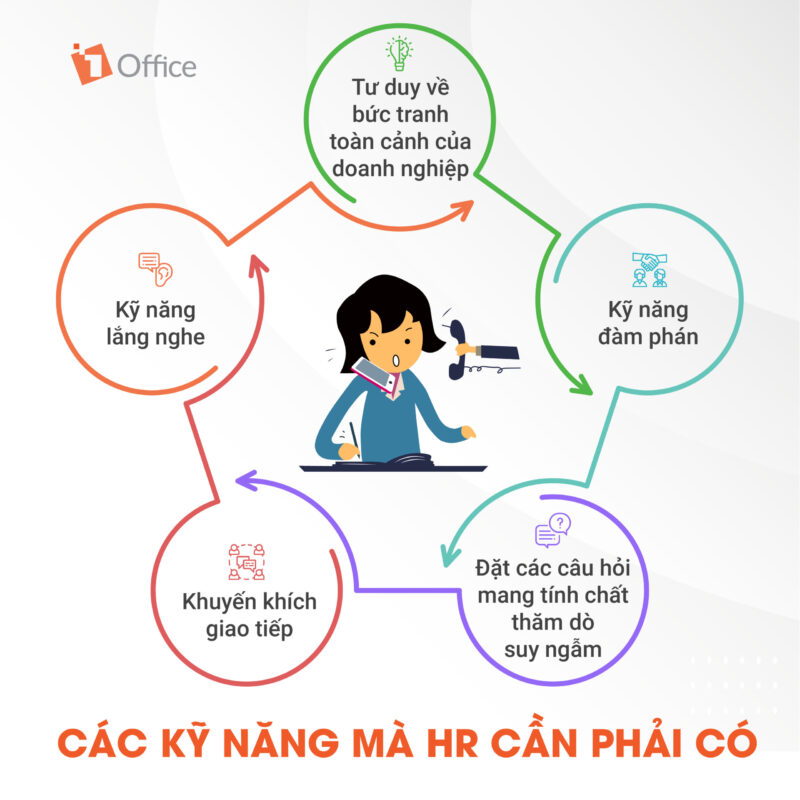
1. Listening Skills
Nearly three-quarters (74.7%) of surveyed recruiters feel that the most important skill a recruiter should have is listening. By listening to what your clients want and need, you will be able to tailor the requirements the business is looking for to find the most suitable candidates and ultimately improve the quality of your recruitment process. Not only that, but it will also make your job much easier if you know exactly what you are looking for.
2. Big-Picture Thinking for the Business
Among recruitment interviewing skills, big-picture thinking was voted by 26.8% of recruitment experts as a mandatory skill for recruiters. The big picture reflects the organization’s long-term goals and vision. Therefore, if you are aware of any long-term requirements, you can save yourself a lot of time and effort. Additionally, it helps enhance the effectiveness of the company’s recruitment process.
For example: A candidate may not be suitable for the current role you are recruiting for, but with their skills, position, and experience, they might be a good fit for future positions the company will need. Therefore, what the recruiter should do now is to store the candidate’s profile and personal information for future use.
Of course, as an HR professional, you cannot predict the future, but you can help yourself by trying to anticipate the long-term needs of the business as well as the long-term goals set by the leadership.
3. Negotiation Skills
The business market is constantly expanding, with more and more new businesses appearing, so candidates have no shortage of workplace options. Nearly 80% of recruiters believe that candidates hold the power in this year’s hiring process. Therefore, the ability to negotiate a job offer is highly sought after. Negotiation is heavily used in an HR professional’s candidate interviewing skills. Negotiation strongly affects the salary deal process – one of the organization’s core issues.
Example: It’s likely that some candidates will ask for a higher salary or better benefits. Therefore, negotiating a contract that satisfies both parties is the most important thing in an interview.
Therefore, finding the right balance for negotiation is the key to helping HR conduct a successful interview, and it’s undeniable that recruitment negotiation skills are one of the mandatory factors every recruiter must have.
4. Encourage communication
The interviewer must know how to elicit the desired information from candidates. It doesn’t require a complex technique, but it requires more than just asking candidates if they possess the necessary skills and attributes. Therefore, the manager must have a communication style that makes candidates feel comfortable and easy to talk to, so that information can be exchanged more easily.
5. Ask probing, reflective questions
The skill of asking probing interview questions will help candidates reveal their thoughts and assessments on aspects such as:
- The candidate’s thoughts on the applied position
- Their long-term future orientation
- The candidate’s assessment and perception of the company
- The interviewee’s working style
Asking a series of questions to gather information on the above aspects will help HR get the most comprehensive overview of the candidate, and then proceed to evaluate and determine their level of suitability for the company.
| Learn more: How to Create a Detailed and Standard HR Recruitment Plan for 2023 |
Key questions for candidate interviews
For both recruiters and candidates to get the most out of an interview, it’s essential to carefully consider the types of questions to ask. While preparing questions in advance is important, recruiters should not enter the interview with a preconceived list of ideal answers. In addition to some mandatory questions that should be included in an interview, such as:
- Personal background
- Strengths and weaknesses
- Candidate’s understanding of the company and the applied-for position
| No. | Question Type | Illustrative Examples | Meaning – Evaluation Criteria |
| 1 | Traditional Questions |
|
To grasp basic information about the candidate |
| 2 | Behavioral Questions | – Describe a situation where you successfully persuaded someone to see things your way.
– Give a specific example of a time when you used good judgment and logic to solve a problem. – A time when you had to use your presentation skills to influence someone’s opinion. – A specific example of a time when you had to follow a policy you didn’t agree with. |
The interviewer’s questions are designed to determine whether the candidate possesses certain attributes or skills; these questions tend to be focused, probing, and specific. |
| 3 | Competency-Based Interview Questions | – A situation where your verbal communication skills made a difference in the outcome. How did you feel? What did you learn?
– A situation when you had to persuade others to accept your point of view when they thought you were wrong. How did you prepare? What was your approach? How did they react? What was the result? – Tell me about your greatest success story involving [skill]. |
Provides the interviewer with a sense of the candidate’s job performance and attitude towards work. |
| 4 | Career Goal Interview Questions | – Where do you see yourself in five years?
– What are you looking to achieve in your next position? – Describe your management style. |
To identify the candidate’s professionalism and career aspirations. |
| 5 | Situational Skill Questions | – Tell me about a time you had a difficult working relationship with a colleague. What was the challenge?
– A time when you had to encourage others to contribute their ideas or opinions. How did you get everyone to contribute? What was the final result? |
To understand how the candidate overcomes and solves problems, as well as how the experience and knowledge gained can be applied to potential future situations. |
| 6 | Company Culture Fit Questions | – Do you work best alone or in a team?
– Why do you want to work for our company? – Tell me about your relationship with your previous manager: How effective was it? How could it have been improved? |
To determine if they are a good fit for your company’s work environment. |
Professional and optimized recruitment process management with 1Office software
As a comprehensive business management software with a customer base of over 5000+ businesses, our HRM module is arguably the #1 solution in the Vietnamese market for recruitment management. With 1Office, HR can easily perform a series of the following activities:
<iframe title="
Digitize and store employee records
- The company’s employee records are fully managed on the system, making it easy to search and look up employee information.
- Generate automatic reports on working hours and the company’s actual personnel status.
Recruitment
- Manage the recruitment process: recruitment progress, recruitment costs, etc.
- Store and filter candidate profiles by recruitment channel to evaluate HR performance and the effectiveness of each channel.
Synchronize timekeeping data
- Track work shifts and employees’ actual working hours.
- Payroll is processed automatically, helping to reduce workload and working hours.
- Allows timekeeping through various methods: FaceID, GPS, etc.
KPI Management
Work progress and employees’ KPI completion levels are calculated and processed automatically on the software, based on the Admin’s settings.
Through this article, 1Office hopes we have provided our readers with the most useful and necessary information. We hope this article helps you design an effective recruitment management process and acquire the best interview skills. Thank you!
Contact details:
- Hotline: 083 483 8888
- Fanpage: https://www.facebook.com/1officevn/
- Youtube: https://www.youtube.com/channel/UCeTIRNqxaTwk0_kcTw6SxmA
















