12/05/2026
  376 views
The SMART model is a method widely used by businesses to set goals for individuals and departments to achieve the best results. It is not only applied in business but also in many other areas within an organization. It helps businesses define strategies, outline clear objectives, and establish a clear development direction. So, what is the SMART principle? And how is it applied in a company’s marketing and sales? Let’s find out with 1Office in the article below.
Mục lục
- 1. What is the SMART model?
- 2. Benefits of the SMART model for businesses
- 3. How to define Marketing goals according to the SMART Principle
- 4. How to build the SMART model in marketing and business
- 5. The difference between the SMART model and the OKR model
- 6. Effective Marketing Campaign Management Solution with 1Office
1. What is the SMART model?
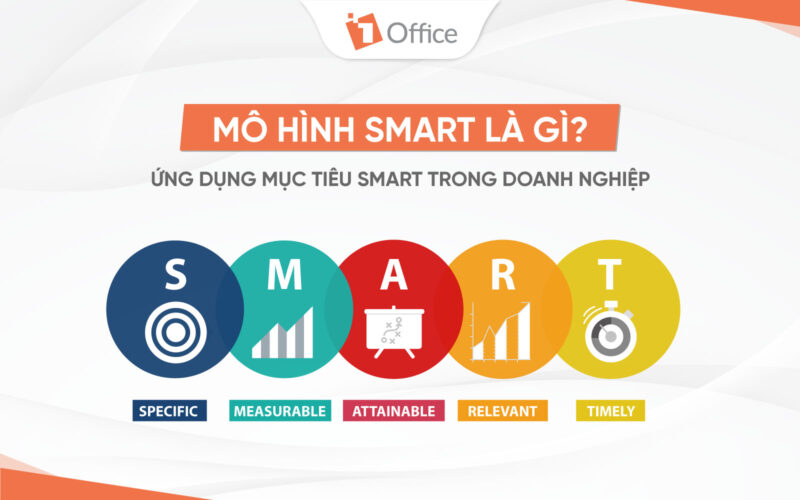
S.M.A.R.T is an acronym used to describe a goal-setting process. The acronym stands for “Specific,” “Measurable,” “Achievable,” “Relevant,” and “Time-bound,” which are the essential characteristics of setting goals.
SMART is a model that helps businesses establish and build the feasibility and reasonableness of goals in marketing plans, business plans, and more. Additionally, the SMART goal model provides a way to measure your progress and take responsibility for your success.
Setting goals according to the SMART principle allows you to realistically assess what you are trying to achieve by evaluating the actions needed to reach the goal.
2. Benefits of the SMART model for businesses
In the Industry 4.0 era, applying the SMART model to set goals helps businesses accurately define and measure the effectiveness of their work and plans. Here are some benefits of SMART goals for businesses.
2.1 Making goals specific
At the end of a month or a quarter, managers and employees often start setting new goals. Many businesses will set goals for the upcoming quarter. However, most businesses have not yet specified their business goals, and they often lack practicality.
The SMART model helps businesses make every corporate goal specific with concrete metrics. This helps the business see a clear, overall picture.
2.2 Increasing the clarity and accuracy of goals
The SMART model tells you exactly when a goal is achieved. This makes it easy to know when you have succeeded and harder to procrastinate. Using the SMART principle, managers can eliminate objectives that do not align with the established goals. This helps the business establish a new direction and strategy with clearly defined objectives.

2.3 Easily track goal progress
While it may have been difficult to measure and track your goal progress before, the SMART model helps you stay motivated and engaged. Because SMART goals are measurable, you will quickly realize when you are veering off track from your set goal and can adjust your course.
2.4 Relevant to the business
Each department and division has its own goals, as does the business as a whole. The Relevant (R) element of SMART helps align the individual goals of departments with the overall goals of the company. When departmental goals are consistent with company goals, it strengthens unity and helps the business achieve its objectives more quickly.
2.5 Increase employee work performance
Another benefit of the SMART model is that it gives employees a clear direction in their work to complete the set goals. Setting goals using the SMART model helps the business evaluate employee performance. As a result, employees will be more motivated to work and contribute to the company’s success.
3. How to define Marketing goals according to the SMART Principle
3.1. Specific
The more specific your goal, the clearer the path to success: you will know what is needed to achieve it. The clearer the goal, the faster you will achieve it.
For example: if the goal is to increase web traffic by 20% this month. Who is responsible for that goal? What must they do to increase the traffic?
3.2. Measurable
The second criterion for a goal is measurability. This allows you to track, quantify time, and measure progress toward achieving your goal. If you don’t measure a goal, you can’t know which objectives you’ve met or what your current progress level is.
3.3. Achievable
A stands for Attainable. This is an important factor in achieving the goals set by the team or the business. A SMART goal takes into account the team’s ability to achieve the goal and the available resources. If you don’t have enough resources, you should adjust your plan.
In reality, some goals are not achieved because they are not feasible. Setting goals too high can easily lead to discouragement and negative emotions. Therefore, to achieve a goal, you need to analyze its feasibility to minimize risks.
3.4. Relevant
Relevant is about assessing the appropriateness of your goals. You have enough resources and time, but will the goal bring profit to your company? Is this the right time? Analyze your situation and ask yourself if your goal is relevant. Is increasing your newsletter subscriptions relevant to your company? Ask yourself if this is meaningful to you and your business.
3.5. Time-bound (Time)
Time is one of the important factors that determine whether you achieve your goal or not. Any plan without a start and end time will make it very difficult for you to achieve your goal. Therefore, you need to schedule and set specific timelines and accelerate the implementation time to achieve the set goal soon.
See more: Scrum Model: Roles, and key principles of the Scrum model
4. How to build the SMART model in marketing and business
To visualize how to build goals according to the SMART model, we can refer to the following examples:
4.1. Example of the SMART model in marketing
Example: Setting a SMART goal for the number of website visitors
SMART Goal: By mid-October, increase the number of articles from 5 to 10, and traffic from organic search will increase by 10% compared to September.
- Specific: Increase website traffic from organic search.
- Attainable: By increasing the number of blog posts to 10 with more useful content that customers are interested in, it will help increase website traffic from organic search by 10%.
- Relevant: Increasing the number of website visitors will help expand the company’s brand and bring new opportunities for the sales staff.
- Time-bound: By the end of October.
Example: Setting a goal for the number of email marketing subscribers
SMART Goal: Increase the number of email subscribers to receive articles by 15% in February compared to January by creating 2 additional email flows per week.
- Specific: Increase the number of email subscribers to read new articles by increasing the number of emails from 2 to 6 emails weekly.
- Measurable: Increase the number of email subscribers by 15%.
- Attainable: Increasing the number of weekly email flows with useful content will help customers receive important information. As a result, the number of email subscribers will also increase, making a 15% increase completely achievable.
- Relevant: When the number of email subscribers increases, consultants will have a source of higher quality, more potential data. This helps to quickly increase the company’s conversion rate and sales revenue.
- Time-bound: In February.

Example: Setting a SMART goal for the number of fanpage likes
SMART Goal: Increase the number of likes on the product and service fanpage in Q1 2022 by running Facebook ads and inviting friends to like the fanpage.
- Specific: Increase the number of likes on the product fanpage by running ads on Facebook.
- Measurable: Increase the number of likes on the product and service fanpage by 14%.
- Attainable: When you pay a higher budget for Facebook ads, increasing the number of fanpage likes will be achievable in Q1 2022.
- Relevant: When the number of fanpage likes increases, the company’s image and brand will be enhanced.
- Time-bound: Q1 2022.
4.2. Examples of the SMART model in businessExample 1: Improve customer response time
Example 2: Increase sales revenue
Example 3: Expand business branches
Example 4: Reduce business costs
5. The difference between the SMART model and the OKR model5.1. OKR and SMART Goals: SimilaritiesBoth of these goal-setting approaches were developed from the perspective that goals are absolutely crucial for achieving business and organizational success. Although they have significant differences, both guide you in defining goals and the necessary plans to achieve them in a realistic and timely manner. Both OKR and SMART goals involve removing the “ambiguity” factor from setting and achieving objectives. Both focus on measuring success based on results, not just the number of activities completed. Both approaches teach you to be specific, but the OKR method allows teams to visualize their role in achieving the Company’s Objectives and acknowledges that there are always countless different factors contributing to the team’s success. OKRs also provide a specific process to follow, while SMART goals are often an ad-hoc combination of long-term and short-term projects with mixed significance and little to no consideration for the bigger picture. 5.2. OKR and SMART Goals: Differences
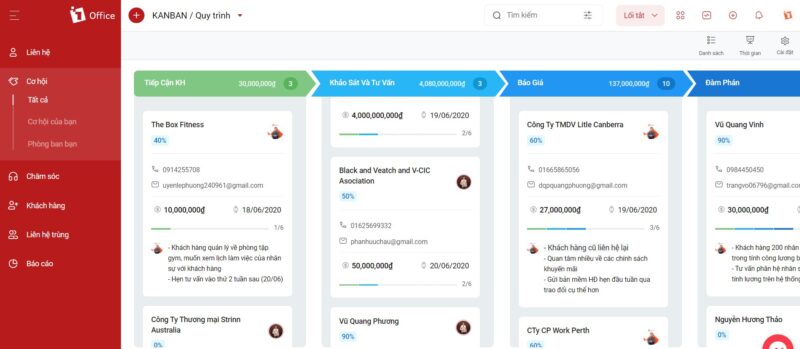
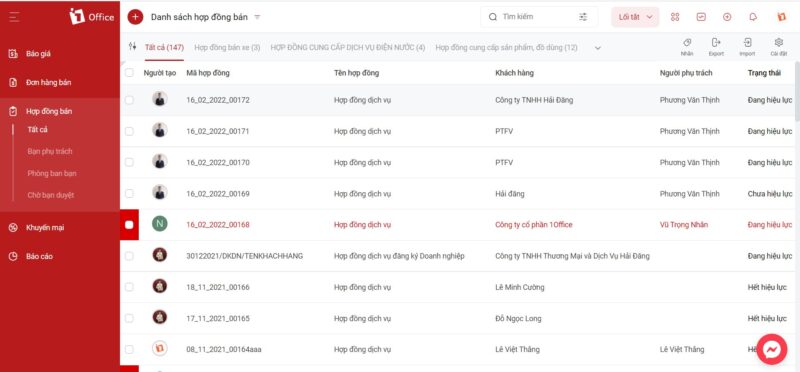
6. Effective Marketing Campaign Management Solution with 1OfficeThe 1Office CRM marketing campaign and sales management system is one of the effective solutions that helps businesses deploy all marketing and sales campaigns on a single platform. With many smart and superior features, our effective CRM software helps you save costs and increase sales conversion rates efficiently. The 1Office CRM toolkit includes many smart features such as: Email Marketing, SMS, customer care, sales…

 Thus, the content above has introduced users to the SMART model as well as its benefits and how to apply SMART in business. It is clear that building goals with this model will help each individual and business have a clear direction and strategy for each specific goal. This helps businesses achieve great success with each of their goals and projects. For consultation and support in using the software, please leave your information here, and 1Office experts will contact you today. For more details, please contact us via:
|