


 12/05/2026
  150 views
Human Resource Management (HRM) is one of the key functions in businesses, responsible for supervising, directing, and managing human resources to optimize the company’s HR operations. So, what exactly is human resource management, and what are the main functions and responsibilities of HRM? Let’s explore in the article below.
Mục lục
What is Human Resource Management?
Human Resource Management (HRM) is the process of directing and managing all aspects related to human resources within an organization or business. The main task of HRM is to ensure the organization has the necessary quantity, quality, and diversity of personnel to effectively carry out business activities and achieve the company’s goals.

Additionally, HRM is responsible for maintaining good relationships among employees and building a healthy work culture. In the context of integration and globalization, with the boom of the knowledge economy alongside the digital revolution and Industry 4.0, the role of the human resource management department has become increasingly important. Professionals in this field now not only manage personnel but also need to act as change agents, building sustainable strength and delivering value on an international scale.
Key Functions and Responsibilities of Human Resource Management
Recruitment and Talent Attraction
Human resource management is responsible for developing and implementing recruitment strategies to attract talent that meets the company’s needs. This work includes defining recruitment requirements, writing job descriptions, posting job ads, screening resumes, interviewing, and selecting candidates. Additionally, HRM must build an employer brand to attract talent and ensure the recruitment process runs smoothly and effectively.
Workforce Contingency Planning

Human resource management needs to forecast future personnel needs and create contingency plans to ensure the business always has a suitable workforce available. This includes assessing promotion potential, training successors for key positions, and planning for personnel replacement when necessary. The goal is to ensure business continuity, even when there are personnel changes.
Performance Management
HRM must establish standards and processes for evaluating employee performance. This work involves setting goals, monitoring performance, providing feedback, and conducting regular performance reviews to ensure employees achieve their set objectives. Additionally, HRM needs to develop performance improvement plans for underperforming employees and recognize and reward those with outstanding achievements.
Employee Training, Coaching, and Development

HRM is responsible for creating and implementing training and development programs for employees to enhance their skills, knowledge, and professional capabilities. This work includes identifying training needs, organizing courses, workshops, and coaching programs, as well as evaluating the effectiveness of these programs. The goal is to help employees develop continuously and be ready to take on higher roles in the future.
Compensation and Benefits
HRM needs to design, implement, and manage compensation and benefits policies for employees, including salary, bonuses, insurance, and other welfare programs. This work requires careful consideration to ensure that benefit packages both attract and retain talent while fitting within the company’s budget. HRM must also ensure that these compensation and benefits comply with legal regulations and accurately reflect the company’s culture.
Human Resource Information System (HRIS) Management

HRM is responsible for managing and maintaining the Human Resource Information System (HRIS), which includes storing, updating, and securing employee data. This system helps optimize HR management processes, from recruitment and training to performance evaluation and payroll processing. HRM also needs to analyze data to make HR management decisions based on accurate and timely information.
Monitoring and Supervising HR Data
HRM needs to regularly monitor and supervise HR data to ensure its accuracy, consistency, and security. This work includes checking data on recruitment, performance, benefits, and other employee-related information. Additionally, HRM must analyze data to identify trends, weaknesses, and opportunities for improvement in human resource management, thereby making appropriate strategic decisions.
Optimal Human Resource Management Process for Businesses

Each type of business may have a different management approach, depending on the organization’s size, industry, and goals. However, regardless of whether the business is large or small, an effective human resource management process typically includes the following basic steps:
Step 1: Build a recruitment process
First, businesses need to identify their recruitment needs and build a clear recruitment process. This process includes steps from writing job descriptions, posting job ads, screening resumes, and interviewing, to selecting the most suitable candidates. The goal is to ensure that the business attracts talented individuals who can contribute to its overall development.
Step 2: Develop HR policies
After completing recruitment, it is necessary to develop HR policies to guide human resource management activities. These policies include regulations on salary and bonuses, benefits, promotions, discipline, and other work rules. Clear policies help create a transparent, fair work environment and ensure legal compliance.
Step 3: Train and develop resources

To help employees reach their full potential, businesses need to create employee training and development programs. This includes professional training, soft skills development, and career advancement. The goal is to enhance work performance and prepare employees for higher roles in the future.
Step 4: Set work goals and evaluate performance
Next, businesses need to set specific work goals and periodically evaluate employee performance. This helps identify the strengths and weaknesses of each individual, while also creating opportunities for rewards or performance improvement plans when necessary.
Step 5: Develop corporate culture
Finally, developing corporate culture is a crucial factor in creating a positive and cohesive work environment. This includes establishing core values, codes of conduct, and activities that promote team unity. A strong corporate culture will help boost morale, retain talent, and drive the sustainable development of the business.
>>> See more: What is a human resource management process? Detailed building steps
Essential skills for an HR manager
As a skilled HR manager, you cannot lack the following basic skills:
- Professional skills: A deep understanding of processes, labor laws, and HR management principles, helping HRM perform tasks such as recruitment, training, and performance management effectively.
- Interpersonal skills: The ability to interact, listen, and understand employees’ needs, thereby building good relationships and creating a positive work environment.
- Leadership skills: The ability to guide, motivate, and inspire the workforce, helping them reach their full potential and achieve the company’s common goals.
- Time management skills: The ability to organize work scientifically, prioritize important tasks, and use time effectively to complete work on schedule.
- Communication skills: The ability to convey information clearly, coherently, and effectively, ensuring that the message is accurately received and creates a shared understanding.
- Problem-solving skills: The ability to analyze situations, identify the root causes of problems, and propose effective solutions, ensuring stability and high performance at work.
1HRM – Vietnam’s leading human resource management software
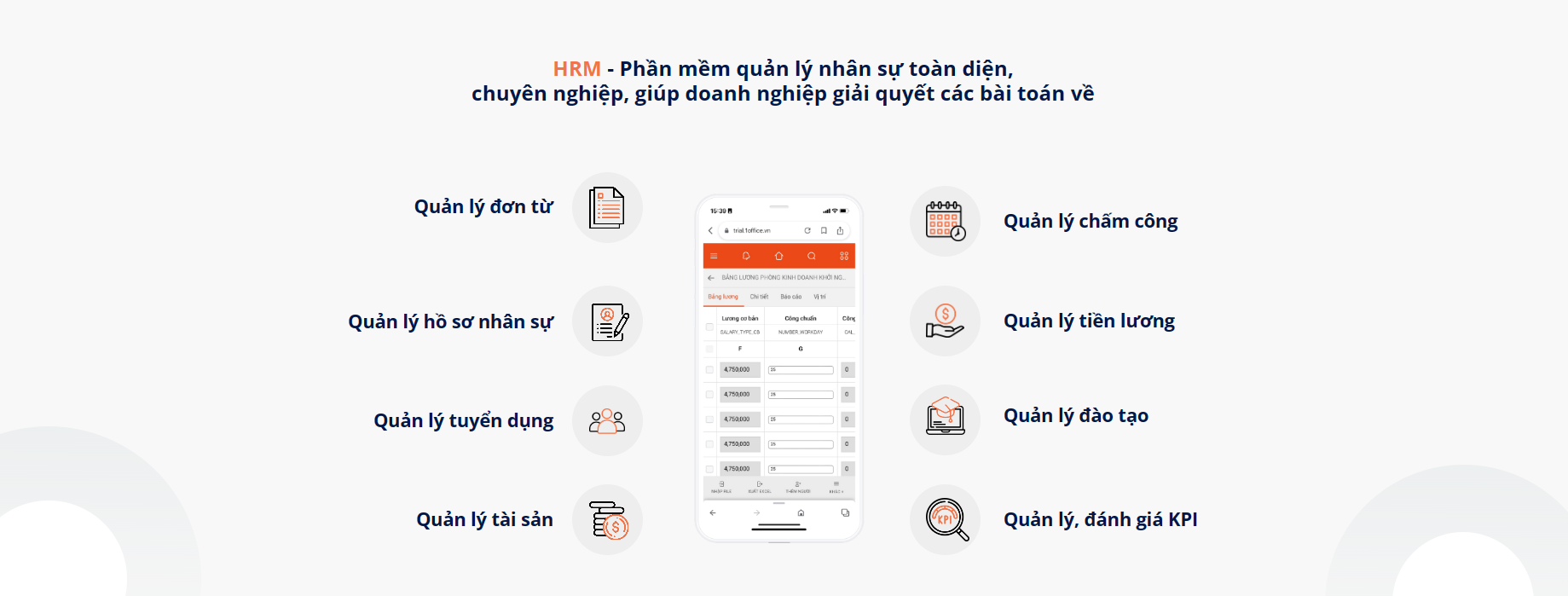
1HRM by 1Office is a groundbreaking tool in human resource management, specifically designed to meet the diverse needs of Vietnamese businesses of all sizes. From startups to large corporations, 1HRM helps businesses optimize every aspect of HR management. Thanks to its advanced and flexible features, the software simplifies processes such as recruitment, employee record management, timekeeping, payroll, and performance evaluation, ensuring all operations run smoothly and efficiently.
When using the 1HRM human resource management software, managers will easily see the following outstanding advantages:
- Recruitment management with the ability to seamlessly sync CVs from recruitment sites.
- Track and manage interview schedules and detailed candidate evaluation results.
- Store all employee information, including work history, contracts, salary, insurance, and other related data.
- Manage labor contract information, with a convenient integrated eContract digital signature feature.
- Flexible and easily customizable work shift scheduling.
- Supports multiple timekeeping methods such as time clocks, GPS, FaceID, and more.
- Timesheets are 100% automatically calculated, ensuring absolute accuracy.
- Automated payroll calculation runs 24/7, without missing any transactions.
- Online leave request system, automatically manages and updates leave and compensatory time-off information.
- Integrated salary payment through MB Bank for security and convenience.
- Evaluate work performance through KPI and OKR systems, ensuring transparency and fairness.
Register for a free 1HRM demo account!
We hope the information in this article has helped you answer the questions: “What is human resource management?” and “What are the functions and responsibilities of an HR manager?”. If you are looking for a comprehensive solution to support the management of all aspects of HR, such as payroll, recruitment, etc., contact 1Office immediately to have our experts advise you on the most suitable solution!
Read more: Top HR Management Software for Businesses in 2026
















