12/05/2026
  283 views
Team management skills encompass the soft skills and qualities that help managers and leaders guide their teams to work effectively and achieve set goals. This skill set includes the ability to coordinate, communicate, and foster collaboration. To develop these skills, managers need to undergo a process of learning and practice. The article below will help you understand what these skills and qualities are and grasp their roles.
Mục lục
- What are team management skills?
- The importance of team management skills for managers
- 9+ most effective team management skills for managers
- 1. Empower employees
- 2. Unify opinions & Decide together
- 3. Eliminate Perfectionism
- 4. Skillful Communication Skills
- 5. Provide Feedback and Encourage Employee Input
- 6. Effective Negotiation and Conflict Management Skills
- 7. Build and Set Achievable Goals
- 8. Motivate and Connect People
- 9. Build a positive team culture
- 10. Personnel training skills
- Easily enhance team management skills with 1Office
What are team management skills?
According to a Deloitte report, the trend of shifting from hierarchical organizational structures to team-based work models is becoming increasingly popular in businesses. Instead of focusing on traditional hierarchies, modern companies are moving towards empowering employees, encouraging collaboration, and promoting a collective work spirit.
Team management is the ability of a leader to organize and coordinate team members to perform tasks towards a common goal. With this ability, a manager knows how to support, motivate, and connect their team.

Successful team management also demonstrates teamwork, enhances work performance, and reduces disengagement. The leader can guide the team through challenges in the business environment.
Team management skills include a range of soft skills such as leadership, problem-solving, empathy, active listening, communication, accurate decision-making, and more.
The importance of team management skills for managers
Team management skills can stimulate a spirit of cooperation, coordination, and mutual support among members, leading to creative solutions for any difficult problem. If you cultivate this skill, you will not only enhance the quality and efficiency of your team’s work but also create opportunities for career advancement. At the same time, your subordinates will also enjoy their jobs more and want to stay with your company long-term.
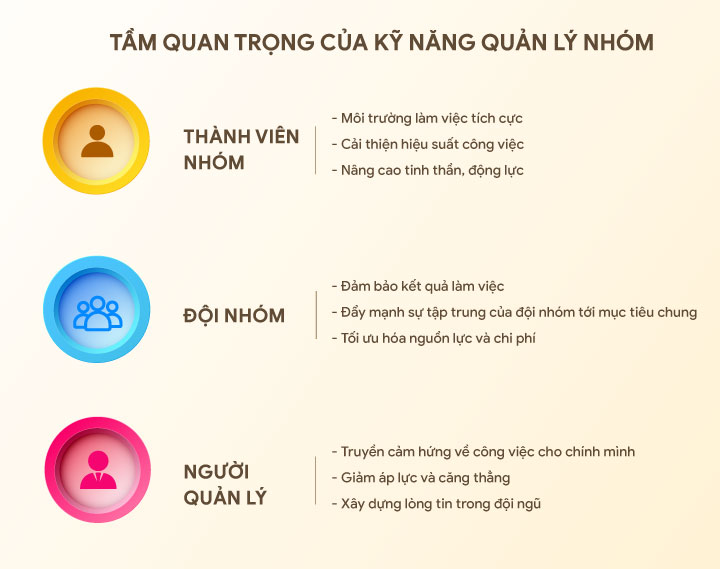
Benefits for team members:
- Positive work environment: Team members work in an environment where they are respected, listened to, and supported, which enhances job satisfaction and motivation.
- Improved work performance: A good manager can assign tasks reasonably, thereby maximizing the talents and skills of each member.
- Enhanced morale and motivation: By conveying positive appreciation and recognition, the manager helps boost the morale and motivation of each individual.
Benefits for the team:
- Ensured work results: The manager clearly defines goals and creates detailed plans to achieve them, while also establishing clear rules to ensure effective coordination and interaction among members.
- Promoted focus on common goals: A skilled team manager knows how to direct the team towards a common goal and provide direction for their work, creating consistency and consensus within the group.
- Optimized resources and costs: Team management skills help to make the most of the resources and abilities of team members.
Benefits for the manager:
- Inspiring work: The manager develops leadership abilities to convey passion and create spiritual motivation for the entire team.
- Reduced pressure and stress: Instead of taking on all the responsibility alone, you can trust and delegate tasks to team members for support.
- Building trust within the team: This skill helps build trust, create unity within the team, and foster effective collaborative relationships.
9+ most effective team management skills for managers
1. Empower employees
A leader’s task is to identify and wisely use the best talent for the job. While an employee’s success is often measured by individual performance, a manager’s success is often related to ensuring each team member is fully accountable.
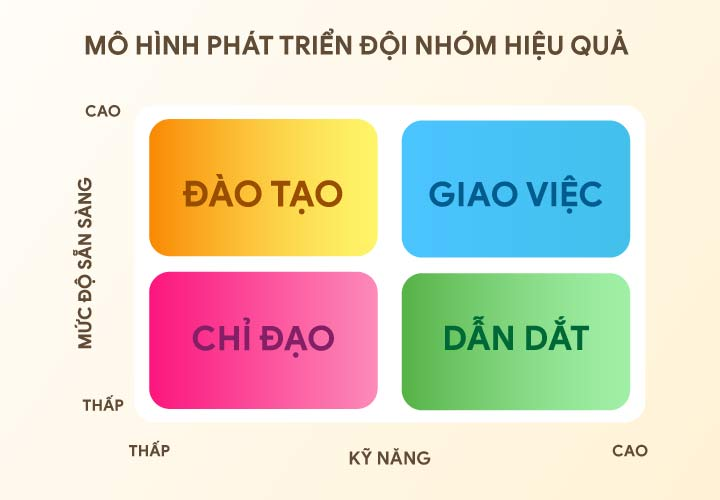
Experience has shown that micromanagement often exhausts managers and makes employees feel controlled and untrusted. Meanwhile, managers may miss out on completing strategic tasks such as analyzing data, evaluating progress, or making important decisions.
Therefore, in the modern era, managers need to shift their mindset from being just a ‘player’ on the field to becoming a ‘coach’ who guides and shapes strategy.
2. Unify opinions & Decide together
Managers should encourage discussion and the exchange of ideas among team members through means like team meetings and discussion sessions. This allows managers to gather various perspectives and assessments from everyone on a specific issue.
Next, the manager will facilitate the exchange of opinions, build consensus, and find the best solution for the team. This method helps minimize disagreements and conflicts within the group, while also increasing accountability, making members committed to carrying out their assigned tasks and pursuing common goals.
The diversity of opinions among individuals can help break down existing biases. By encouraging debate and considering different viewpoints, your team can discover more creative solutions and enhance teamwork efficiency. Therefore, the final decision-making process should involve the consensus and participation of all members.
3. Eliminate Perfectionism
As a manager, you need to be able to see the big picture of all activities, avoiding getting bogged down in details or paying excessive attention to individual employees.

Studies have shown that micromanagement can lead to a loss of motivation, reduced productivity, and increased employee turnover. To avoid this, let go of perfectionism and allow team members to experiment with their own methods to complete tasks. This frees up your time to focus on the organization’s overall goals and build deep trust with your team members, thereby enhancing teamwork efficiency.
4. Skillful Communication Skills
A manager’s primary role is to help team members complete tasks efficiently, consistently, and in line with the company’s overall strategic goals. To do this, managers must clearly articulate strategic objectives, detailing the specific tasks and processes the team needs to follow to achieve them. By being an effective communicator, a manager can eliminate unnecessary confusion and conflict within the team.
When instructions and clear expectations are not fully communicated or explained, employees often work inefficiently. Lack of communication is a common cause of employee frustration, but building a solid communication system will help teams grow stronger and more confident. You can improve your communication skills by reading books, attending workshops, or interacting with experts in the field.
5. Provide Feedback and Encourage Employee Input
Employee evaluation is a critical skill that needs more attention. Instead of waiting for year-end reviews, provide feedback and comments to employees periodically and naturally. This helps build a closer relationship with your team members.
At the same time, don’t forget to ask for employees’ opinions about their work or about you as a manager. Feedback from team members can help you identify your strengths and weaknesses, which you can then integrate into your skill development and leadership style plan, as well as enhance teamwork skills.
6. Effective Negotiation and Conflict Management Skills
Managers need to possess the ability to analyze, assess conflicts, and negotiate flexibly. It is crucial that you can quickly identify the root cause of a conflict and then apply flexible negotiation techniques to reach an agreement with all parties involved.
Additionally, managers need to have clear thinking and the ability to propose multifaceted and fair solutions. It is important to ensure that the conflict resolution method benefits all parties involved and does not negatively affect team morale.
7. Build and Set Achievable Goals
Setting realistic goals plays a crucial role in personal and professional development. It is also an essential part of management processes, such as strategy implementation. To manage teamwork effectively, establish a list of clearly defined goals for your employees to work towards, and create a roadmap of smaller, achievable tasks to reach those goals.

Setting appropriate goals is key for managers to define direction and motivate team members. When everyone understands the team’s goals and vision, they can focus on their work and enhance their roles to achieve common objectives. Meanwhile, performance management is the continuous process of monitoring, evaluating, and adjusting members’ work to ensure the team operates effectively and stays on track. Performance management requires skills in communication, feedback, providing constructive criticism, and fostering employees’ personal development.
By setting clear goals and managing performance effectively, managers can ensure that all team members are working towards the common objective and achieving the best results. This creates a positive work environment, motivates members, and contributes to the project’s success.
8. Motivate and Connect People
Building a team is a continuous and purposeful process, so managers need to have skills in building team spirit and strengthening relationships among members. While some individuals can integrate immediately, most teams need support to communicate, collaborate, and respect each other.
Managers need to establish common ground while simultaneously developing the individual talents of each member. Connecting team members is only meaningful if done through flexible methods that encourage interaction.
9. Build a positive team culture
A positive team culture includes the values, attitudes, rules, and behaviors that members of a team or organization typically follow. It creates an encouraging work environment, enhances member satisfaction and commitment, and facilitates individual and collective development. Building and maintaining a positive team culture requires excellent leadership and management skills. Managers need to create an environment where the values and rules of a positive culture are encouraged and demonstrated.
10. Personnel training skills
Another important team management skill is training and encouraging personnel development. In addition to direct guidance, providing opportunities for employees to participate in skill-based courses and seminars is an effective method. Using online courses from reputable organizations is a way for employees to expand their knowledge while still meeting job requirements.
Easily enhance team management skills with 1Office
The application of technology, especially administration and management software, plays a crucial role in enhancing the performance and management skills of teams as well as senior executives like managers and CEOs.
One of the most important applications of technology is the ability to create an effective and flexible work environment. Using technology and management software gives management teams and CEOs more flexibility and reliability in managing resources and shaping business strategy. The combination of traditional management capabilities and modern technology helps create a smarter and more competitive work environment, while enhancing management skills and promoting business growth.
Management software like 1Office helps team managers easily track work progress, assign tasks, and interact directly with members. This helps enhance the team’s consistency and work performance.
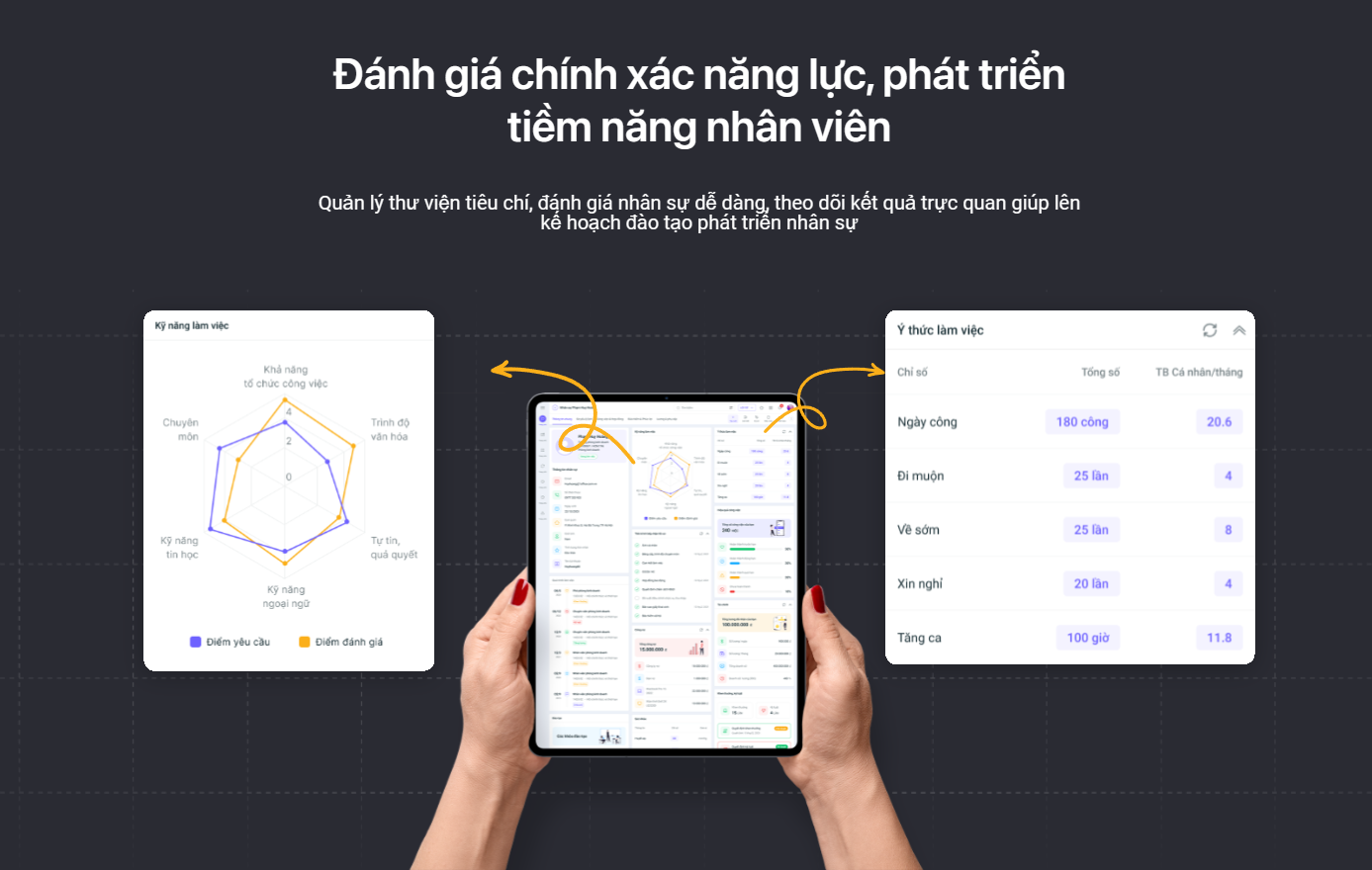
1Office’s Human Resource Management feature is built as a comprehensive and powerful tool to help businesses manage all aspects related to personnel. From recruitment, training, performance management, and employee evaluation to planning and task assignment, this software provides a range of flexible tools and features. With a simple and user-friendly interface, it helps managers save time, increase work efficiency, and enhance employee satisfaction.
Some outstanding features of 1Office that help enhance team management capabilities include:
- Simplify task assignment and division for each individual and department in the organization.
- Fully support various types of progress reports and project progress reports, helping managers get an overview and make data-driven decisions.
- Easily interact and support work execution by providing an interactive environment for teamwork.
- Easily track the evaluation results of each criterion for each person or department. This allows managers to view and compare the performance of each employee and department.
- Evaluate employee performance and work completion levels specifically and fairly through the ASK model.
- Customize permissions by level, allowing personnel to directly implement work according to the hierarchical authority system.
- Support the building and customization of training program systems to enhance employee capabilities and qualifications.
- A multi-dimensional, intuitive reporting system that allows exporting and importing in various formats, helping managers get a complete, comprehensive view to accurately evaluate work efficiency.