


 12/05/2026
  264 views
What is global thinking? How does it differ from a narrow mindset? Why does global thinking help with decision-making and organizational success? Global thinking is not just about having broad knowledge, but also the ability to perceive, think flexibly, and be creative to adapt and seize market opportunities. Let’s explore the concept, characteristics, role, and ways to practice this skill with 1Office in the article below!
Mục lục
1. What is global thinking? Characteristics of global thinking
-

Global thinking: The key to leading a successful business

1.1 The concept of global thinking
Global Thinking is the ability to approach and process information, problems, or situations from various perspectives by looking beyond a “narrow” point of view.
Global thinking is essential not only for internationally operating businesses but for all types of enterprises. Possessing a global mindset helps businesses seize opportunities, effectively deal with challenges, and contributes to shaping a competitive and sustainable strategy in today’s diverse business world.
To understand it better, imagine looking at a large painting with many different details. It’s like not just focusing on one small part of the picture, but also seeing the whole and the connections and interactions between the different parts.
1.2 Characteristics of global thinking
-

Characteristics of global thinking

The ability to take a multi-dimensional approach, viewing issues from various angles including cultural, social, economic, political, and environmental aspects. This helps leaders with a global mindset better understand the complex factors influencing the issue.
The ability to understand and respect different values, ideas, and ways of life around the world, avoiding judgments based on narrow viewpoints or regional cultural biases. It involves processing complex information and the interactions between related factors to analyze the diverse connections and impacts they may have.
Overcoming a narrow mindset, encouraging looking beyond narrow boundaries, and recognizing the global impact of decisions and actions. It avoids focusing too much on short-term goals at the expense of a long-term vision and helps promote creativity in finding solutions to complex problems.
According to extensive research, seven attributes constitute a global mindset that any leader should master, including:
- Openness to learning
- Adapting to new cultures
- Managing different cultures
- There is no one right way
- Interest and curiosity
- Proactively leveraging diversity
- Not being bound by locality
2. The importance of global thinking in decision-making?
A leader with a global mindset can lead a strong team in the business market. They can bring a real competitive advantage to the business compared to competitors because both employers and employees have a deeper understanding of business operations in a multicultural environment. Some of its important roles include:
-

The importance of global thinking in decision-making

Understanding cultural and market diversity: Today’s business environment contains many diverse elements of culture, language, customs, and perspectives. A leader with a global mindset can better understand and respond to customers and partners worldwide, thereby creating new business opportunities and expanding markets.
Smart team management: In a multicultural work environment, managing a team requires the ability to understand and respect different values and viewpoints. A leader with a global mindset can build a positive work environment, encourage diverse opinions and creativity, thereby enhancing team performance and innovation.
Enhancing competitive advantage: Businesses that can adapt and integrate information from multiple global sources often have a competitive edge. A leader with a global mindset can collect, analyze, and apply information from various sources to make smarter decisions, helping to create added value and adapt better to environmental changes.
Forecasting and responding to global risks: The modern business environment faces many global risks such as climate change, terrorism, and financial crises. A leader with a global mindset can identify and assess these risks from a global perspective, thereby finding ways to respond and build sustainability for the business.
3. How to practice global thinking skills
-

How to practice global thinking skills

3.1. Listen to and understand yourself
Listening to and understanding yourself is a crucial step in developing a global mindset. Understanding your own values, beliefs, and ways of thinking helps you recognize how these factors can impact the way you approach and interact with others. This is very important when working in a multicultural environment and interacting with people from different cultural backgrounds.
- Promotes personal development: Self-awareness allows for deeper self-exploration, helping you identify personal tendencies and desires. This can lead to continuous personal growth and a clearer direction for your goals.
- Respect and understanding: You will be able to respect and understand the perspectives and behaviors of others more deeply, thereby creating a positive work environment and motivating collaboration.
- Adaptability: Understanding yourself helps you recognize your strengths and limitations, enabling you to adapt flexibly and find effective ways to work in any situation.
- Conflict resolution: When you understand yourself and others, you are better able to resolve conflicts effectively, finding subtle ways to balance different viewpoints.
- Building a positive environment: Your self-awareness helps build a positive work environment, encouraging everyone to express and share their views freely and comfortably.
3.2. Always be curious, exploratory, and open-minded
A global mindset often requires the ability to change and adapt quickly. By maintaining a curious and exploratory spirit, you will more easily accept and adapt to changes in the business environment.
Technology is constantly advancing and creating new opportunities for businesses. As a leader, you need to maintain a spirit of exploration to learn about and apply these technologies to your field and industry. By encouraging employees to express creative ideas and experiment with new approaches, you will create an environment that fosters a global mindset within the organization.
3.3. Continuously update on new trends
-

The latest trends in company management today

New trends often bring both opportunities and challenges. Staying updated on trends helps them seize opportunities in a timely manner, create breakthrough strategies, and expand the scope of their business operations. At the same time, monitoring these trends also helps them face potential challenges and find effective solutions.
Another important aspect of continuously updating on new trends is the enhancement of knowledge and understanding. Trends often reflect changes in technology, society, culture, and consumer behavior. A clear understanding of these changes helps those cultivating a global mindset not only to grasp the current situation but also to make intelligent decisions based on the latest information.
Of course, continuously updating on new trends requires patience and a ready attitude, as some changes can be rapid and unpredictable. However, a willingness to learn and adapt will help them maintain a flexible mindset and make the best decisions for both themselves and their business.
3.4. Build strong cross-cultural relationships
Interacting and working with people from different cultural backgrounds exposes you directly to different perspectives and ways of working. By immersing yourself in a communicative environment, such as when learning a new language, you will learn and understand more about the factors that create efficiency and differences in work styles.
Positive cross-cultural relationships bring many benefits. First, they help you feel more comfortable interacting with others and gain a deeper understanding of their work styles and thinking. Flexibility in adapting and a willingness to learn from others are crucial factors in developing a global mindset.
-

Proactively connect and build relationships to learn
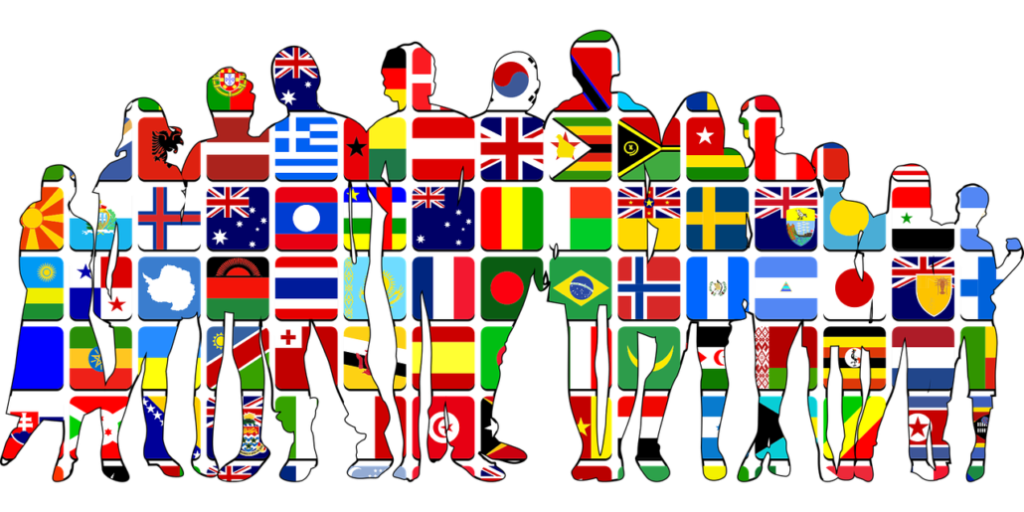
Additionally, by building cross-cultural relationships, you also have the opportunity to see the limitations and constraints of your own way of thinking. Awareness of this helps you avoid stereotyping and develop the ability to deal with complex and diverse situations.
3.5. Proactively connect and build relationships to learn
Proactively connecting and building relationships is an indispensable part of cultivating a global mindset. When you create relationships with people from different cultural backgrounds, you open the door to endless learning opportunities. Integrating into a communication network not only helps you access new information and knowledge but also helps you understand different perspectives and ways of life more deeply.
Proactive connection brings many benefits. You can learn from people with diverse experience and knowledge, leveraging their creative thinking and novel problem-solving approaches. At the same time, regular exposure to different ideas and viewpoints also promotes your own flexible and enriched thinking.
3.6. Always use positive language in all communication
Using positive language in all communication is not only a way to maintain a positive interactive environment but also an important part of developing a global mindset. Positive language demonstrates an open, respectful, and kind attitude towards others.
The use of positive language can strongly influence how you interact with others and create an environment that promotes effective communication. From showing empathy to asking open-ended questions, you create conditions for quality communication and an effective exchange of information.
4. Examples of a global mindset
Juvencio Maeztu arrived in India as the CEO of Ikea India. Since then, he has been busy learning and laying the groundwork for Ikea’s success in India. During the first two years, he stepped out of his comfort zone by exploring, learning, and adapting his and the company’s style to suit the “Indian way of working”.
-

Example of a global mindset

As he explained: “This is a market you need to learn from and should not enter with the attitude that you know everything.” He met people from all walks of life to ask for advice and things Ikea should know about their new market. Maeztu is a leader with vision and a Global Mindset.
Maeztu, a leader with a Global Mindset, returned to Europe, and his replacement in India was Peter Betzel. Peter is passionate about diversity and inclusion, and had the tools and foundation to help Ikea succeed in India. When India opened its first store, the elements for success were in place. They were not taking risks; rather, they were executing a business plan with a global mindset approach.
Ikea’s principle for success is simple: step out of their base culture with an open mind that there is no one universal way to do things. Simple, but not easy. Companies are not global; leaders are. Ikea’s success is driven by leaders with a Global Mindset.
—————————
The above is all the information that 1Office wants to share with you about what a Global Mindset is, its characteristics, role, and how to cultivate a global mindset for leaders. We hope that through this article, your business has found the right direction. We wish you success!
- Hotline: 083 483 8888
- Facebook: https://www.facebook.com/1officevn/
- Youtube: https://www.youtube.com/@1office-chuyendoisodn
















