


 12/05/2026
  511 views
Screen CV or CV Screening is a term used to describe the process of filtering and selecting candidate profiles that match a company’s recruitment needs. To help HR recruit the most “outstanding” candidates, please read the article below! 1Office will reveal the fastest, most effective, and most accurate way to screen candidates.
Mục lục
1. What is CV screening?
Screen CV, or CV Screening, is the process of filtering candidate profiles. This term describes the process of evaluating, filtering, and selecting the most suitable profiles. Recruiters will screen candidate profiles based on the company’s recruitment criteria and hiring needs. The primary criteria and content that recruiters look for in a candidate’s CV include: work experience, achievements, skills, etc.
Additionally, to ensure the most effective CV screening process, recruiters will often collaborate with departments/individuals with high expertise related to the position being recruited.
2. Benefits of CV screening in recruitment
CV screening is an essential activity in the recruitment process. Screening candidate profiles offers many benefits, such as:

- Saves time and effort: Instead of spending a lot of time on tasks like reading CVs, analyzing them, contacting candidates, and interviewing all applicants, recruiters will only use interview methods with the most suitable and promising candidates. The company will not have to waste much time on unsuitable CVs. This allows the company to quickly find qualified candidates while saving time and effort.
- Finds the most “outstanding” candidates: The essence of CV screening is to eliminate unsuitable CVs and select quality ones. Based on the list of quality candidates, recruiters proceed with the next steps to select the most “outstanding” applicant.
- Ensures objective and consistent evaluation: When conducting CV screening, all candidate profiles are evaluated consistently and objectively. The company can eliminate recruitment risks such as overlooking talented individuals, lack of fairness, subjective assessments, etc.
- Saves costs: CV screening helps save recruitment costs by eliminating unsuitable candidates, reducing effort and human resources, lowering advertising expenses, and increasing evaluation efficiency.
3. Evaluation criteria for screening candidate profiles
Presentation format and CV content are the two main groups of evaluation criteria used to screen candidate profiles. 1Office will reveal the detailed information within these two groups of evaluation criteria in the content below:
3.1. Presentation Format
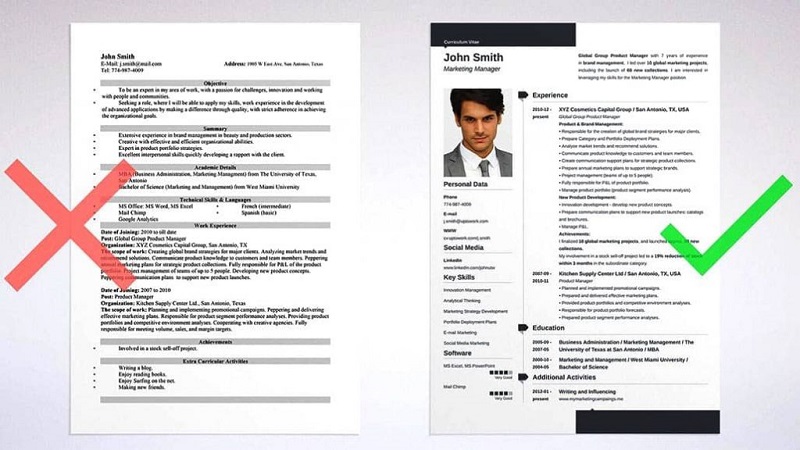
Before even considering the content conveyed by the candidate, recruiters will make an objective assessment of the CV’s format. A basic CV must be presented in a clean and easy-to-read manner. Especially for design positions, this criterion is considered a crucial evaluation factor for screening.
The presentation format of a CV is evaluated based on the following specific criteria:
- Color: Harmonious and attractive colors
- Layout: Easy to read, scientific, logical
- Font: Easy to see and read
- Profile picture: Use a professional, realistic photo; avoid using offensive images, etc.
- Icons or other illustrations: Appropriate and aesthetically pleasing
- Spelling: No spelling errors, no abbreviations, etc.
>> FREE DOWNLOAD: Top 10 most detailed INTERVIEW EVALUATION FORMS
3.2. CV Content
The most important group of criteria when screening CVs is the CV content. Recruiters will evaluate and screen based on this group of criteria, considering the following factors:
- Personal information: Name, age, contact information (phone number, social media, email), address.
- Applied position: Check the compatibility between the position the candidate is applying for and the position the company needs to fill.
- Objective: Assess the connection between the candidate’s objectives and the company’s goals.
- Education level: Necessary degrees and certificates for the applied position. For example: YODY Fashion Joint Stock Company is recruiting for a purchasing specialist position with the criterion of a college or university degree in economics. In this case, candidates who do not meet this criterion will be eliminated.
- Hobbies: Assess the candidate’s hobbies and how they relate to or support the job or the company’s business field. For example: Book publishing companies often prioritize candidates who enjoy reading if other candidates have similar skills and experience.
- Experience: Time spent at previous companies, tasks performed in the past, and the duration of commitment to each job/position. For example: A company sets a recruitment criterion for candidates with over 2 years of experience in a corresponding position. Obviously, candidates with less than 2 years of experience will be eliminated.
- Achievements: Results and accomplishments from previous work.
- Skills: Necessary skills for the job and that fit the company culture. For example: A designer position requires candidates to have Photoshop skills.
Evaluating CV content is how recruiters make a preliminary assessment of a candidate’s skills, experience, and knowledge. Recruiters must always carefully review and assess a candidate’s suitability for the desired position. This ensures the CV screening process is effective for HR and allows them to proceed with subsequent steps.
4. A Guide to the Most Effective and Accurate Candidate Screening Process
With just 5 simple steps, recruiters can screen CVs quickly, effectively, and accurately.
Step 1: Establish evaluation criteria for candidate profiles
Candidate evaluation criteria are a crucial foundation for recruiters to assess a candidate’s suitability for the desired position. These criteria are divided into different levels, including:
- Basic evaluation criteria (education level, skills, CV format, etc.)
- Core evaluation criteria (work experience, length of employment, achievements, etc.)
- Supplementary evaluation criteria (hobbies, location, marital status, etc.)

Using the candidate profile evaluation criteria mentioned in section (3), select and organize the criteria by evaluation level, along with specific requirements. This will help you build a standard candidate evaluation framework for the position being recruited.
Example: Viettel Construction Joint Stock Corporation is recruiting for a B2B Project Sales staff position and has established the following CV content evaluation criteria:
– Graduated from universities with majors in Economics, Law, Finance and Business Administration, Marketing, or other related fields.
– At least 1 year of experience in project sales, dealer development, and building business relationships… Candidates with experience in selling electronic equipment, HVAC, and smart solutions are preferred…
– Good listening, communication, negotiation, problem-solving, presentation, and teamwork skills.
– Ability to work well under pressure, can work overtime, and desires a long-term commitment to the company.
– Good office skills, especially PowerPoint – Language proficiency: English with a TOEIC score of 500 or IELTS 5.0, with good listening and speaking skills.
Step 2: Eliminate CVs that do not meet the standards
Having clearly defined the evaluation objectives, recruiters proceed to eliminate CVs that do not meet the standards. Based on the evaluation criteria, CVs that do not meet these criteria will be removed.

Note: In step 2, recruiters only need to focus on the compatibility between the candidate’s CV and the evaluation criteria.
Example: Candidate A graduated with honors from a top university in Vietnam with a major in economics, and has won many titles and major awards in competitions. This candidate also has many other talents and skills such as Photoshop, photography, Canva, etc. However, the candidate has no practical work experience at any company.
The recruitment criteria for the sales specialist position at company B include a requirement for at least 1 year of experience in a similar role. Therefore, candidate A’s profile will be eliminated for not meeting the experience criterion.
Step 3: Compile the CVs of candidates who meet all evaluation criteria
After eliminating the non-compliant CVs, recruiters proceed to compile and select the CVs that meet all the evaluation criteria.
Example: Out of 20 candidate profiles, HR eliminated 6 that did not meet the standards, leaving 14 qualified profiles. From the remaining 14, HR will filter for those that fully meet all evaluation criteria. The result is 10 profiles.
Step 4: Create a shortlist of the most “outstanding” candidates
In the next step of CV screening, recruiters will conduct an in-depth analysis of each CV to evaluate candidates more accurately. From the CVs filtered in step 3, the company will screen further to find the highest quality ones.

By identifying the commonalities, strengths, and weaknesses of each candidate profile, recruiters will find the most “outstanding” candidates. In particular, recruiters will focus on evaluating the candidate’s work experience and necessary skills.
Note: All evaluation and comparison activities must be based on the company’s recruitment needs and criteria to ensure objectivity and accuracy.
Step 5: Verify information with the candidate
With a thoroughly screened list of candidates, recruiters need to re-verify the information in the candidate’s profile to complete the CV screening process. This helps recruiters check the accuracy of the candidate’s information as well as further assess their honesty and ethics.
Ways businesses can verify candidate information include:
- Administering a quick test
- Asking the candidate to share some projects/products they have worked on
- Q&A
For example: A recruiter can ask the candidate about the information in their CV to compare their answers with their profile. If the candidate’s answers are consistent with the information in the CV, it proves that the information is accurate. For instance: “What were your responsibilities at your previous company? Can you share more details about your tasks and the results you achieved?”
5. Fast and Effective Candidate Profile Screening Methods
5.1. Manual Candidate Profile Screening Method
The manual candidate profile screening method is a way to screen CVs without using any supporting software or tools. The evaluation and screening results are carried out directly by the recruiter.
| Pros | Cons |
| – Suitable when recruiting a small number of personnel and receiving a low volume of CVs.
– Detailed and accurate evaluation of each candidate’s profile. – Allows for the assessment of additional factors like qualities and personality. |
– Time-consuming and labor-intensive if a large number of CVs need to be screened.
– Difficulty in storing and comparing candidate profiles. – Prone to confusion and errors during the screening process, potentially overlooking promising candidates. |
5.2. Screening candidate profiles with 1Office software
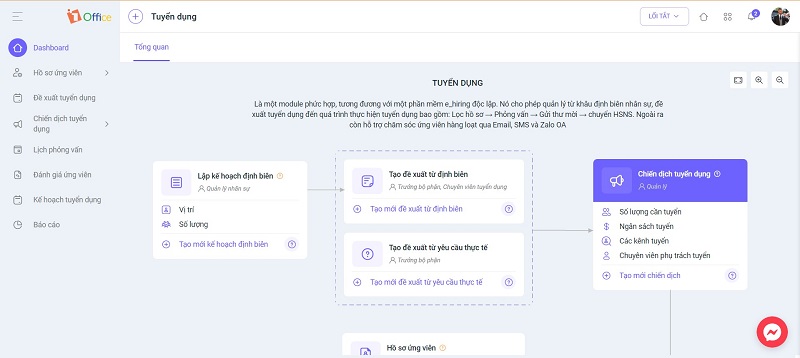
Known as a leading HR management software, HRM Office is also highly acclaimed for its recruitment functions. Specifically for its CV screening feature, the software helps HR select outstanding candidate profiles with complete automation and accuracy. With just a few simple steps, hundreds or even thousands of candidate profiles can be screened with ease.
| Advantages | Disadvantages |
| – Saves time and effort.
– Automatically screens a large number of candidate profiles quickly and accurately. – Easily manage and track candidate profiles. – Evaluates based on criteria and custom filters tailored to the business’s needs. |
– Difficulty in measuring and evaluating factors such as personality, mindset, ethics, etc.
– Requires an initial investment cost to activate the software. |
6. Common Mistakes When Screening CVs
To ensure the CV screening process is as effective and accurate as possible, recruiters should avoid the following mistakes:
- Screening candidate profiles based on intuition while ignoring evaluation criteria, which leads to subjective assessments.
- Conducting a superficial review and not thoroughly examining a candidate’s information, causing recruiters to miss out on excellent applicants.
- Being too rigid and strictly adhering to the evaluation criteria during the CV screening process.
- Being subjective and failing to verify the candidate’s information. This can lead the company to hire the wrong or an unsuitable candidate.
This article has provided detailed information on CV screening and how to screen candidate profiles most effectively and accurately. We hope you find this information useful. We wish you success!
















