13/05/2026
  314 views
Not only is it considered an outstanding human resource development strategy, but mentorship has now become an essential part of the work culture in many businesses. So, what is Mentorship? How can you build an effective mentorship program to improve employee quality? Let’s find out with 1Office in the article below.
Mục lục
- 1. What is Mentorship? What is a Mentorship Program?
- 2. Why do businesses need to build a Mentorship program?
- 3. 3 common forms of Mentorship
- 4. The 5 Most Applied Mentorship Techniques
- 5. 7 Steps to Building a Successful Mentorship Program
- Step 1. Define the Goals of the Mentorship Program
- Step 2. Develop the Program Plan
- Step 3. Present the Program Plan to Leadership
- Step 4. Communicate the Program
- Step 5. Connecting Mentors – Mentees: Criteria and Matching Methods
- Step 6. Guiding Mentorship Activities for Mentors and Mentees
- Step 7. Measure the Quality and Effectiveness of the Program
- 6. REFERENCE: Professional, Detailed Mentorship Program Plan Template
- 7. 5 Tips for Businesses to Implement an Effective Mentorship Program
- 8. Build an effective mentorship program with 1Office HRM
1. What is Mentorship? What is a Mentorship Program?
1.1. What is Mentorship?
Mentorship is a relationship where a person with deep understanding and extensive experience in a specific professional field (called a Mentor) guides and directs a less experienced person (the Mentee) to help them learn and grow. A Mentor does not necessarily need to have a higher rank than the mentee but must have sufficient competence and professional qualifications for the mentee to learn from.
1.2. What is a Mentorship Program?
A Mentorship program is a mentoring program organized by businesses to promote and improve employee quality by connecting them with expert mentors so they can learn and gain experience. Today, a Mentorship program is considered an indispensable part of a business’s employee development strategy and is widely applied by large organizations and corporations worldwide.
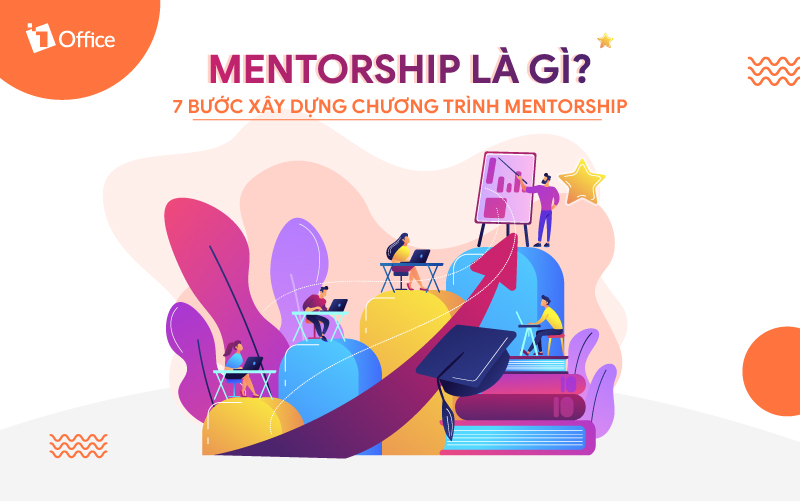
2. Why do businesses need to build a Mentorship program?
Today, mentorship plays a key role in guiding and developing an organization’s human resources. Mentorship programs not only serve to train employees but also bring countless benefits to the business, such as:
2.1. Retain talent, reduce turnover rate
A study by the University of Southern California showed that mentorship programs help reduce the turnover rate among participants by 45% and save up to $3,000 in recruitment and training costs per employee per year.
These figures prove that the impact of mentoring programs on talent retention is incredibly significant. Mentoring programs are also a way for businesses to build a developmental environment for employees, thereby increasing job satisfaction and engagement.
2.2. Promote employee development
Providing professional mentorship programs for employees creates opportunities for them to directly access knowledge, skills, and experience from the best.
In addition, mentorship programs also help diversify a company’s training methods. Instead of attending professional training sessions and taking periodic tests, employees can train and cultivate their skills by developing and building a relationship with a mentor.
2.3 Bridge the gap between leadership – management and employees
Mentorship programs create opportunities for employees to have a voice with managers and leaders, thereby breaking down communication barriers. The mentoring program helps establish good relationships between all levels in the organization by creating conditions for them to exchange, interact, and learn from each other. This is the solid foundation for building a united and healthy organization.
3. 3 common forms of Mentorship
| 1-on-1 Mentoring | This is a traditional mentoring model where an experienced mentor is paired with a mentee to help them develop, improve, and achieve their goals. |
| Peer Mentoring | Similar to 1-on-1 mentoring, but both parties are at the same job level or age. They can take turns acting as mentor and mentee to share experiences and expertise and learn together. |
| Group Mentoring | A type of mentorship where one mentor advises a group of multiple mentees. This mentoring format helps improve participants’ teamwork skills, while also promoting team spirit and an inclusive culture. |

4. The 5 Most Applied Mentorship Techniques
- Goal Orientation: The mentor does not directly set goals for the mentee but rather acts as a guide to help them define their own goals. The goal orientation technique can be used by
- Asking questions that help the mentee think about what they want to achieve
- Helping the mentee develop their own vision and mission
- Accompanying: The mentor accompanies the mentee to help them achieve their goals. Let the mentees figure out how they want to achieve their goals, with your guidance. This accompanying approach helps mentees take ownership of their decisions and become more resilient, even without a mentor.
- Two-Way Feedback: Both the mentor and mentee can provide contributions and personal opinions to improve the mentorship relationship. This technique helps build a collaborative relationship and provides a foundation for both the mentor and mentee to grow. For two-way feedback to be effective, both parties need to have active listening skills and a receptive attitude.
- Encouragement: The mentor motivates and boosts the mentee’s morale by acknowledging their efforts, praising their personal achievements, and providing positive feedback.
- Inspiring: Stimulating the mentee’s will and motivation by setting an example and sharing success stories of oneself or others; arranging challenging situations to help the mentee step out of their comfort zone.
To increase the effectiveness of mentorship models, refer to: Standard Human Resource Training and Development Process for businesses, including a standard training plan template
5. 7 Steps to Building a Successful Mentorship Program
Now that you have a comprehensive understanding of what mentorship is and its popular forms, let’s start building a professional and well-structured mentorship program for your company!
Step 1. Define the Goals of the Mentorship Program
The goals of a mentorship program need to be specific and aim to achieve a certain outcome. Mentorship goals guide the organizers’ efforts and help keep the program on track. Setting clear goals helps the business choose the appropriate type of mentorship and measure the program’s success. Whether it’s developing employees’ management skills, increasing employee retention rates, or fostering corporate culture, the mentorship goals must adhere to the 5 principles of the SMART model: Specific, Measurable, Attainable, Relevant, and Time-bound.
Here are some examples of specific goals for your organization:
- Increase the number of female leaders in the company by 25% over the next 5 years
- Double the number of mid-level employees promoted to senior positions within 2 years
- Reduce the employee turnover rate by half within six months
- Provide support for new employees to help them feel more comfortable and integrated within their first 3 months of employment
Step 2. Develop the Program Plan
After defining clear goals to pursue, the most crucial step is to create a framework for the mentorship program. A professional and well-structured mentorship program plan should include all of the following elements:
- Purpose & desired outcomes of the program: Clearly state the goals and target results with specific metrics
- Participants: Clarify which members will be mentors and mentees in the program
- Implementation format: Includes the type of mentorship, the working method between mentor and mentee, collaboration tools, etc.
- Main content: Career orientation/ skill development/ problem-solving/ workflow consultation, etc.
- Implementation roadmap: Timeline, key milestones to note
- Projected budget: Costs for organizing and implementing the program

Step 3. Present the Program Plan to Leadership
Once you have a complete plan, your next challenge is to get the necessary resources from leadership to run a successful program.
When presenting the mentorship program plan to leaders, make sure you:
- Clearly present the specific goals of the program
- Highlight how the program will benefit the entire company (e.g., enhanced innovation, better problem-solving)
- Explain how the mentorship program can help leaders achieve their own goals
- How the program will be implemented and promoted
Remember that a mentorship program is a completely viable option for leaders who want to invest in their employees and develop their teams – so don’t lose faith in your idea!
Step 4. Communicate the Program
Now that you have received leadership approval and have enough budget and resources to launch your program, you are only missing one element: participants. It’s time to bring in the Mentors and Mentees!
If members don’t recognize the value and relevance of the mentoring program, they will feel like they are being forced into a long-term training course. That’s why you need to inspire all members to join the program voluntarily. Show employees how the mentorship program will help them grow, learn new things, and advance their careers.
Here are some ways to promote the mentorship program internally within the company:
- Organize a sharing session about the mentorship program during a break
- Publish promotional articles about the program in company newsletters or on the intranet
- Ensure that managers announce and encourage their employees to participate in the program
- Send emails or post personal videos from the CEO or other leaders about the importance of mentorship in the business
Note that communication messages must be carefully invested, attractive, and engaging in both content and visuals to show employees that this is an opportunity they cannot miss.
Step 5. Connecting Mentors – Mentees: Criteria and Matching Methods
Many people think that you just need to connect a mentee with a more senior mentor to make them a pair. However, this is not how a mentoring program works; not to mention that a random pairing method will not result in high collaboration efficiency if the mentor and mentee are not a good fit.
To build a successful mentor-mentee relationship, it is important to have suitable criteria for pairing. Only when mentor and mentee pairs are compatible and have a common ground can they become a great team.
Don’t just think about the job roles or seniority of the individuals being paired. Consider other factors such as:
- Personality type
- Communication style
- Values
- Life experience
- Goals and development orientation
- Work style

Step 6. Guiding Mentorship Activities for Mentors and Mentees
Have you successfully paired mentors based on all the right factors and everyone is satisfied? The work doesn’t stop there. The next task in implementing the mentoring program is to provide guidance and working methods to ensure mentors and mentees clearly understand their roles.
Disseminating the detailed roadmap and expected outcomes of the mentoring program will help everyone know what they need to achieve and thus invest their efforts.
You can suggest guidelines for participants such as:
- Discussing their personal goals and ambitions, as well as what they hope to gain from the mentoring program
- Sharing experiences and advice about their careers or fields
- Providing feedback on each other’s work or career development goals
- Talking about the challenges they are facing and how they can overcome them
This not only helps the mentoring process run smoothly but also creates opportunities for participants to learn from each other and maximize the value of the program.
Step 7. Measure the Quality and Effectiveness of the Program
The final step in the process of implementing a mentorship program is to measure its effectiveness to evaluate the program’s success. Without proper measurement and tracking, it is very difficult to know whether the program is successful or not.
Here are the criteria you should consider to evaluate the quality of the mentorship program:
- Participation rate – How many people are actually participating in the program?
- Retention rate – Of those who participate, how many stick with it for more than one cycle?
- Satisfaction rate – How do participants feel about the program? Are they getting what they need from it?
- Impact – How does the program impact participants? (e.g., professionally, educationally, etc.)
- Cost-effectiveness – Is the mentorship program achieving its goals at a reasonable cost?
- Scalability – Can the program be easily replicated and scaled up if needed?
6. REFERENCE: Professional, Detailed Mentorship Program Plan Template
Implementing a mentorship program is a long process that requires effort and breakthrough ideas from the organizer. Therefore, to help businesses better understand what mentorship is and build a professional, well-structured, and easy-to-implement mentoring program, 1Office provides you with the most detailed mentorship program plan template:
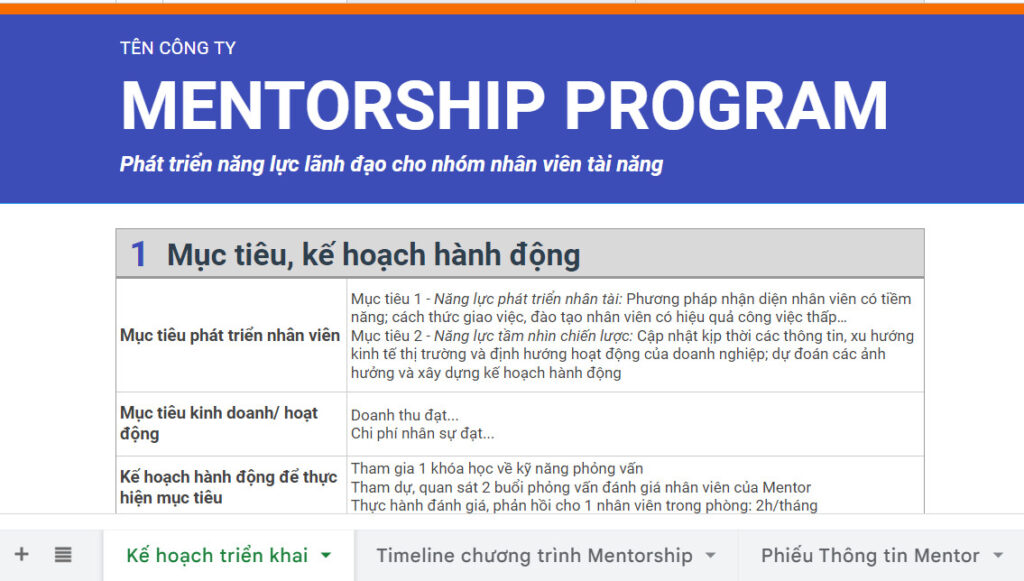
DOWNLOAD NOW: The Most Professional Mentorship Program Plan Template 2022
7. 5 Tips for Businesses to Implement an Effective Mentorship Program
7.1. Encourage leaders to become mentors
When we understand the concept of mentorship, we can see that when a senior executive agrees to participate in a mentorship program as a mentor, it can add credibility to the program and make it more appealing.
Additionally, when leaders participate as mentors, they can bring excellent skills and valuable experience. Not only that, but having leaders as mentors also helps bridge the gap between managers and junior employees, something that not every training session can achieve.
7.2. Encourage proactivity from mentees
The best mentorship relationship is one where both parties receive benefits and value from each other. Mentees are often seen as learners and followers. However, they also bring many unique perspectives and viewpoints to their mentors.
Encourage mentee participation by allowing them to set the agenda for meetings and being open to hearing their opinions. This approach ensures that both parties feel invested in the mentorship relationship, thereby building a positive experience for everyone involved.
7.3. Encourage mentors and mentees to stay in touch
Maintaining a close mentorship relationship between the parties is key to a successful mentoring program. Mentors and mentees can continue to support and help each other even after the program has ended. This contributes to increased organizational cohesion and strengthens collegial relationships.

7.4. Address obstacles for mentors and mentees
During the implementation of a mentorship program, you must be prepared for situations where mentors and mentees do not make significant progress. Instead of waiting for them to resolve their differences on their own, you should proactively foster the relationship by contacting both parties to clarify the situation.
Encourage collaboration by emphasizing the benefits they can gain from the mentoring program, motivating them to find a solution together.
7.5. Ensure privacy for all parties
Once you understand the nature of mentorship, you can see that relationships in mentoring activities must be built on trust. Only when privacy is guaranteed will mentors and mentees feel comfortable sharing their thoughts and experiences.
One method to build trust between parties is to establish confidentiality agreements as a clause in the program’s contract. The mentorship program organizers should emphasize that all data of program participants is secured at a high level.
8. Build an effective mentorship program with 1Office HRM
To build an optimal and highly effective Mentorship program, applying technology and support software during implementation is essential.
With the goal of helping businesses standardize their mentorship programs and develop human resources, 1Office provides an HRM solution that helps manage and implement internal mentoring programs easily and scientifically.
- With the feature to create new training campaigns, users can input relevant information such as time, location, mentor, and mentee, so all involved parties can clearly understand the mentorship program’s content.
- Easily track the program’s progress with statuses: In Progress, Completed, Planned, Expired, etc.
- Evaluate mentees directly on the software after the program with a system of evaluation criteria designed and customized to fit the mentorship program.
We hope this article from 1Office has provided managers with the most comprehensive perspective on what mentorship is and how to implement a successful mentorship program. To receive a consultation and experience Vietnam’s leading human resource management software, 1Office HRM, please register for a free consultation here:
For more details, please contact:
- Hotline: 083 483 8888
- Fanpage 1Office: https://www.facebook.com/1officevn
- Youtube Channel: https://www.youtube.com/c/1OfficeNềntảngquảnlýtổngthểDoanhNghiệp
Related keywords: What is Mentorship? How to build a Mentorship program