


 13/05/2026
  206 views
Continuing from part 1, 1Office provides 5 technology trends that will shape your business in 2026!
Mục lục
5. The Edge Computing Trend is Increasingly Supported
Edge computing is a topology where information processing, content collection, and delivery are placed closer to the source of information, with the goal of keeping traffic internal to reduce latency. The focused investment in this technology is a result of the need for IoT systems to be able to meet distributed capabilities and embedded applications in the IoT field. This type of topology will address the challenges of high WAN costs and unacceptable latency levels. Furthermore, it will allow for a focus on the specific details of digital business and IT solutions.
“Technology and thinking will advance to a point where the experience will connect people with hundreds of edge devices.”

From now until 2028, Gartner expects a steady increase in the embedding of sensors, storage, computing, and advanced AI capabilities in Edge devices. In general, the intelligence of a range of endpoint devices, from industrial equipment to displays to smartphones to automotive generators, will shift to the Edge.
6. Immersive technology trend
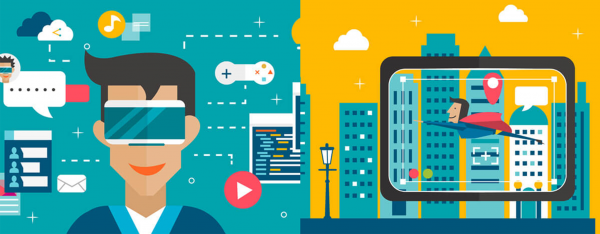
By 2028, conversational platforms, which change how users interact with the world, and technologies like augmented reality (AR), mixed reality (MR), and virtual reality (VR), which change how users perceive the world, will lead to new immersive experiences. AR, MR, and VR have great potential to increase productivity, with the next generation of VR able to perceive shapes and track the user’s position, and MR allowing people to view and interact.
Immersive technology is a future technology trend. By 2026, 70% of enterprises will be experimenting with immersive technologies for consumer and enterprise use; 25% will have deployed to production. The future of conversational platforms, ranging from virtual assistants to chatbots, will incorporate expanded sensory channels that allow the platform to detect emotions based on facial expressions.
Ultimately, technology and thinking will shift to a point where the experience will connect people with hundreds of different edge devices, from computers to cars.
7. Blockchain trend
Blockchain is a distributed ledger, a chronologically ordered list of encrypted transaction records; it is immutable and shared by all participants in the network. Blockchain allows companies to track a transaction and work with untrusted parties without needing a traditional intermediary to validate (for example, a bank). This significantly reduces business friction. Blockchain has started to be applied in the financial industry and has expanded to government, healthcare, manufacturing, supply chain, and other sectors. Blockchain has the potential to reduce costs, decrease transaction settlement times, and improve cash flow. The technology has also introduced ways for a range of blockchain-based solutions to leverage the benefits that blockchain offers.
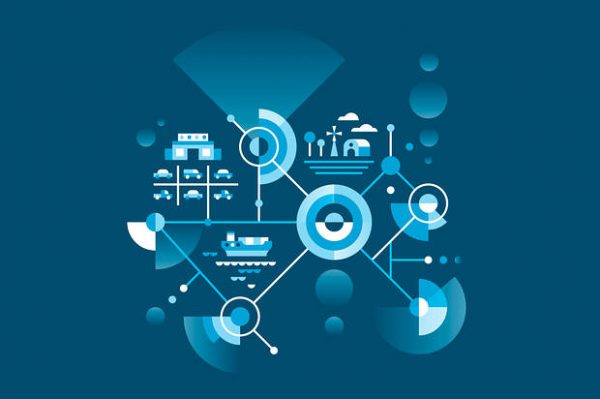
Pure blockchain models are still immature and can be quite difficult to scale. However, businesses should start reviewing and evaluating this technology now because blockchain will create $3.1 trillion in business value by 2030.
8. Smart spaces trend
A smart space is a physical or digital environment in which humans and technology-enabled systems interact in an increasingly open, connected, coordinated, and intelligent ecosystem. As technology becomes a part of daily life, smart spaces will enter a period of faster delivery. Furthermore, other trends such as AI-driven technology, edge computing, blockchain, and digital twins are driving this trend.
Smart spaces are evolving across 5 areas: Openness, connectivity, coordination, intelligence, and scope. Essentially, smart spaces are developing as individual technologies work together to create an interactive environment. The most comprehensive example of a smart space is a smart city, which combines business, residential, and industrial communities. These clusters are designed to integrate smart urban ecosystem frameworks with all sectors related to social and community collaboration.
9. Digital ethics and privacy trend
Consumers are increasingly aware of the value of their personal information and are increasingly concerned about how it is used by public and private entities. Businesses that do not pay attention to this will face the risk of consumer backlash.
Discussions about privacy must be grounded in ethics and trust. The conversation should shift from “Are we compliant?” to “Are we doing the right thing?”
Governments are rapidly planning or passing laws that companies must comply with, and consumers are increasingly protecting or deleting information about themselves. To succeed, companies must gain and maintain trust with their customers.
10. Quantum computing trend
Quantum computing is a type of non-classical computer based on the quantum state of subatomic particles, representing information expressed as quantum bits or “qubits”.
Quantum computers are a computing model that can scale exponentially. One way to visualize the difference between traditional and quantum computers is to imagine a giant library of books.
While a traditional computer would read every book in a library linearly, a quantum computer would read all the books at once. In theory, a quantum computer can work on millions of calculations at the same time. When applied to commercial services affordably and reliably, quantum computing will transform several different industries.
Real-world applications range from personalizing medicine to optimizing pattern recognition. This technology is still in its developmental stage, meaning it is a good time for businesses to enhance their understanding of potential applications and review security impacts. Specific quantum algorithms will provide a significant advantage to a certain group of businesses, but beyond those, most other businesses may remain in the market exploration phase until 2026 and begin to leverage this technology thereafter.
Conclusion
The article has listed strategic technology trends globally, helping you get a better overview of technology. Additionally, the article also mentions the importance of applying these technologies in practice. By staying ahead of trends, pioneering digital transformation, and applying artificial intelligence, 1Office software has assisted businesses in automated and comprehensive management. 1Office solves 04 basic problems in business management: Work Management (WorkPlace), Human Resource Management (HRM), Customer Relationship Management (CRM), and Overall Management Automation. Notably, everything is integrated into a single software, 1OFFICE, without intermediate apps or lengthy manual procedures.
Read more articles at:
















