


 09/05/2026
  167 views
A purchase requisition form is a crucial document in the internal procurement process, helping businesses control costs, ensure transparency in purchasing decisions, and standardize approvals. However, not all businesses create a standard form with complete content and an effective processing workflow. In this article, we provide a standard 2026 Purchase Requisition Form template, along with detailed instructions on how to create it, the approval process, common use cases, and free downloadable Word, Excel, and PDF files for immediate practical application.
Mục lục
- 1. What is a Purchase Requisition Form? Definition & Outstanding Importance
- 2. Key Components of a Standard Purchase Requisition Form
- 3. Các Mẫu Phiếu Đề Xuất Mua Hàng Phổ Biến & Tải Miễn Phí (Cập Nhật 2026)
- Mẫu 1: Phiếu đề xuất mua hàng chung ( Click tải file word miễn phí)
- Mẫu 2: Phiếu đề xuất mua vật tư / nguyên vật liệu ( Click tải file word miễn phí)
- Mẫu 3: Phiếu đề xuất mua sắm tài sản cố định / thiết bị( Click tải file word miễn phí)
- Mẫu 4: Phiếu đề xuất mua văn phòng phẩm ( Click tải file word miễn phí)
- 4. Quy Trình Xử Lý Phiếu Đề Xuất Mua Hàng Hiệu Quả Trong Doanh Nghiệp
- 5. Kết Luận
1. What is a Purchase Requisition Form? Definition & Outstanding Importance
As businesses increasingly focus on cost control, internal transparency, and process standardization, the Purchase Requisition Form has become an indispensable document in modern management systems. A proper understanding of its nature, role, and usage helps businesses avoid operational confusion and enhance procurement management efficiency.
What is a purchase requisition form template?
A purchase requisition form template is an internal document created by an individual, department, or division when a need arises to purchase goods, supplies, or services for business operations. This form is sent to the authorized department (direct manager, purchasing department, accounting, board of directors) for review and approval before any purchase is made.
Essentially, a purchase requisition form is not a payment voucher nor a transactional document with a supplier. It is the initial step in the procurement process, helping the business control needs from the very beginning, before any actual costs are incurred.
Distinguishing Between a Purchase Requisition and a Purchase Order
In the internal procurement process, the Purchase Requisition and the Purchase Order are two documents with entirely different roles but are often confused. Clearly distinguishing between these two documents helps businesses better control costs, avoid out-of-budget spending, and ensure the purchasing process is followed correctly.
A Purchase Requisition is an internal document created before any purchasing activity occurs. Its main purpose is to present the purchasing need, the reason for use, and the estimated cost for management to review and approve. A purchase requisition is not transactional and is not sent to the supplier; it serves only as the starting point of the procurement process.
Meanwhile, a Purchase Order is an official external transaction document, created only after the Purchase Requisition has been approved. The purchase order represents the company’s commitment to buy goods or services from a supplier and serves as the basis for delivery, payment, and future reconciliation.
The Core Role and Benefits of a Purchase Requisition Form
A purchase requisition form is not just a procedural document; it plays a foundational role in cost management and business operations. When applied correctly, this form offers numerous outstanding benefits.
Effective cost and budget control
All purchasing needs must be proposed and approved beforehand, helping the business avoid arbitrary spending, budget overruns, or duplicate purchases.
Transparent procurement process
A purchase requisition form clearly shows who is requesting, what is being purchased, for what purpose, in what quantity, and at what time. This makes the procurement process transparent, easy to track, and simple to audit.
Minimizing the risk of loss and fraud
When every purchase has a requisition and approval record, the risk of personal purchases, price inflation, or misappropriation of funds is significantly reduced.
Optimizing workflows and decision-making
Standardized information from the requisition form helps management make faster, more accurate decisions while reducing back-and-forth communication between departments.
Serving as a legal and accounting basis
The purchase requisition form is a crucial document in the procurement file, serving for:
-
Internal reconciliation
-
Audits and inspections
-
Explaining costs to accounting and management
2. Key Components of a Standard Purchase Requisition Form
A standard Purchase Requisition Form not only helps the purchasing department and management approve requests easily but also serves as a foundation for the business to control costs, trace accountability, and complete accounting records. In practice, many requisitions are rejected or delayed simply due to missing important information or unclear presentation. Below are the core components that must be included in a proper 2026 purchase requisition form.
Administrative Information
The administrative information section helps establish the legality, timing, and originator of the requisition. This is the primary basis for the company to manage records and for future reconciliation.
Administrative information typically includes:
-
National emblem and motto (if the company follows a standard administrative template)
-
Company/business name, logo (if any)
-
Requisition number: numbered according to internal regulations for easy management
-
Date and place of creation
-
Requester/Department Information:
-
Full name of the requester
-
Job title
-
Department/division
-
Clearly stating this information helps the company define responsibility and facilitates communication or requests for additional information.
Information on Requested Goods/Services
This is the most critical part of the Purchase Requisition Form, directly influencing how quickly it gets approved. The information must be presented specifically, be easy to understand, and be verifiable.
Mandatory content should include:
-
Name or detailed description of the goods/services
(specify type, specifications, technical standards if any) -
Item code (applicable for businesses with a material code management system)
-
Quantity and unit of measure
-
Estimated unit price (based on
-
Yêu cầu bổ sung/chỉnh sửa
Việc thể hiện rõ trạng thái phê duyệt giúp tránh hiểu nhầm và là căn cứ quan trọng cho các bước tiếp theo như lập Đơn đặt hàng (PO) hoặc thanh toán.
3. Các Mẫu Phiếu Đề Xuất Mua Hàng Phổ Biến & Tải Miễn Phí (Cập Nhật 2026)
Trong thực tế vận hành, không phải mọi nhu cầu mua sắm đều phù hợp với một mẫu chuyên biệt. Tùy theo tính chất hàng hóa, giá trị mua sắm, mức độ khẩn cấp và đối tượng phê duyệt, doanh nghiệp nên sử dụng mẫu Phiếu đề xuất mua hàng tương ứng để tối ưu tốc độ xử lý và kiểm soát chi phí. Dưới đây là các mẫu phổ biến, đã được chuẩn hóa cho năm 2026, kèm mô tả và link tải miễn phí để bạn áp dụng ngay.
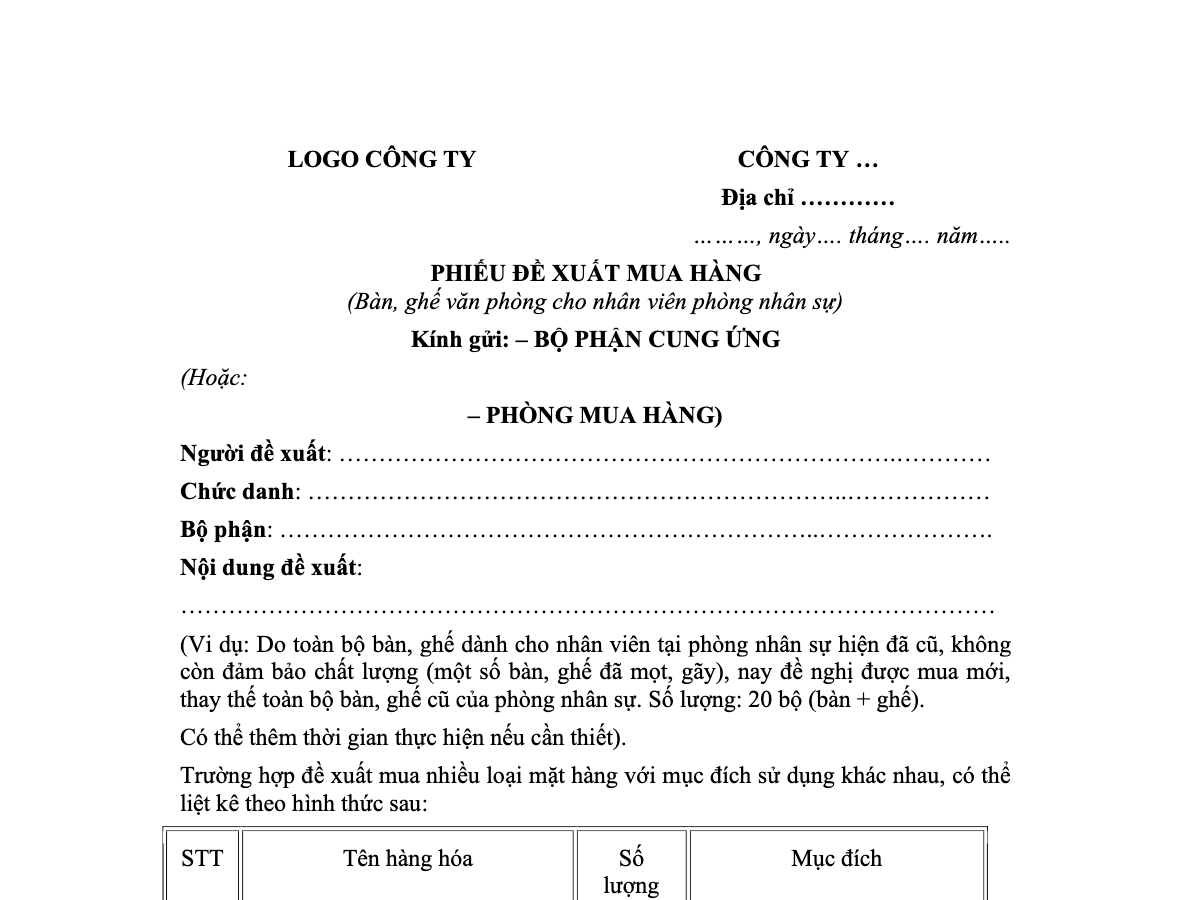
Mẫu 1: Phiếu đề xuất mua hàng chung ( Click tải file word miễn phí)
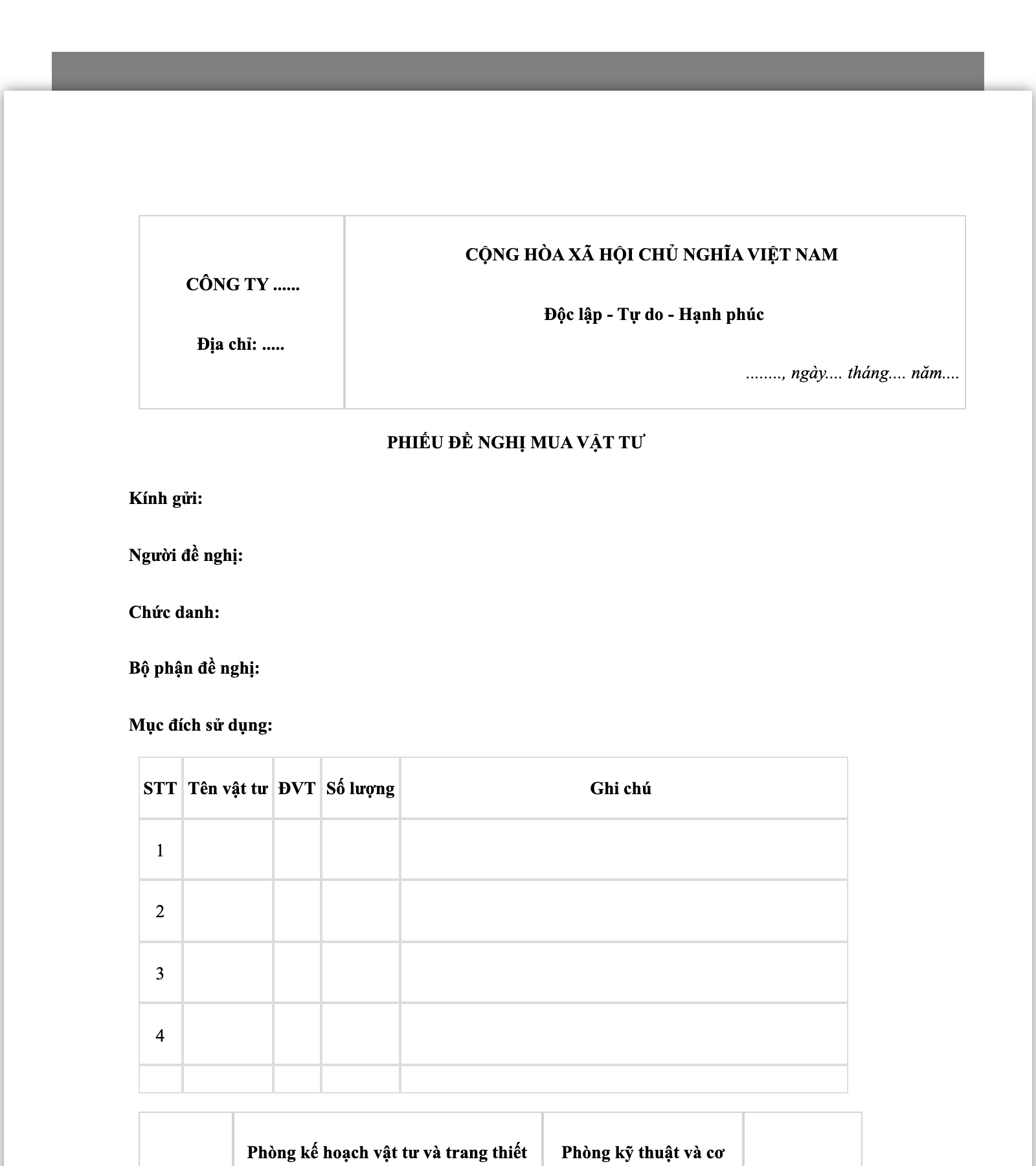
Mẫu 2: Phiếu đề xuất mua vật tư / nguyên vật liệu ( Click tải file word miễn phí)
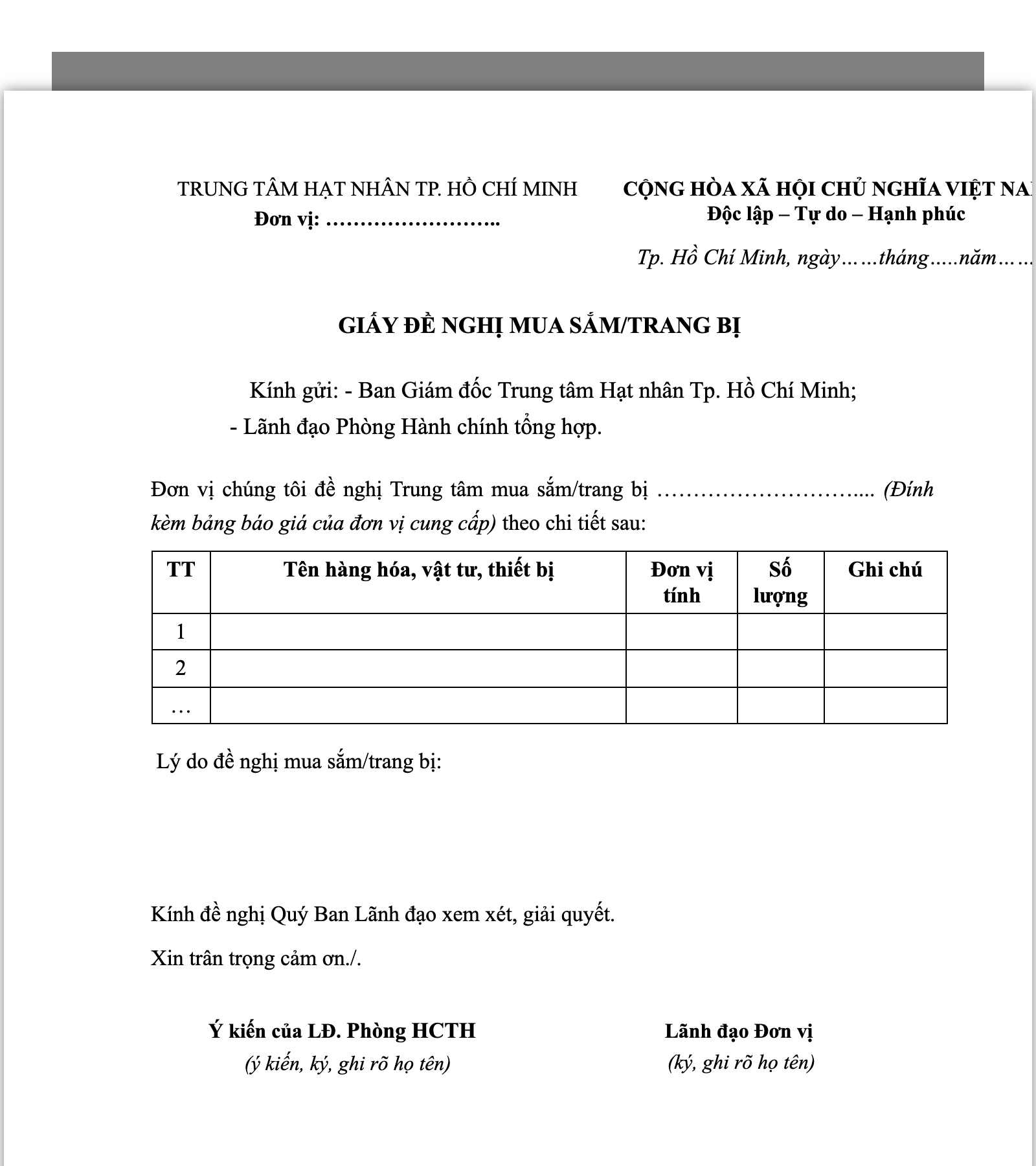
Mẫu 3: Phiếu đề xuất mua sắm tài sản cố định / thiết bị( Click tải file word miễn phí)
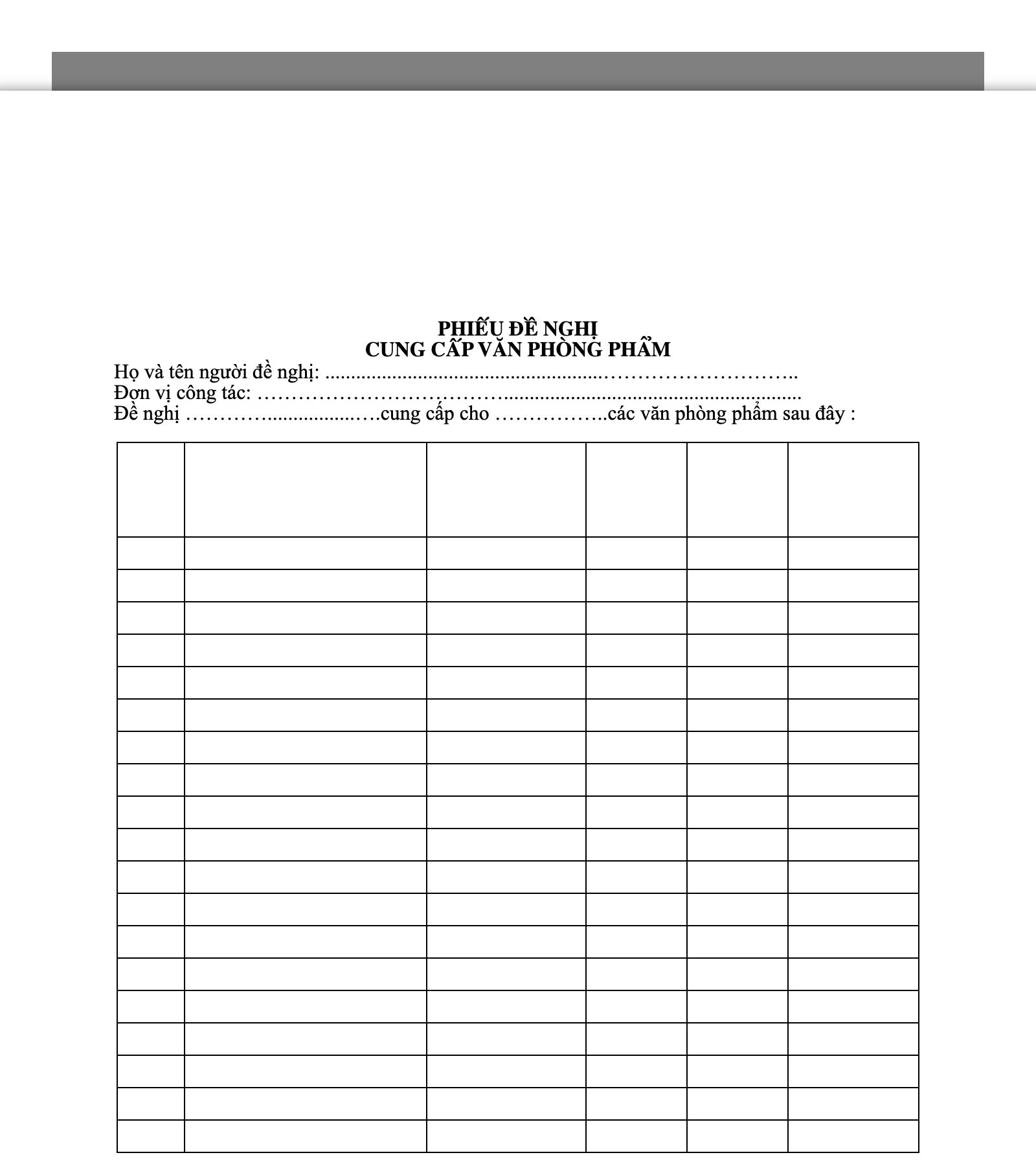
Mẫu 4: Phiếu đề xuất mua văn phòng phẩm ( Click tải file word miễn phí)
4. Quy Trình Xử Lý Phiếu Đề Xuất Mua Hàng Hiệu Quả Trong Doanh Nghiệp
Một quy trình xử lý Phiếu đề xuất mua hàng rõ ràng, nhất quán là nền tảng để doanh nghiệp kiểm soát chi phí, giảm thiểu rủi ro và nâng cao tốc độ ra quyết định. Trên thực tế, nhiều doanh nghiệp gặp tình trạng chậm mua, vượt ngân sách hoặc thiếu chứng từ không phải vì thiếu mẫu biểu, mà do quy trình chưa được chuẩn hóa. Dưới đây là quy trình 7 bước được áp dụng hiệu quả trong các doanh nghiệp năm 2026.
Bước 1: Khởi tạo đề xuất – Nhu cầu phát sinh
Quy trình bắt đầu khi cá nhân hoặc phòng ban phát sinh nhu cầu mua sắm để phục vụ công việc, sản xuất hoặc dự án. Ở bước này, điều quan trọng là xác định đúng nhu cầu thực tế, tránh mua sắm trùng lặp hoặc phát sinh ngoài kế hoạch.
Nhu cầu có thể đến từ:
-
Hoạt động vận hành thường ngày
-
Yêu cầu của dự án
-
Thay thế, sửa chữa, bổ sung tài sản/vật tư
Bước 2: Lập và gửi Phiếu đề xuất mua hàng
Người đề xuất tiến hành lập Phiếu đề xuất mua hàng theo mẫu doanh nghiệp đang áp dụng, điền đầy đủ thông tin về hàng hóa/dịch vụ, số lượng, chi phí ước tính, mục đích sử dụng và thời gian cần hàng. Phiếu sau đó được gửi đến quản lý trực tiếp hoặc bộ phận phụ trách theo quy định.
Một phiếu đề xuất đạt yêu cầu cần đảm bảo:
-
Thông tin rõ ràng, có thể kiểm chứng
-
Chi phí ước tính hợp lý
-
Lý do đề xuất thuyết phục và đúng bối cảnh
Bước 3: Phê duyệt nội bộ theo cấp bậc
Đây là bước trọng yếu nhất trong toàn bộ quy trình, quyết định việc mua sắm có được triển khai hay không. Việc phê duyệt thường diễn ra theo cấp bậc quản lý, tùy thuộc vào giá trị và tính chất của đề xuất.
Quy trình phê duyệt phổ biến:
-
Quản lý trực tiếp / Trưởng bộ phận
-
Phòng mua hàng hoặc kế toán (kiểm soát ngân sách)
-
Ban giám đốc (đối với khoản chi lớn)
Các tiêu chí phê duyệt thường được xem xét gồm:
-
Mức độ cần thiết của đề xuất
-
Phù hợp với ngân sách và kế hoạch
-
Tính hợp lệ của thông tin và hồ sơ
Thời gian xử lý ở bước này có ý nghĩa rất lớn. Quy trình phê duyệt càng rõ ràng, doanh nghiệp càng tránh được tình trạng chờ đợi kéo dài, ảnh hưởng đến tiến độ công việc.
Bước 4: Chuyển giao cho bộ phận mua hàng
Sau khi Phiếu đề xuất mua hàng được phê duyệt, hồ sơ được chuyển sang bộ phận mua hàng hoặc bộ phận phụ trách mua sắm. Từ thời điểm này, đề xuất chính thức trở thành đầu vào của quy trình mua hàng.
Bộ phận mua hàng căn cứ vào:
-
Phiếu đề xuất đã được duyệt
-
Ngân sách được chấp thuận
-
Thời gian yêu cầu
để xây dựng kế hoạch mua sắm phù hợp.
Bước 5: Thực hiện mua hàng
Bộ phận mua hàng tiến hành các nghiệp vụ cần thiết như tìm kiếm nhà cung cấp, so sánh báo giá, đàm phán điều kiện và đặt hàng. Với các doanh nghiệp có quy mô lớn, bước này thường gắn với quy trình lựa chọn nhà cung cấp nhằm đảm bảo minh bạch và tối ưu chi phí.
Ở giai đoạn này, Phiếu đề xuất mua hàng đóng vai trò:
-
Căn cứ xác định phạm vi mua sắm
-
Cơ sở đối chiếu với Đơn đặt hàng (PO)
-
Hạn chế mua sai hoặc mua vượt đề xuất
Bước 6: Giao nhận và kiểm tra hàng hóa/dịch vụ
Khi hàng hóa hoặc dịch vụ được cung cấp, bộ phận liên quan tiến hành giao nhận và kiểm tra, đảm bảo đúng với nội dung đã được đề xuất và phê duyệt. Việc kiểm tra này giúp phát hiện sớm các sai lệch về số lượng, chất lượng hoặc chủng loại.
Cần đối chiếu:
-
Hàng hóa/dịch vụ thực nhận
-
Phiếu đề xuất mua hàng
-
Đơn đặt hàng và chứng từ liên quan
Bước 7: Thanh toán và lưu trữ hồ sơ
Bước cuối cùng là thanh toán và hoàn thiện hồ sơ mua sắm. Kế toán căn cứ vào đầy đủ chứng từ để thực hiện thanh toán và ghi nhận chi phí theo đúng quy định.
Hồ sơ cần được lưu trữ bao gồm:
-
Phiếu đề xuất mua hàng
-
Quyết định/phê duyệt
-
Đơn đặt hàng, hợp đồng
-
Hóa đơn, biên bản giao nhận
Việc lưu trữ đầy đủ có ý nghĩa đặc biệt quan trọng trong kiểm toán, thanh tra và quản lý nội bộ, giúp doanh nghiệp dễ dàng truy xuất và giải trình khi cần thiết.
5. Kết Luận
Một quy trình xử lý Phiếu đề xuất mua hàng hiệu quả không chỉ giúp doanh nghiệp mua đúng – mua đủ – mua kịp thời, mà còn nâng cao tính minh bạch, khả năng kiểm soát chi phí và hiệu quả vận hành. Khi quy trình được chuẩn hóa, Phiếu đề xuất mua hàng sẽ thực sự trở thành công cụ quản trị, thay vì chỉ là một thủ tục hành chính.
















