


 12/05/2026
  365 views
Any business that lacks a specific and suitable sales process will struggle to achieve success. The sales steps play a crucial role in shaping the organization’s direction and creating favorable conditions for competing in the market. The article below will analyze in detail the highly effective 8-step sales process that veteran salespeople are using and don’t want you to know about!
Mục lục
Why do businesses need an 8-step sales process?

The 8-step sales process acts as a compass, guiding the sales team to success. It offers practical benefits such as:
- Increase sales efficiency: A structured process helps optimize each step of customer outreach, thereby increasing the closing rate.
- Enhance professionalism: The business projects a professional image, building credibility and trust with customers.
- Improve consistency: Ensures all sales staff follow a unified process, delivering a consistent customer experience.
- Easy to manage and evaluate performance: Tracking and evaluating the effectiveness of each step helps the business optimize the process and improve sales performance.
The Basic 8-Step Sales Process to Double Efficiency, Easy to Apply
Step 1: Prepare Before Meeting the Customer
Before a direct meeting with a customer, sales staff need to have a deep understanding of the product’s characteristics, uses, features, and pricing to provide the most effective consultation. In addition to mastering product information, you also need to research the target customer audience and clearly understand their needs. Mental and emotional preparation is also important to be confident when interacting with and meeting customers.
Step 2: Approach the Customer
After mastering sales skills, the next step for a salesperson is to approach potential customers. However, not all customers are a good fit for the product line you are marketing. Therefore, for each product type, clearly identify the key customer audience and focus on approaching them. This step helps you save valuable time and ensures you reach the right people at the right time.

In this step, the salesperson makes the first contact with the customer. This is considered an opportunity to build a long-term relationship with them. Common methods for approaching customers include:
- Sincerely introduce the product.
- Offer customers a trial sample so they have a chance to experience and evaluate the product’s quality.
- Build a good relationship with the customer.
- Suggest that the customer use the product.
- Pay attention and listen to opinions and feedback from the customer.
- Send informational materials about the product.
- Persistently persuade the customer until a final decision is made.
Step 3: Identify Needs
A customer’s needs often reflect their psychology and personal desires, with the goal of satisfying their expectations. In the past, business often focused on selling products; however, to succeed today, businesses need to aim at providing what customers truly need, rather than just getting them to buy the company’s product.
At this point, it’s not about focusing on the specific features and characteristics of the product, but about clarifying the benefits the customer can gain from using the company’s product or service. The key is to demonstrate whether the product or service can solve the problem the customer is concerned about.
Step 4: Persuade the Customer
Sales staff need to set specific goals when approaching customers. For example, capturing attention, eliminating doubt, and building trust in the product’s value for the buyer. Therefore, the salesperson needs a compelling opening to create a positive impression.
The topics that guide the conversation should be diversified to stimulate interest and must accurately reflect the customer’s psychology. Most importantly, they must be appropriate for the target audience and avoid issues related to politics or religion.
Step 5: Handle Customer Objections
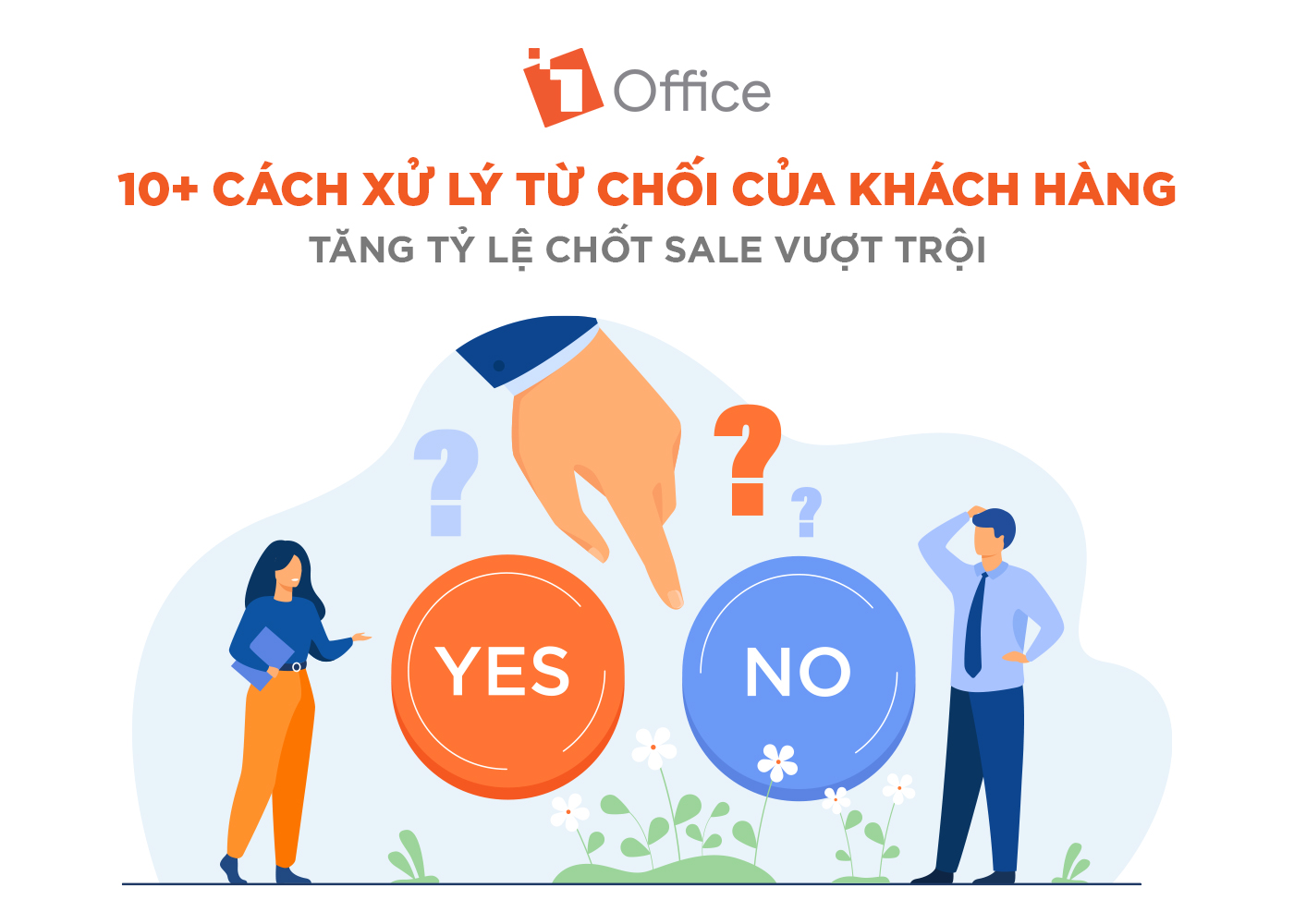
Customers often have many reasons to object, such as high product prices, unsatisfactory quality, no need, or a lack of trust. Therefore, salespeople need to remain calm when facing these situations, avoiding tension or conflict with the customer. Instead, they should explain maturely so that the customer understands and perceives the product’s advantages and the new value they can receive, thereby stimulating and increasing their purchasing demand.
>>> Read more: 10+ Ways to Handle Customer Objections to Dramatically Increase Your Closing Rate
Step 6: Closing the order
Customers who show interest in the product often ask questions related to price, product features, after-sales programs, or accompanying gifts…
Opportunities often pass quickly, so salespeople need to seize them promptly, pushing the customer’s decision-making process by suggesting they try the product, proposing an immediate order, inviting feedback to improve the product, etc. After the order is signed, it is important to forward that information to the relevant departments.
Step 7: Handling complaints
Resolving customer complaints is a smart step in the 8 basic steps of the sales process, aiming to prevent customers from complaining to others and to maintain a positive relationship with them. This also helps increase sales opportunities with other customers.
The handling process includes receiving the complaint, determining whether the fault lies with the product or the customer, and quickly providing a solution.
Step 8: After-sales care

Customer care after selling is an extremely important step, helping customers build absolute trust in your company and creating a positive impression of how you do business. Many people mistakenly believe that once the product is delivered to the customer, the sales process is over, but that is a completely wrong perspective. The amount of money spent to find and retain an existing customer is often much greater than the cost of attracting a new one. At the same time, the profit from existing customers is usually much higher than from new customers.
>>> Read more: Effective and professional after-sales customer care process
——————————————-
The 8 basic sales steps above are a series of activities and interactions between the salesperson and the customer. However, in practice, the most important factor is still how the salesperson approaches and persuades the customer. The seller needs to apply the process flexibly, avoiding rigidity and dryness to enhance sales efficiency and achieve the set sales targets.
















