11/05/2026
  585 views
Fixed asset liquidation is a common accounting transaction, but if the remaining value, related costs, or income from the liquidation are recorded incorrectly, the business can easily have inaccurate data and face tax risks. This article will help you clearly understand accounting for fixed asset liquidation, from the implementation process to how to make journal entries for specific cases.
Mục lục
- 1. What is accounting for fixed asset liquidation?
- 2. Legal regulations on the liquidation and sale of fixed assets
- 3. How to account for the liquidation and sale of fixed assets in different cases
- 4. Example of fixed asset liquidation
- 5. Impact of fixed asset liquidation on corporate tax management
- 6. Risks in the Accounting Process for Fixed Asset Disposal
- 7. Conclusion
1. What is accounting for fixed asset liquidation?
Accounting for fixed asset liquidation (FA) is the process of recording and processing economic transactions related to the liquidation, sale, or disposal of fixed assets that are no longer usable or suitable for the business’s operations. This is part of the fixed asset management process, aimed at ensuring transparency and accuracy in the accounting books.
2. Legal regulations on the liquidation and sale of fixed assets
Regulations on the liquidation of fixed assets are detailed in Point 3.2, Clause 2, Article 35 of Circular 200/2014/TT-BTC and Clause 1, Article 31 of Circular 133/2016/TT-BTC. Accordingly, “Liquidated fixed assets (FA)” refers to fixed assets that are damaged, unusable, or technologically obsolete, and no longer meet production and business requirements.

2.1 When are businesses allowed to liquidate fixed assets?
A business may need to liquidate fixed assets in the following cases:
- The fixed asset is severely damaged and can no longer be used.
- The fixed asset is obsolete and no longer suitable or sufficient for the needs of the business/organization.
- Sale, dissolution, or merger of the business.
For fixed assets that are fully depreciated (capital fully recovered) but are still being used in production and business activities, depreciation should not continue to be recorded. In cases where a fixed asset is not yet fully depreciated (capital not fully recovered) but is damaged and needs to be liquidated, the cause and responsibility of the collective and individuals must be determined to handle compensation. If the remaining value of the unrecovered fixed asset is not fully compensated, it must be offset by the proceeds from the liquidation and the compensation amount determined by the manager or leadership.
If the total proceeds and compensation are not enough to cover the remaining value of the unrecovered fixed asset or the value of the lost fixed asset, the remaining difference is considered a loss.
Note: In cases where a fixed asset is no longer needed and is awaiting liquidation but is not yet fully depreciated, the business/organization must manage, monitor, and preserve it according to legal regulations.
2.2 Fixed asset liquidation procedures
When a decision is made to liquidate a fixed asset, the business needs to establish a Fixed Asset Liquidation Council. The Council is responsible for organizing the liquidation of the fixed asset according to the correct procedure and preparing a “Fixed Asset Liquidation Record” according to the prescribed form.
The Fixed Asset Liquidation Record is made in 2 copies, one for the accounting department to record and file, and one for the unit that uses and manages the fixed asset.
2.3 Fixed asset liquidation process
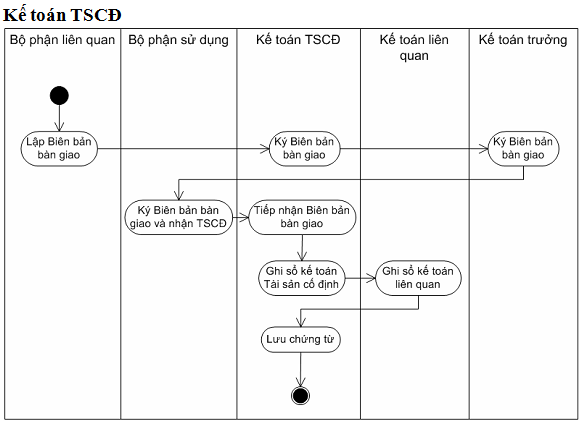
Step 1: The department (or division) with the fixed asset to be liquidated prepares a liquidation request based on asset inventory results and the asset’s monitoring and usage history, then submits it to the company’s leadership for approval. The request must detail the list of assets to be liquidated.
Step 2: A representative of the business makes the decision to liquidate the fixed asset.
Step 3: Establish a Fixed Asset Liquidation Council, including:
- Head of the unit: Chairman of the Council;
- Chief Accountant, asset accountant;
- Head (or deputy) of the facilities department, officer in charge of assets;
- Representative of the unit directly managing the liquidated asset;
- Specialist with knowledge of the technical specifications of the liquidated asset;
- Representatives of organizations: Trade Union, People’s Inspectorate (if necessary).
Step 4: The Fixed Asset Liquidation Council submits a proposal to the head of the business to decide on the method of disposal, such as selling or destroying the asset, depending on the characteristics and condition of the fixed asset to be liquidated.
Step 5: The Fixed Asset Liquidation Council prepares a “Fixed Asset Liquidation Record” after the liquidation process is complete. This process is accompanied by a fixed asset liquidation file, which includes:
- Minutes of the Fixed Asset Liquidation Council meeting.
- Decision on Fixed Asset Liquidation.
- Fixed Asset Inventory Record.
- Fixed Asset Revaluation Record.
- Fixed Asset Liquidation Record.
- Economic contract for the sale of the liquidated fixed asset.
- Invoice for the sale of the fixed asset.
- Fixed Asset Handover Record.
- Fixed Asset Destruction Record.
- Liquidation of the economic contract for the sale of the fixed asset.
Read more: What are intangible fixed assets? How to determine and account for fixed assets
3. How to account for the liquidation and sale of fixed assets in different cases
3.1 Case 1: Liquidation of fixed assets used for production and business activities
When accounting for the liquidation of fixed assets during production and business operations, accountants follow these principles:
- For fully depreciated assets, the accountant writes off the entire original cost (account 211) and accumulated depreciation (account 214) of that asset.
- Income from the liquidation of fixed assets is recorded in account 711 – other income.
- Expenses incurred during the liquidation of fixed assets are recorded in account 811 – other expenses.
- For assets that are not fully depreciated, the remaining value of the asset is recorded in account 811.
At this point, the accountant records as follows:
Recording revenue
- Debit Accounts 111, 112, 131 (Total amount received from the liquidation of fixed assets)
- Credit Account 711 (Value of liquidated fixed assets, excluding VAT)
- Credit Account 3331 (VAT payable.)
If Account 3331 cannot be separated immediately, Account 711 will include the tax amount and must be reduced when declaring the tax payable.
Recording the decrease in fixed assets
- Debit Account 214 (accumulated depreciation value from the beginning of the fixed asset depreciation period)
- Debit Account 811 (remaining value not yet fully depreciated – if any)
- Credit Account 211 (original cost of the fixed asset)
Other expenses
- Other expenses related to the liquidation of fixed assets are recorded as a Debit to Account 811.
Read more: What is the original cost of a fixed asset? How to determine the original cost of a fixed asset
3.2 Case 2: Liquidation of fixed assets used for internal purposes or projects
For Fixed Assets (FA) formed from non-business funds, project funds granted from the state budget, aid, and sponsorships used in non-business activities, the accountant will use account 466 to record the revenues and expenditures related to the sale or liquidation of that FA.
When the enterprise liquidates fixed assets used for internal purposes or projects, based on the Fixed Asset Handover Record, the accountant will record as follows:
Recording the decrease in fixed assets
- Debit Account 214 (accumulated depreciation value from the beginning of the fixed asset depreciation period).
- Debit Account 466 (Remaining value not yet fully depreciated – if any).
- Credit Account 211 (Original cost).
Reflecting the amount received from the liquidation of fixed assets:
- Debit Accounts 111, 112,…: Total value received from the liquidation of fixed assets.
- Credit Account 466 (according to Circular No. 200): The fund source that formed the fixed asset.
- Credit Account 3331: Taxes and other amounts payable to the State (if any).
Reflecting the expenses incurred from the liquidation of fixed assets:
- Debit Account 466 (according to Code 200): Total value of expenses incurred during the liquidation of fixed assets.
- Credit Accounts 111, 112,…: Total value of expenses incurred from the liquidation of fixed assets.
Other expenses
Other related expenses are recorded in the relevant accounts as prescribed.
3.3 Case 3: Liquidation of fixed assets used for welfare and cultural activities
Revenues and expenditures related to the liquidation of Fixed Assets (FA) used for employees’ cultural and welfare activities will be recorded in account 353 – Bonus and welfare fund. When the enterprise liquidates fixed assets for cultural and welfare activities, based on the Fixed Asset Handover Record, the accountant will record as follows:
Recording revenue
- Debit Accounts 111, 112, …: Total value received from the liquidation of fixed assets.
- Credit Account 3532: Welfare fund.
- Credit Account 3331: Taxes and other amounts payable to the State (if any).
Reflecting the expenses incurred from the liquidation of fixed assets:
- Debit Account 3532: Total value of expenses incurred during the liquidation of fixed assets.
- Credit Accounts 111, 112, etc.: Total value of expenses incurred during the liquidation of fixed assets.
Recording the decrease in fixed assets
- Debit Account 214 (accumulated depreciation value from the beginning of the fixed asset depreciation period).
- Debit Account 353 (Remaining value not yet fully depreciated – if any).
- Credit Account 211 (Original cost).
Other expenses
Other related expenses are recorded as a Debit to Account 353
3.4 Case 4: Liquidation of fixed assets upon demolition
According to the provisions in Clause 1, Article 4 of Circular 45/2013/TT-BTC, when an enterprise demolishes or dismantles buildings and architectural structures related to land use rights after purchasing tangible fixed assets, the value of the land use rights must be determined separately and recorded as an intangible fixed asset if it meets the criteria specified in point dd, clause 2 of this regulation.
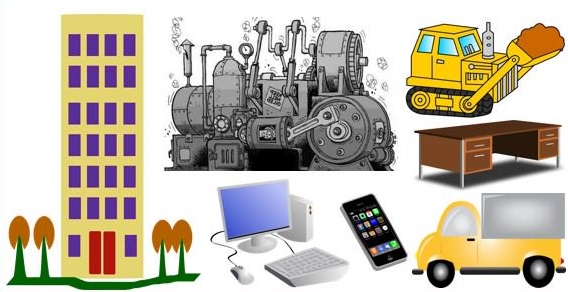
The original cost of newly constructed fixed assets will be determined based on the final settlement price of the construction investment project according to the current Regulations on Investment and Construction Management. Demolished or dismantled fixed assets will be accounted for according to the current regulations on fixed asset liquidation.
The accounting entries for demolishing fixed assets are as follows:
- Debit Account 214 – Fixed asset depreciation (depreciation value).
- Debit Account 811 – Other expenses (remaining value).
- Credit Account 211 – Tangible fixed assets (original cost).
According to Official Letter 2590/TCT-CS dated June 26, 2015, from the General Department of Taxation, if a company self-constructs and manages machine bases and foundations as separate fixed assets, and it becomes necessary to reinstall and rearrange the production line system with new technology, the complete demolition of these bases and foundations is mandatory. In the case of demolishing and liquidating these fixed assets, if they are not yet fully depreciated, the remaining value will be included in deductible expenses when determining corporate income tax, provided there are complete legal invoices and documents as required by law.
4. Example of fixed asset liquidation
On October 12, company XYZ sold a laptop used in the office. The information related to this transaction is as follows:
- The original cost of the laptop is 20 million VND.
- The accumulated depreciation of the laptop is 5 million VND.
- The laptop has been used for 3 years.
- Before selling, the company spent 800,000 VND to upgrade the laptop, which was paid in cash.
- The company sold the laptop for 9 million VND, excluding 10% VAT, and has not yet received payment from the customer.
The related accounting entries are as follows (unit: Vietnamese Dong):
Recording the decrease in the original cost of the fixed asset:
- Debit Account 214: 5,000,000
- Debit Account 811: 15,000,000
- Credit Account 211: 20,000,000
Recording expenses related to the fixed asset liquidation:
- Debit Account 811: 800,000
- Credit Account 111: 800,000
Recording income from the fixed asset liquidation:
- Debit Account 111: 9,900,000
- Credit Account 333: 900,000
- Credit Account 711: 9,000,000
5. Impact of fixed asset liquidation on corporate tax management
The liquidation of fixed assets (FA) directly affects a company’s tax obligations. Upon liquidation, the revenue generated is recorded as other income, increasing the corporate income tax (CIT) base. Concurrently, reasonable expenses related to the liquidation (such as dismantling, transportation, and disposal costs) are considered deductible expenses. If the company maintains transparent accounting, this process helps optimize taxes while ensuring legal compliance. However, incorrect recording poses a high risk of tax arrears and penalties.
- Example of a positive impact: In 2022, Bim Son Cement (BCC) recorded other income of over VND 5.4 billion from the disposal of fixed assets. The company accounted for this amount correctly and transparently, helping to increase legal profits while providing the tax authorities with a clear basis for determining taxable income.
- Example of a negative impact: In 2019, the State Audit Office discovered that many public service units failed to record or incorrectly recorded revenue from the disposal of fixed assets, leading to misstated reports by tens of billions of VND, causing budget losses and forcing adjustments and tax arrears collection.
6. Risks in the Accounting Process for Fixed Asset Disposal
Accounting for the disposal of fixed assets (FA) is not just a simple accounting task; it also involves taxes, financial reporting, and the company’s reputation. If not performed accurately, businesses may face tax arrears, inaccurate financial statements, and even asset loss. Below are the most common risks.
6.1. Incorrectly Recording the Remaining Value of Assets
One of the most common errors is failing to accurately determine the remaining value (original cost – accumulated depreciation). If an accountant miscalculates depreciation or omits related incurred costs, the recorded value will be incorrect, leading to a distorted profit/loss from the disposal.
Prevention:
- Always reconcile figures between the fixed asset ledger and the depreciation schedule before recording.
- Use management software to automatically calculate depreciation and minimize manual errors.
Correction:
- Make an adjusting entry in the period the error is discovered.
- Provide a detailed explanation in the notes to the financial statements to ensure data transparency.
During the disposal process, businesses often incur costs for dismantling, transportation, processing, etc. If the accountant omits these, the recorded profit from the disposal will be “inflated” compared to reality.
Prevention:
- Create a checklist of potential costs that may arise during disposal.
- Collect all relevant invoices and supporting documents.
Correction:
- Review the disposal records and add entries for any missing costs.
- If the financial statements have already been submitted, prepare a supplementary report and resubmit it to the tax authorities.
6.3. Errors in Determining Taxable Income from Disposal
Many businesses confuse income from disposal with other income or fail to include it as part of corporate income tax (CIT). This leads to incorrect declarations, potentially resulting in tax arrears and penalties.
Prevention:
- Understand current tax regulations (Circular 78/2014/TT-BTC and related documents).
- Always cross-reference carefully when accounting for disposal income.
Correction:
- File a supplementary declaration and adjustment with the tax authorities immediately upon discovering the error.
- Prepare a written explanation to minimize administrative penalties.
6.4. Lack of Valid Documents in the Disposal File
If a business lacks a complete file (disposal minutes, contracts, invoices, etc.), the tax authorities may deem the expense/income invalid.
Prevention:
- Prepare disposal minutes signed by the disposal committee.
- Retain all sales contracts, invoices, and shipping documents.
Correction:
- Supplement and complete the documentation immediately upon discovering any omissions.
- If documents cannot be supplemented, prepare an explanatory report and accept the risk of the expense being disallowed.
6.5. Incorrect Account Entries for Disposal
This is an extremely common risk. Many businesses make mistakes in using accounts when disposing of fixed assets, for example:
- Forgetting to transfer the accumulated depreciation value to Account 214.
- Incorrectly recording in Account 711 (other income) or Account 811 (other expenses).
- Failing to write down the original cost in Account 211 and only recording the disposal income.
The result is unbalanced books, imbalanced financial statements, and difficulties during tax finalization.
Prevention:
- Master the disposal accounting process according to accounting standards:
- Write down the original cost of the fixed asset (Account 211).
- Write down the accumulated depreciation (Account 214).
- Record disposal costs (Account 811), if any.
- Record income from disposal (Account 711).
- Use accounting software with an integrated fixed asset management module to limit manual errors.
- Always have journal entries reviewed by the chief accountant before closing the books.
Corrective actions:
- If an incorrect account determination is discovered, an adjusting journal entry must be created:
- Re-account for the full 4 steps above according to regulations.
- Reverse the previous incorrect journal entry to ensure no duplication.
- If the error has affected the submitted financial statements, the business needs to:
- Prepare adjusted financial statements.
- Send an official letter and a supplementary explanation to the tax authorities to avoid heavy penalties.
7. Conclusion
The above is a detailed guide on how to account for the disposal of fixed assets, updated according to legal regulations. We hope the information in this article will be helpful to your business, accountants, and auditors during the process of accounting for costs related to the disposal of fixed assets. We wish you success!