12/05/2026
  387 views
Do you want to enhance your persuasion skills to become an excellent manager? This article from 1Office.vn will introduce 6 easy-to-apply persuasion techniques to help you succeed in communication and influence. From using the principles of “reciprocity” and “scarcity” to the “principle of authority,” each technique is presented clearly, is easy to understand, and comes with practical examples. Discover these secrets to turn persuasion into your art.
Mục lục
- 1. Why is persuasion an art?
- 2. Skills needed to become a great persuader
- 3. The 6 timeless principles of the art of persuasion
- Principle of persuasion #1: Reciprocity – Principle of reciprocity
- Principle of persuasion #2: Scarcity – Principle of scarcity
- Principle of persuasion #3: The principle of authority – Principle of authority
- Principle of Persuasion #4: The Principle of Consistency.
- Principle of Persuasion #5: The Principle of Liking
- Principle of Persuasion #6: The Principle of Consensus (Social Proof)
- 4. 6 Tips to Elevate the Art of Persuading Others
- 5. The Art of Persuasion in Sales
- 6. The Best Books on the Art of Persuasion
- 7. Examples of Successfully Applying the Art of Persuasion
- Conclusion
1. Why is persuasion an art?
Persuasion is not just a common skill, but an art that requires knowledge, skill, and subtlety. To persuade effectively, the persuader needs knowledge of people and situations, an understanding of the art of communication, and a subtle approach.
1.1 Knowledge of people and situations
To understand and persuade someone, you need to have a firm grasp of their situation, interests, goals, and values. The ability to analyze the situation and predict the other person’s reaction is a crucial factor in crafting a powerful persuasive message.
For example, when you propose an idea to your boss, you need to clearly know the benefits that the idea brings to the company and how it relates to the organization’s goals and strategy. You also need to understand your boss’s personality and preferences to choose the right approach.
1.2 Understanding the art of communication
In addition to knowledge of people and situations, a persuader needs to have skills and a thorough understanding of communication techniques. This includes how to structure the message, choose words, and express attitude and respect in communication.
Listening and interaction skills are also very important for creating a friendly and open environment for agreement. When you are persuading employees, listening to their opinions and asking questions to explore their perspectives more deeply can help increase the chances of success.
1.3 A subtle approach
Subtlety is the final crucial element for effective persuasion. The persuader needs to know how to adjust the message and approach to suit each individual. You also need to be flexible and ready to change your strategy if necessary. During the persuasion process, you need to pay attention to the other person’s reactions to adjust your message accordingly.

2. Skills needed to become a great persuader
- Communication skills: Effective communication is the foundation of any persuasion skill. You need to be able to convey your message clearly, concisely, and persuasively. This means having a rich vocabulary, the ability to use language fluently and confidently, and effective listening skills.
- Relationship-building skills: When you have a good relationship with the person you are persuading, they are more likely to trust you and be persuaded by you. You can build relationships by showing interest in others, listening to them attentively, and building trust.
- Logical reasoning skills: You need to be able to present clear and persuasive arguments to support your point of view. This means you need the ability to analyze the issue carefully, gather evidence, and use that evidence thoroughly.
- Adaptability skills: You need to be able to flexibly adjust your approach to suit each individual and handle situations intelligently to achieve maximum effectiveness in persuading others. This means you need the ability to understand the needs and motivations of the person you are persuading and adjust your message accordingly.
In addition to the skills above, you also need confidence and persistence. Persuasion is a process that requires effort and perseverance. You shouldn’t give up if you don’t succeed immediately. Keep practicing and developing your skills, and you will soon become a great persuader.
3. The 6 timeless principles of the art of persuasion

Principle of persuasion #1: Reciprocity – Principle of reciprocity
This principle states that people tend to repay what others have done for them. When someone does something nice for us, we often feel obligated to reciprocate. This can be used to persuade others by making them feel indebted.
Example: When you go shopping at a store, the salesperson will often give you a small gift like a pen, a notebook, or a product sample. This gift will make you feel grateful and feel “obligated” to return a second time to buy from that store.
The lesson from this principle is: Always be the first to give, and you will receive unexpected gifts for that action.
Principle of persuasion #2: Scarcity – Principle of scarcity
The key to this principle is the idea that people tend to value things that are scarce more than things that are readily available or that they already own. You will see this principle most commonly applied in business to persuade customers to buy by creating a sense of scarcity for a product or service.
For example, fashion stores often run promotions introducing special models in limited quantities for only the first 1000 customers or a 50% discount program for the first 200 customers. This creates a sense of scarcity, urging buyers to make a quick purchasing decision.
The lesson from this principle is: Always create scarcity; people want what they lack, not what they already have enough of. The element of scarcity will be the main factor to encourage and motivate the other party to quickly take an action you desire.

People tend to listen to those who are reputable, have status, have influence, or are experts in a particular field. This is likely a result of cultural development and social stratification, which has made us inclined to trust people with expertise or authority. Companies also apply this principle in their advertising activities.
The most obvious example is in TV commercials. In the video, they often say that the “product is certified/highly rated/researched by world research organizations” and accompany it with images of research experts in white lab coats. This is all aimed at persuading viewers that their product is high-quality and reputable, creating a sense of security for users.
Applied in a business context, when a superior persuades a subordinate to join a new project. The superior needs to explain the project’s importance to the company’s development and present the benefits employees will receive from participating, such as opportunities for learning and development, promotion prospects, etc. The manager’s goal is to convince the employee that this project is an excellent opportunity for them to develop themselves and showcase their abilities.
Principle of Persuasion #4: The Principle of Consistency.
This is a principle concerning human behavior. The essence of this principle is that people feel persuaded when others act consistently with the beliefs and values they know or trust. This is applied in the art of persuasion by mimicking what they have said or done before, making them feel as if you are acting consistently with them.
For example: Employee A’s boss is a devout Buddhist. Therefore, when the employee presents ideas related to religion or Buddhism, this boss is more likely to approve and agree.
Principle of Persuasion #5: The Principle of Liking
This principle suggests that people tend to agree with, trust, and like those they have a good feeling about. This can be used to persuade others by making them like you as a person or have a favorable impression of your product/service. But how do you gain affection from others?
Psychological researchers have confirmed that there are 3 main factors that make us like someone:
- Similarity: We tend to like people who are similar to us, in terms of appearance, personality, interests, etc.
- Compliments: We often feel pleased and appreciated when praised by others.
- Cooperation: We tend to like people who can cooperate with us to achieve common goals.
In the art of persuasion, no matter how well you speak or how much you understand them, if your initial impression makes them uncomfortable and they don’t like or feel good about you, all your persuasive words are meaningless. Therefore, the lesson from this principle is to win the other person’s affection. Just like the saying “Money is everything,” in persuasion, “Affection is everything.”

This principle suggests that people often trust and do what others are doing. In other words, we tend to make decisions about things we are unsure of by observing and following the behavior of those around us. This can be used to persuade others by creating a community where everyone performs the same action; the person you want to persuade will feel they need to follow the majority.
For example, if a team member doesn’t have the habit of filling out reports before meetings, as a manager, you can change that habit by requiring everyone on the team to fill out and submit reports, except for that person. After a while, that team member will observe and follow what everyone else is doing.
4. 6 Tips to Elevate the Art of Persuading Others
Based on the 6 immutable principles of the high art of persuasion, 1Office reveals some tips below to help you elevate your skills in persuading others.
Focus on the Other Person’s Emotions
Humans are emotional creatures. We often make decisions based on emotion rather than reason. Therefore, emotion is the most exploited element in the art of persuasion.
Every word, gesture, or way you speak needs to create a strong emotional response in the other person. The key to leveraging emotion in the art of persuasion is to target the listener’s weaknesses and interests. When listeners feel that your message is relevant to their interests, they are more likely to be persuaded.
Appeal to Herd Mentality
This is one of humanity’s greatest weaknesses. When in a crowd or with companions, people feel more protected and secure. When you separate the other person from the rest of the majority, they will feel insecure and fearful. At this point, it will be very difficult for them to listen to you. Instead, if you create the feeling that their decision is the same as everyone else’s, your counterpart will feel completely at ease and more confident in making their decision.
Practice Concession
People often have a sense of pride and want to prove they are wise and victorious. Therefore, in a conversation, gaining the upper hand does not mean you have persuaded the other person.
Instead of trying to win, you should learn to concede when necessary. This will help you create a good impression with the listener, making them more likely to accept your point of view. At the same time, you also need to be restrained in your words and actions to manage things flexibly.

Know How to Listen and Understand to Win People Over
We all want to be respected and understood. Therefore, listen to and understand what the other person is saying. This will help you build a good relationship with them and persuade them more easily.
Use images for more effective persuasion
When persuading someone, we often encounter resistance from them because people tend to defend their own views, causing them to ignore new information. An effective way to break down this barrier is to use images.
Research shows that people who use images to illustrate their arguments can persuade others 43% more effectively than those who do not. Images can help the listener understand information more quickly and easily, and can also help them see the issue from a new perspective, making them easier to persuade.
Presenting ideas objectively and comprehensively is very important. This helps the listener evaluate accurately, while also building trust and increasing the chances of persuasion. When presenting an idea, focus on highlighting its outstanding advantages, while only mentioning the disadvantages concisely and briefly. Absolutely do not exaggerate the pros or hide the cons.
5. The Art of Persuasion in Sales
The art of persuading customers is a crucial factor in determining whether they will make a purchase. To sell products and build long-term relationships with customers, in addition to professional knowledge, you need good communication and persuasion skills.
Start with an interesting story
The way you start a conversation is a key factor in its success or failure. First impressions are very important, and so is the opening of your story. If you can choose a topic or phrase that fits the current context, the customer will be more likely to continue the conversation with you.
To achieve this, you need to identify the customer’s needs and wants. From there, you can suggest actions or phrases that guide the customer toward your desired goal.
Maintain interaction by asking smart questions
Communication is the key to the art of persuading customers. If you are the only one talking, the customer will feel uncomfortable and uninterested. Instead, you should interact with the customer by asking questions directed at them.
These questions will help you better understand their needs and wants. When you understand the customer, you can offer suitable advice or solutions, thereby persuading them to make a purchase. Additionally, asking questions helps the conversation flow more naturally and be more engaging. This will make the customer feel comfortable and more willing to share with you.
Respond to customers quickly
If a customer has questions or concerns about the product, respond quickly. This shows your and your company’s care and attentiveness towards the customer. The customer will feel valued and become more reassured and trusting of you.
Communicate with rhythm
The impression you make during communication depends not only on your appearance but also on how you speak. Word emphasis, speed, and intonation are important factors that contribute to creating a good impression on the other person.
Especially for phone appointments, creating a rhythm when speaking is extremely important. Your voice and intonation are the only tools you have to persuade the customer in this situation. You should use a clear, coherent voice, with proper emphasis to attract and impress the listener.
6. The Best Books on the Art of Persuasion
#1. The Art of Winning People Over in Business

The book “The Art of Winning People Over in Business” is a useful resource for anyone looking to develop their communication and persuasion skills. The book provides effective methods for communication, persuasion, and developing a professional demeanor in business and life.
For managers, the book will help them enhance their leadership abilities and communication with employees and customers. For those seeking career advancement, the book will help them build a professional image and impress recruiters.
#2. The Demeanor of a Master Persuader
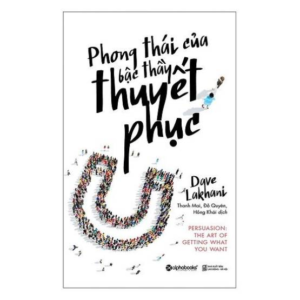
The art of persuasion and the ability to “lure” others are two completely different concepts. The book “The Demeanor of a Master Persuader” provides the necessary knowledge and skills for you to become a great persuader, based on a foundation of ethics and conscience.
This book will not instantly make you a master persuader. However, what the book aims to convey will be the tools to equip yourself with, helping you achieve your persuasion goals effectively and persuasively.
#3. Persuasion Through Empathy – When Facts Don’t Change Minds
This book is not just a guide on how to persuade others. It also helps you understand the psychology of the person you want to persuade and overcome the challenge of dealing with people who have opposing views.
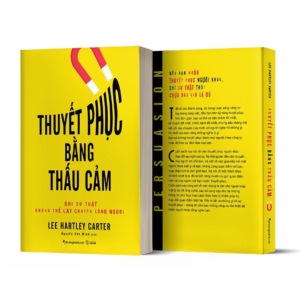
This book will help you:
- Understand the needs and desires of the person you want to persuade.
- Build a relationship with that person, so they feel comfortable and willing to listen to you.
- Present your message clearly and persuasively.
- Respond to their feedback skillfully.
Lee Hartley Carter’s book does not guarantee that you will always succeed in persuading others. However, it will provide you with the necessary knowledge and skills to increase your chances of success.
#4. Hypnotic Writing

The book “Hypnotic Writing” is a useful resource for anyone looking to develop their communication and persuasion skills. It is especially for those pursuing their entrepreneurial dreams or those who are still searching for their own path.
The book provides the necessary knowledge and skills for you to use words effectively, make a good impression, and persuade others. This book will help you:
- Create words and sentences that are engaging and inspiring.
- Evoke understanding and empathy from others.
- Build relationships and establish trust with others.
- Persuade others to act according to your wishes.
#5. Psychological Tactics in Persuasion

The book “Influence: The Psychology of Persuasion” was written by Professor Robert B. Cialdini, an expert in Psychology and Marketing at Arizona State University. With his deep understanding of psychology and practical experience in marketing, Professor Cialdini identified 6 basic psychological principles that govern human behavior, thereby helping you apply these principles to persuade others effectively.
7. Examples of Successfully Applying the Art of Persuasion
Example #1
In his TED talk on reforming the criminal justice system in the US, Human Rights Attorney Bryan Stevenson chose to open with a story about his experience working with death row inmates. Instead of introducing himself and his achievements, he told a genuine and moving story about the people he had met and helped.
This opening created a strong connection between Stevenson and the audience. Listeners could feel his empathy and understanding for those on death row. This helped Stevenson build trust and support from the audience for the arguments he would present in his speech.
Example #2
Warren Buffett is a brilliant investor and also a brilliant persuader. He frequently uses metaphors in his speeches to convey his message in a way that is clear, easy to understand, and memorable.
A prime example was in 2017, during the Berkshire Hathaway annual shareholders meeting, when Buffett compared the rising healthcare costs to an “unpleasant tapeworm” on the American economy. This metaphor helped him vividly and genuinely describe the negative impact of this situation on the economy. Through the image of a tapeworm, Buffett showed that healthcare costs were continuously rising and becoming a burden on the economy.
Buffett’s metaphor was widely used by newspapers and the media, helping to raise public awareness of the issue. This demonstrates that metaphors are an effective persuasion tool that can help convey a message to many people quickly and easily. This is certainly a useful tool when you want to apply the art of persuasion not just to one person, but to many people or even entire organizations and businesses.
Conclusion
The art of persuasion is not as out of reach as it seems, and you can certainly master it through daily practice and frequent application. We hope that these insights from 1Office will be helpful in your negotiations and in enhancing your communication skills to win people over. We wish you success