


 13/05/2026
  223 views
Up-selling is a sales method widely applied in today’s business environment. Many salespeople consider it their secret to increasing revenue and a way to appeal to customer psychology, building their trust and comfort, making them willing to open their wallets to buy products and services. So, what is up-selling? Let’s learn more about up-selling in this article by 1Office to understand why it is considered an essential skill in sales consulting.
Mục lục
1. Up-selling – An Important Sales Skill
Up-selling is not just a sales method but also a skill and an art. It’s a way for sellers to advise and persuade customers to buy additional goods beyond their initial needs. Instead of just purchasing the items they originally planned for, the seller will suggest buying other product or service packages that suit the buyer’s psychology and usage needs. As a result, the customer will spend more, and the seller’s revenue will be higher.
Additionally, up-selling is an art of selling because it requires the seller to understand customer psychology—what they need and what additional needs they might have—to effectively persuade them to buy more. Otherwise, it can easily backfire if the customer feels they are being “pestered.”
2. Benefits and Examples of Up-selling
Up-selling is used very commonly in today’s business environment. For example, when choosing between option 1: a 4-pack of yogurt for 25,000 VND, and option 2: buy two packs and get one extra cup for 48k, many people will choose option 2. This is because they feel they are getting a much better deal. In today’s competitive environment, businesses and brands must devise up-selling strategies daily to attract customers, making the consumer the biggest beneficiary. Currently, many fields and industries such as tourism, hotels, restaurants, spas, etc., all apply up-selling to achieve higher profits.
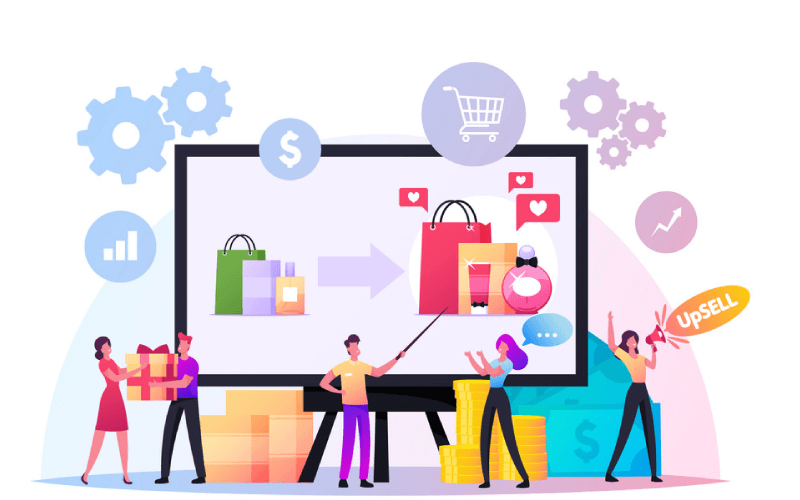
From this sales tactic, business owners recognize the significant benefits of up-selling, such as:
2.1 Increase Revenue – Add Profit
The first undeniable benefit is increased revenue. When customers spend more, revenue will certainly rise. Instead of focusing on finding new customers, businesses can leverage existing customers through up-selling while simultaneously seeking new ones. Sometimes, this can also be an effective marketing tactic that attracts potential new customers you didn’t expect. If the product or service quality is good and the consulting approach appeals to their psychology, customers won’t hesitate to spend more to buy additional products. You can also build a sale funnel to find potential customers and develop a suitable up-selling strategy.
2.2 Improve Customer Experience
The customer’s impression of your business or brand is a crucial factor in retention. Providing and suggesting products and services through up-selling tactics shows that the business cares about the customer’s needs and spending level. Customers will have a better purchasing experience and feel more comfortable when they are satisfied with the service, and they can spend less than buying items individually while still receiving equivalent quality.
2.3 Ensure Customer Lifetime Value
Up-selling not only helps increase immediate revenue but also brings long-term customers to the business. Customers will always have a good impression of brands with good products, services, or customer care. They will tend to prioritize choosing your business when new needs arise due to their trust. This is the long-term benefit that up-selling brings to a business.
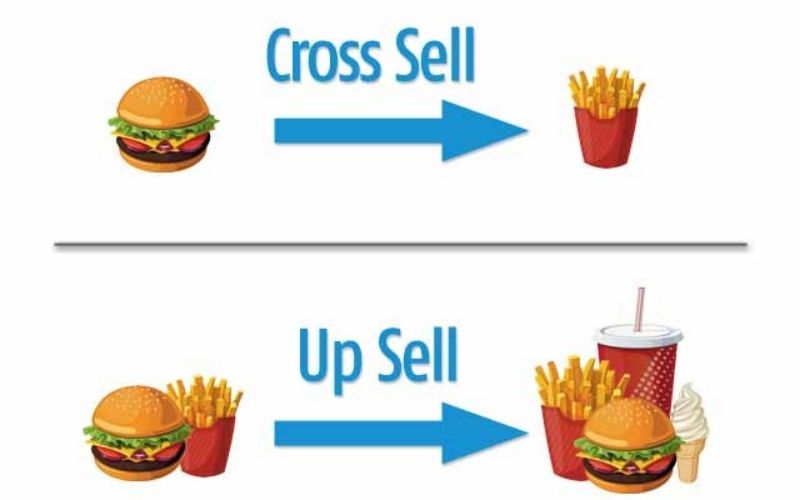
Furthermore, it is necessary to distinguish the difference between up-selling and cross-selling, as these two terms are often confused. Although they are both tactics to encourage customers to buy more to increase revenue, up-selling is when a customer buys more of the same type of product, while cross-selling is when a customer buys a different type of product (for example, a customer buying an iPhone might also buy Apple headphones as part of a combo package, whereas up-selling is when a customer intending to buy a 64GB phone is persuaded to buy the 256GB version).
3. Principles of Up-selling in Sales
A business or brand needs to follow these principles when building an upselling plan:
3.1 Customer Trust is the Foundation
Customer trust in the brand is the surest guarantee that an upselling tactic will succeed. Understanding what customers want, what they need, and then thinking about what else they might be interested in is the way to appeal to their psychology and effectively strengthen their trust. This allows you to provide the right products that meet their needs and ensure quality. Additionally, by understanding customers, sellers can also predict market demand to develop appropriate strategies.
3.2 Track the Customer Journey
The Customer Journey is the process a customer goes through from interacting with your product or service to making a purchase decision. During this process, sellers can use a sales pipeline in business to conveniently understand customer needs. Before upselling to a customer, a smart seller will observe the customer’s attitude and reactions. This is a fundamental skill for any salesperson. Find out what they need, which items might be suitable for them, and which have the highest potential to “close the deal” to provide upselling advice. Then, when advising the customer, if they seem enthusiastic or listen attentively to the product consultation, it indicates that the upselling approach has been successful. Sometimes, some businesses or stores may track a customer’s purchase history to understand their buying trends or spending levels to offer suitable advice. The most effective method at this point is to use customer management software for easy tracking.
3.3 Advise, Don’t “Hard Sell”
Customers will feel more comfortable when they are being advised, not when salespeople are solely focused on pushing them to add more items to their cart. Sellers need to use their expertise and knowledge to introduce the best solution to the customer, integrating upselling tactics by suggesting additional accompanying products. If the customer shows dissatisfaction, you should focus only on the product being sold to avoid a negative reaction.
Through this article, 1Office hopes to have provided readers with useful information about upselling—the art of selling that also retains customers and increases revenue. This is a necessary and important soft skill in today’s competitive environment, helping salespeople achieve the greatest benefits.
















