


 11/05/2026
  238 views
Shares are a fundamental concept in business and investment, representing ownership of a portion of a company’s capital. This article will help you understand what shares are, the rights and obligations of share ownership, common types of shares, and the difference between shares and stocks. Additionally, we will analyze the role of shares in business operations, relevant legal regulations, and provide real-life case studies on the opportunities and risks of purchasing shares, especially in startup companies. This is a comprehensive guide for investors, business owners, and anyone who wants to master the knowledge needed to make smart financial decisions.
Mục lục
- 1. Explaining What Shares Are
- 2. Common Types of Shares Today
- 3. The Role of Shares in a Business
- 4. Corporate Laws Regulating Shares
- 5. Are shares and stocks different?
- 6. Should you buy shares in a startup company?
- 7. How do shares in listed vs. unlisted companies differ?
- 8. Guide to calculating ownership percentage when additional shares are issued
- 9. Do shares still have value if the company goes bankrupt?
- 10. Conclusion
1. Explaining What Shares Are
A share is the smallest unit that constitutes the charter capital of a joint-stock company, reflecting the ownership rights of an individual or organization in that enterprise. When an investor holds shares, they become a shareholder of the company and are entitled to rights and obligated to fulfill duties corresponding to their capital contribution. Issuing shares is a crucial method for businesses to raise capital from the market, while also creating opportunities for investors to participate in the company’s growth.
Shareholders have many significant rights. They have the right to receive dividends—a portion of the profits distributed from the company’s business activities, which can be in the form of cash or stock. They also have voting rights at the General Meeting of Shareholders, thereby participating in important strategic decisions, except for certain types of preference shares that do not carry voting rights. Additionally, shareholders can transfer their shares to others according to legal regulations and the company’s charter, have priority in purchasing new shares when the company issues more, and have the right to access information about the company’s operations and finances.
However, owning shares also comes with potential risks. The value of shares fluctuates with business performance and market conditions, which can lead to reduced profits or capital loss for investors. In the event of business losses or bankruptcy, shareholders may lose their entire investment. For unlisted companies, finding a buyer for shares can be difficult, leading to low liquidity. Furthermore, when the company issues additional shares, the ownership percentage of existing shareholders will be diluted if they do not purchase more.
Besides rights, shareholders also have certain obligations. They must fully pay for the shares they have registered to purchase by the deadline, comply with the company’s charter and operational regulations, be responsible for the company’s financial obligations within the scope of their contributed capital, maintain the confidentiality of internal information, and refrain from actions that harm the common interest.

2. Common Types of Shares Today
In the Vietnamese legal system, the 2020 Law on Enterprises stipulates that a joint-stock company can issue various types of shares. Each type of share has its own characteristics regarding rights, obligations, and ownership conditions, tailored to the specific capital-raising purposes and governance strategies of the business.
2.1. Ordinary Shares
Ordinary shares are a mandatory type of share in every joint-stock company. They can be owned by individuals or organizations, with no limit on the quantity. The legal basis is stipulated in Article 113 of the 2020 Law on Enterprises. Ordinary shareholders have voting rights, with each share corresponding to one vote, and are entitled to receive dividends based on business results and the decisions of the General Meeting of Shareholders. This type of share does not allow for the return of contributed capital, except when the company repurchases shares upon request or by its own decision. They are freely transferable, unless restricted by the company’s charter or the law. The ownership term is unlimited as long as the company exists.
2.2. Voting Preference Shares
This is a type of share that grants more voting rights than ordinary shares. The owners are typically founding shareholders or state organizations as prescribed by law. The legal basis is in Article 116 of the 2020 Law on Enterprises. Voting preference shares have the right to receive dividends like ordinary shares, or higher, depending on the charter. However, this type of share is not freely transferable, and its ownership term is usually effective for only 3 years from the company’s establishment date, after which it converts into ordinary shares.
2.3. Dividend Preference Shares
This type of share guarantees the right to receive dividends at a higher or more stable rate than common shares, regardless of business performance. The owners are typically investors who prioritize periodic returns. The legal basis is Article 117 of the Law on Enterprises 2020. Dividend preference shareholders usually have no voting rights or only limited voting rights. The right to a refund of contributed capital can be specified in the company’s charter. Transferability depends on the charter and the law but is often less restricted. The ownership term is unlimited.
2.4. Redeemable Preference Shares
Redeemable preference shares allow shareholders to request the company to refund their contributed capital at any time or under agreed-upon conditions. The owners are often investors who want to ensure the ability to withdraw capital quickly. The legal basis is Article 118 of the Law on Enterprises 2020. This type of share has no voting rights unless otherwise stipulated in the company’s charter. Transferability depends on the company’s charter. The ownership term is unlimited, but shareholders can terminate ownership upon receiving their capital refund.
2.5. Other Preference Shares as per the Company’s Charter
In addition to the types of shares mentioned above, a company can issue other preference shares based on its charter, as long as they do not violate the law. The owners, rights, and obligations will be specifically defined by the company. This allows the company flexibility in capital raising, such as employee stock ownership plans (ESOP) or preference shares with special redemption rights.
3. The Role of Shares in a Business
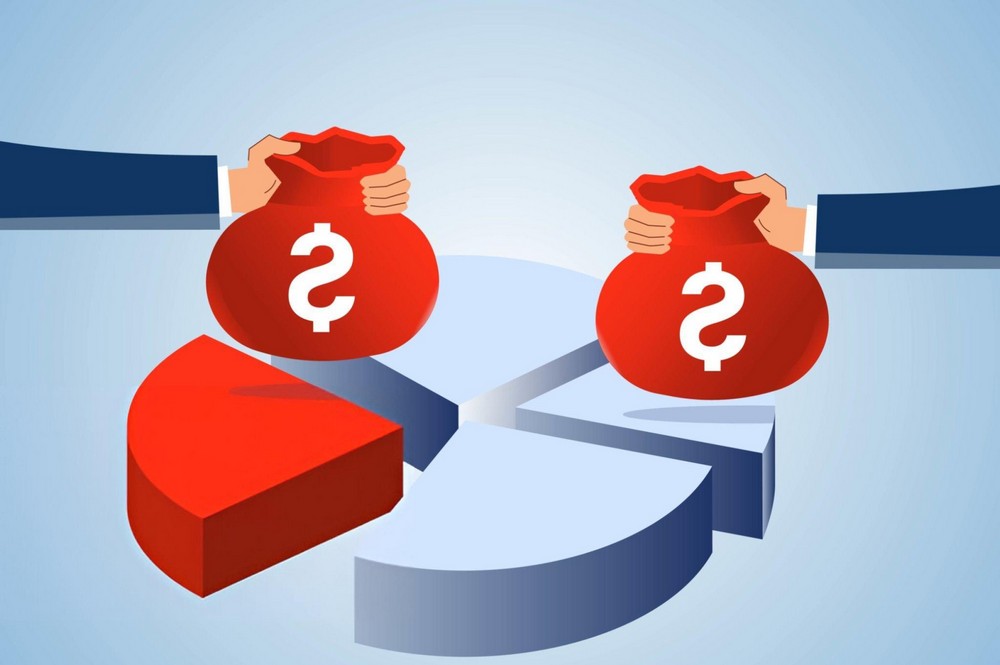
Shares are not only the basic units that constitute the charter capital of a joint-stock company but also a strategic tool for raising capital, distributing ownership, and shaping corporate governance structure. The issuance and distribution of shares directly impact the company’s growth potential, financial strategy, and control.
First and foremost, shares help businesses raise capital flexibly. Instead of relying on bank loans or debt, businesses can issue shares to attract capital from multiple investors. This not only provides financial resources for expanding production, research, and development but also reduces the pressure of loan interest payments, thereby increasing cash flow stability.
Next, shares are the foundation for distributing ownership and governance rights. Each share is typically associated with voting rights, allowing shareholders to participate in important decisions such as electing the board of directors, approving business strategies, or distributing profits. As a result, shares become a tool for investors to voice their opinions and represent their interests in the business.
Additionally, shares play a role in incentivizing and retaining key personnel through employee stock ownership plans (ESOPs). When employees become shareholders, they are motivated to stay long-term and contribute more, as their interests are aligned with the company’s growth.
Finally, shares help businesses enhance their reputation and brand value. A company with a transparent share structure, trusted by many investors, will find it easier to access new capital sources, expand partnerships, and improve its competitive position in the market.
4. Corporate Laws Regulating Shares
In Vietnam, shares and the activities of issuing, managing, and transferring shares are primarily regulated by the Law on Enterprises and other related legal documents. Each regulation plays a crucial role in protecting shareholders’ rights and ensuring the transparency of the capital market.
Law on Enterprises 2020: The Law on Enterprises is the core legal document that governs all matters related to shares in a joint-stock company. This law clearly defines the concept of shares, types of shares (common shares, preference shares), rights and obligations of shareholders, as well as the principles for issuing additional shares. Additionally, the law also regulates the transfer of shares, restrictions on transfer in certain cases, and the procedure for changing charter capital.
Law on Securities 2019: For listed joint-stock companies or those offering shares to the public, the Law on Securities regulates the process of offering, trading, and listing stocks (which represent shares). The law requires companies to disclose full and transparent information to ensure investors have a basis for making decisions, while also setting corporate governance standards for listed companies.
Civil Code 2015: The Civil Code serves as the general legal framework for property rights and obligations, including the ownership of shares. This property right is protected by law, which also regulates civil transactions related to the purchase, sale, gift, and inheritance of shares.
Law on Tax Administration and related tax documents: Share transfer transactions are governed by the Law on Tax Administration, including the obligation to pay personal income tax or corporate income tax on profits from the transfer. In addition, the law also specifies the declaration methods, deadlines, and applicable tax rates.
Guiding decrees and circulars: In addition to the main laws, many decrees and circulars issued by the Government and the Ministry of Planning & Investment provide detailed guidance on procedures, forms, and implementation processes related to shares, such as Decree 01/2021/ND-CP on business registration and Decree 155/2020/ND-CP guiding the Law on Securities.

5. Are shares and stocks different?
In the financial and corporate environment, shares and stocks are often used interchangeably, but in reality, they are not entirely the same.
- Share: A portion of the charter capital divided into equal parts when establishing a joint-stock company. When an individual or organization owns shares, they become a shareholder of the company and have rights and obligations corresponding to the number of shares held. A share is a legal concept tied to the company’s charter capital.
- Stock: A certificate or electronic entry confirming ownership of one or more shares in a company. Stocks are issued to record the holding of shares and can be traded on the stock market (if the company is listed). A stock is the “physical form” or “proof” of share ownership.
The core differences include:
- Nature: A share is the value of capital contribution, while a stock is the paper or certificate of share ownership.
- Legality: Shares are regulated by the Law on Enterprises, while stocks are regulated by both the Law on Enterprises and the Law on Securities.
- Tradability: Shares can only be transferred according to the company’s charter, while stocks (especially listed stocks) can be freely bought and sold on the stock exchange.
To understand more about stocks, types of stocks, and how to make money from them, please read our detailed article on what are stocks? How to invest and profit from stocks right here.
6. Should you buy shares in a startup company?
Buying startup shares can yield outstanding returns if you choose the right potential business and understand the associated risks. Carefully evaluate the business model, founding team, and financial situation before investing your trust — and be prepared to accept the possibility of losing capital if the startup fails. Below is a comprehensive overview to help you make a smarter consideration.
6.1. Benefits of buying startup shares
Startup shares offer superior growth potential compared to large enterprises and are ahead of their time. Investors have the opportunity to receive returns of tens or even hundreds of times their investment if the startup achieves a breakthrough. Especially if investing at a very early stage, the returns can be very impressive.
The clearest real-world example is Lightspeed Venture Partners — an early investor in Snapchat. The fund invested about $485,000, and after several funding rounds, that investment was worth nearly $2 billion at the time of the IPO, yielding enormous profits.
A clear business model that solves a real-world problem: A startup like Airbnb started by addressing a real need for housing, then expanded to become a global enterprise. A founding team with vision and strong execution capabilities: Founders who have worked at large companies like Google or Amazon often have networks, skills, and a mindset that can provide a clear competitive advantage. Sustainable fundraising from reputable funds or strategic investors, demonstrating confidence in the startup’s potential.
Airbnb is a prime example of the benefits of buying startup shares: from a small capital base, strong scalability, and a clear vision, the company became a global icon in the travel industry — turning the initial investment into an incredibly valuable asset.
6.2. Risks of investing in startup shares
High failure rate: According to CB Insights, up to 95% of startups fail for various reasons such as an unsuitable model, lack of capital, or poor management. A prime example of failure – Theranos: The medical technology company was once highly valued, but its collapse was entirely due to data falsification and fraud, causing investors to worry about legal risks and capital loss.
Example of a startup with operational issues – Doppler Labs: The smart earbud developer once received tens of millions of dollars in investment. But an unoptimized product, immense competition from major players, and an inability to secure further funding forced the startup to cease operations.
No real product or just an idea that “sounds good” but lacks a practical basis. A rapid growth strategy without financial control, like Webvan during the dot-com era — expanding too quickly and building excessive infrastructure led to bankruptcy. Lack of financial transparency, continuously adjusting reports with false data, as Theranos infamously did.

7. How do shares in listed vs. unlisted companies differ?
In the market, company shares are divided into two main groups: listed companies (on the stock exchange) and unlisted companies (not yet on the exchange). Each type of share ownership offers different characteristics, benefits, and risks for investors.
The section below will provide a detailed analysis of the characteristics of shares in listed companies, the characteristics of shares in unlisted companies, and a specific comparison between these two types. This will help investors and business owners gain a clearer understanding to make appropriate investment or capital-raising decisions.
7.1. Analysis of Shares in Listed Companies
Shares in listed companies are shares issued by a company that is officially listed on a stock exchange such as HOSE, HNX, or UPCoM in Vietnam. Being listed means the company’s shares are allowed to be publicly traded on the market, adhering to the strict regulations of the State Securities Commission and the stock exchange.
The prominent characteristics of shares in listed companies include:
- High liquidity: Investors can easily buy and sell shares through licensed securities companies.
- Transparent value: The share price is determined by market supply and demand and is publicly announced in each trading session.
- Clear shareholder rights: Shareholders are entitled to dividends (cash or stock), voting rights at the General Meeting of Shareholders, and other rights under the Law on Enterprises.
- Price volatility risk: Due to direct influence from market fluctuations, investor sentiment, and economic news, the price of listed shares can rise or fall sharply in a short period.
- Information transparency requirement: Listed companies are required to periodically publish financial reports, governance information, and significant events to ensure shareholder rights.
This type of share is suitable for investors who prefer transparency, want to trade quickly, and are willing to accept price volatility risks to seek profits from buy-sell spreads or dividends.
7.2. Analysis of Shares in Unlisted Companies
Shares in unlisted companies are shares belonging to companies that have not registered for trading on a stock exchange. This means that the buying and selling of shares usually occur through direct agreements between parties or through funding rounds, rather than through a public trading system.
The prominent characteristics of shares in unlisted companies include:
- Low liquidity: Reselling shares is often more difficult as it requires finding a direct buyer and cannot be traded as quickly as on the stock exchange.
- Value depends on internal valuation: The share price is primarily based on the company’s valuation or agreements between parties and is not continuously updated like listed shares.
- High profit potential: If the company grows strongly, goes through an IPO, or is acquired, the share value can increase dramatically, bringing significant returns to investors.
- High risk: Due to a lack of information transparency and not being under the strict supervision of regulatory bodies like listed companies, the probability of failure or bankruptcy is higher.
- Less affected by daily price fluctuations: Since they are not publicly traded, unlisted shares are less affected by short-term market sentiment but are heavily dependent on actual business performance.
This type of share is suitable for long-term investors who can conduct thorough business analysis and are willing to accept risks in exchange for high potential returns.

7.3. Comparison of Shares in Listed and Unlisted Companies
When comparing shares of listed and unlisted companies, clear differences can be seen in terms of liquidity, transparency, investment opportunities, and risks.
Liquidity:
- Listed companies: Shares are publicly traded on the stock exchange, making it easy to buy and sell large quantities quickly.
- Unlisted companies: Low liquidity; transfers are usually made through private negotiations, which takes time to find a suitable buyer.
Information Transparency:
- Listed companies: Bound by the information disclosure regulations of regulatory bodies (like the State Securities Commission); financial statements must be audited annually.
- Unlisted companies: Information is less public, often shared only with existing shareholders or potential investors, making a comprehensive assessment difficult without direct access.
Valuation and Price Volatility:
- Listed companies: The share price fluctuates daily according to market supply and demand, making it easy to value based on the current trading price.
- Unlisted companies: The share value depends on agreements and internal valuations; it is generally more stable but lacks a market reference point.
Opportunities and Profit Potential:
- Listed companies: Profit opportunities from price differences and dividends, suitable for both short-term and long-term investors.
- Unlisted companies: Very high profit potential if the company grows strongly or has a successful IPO, but it also requires patience and a high tolerance for risk.
Risk level:
- Listed companies: The risk is heavily influenced by market fluctuations and macroeconomic factors, but it is better controlled due to strict supervision.
- Unlisted companies: The risk is higher due to a lack of transparency, difficulty in selling when needed, and the potential for business failure in the early stages.
In general, listed shares are suitable for investors seeking high liquidity and transparency, while unlisted shares are suitable for those who accept higher risk in exchange for the potential for extraordinary returns.
8. Guide to calculating ownership percentage when additional shares are issued
When a company issues additional shares, the ownership percentage of existing shareholders may be diluted if they do not purchase new shares. To know the exact extent of the change, you need to calculate it using the following formula:
8.1. Formula for calculating the new ownership percentage
Where:
- Number of shares currently owned: The number of shares you hold before the additional issuance.
- Total shares after issuance: Equals Total shares before issuance + Number of additional shares issued.
8.2. Illustrative example
Assume:
- Company A has 1,000,000 outstanding shares.
- You own 100,000 shares (equivalent to 10%).
- The company decides to issue an additional 500,000 shares.
Step 1: Determine the total number of shares after issuance: 1,000,000 + 500,000 = 1,500,000 shares
Step 2: Calculate the new ownership percentage (if no additional shares are purchased): 100,000 / 1,500,000 = 6.67%
Thus, if you do not purchase additional shares during the issuance, your ownership percentage will decrease from 10% to 6.67%.
8.3. How to maintain your ownership percentage
To maintain your original 10% ownership, you need to purchase additional shares corresponding to the issuance ratio:
500,000 × 10% = 50,000 shares
Important notes:
- Pre-emptive rights: According to Vietnam’s Law on Enterprises, existing shareholders usually have the right to purchase new shares first, in proportion to their current ownership.
- Impact on voting rights: If your ownership percentage decreases, your voting rights in the company will also decrease accordingly.
- Share value: The market value may change depending on the business situation and the price of the additional issuance.

9. Do shares still have value if the company goes bankrupt?
Typically, if a company goes bankrupt, the value of its assets after settling the above obligations is almost zero or very small, causing common shares to lose all their value. When a company goes bankrupt, its assets will be used to pay off debts in the following order of priority:
- Bankruptcy and legal costs.
- Secured debts (banks, credit institutions).
- Unsecured debts (suppliers, partners).
- Employee benefits (salaries, allowances).
- Taxes and state obligations.
- Preferred shareholders.
- Common shareholders.
How to handle shares when a company is on the verge of bankruptcy:
- Closely monitor the financial situation: Read periodic financial reports, track cash flow and debts.
- Sell shares early: If signs of bankruptcy risk are detected, investors should consider selling shares on the secondary market (if the company is listed) or finding other investors to buy them (if unlisted).
- Negotiate divestment: In the case of being a major shareholder or involved in management, you can negotiate to withdraw capital or sell shares to interested parties before the company files for bankruptcy.
Some early warning signs to recognize that a company is on the verge of bankruptcy:
- Severe financial weakness: Continuous revenue decline, prolonged losses, negative equity.
- Negative cash flow: Insufficient funds to pay loan interest, supplier debts, or employee salaries.
- Sudden increase in debt: Especially short-term loans to maintain operations.
- Loss of major contracts or key customers: When the main source of revenue is lost, the risk of bankruptcy is very high.
- Serious legal issues: The company is sued, its assets are frozen, or its operations are suspended.
- Shares are delisted or placed on a warning list (for listed companies).
Real-life example: In Vietnam, Huu Lien A Chau Joint Stock Company (HLA) – once a major steel producer – went bankrupt in 2015 due to a heavy debt burden, prolonged losses, and the loss of major customers. When the court declared bankruptcy, HLA shares on the HOSE were delisted, and common shareholders lost their entire investment because the asset value was insufficient to pay off debts to priority creditors.
10. Conclusion
Shares are not just a legal concept in business but also a “ticket” to participate in the ownership and profits of a company. A clear understanding of the nature of shares, the types of shares, the rights and obligations of shareholders, as well as potential risks, will help investors and business owners make informed decisions to best protect their interests.
In fact, successful or failed investment deals all stem from an understanding or lack of understanding of shares and related regulations. Therefore, equipping yourself with solid knowledge, combined with appropriate management and investment strategies, will be the key to ensuring capital safety and increasing profits.
Continue reading other useful articles on the 1Office Blog to gain comprehensive knowledge of business administration, financial management, and effective investment strategies. Contact 1Office now if you need in-depth consultation on a comprehensive business management solution, from human resources and financial management to operations, helping your business grow sustainably and transparently.
















