12/05/2026
  479 views
Business processes have become more popular than ever, especially for businesses looking to undergo digital transformation with the goal of increasing sales and business efficiency and enhancing the customer experience. So, what is a business process? Let’s explore the details with 1Office in this article.
Mục lục
What is a business process?
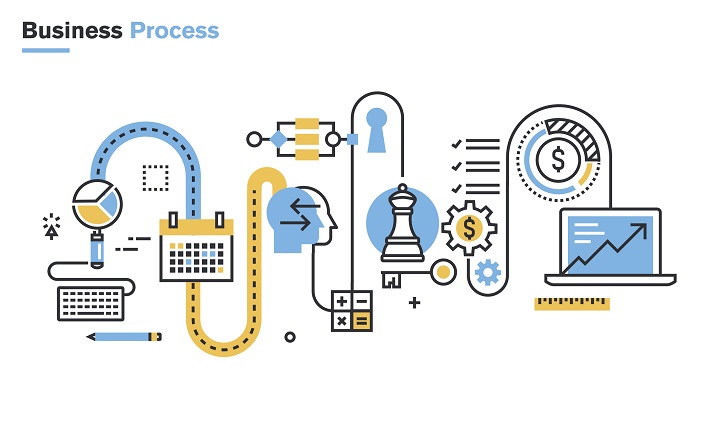
A business process is a series of organized steps and actions performed to achieve a specific business goal. These can be activities related to production, advertising, sales, customer service, or any other activity that contributes to the overall objectives of the business.
A typical example of a Business Process is the membership card registration process at a gym:
- Fill Out Registration Form: The customer fills out a registration form, providing necessary personal information.
- Verify Information: The registration desk staff checks and verifies the information on the form, asking for clarification if needed.
- Create Membership Card: The system generates a membership card containing the customer’s personal information and photo.
- Store Information: The registration information and photo from the membership card are stored in the gym’s database.
- Issue Card and Provide Instructions: The staff gives the membership card to the registrant and provides instructions on how to use the card and the gym’s facilities.
- Collect Fee and Activate Card: The registrant pays the required registration or membership fees.
- The system activates the membership card for service use.
This process helps the gym manage member information effectively while providing a convenient and fast registration experience for customers.
The role of business processes in a company
Business Processes play a crucial role in the structure and operation of a company. A well-researched, planned, and strategic business process will bring many benefits to the company:
- Save budget and minimize risks: Business processes help optimize operations and limit future risks through effective methods, thereby saving budget and reducing the likelihood of incidents.
- Minimize human error: Evaluating personnel through business processes helps managers assign tasks to qualified individuals, reducing errors caused by human factors.
- Enhance efficiency and productivity: Business processes establish specific plans and optimize the most relevant stages for the company, thereby boosting the productivity and efficiency of all departments.
- Focus on customers: Effective business processes are customer-oriented, becoming a useful tool to help the company stay updated on customer needs and feedback regarding products/services.
- Reach target customers more effectively: Through surveys and market research, the company can make accurate assessments to approach customers effectively.
- Proactively manage time: Business processes help companies save time effectively by using strategies and diagrams to optimize execution time.
- Apply new technology for the business: Companies should adopt new technologies for better management, especially as the remote work trend continues to grow.
Common types of business processes
1. Primary Process
The primary process is considered a crucial step that every business needs to have. Through this process, the business delivers the final product to the customer. Every activity related to this process aims to add value to the final product offering stage of the business.
2. Support Process
Unlike the primary process, the support process does not directly contribute to the final value of the product. However, it creates the environment and space for the primary process to operate smoothly and efficiently. The daily operations of the business are primarily supported by this process.
3. Management Process
The management process shapes the activities of administration and strategic development management. It defines objectives and standards to ensure effectiveness in implementing both of these processes. Additionally, this process is involved in monitoring and controlling other business processes. Typically, businesses use the management process to shape their strategies, tactics, and operational planning.
Business Process Management
After understanding the concept of Business Process and its various types, the next step is to learn about suitable business process management tools, often referred to as BPMS (Business Process Management System).
Let’s explore this concept and some important related features in the content below.
What is business process management?
BPM is the process of modeling, automating, executing, controlling, measuring, and optimizing business workflows to support the achievement of a company’s key goals and outcomes.
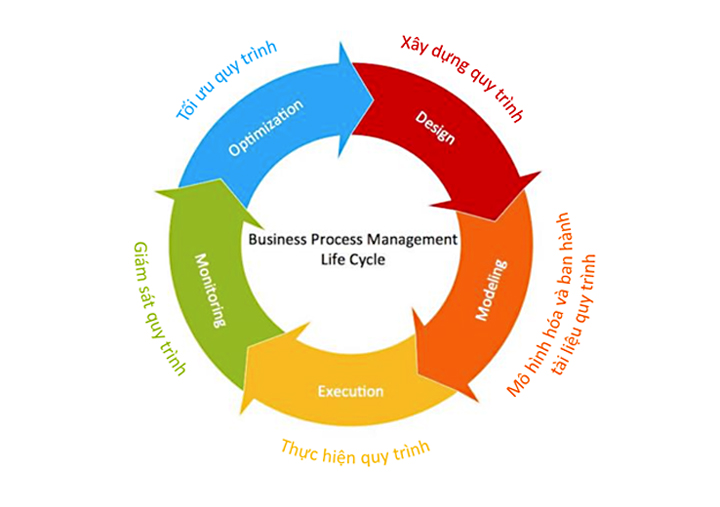
BPMS stands for Business Process Management Software or Business Process Management System. Regardless of the interpretation, BPMS is fundamentally a tool that helps implement a management methodology to improve an organization’s business processes. This is achieved by building, implementing, then analyzing and continuously improving those processes to achieve optimization.
The Role of Business Process Management
The key role of BPM is to manage business processes to achieve both specific goals and intangible results for the company. It also serves as a preparatory step for other activities such as process design or modeling other business processes.
BPM often involves the use of BPM tools. The main task of these tools is to build and automate processes from start to finish. Afterward, they analyze data and optimize those processes.
By doing this, BPM contributes to increasing productivity and reducing costs for the business. The processes created through the application of software are highly refined and efficient, playing a significant role in improving the company’s operational activities.
Key Features of BPM
Business Process Management (BPM) has the following characteristics:
- Continuous Activity: BPM is an ongoing activity aimed at restructuring processes. It is not a one-time task.
- Focus on Process Improvement: BPM is about improving processes and is not necessarily related to technology or automation.
- Implemented by Those Interested in Improvement: BPM is carried out by individuals who are interested in improving processes, not necessarily by the individuals who execute the processes.
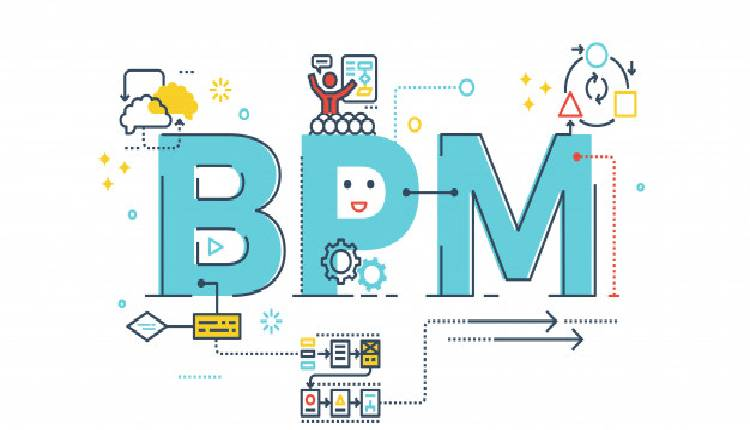
Some misconceptions about the characteristics of Business Process Management
- BPM is not a product, but an activity and a series of activities, as mentioned earlier.
- BPM is not a market segment. Products that support BPM are merely tools for this activity.
- An application does not perform BPM on its own. An application is only the result of BPM activities; it can execute a business process or assist people in carrying it out. Simply using an application is not enough to be considered doing BPM.
- BPM improves processes, but not all process improvements are BPM.
- BPM is not just all the activities supported by a BPMS.
- Operating a BPMS does not mean you are performing BPM.
Manage and automate processes on a unified platform with 1Office
1Office software is a tool that completely digitizes the communication process system between departments, while increasing productivity, saving time, and accelerating customer service speed. It is also the leading software in business innovation and digitalization, providing a superior set of process management tools capable of transforming and automating 100% of an organization’s business processes.
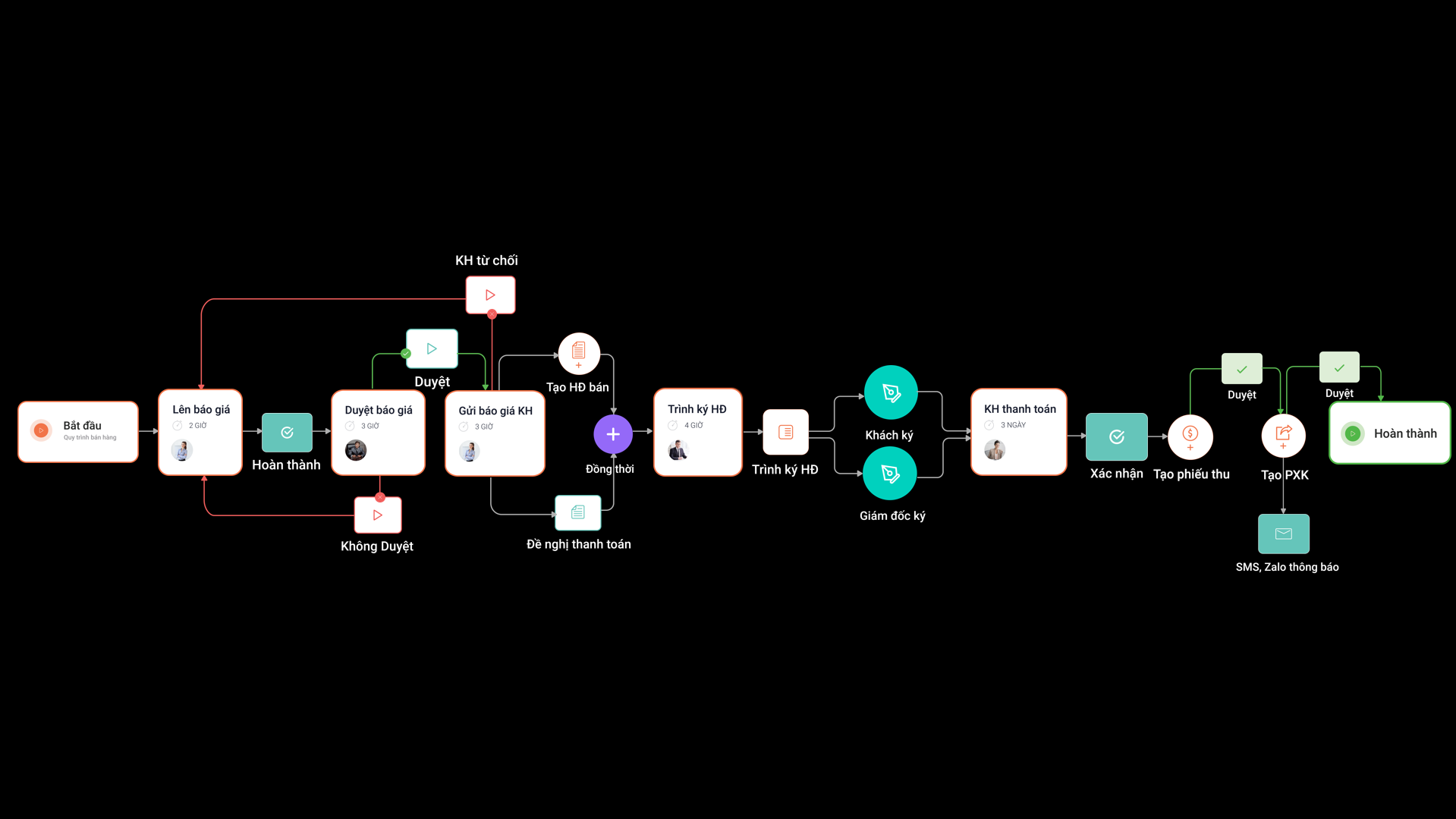
1Office is the leading software in Vietnam that comprehensively applies BPM and moves towards BPA (Business Process Automation), helping businesses operate smoothly, enhance performance, and significantly reduce management costs. The outstanding features of the 1Office total business management software include:
- Standardize and digitize 100% of processes: Including the most complex ones.
- Detailed progress reports: Provide detailed information on progress, the number of tasks in each process, and each step.
- Automatic alerts for upcoming deadlines: Keep all tasks running smoothly with automatic alerts for upcoming deadlines.
- Operate interconnected processes: Link all departments accurately and efficiently.
- Multi-platform digital signature integration: Allows for digital signing directly within the process, enhancing security and reliability.
- Measure the quality of each step in the process: Helps businesses optimize their processes by measuring the effectiveness of each step.
——————————–
In the article above, 1Office has introduced the basic concepts of what a Business Process is, its role, and common types of business processes, as well as the characteristics and role of Business Process Management. If you are still unclear about BPM, you can experience it by registering for a free demo with 1Office!