


 12/05/2026
  693 views
SLA is a crucial concept in service management, helping businesses establish quality standards and commitments to customers. However, many businesses still confuse SLA with KPI or don’t know how to implement it effectively. In this article, 1Office will help you clearly understand what an SLA is, its role in operations, and how to apply it correctly in practice.

First of all, it must be said that SLAs and KPIs are similar in some aspects, as they are both important components in business process management. Both concepts are associated with measuring and evaluating work performance.
The main difference between an SLA and a KPI is most clearly revealed in WHEN they are used.
Mục lục
1. What is an SLA?
SLA stands for “Service Level Agreement,” which is understood as a commitment between a service provider and a customer.
This commitment is not limited to the aspect of “Quality” but also includes factors such as Quantity, Availability, Provider’s Responsibilities, etc., which are mutually agreed upon by both parties.
To take a very practical example, the minimum Internet speed that your network provider specifies in your contract is a form of SLA.
An SLA from a telecommunications company might promise a network availability of 99.999% (which calculates to about 5 minutes and 25 seconds of downtime per year). However, this duration might still be too long for some business sectors.
Accordingly, telecommunications companies also commit to reducing the percentage of the customer’s bill if the committed level is not met, typically based on a sliding scale corresponding to the severity of the violations.
To some extent, an SLA can be simply understood as the expectation to be met between the customer and the provider. A commitment to ensuring SLA quality is the only sustainable way to retain customers, building the company’s credibility and professionalism.
Read more: Building a Standard and Professional Customer Care Process
2. Why do businesses need SLAs?
The SLA model has a long history of development in professional service companies worldwide. These companies thoroughly use the SLA – Service Level Agreement as a useful tool for professional service management.
This helps enhance customer satisfaction with the commitment and its fulfillment as promised, contributing to boosting sales, profits, and market share.
In Vietnam, many banks and large corporations are promoting SLA commitments, viewing them as a culture and a standard to be achieved, with its influence spreading from the highest leadership to the lowest-level employees.
The SLA is considered one of the most important models for businesses today, especially if a company wants to effectively manage its Marketing or Sales departments, etc., it should apply this model.
This is also a very sustainable way to help businesses ensure brand development, affirm their credibility, and acquire potential customers.
The SLA is considered one of the most important models for businesses today
The commitments in an SLA provide complete information related to the service and are clearly stated in the contract, signed by representatives of both parties, ensuring a high level of reliability.
In particular, an SLA also ensures that these commitments are communicated to both parties, guaranteeing that all terms are verified and identical on both sides.
Any valuable contract without an associated SLA (reviewed by a lawyer) can be easily misinterpreted, whether intentionally or unintentionally. An SLA helps protect both parties in the contract, preventing misunderstandings or conflicts during their work.
3. How do SLAs differ from KPIs and OPIs?
3.1. Differentiating between SLA and KPI
While what an SLA is can be a rather vague term, a KPI is a concept that can be measured with numbers and is often used to accurately track the progress of a specific task.
The SLA can be adjusted for the following metrics:
- Agreements related to the information technology sector
- Receipts to ensure service quality
- Continuous service improvement
- Adjustments in the warehouse management process
- Adjustments to the accuracy of inventory reports
- Issues related to customer feedback when using the service
- Adjustments to cost reduction agreements
Additionally, a KPI is a metric used to measure and evaluate the work performance of each employee, individual, and the entire business. KPI is an acronym for Key Performance Indicator.
KPIs contribute to the success of businesses by continuously providing updates on their key vital signs.
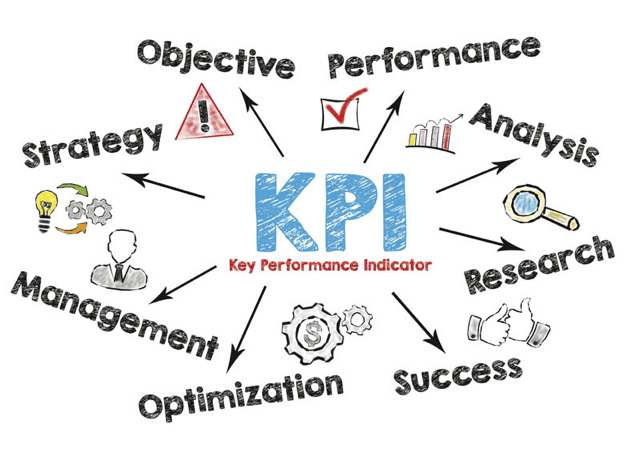
KPIs are also often used as a tool to assess the extent to which SLA expectations are met.
Imagine you hire a technician to install an air conditioner in your bedroom. The KPI would be whether they complete the installation according to your expectations, and how early or late they are.
Inter-departmental KPIs can provide information for the following end-to-end performance factors:
- Orders accepted, processed, and completed without issues (Perfect Order)
- Gross profit
- Inventory level
- Cost of goods sold
- Inventory cost
- Total logistics costs
KPIs are often based on easily measurable factors (time, etc.) and are used to evaluate how effectively a person works.
Read more: What is a KPI? How to build an effective KPI scale?
3.2. Differentiating between SLA and OPI
Unlike KPIs or SLAs, OPIs measure a specific function or activity – often one of the “bottlenecks” for your business.

For example:
OPIs (Operational Performance Indicators) for a shipping company would evaluate the cargo loading process, while OPIs for a restaurant would measure the meal preparation process, etc.
According to an analysis by Purdue University, “Meter and Building Control Datas To Drive OPIs and KPIs,” OPIs will adjust more detailed and specific information, focusing on internal business operations (Inward facing).
Additionally, the flow of information and the users of that information will be restricted.
4. How to implement the SLA model in a business
After you have a firm grasp of what an SLA is, here are the steps to apply this model to your business operations:
- Step 1: Set basic standards based on pre-existing activities to build the management model.
- Step 2: Conduct objective surveys to assess which aspects are performing well and which need improvement.
- Step 3: Draft the SLA from the information collected above to create a simulated SLA. Its purpose is to eliminate redundant services and provide valuable services to customers.
- Step 4: Implement on a small to large scale to evaluate the effectiveness of the SLA model.
5. Conclusion
To put it simply, just remember: SLA (Service Level Agreement) is the Expectation – KPI is the Measurement Metric. Indeed, most KPIs are created after you have an SLA. You define your expectations, then use KPIs to measure those expectations.
Clearly understanding what an SLA is and how it differs from a KPI will help businesses develop a better strategic direction. Furthermore, having SLA and KPI models helps you ensure the sustainable growth of your brand and earn customer trust. You can receive a consultation on how to build SLA and KPI models with our tools by leaving your information at the button below.
Contact information:
Hotline: 083 483 8888
Website: https://1office.vn/
Fanpage: https://www.facebook.com/1officevn
Read more:
















