


What is Internal Communications? Role and 7-Step Process


Countless messages are sent out with no response, and important announcements fail to reach the right people. Meanwhile, leaders are frustrated because they can’t clearly communicate major plans to their teams. As a result, everyone pulls in different directions, and morale plummets.
In reality, the root of these problems lies in a crucial yet often overlooked factor: Internal Communication. A well-structured internal communication strategy not only helps teams understand and connect better but also builds collective strength to overcome any challenge. So, how can internal communication become the key to business success? Let’s explore the secrets with 1Office in this article!
Mục lục
- 1. What is Internal Communication?
- 2. The Importance of Internal Communication in Business
- 3. Channels and Content of Internal Communication
- 4. A professional internal communications process
- 5. Effective Internal Communication Strategies
- 6. Required Skills and Qualities for an Internal Communications Professional
- 7. Common misconceptions about internal communications
- 8. Modern Internal Communication Trends
- 9. Conclusion
1. What is Internal Communication?
According to a study from the Institute of Internal Communication (IoIC), internal communication is defined as: “The process of promoting effective two-way communication between leadership and employees to create clarity, engagement, and alignment with the organization’s goals.”

Thus, Internal Communication can be simply understood as the process of conveying information, ideas, policies, and values from leadership to employees, as well as among employees within an organization. The goal of internal communication is to build mutual understanding, foster team cohesion, and boost work performance.
This includes:
The process of conveying information:
- This is not just about one-way information delivery but also about building two-way communication channels between all levels of the business.
- The goal of communication is to ensure information is conveyed accurately, clearly, and to the right audience.
Creating engagement:
- Effective internal communication helps build trust between employees and leadership, creating a positive and unified work environment.
- Employees feel heard and involved in the organization’s important decisions.
Aligning with business goals:
- Internal communication acts as a bridge, helping employees clearly understand the company’s vision, mission, and strategy.
- This ensures that all departments and employees are aligned and working towards common goals.
2. The Importance of Internal Communication in Business
According to a study by Gallup, organizations with strong internal communication strategies have up to 21% higher employee engagement and a 17% increase in productivity. This is clear evidence of the indispensable role of internal communication in the sustainable development of a business.
Promoting internal engagement
Internal communication is the key to creating a bond among members of a business. When employees clearly understand the organization’s mission, vision, and values, they feel like an important part of the team.
According to a report from Gallup, companies with high employee engagement often achieve 17% higher productivity. This proves that alignment and team spirit not only boost work efficiency but also create a positive work environment, helping the business grow sustainably.
Enhancing work performance
An effective internal communication system helps eliminate misunderstandings and enhances coordination between departments. When information is delivered quickly, clearly, and to the right people, plans and goals are executed more accurately.
For example: A clear announcement about a strategic goal or a new plan will help employees understand the right direction and coordinate effectively.
Accordingly, research from McKinsey indicates that businesses with effective communication strategies can increase productivity by up to 25%. Therefore, communication is not just a tool but a strategic solution for smoother business operations.
Supporting the development and promotion of corporate culture
Internal communication plays a crucial role in disseminating the core values and culture of the business. A strongly developed and promoted corporate culture not only retains talent but also attracts potential candidates, helping the business build a long-term competitive advantage.
Campaigns such as recognizing employee achievements, sharing “real people, real stories,” or encouraging diversity will create internal pride and boost morale.
Minimizing conflict and improving morale
When information is conveyed transparently and promptly, conflicts within the business can be resolved from the outset. According to research by Workplace Trends, 80% of employees believe that internal conflict is a cause of reduced productivity. Therefore, internal communication is the solution to minimize this issue while also improving the entire team’s morale.
For example: Open meetings or anonymous suggestion boxes are effective ways for leadership to listen to employee feedback, thereby building a more positive work environment.
Promote creativity and innovation

In a constantly changing business landscape, internal communication helps organizations adapt quickly and effectively. When a company implements a new system or adjusts its strategy, clear communication minimizes anxiety and builds consensus throughout the organization.
For example, during the implementation of a new policy, internal communication can help employees clearly understand the goals, usage, and benefits the system brings. This helps the business be more agile in facing market challenges.
3. Channels and Content of Internal Communication
3.1. Popular Internal Communication Channels
Internal Email
Email is the most basic and popular channel for internal communication. With the ability to personalize and send information to individuals or groups, email is often used to announce important information such as new policies, work schedules, or business performance reports.
Company Intranet
An Intranet platform is an effective information channel for sharing documents, announcements, and internal programs. It is a centralized place for information, making it easy for employees to look up and stay updated on organizational changes.
Internal Social Network
Many modern businesses use internal social network platforms. This is not just a communication channel but also a place for employees to interact, share opinions, and build colleague relationships.
Currently, with many outstanding features, the 1Office internal network is highly regarded and is a solution trusted by many Vietnamese businesses:
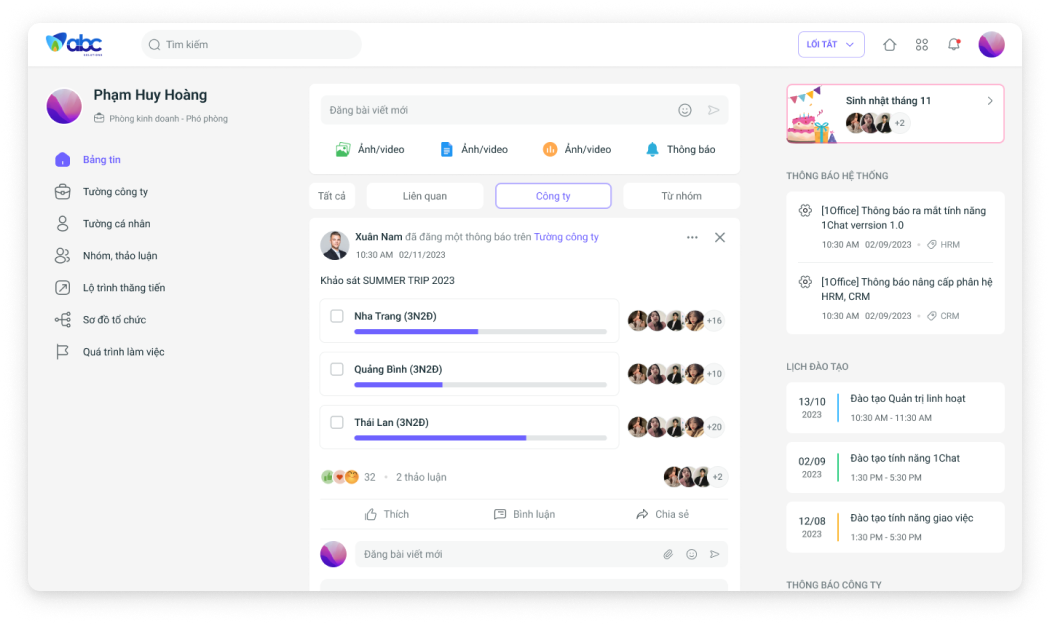
- Announcements and updates: Provides a channel for official information from leadership to all employees. Announcements such as new policies, work schedules, or internal events are updated quickly and accurately.
- Internal newsfeed: Creates a space to share information, news, and necessary documents, helping employees easily look them up anytime, anywhere.
- Integrated group chat (1Chat): Supports instant communication between individuals or groups, making work discussions convenient and fast.
- Interaction on the News Feed: Allows employees to comment, share opinions, or express emotions on internal posts, creating a lively and interactive work environment.
- Employee rewards and recognition: The system supports programs to honor outstanding employees, helping to spread a culture of recognition and encourage contributions.
- Document repository: Provides a shared document storage space, supporting quick searches and easy access. The permission system helps secure important information.
Internal Events
Events such as seminars, training sessions, teambuilding, or award ceremonies are direct communication channels that help create connections among members and spread the company’s important messages.
Notice Boards and Printed Materials
In some traditional businesses, notice boards or printed materials (posters, brochures, banners, etc.) are still effective communication channels for emphasizing necessary messages.
3.2. Internal Communication Content
Internal Announcements and Updates
This is important content aimed at conveying the latest information about company activities, policy changes, or ongoing projects. Therefore, the responsible department needs a delivery method that is clear, transparent, and easy to understand to avoid misunderstandings.
Employee Training and Development
Internal communication also plays a role in providing information about training programs, seminars, or personal development roadmaps. This is an opportunity for the business to enhance the capabilities of its team and retain talent.
Conveying Company Values and Culture
Content related to the company’s mission, vision, core values, or success stories will help build connection and pride among employees.
>>> Read more: 5 Steps to Build an Effective Company Culture
Recognize achievements and motivate employees
Programs to reward outstanding individuals and teams or inspirational stories from employees will boost work motivation and build a positive work environment.
Support during organizational change
When the business undergoes changes (digital transformation, restructuring, market expansion), internal communications need to provide detailed information, answer questions, and offer guidance to ensure employee consensus.
Entertainment and engagement content
Besides work, entertainment content such as contests, quizzes, or sharing interesting moments in the company will also help strengthen bonds and create a relaxed atmosphere.
4. A professional internal communications process
Internal communications play a crucial role in maintaining connections between departments, building corporate culture, and boosting work efficiency. To achieve this, a professional and effective internal communications process must be systematically built and implemented.
Step 1: Define communication objectives
Before implementing any communication activity, the business and the implementer need to clearly define the objectives they want to achieve from internal communications. These objectives may include:
- Providing information about the company’s strategy and development plans.
- Promoting collaboration and cohesion between departments.
- Updating changes in work processes.
- Enhancing employee participation in company initiatives.
Step 2: Choose appropriate communication channels
To convey messages effectively, the business needs to choose communication channels that are suitable for the organization’s needs and characteristics. Some common channels include:
- Email and e-newsletters: Suitable for official announcements and important updates.
- Intranet: An internal network that allows sharing of documents, announcements, and necessary information with all employees.
- Internal social networks: Slack, Microsoft Teams, or 1Office are tools that help employees communicate and collaborate quickly.
- Internal events: Training sessions, meetings, or teambuilding activities help create an interactive atmosphere and strengthen relationships.
Step 3: Clearly craft the message to be conveyed
The communication message must be clear, easy to understand, and appropriate for the target audience. Avoid using jargon or complex language unless necessary. The messages should ensure they are:
- Simple: Use language that is accessible to all employees.
- Realistic: Ensure the information is accurate and feasible.
- Sincere: Convey the company’s care and commitment to its employees.
Step 4: Create a communication plan and schedule

To ensure continuous and effective communication, you will need to create a detailed communication plan. This plan will include some basic information such as:
- Communication schedule: Specifies the timing for sending messages, frequency of newsletters, internal events, etc.
- Specific content: Decides on the topics to be conveyed, the organization method, and related activities.
- Ensure flexibility: The plan must be flexible enough to be adjusted in case of unexpected changes within the company or the market.
>>> See also: A detailed guide to creating an internal communications plan
Step 5: Execute and implement the plan
After creating the plan, the next step is to deploy and carry out communication activities according to the schedule. At this stage, support tools like email, intranet, notice boards, internal networks, or direct meetings will be used to deliver the message to all employees.
Step 6: Evaluate effectiveness
Evaluating communication effectiveness is a crucial step for the responsible department to determine future strategies and plans. Methods for evaluation can include:
- Employee surveys: Measure employee satisfaction with the information communicated.
- Track participation levels: Check employee involvement in internal events or feedback on internal social media platforms.
- Analyze work performance: Assess whether communication has contributed to improving work performance and engagement within the company.
Step 7: Adjust and Optimize
Based on the evaluation results, businesses and organizations will need to improve their communication processes. This may include adjusting the message, changing communication channels, or improving the frequency and content to increase effectiveness in subsequent instances.
5. Effective Internal Communication Strategies
Clear, Understandable, and Accessible Messaging
Communication messages need to be crafted to be simple, easy to understand, and highly shareable. Using plain language and avoiding technical jargon will help the message reach all employees in the company.
- Concise messages: Short, succinct, and to-the-point announcements will help employees easily receive and remember them.
- Flexibility by audience: Messages need to be personalized for each employee group. For example, managers require different messages than employees in various departments.
Combine a Variety of Communication Channels
Businesses should combine the use of various communication channels to ensure that information is delivered to every employee most effectively. These channels can include:
- Face-to-face meetings: Meetings or in-person events can help convey messages clearly and create opportunities for employees to ask questions and provide feedback.
- Internal social networks and mobile chat applications: Tools like Slack, Microsoft Teams, or 1Office can create a space for quick and effective communication. Employees can stay updated and exchange information instantly, especially when working remotely.
- Videos and Podcasts: Using video announcements or podcasts can help deliver messages in a lively, memorable, and accessible way.
Encourage Employee Feedback and Participation
Internal communication is not just about top-down information dissemination; it also requires active employee participation. Implementers and leadership need to listen and encourage employees to participate in the communication process, which will help create an open and friendly communication environment.
- Surveys and polls: Conduct regular surveys to collect employee feedback on internal communication programs.
- Forums and discussion groups: Discussion groups or forums on internal social network platforms are places for employees to share ideas and contribute to building the company.
- Encourage participation in events: Events, meetings, or internal programs should involve all departments in the company to ensure cohesion.
Train and Develop Communication Skills for Employees
For an effective internal communication strategy, training employees in communication skills is essential. This will help employees better understand how to communicate within the company and how to convey information clearly and effectively.
- Communication skills training: Courses on business communication skills will help employees, especially leaders, improve their ability to convey messages and interact with colleagues.
- Guidance on communication tools: Provide training on how to use internal communication tools such as chat software, video conferencing, or work management systems.
Ensure Transparency and Timeliness in Communication
Information in internal communication needs to be transparent and updated promptly to avoid baseless rumors, misunderstandings, or loss of trust from employees. Announcements should be made as soon as a change or important event occurs.
- Timely announcements: Important company decisions, such as strategic changes or personnel changes, must be announced immediately and clearly.
- Transparency in information: Avoid providing vague or non-transparent information, as this can lead to employee dissatisfaction.
6. Required Skills and Qualities for an Internal Communications Professional
The internal communications professional plays a crucial role in connecting departments, maintaining good relationships between leadership and employees, and promoting the sustainable development of the business. To perform this role well, they need to possess certain skills and qualities.
6.1. Essential Skills for an Internal Communications Professional
Excellent Communication Skills
Communication skills are the most critical factor for an internal communications professional. They must be able to convey information clearly, understandably, and engagingly to all audiences within the business.
- Verbal communication: The ability to persuade and convey messages coherently and understandably in meetings, events, and through communication channels.
- Written communication: Writing announcements, emails, newsletters, or reports clearly, concisely, and in an easy-to-understand manner.
- Effective listening: Listening to employee opinions and feedback to improve communication strategies and foster engagement within the company.
Organizational and project management skills
Due to the frequent need to organize communication campaigns, internal events, or training sessions, organizational and project management skills play a crucial role for an internal communications professional.
- Planning: The ability to create detailed plans for communication campaigns and internal events, ensuring timelines and objectives are met.
- Time management: The need to arrange and allocate time reasonably to complete tasks on schedule, especially when handling multiple projects simultaneously.
- Problem-solving: During implementation, issues will arise that need to be resolved quickly and effectively.
Creativity and innovation skills
Internal communications is not just about conveying information; it also requires creativity to attract and engage employees. An internal communications professional needs the ability to:
- Create engaging messages: Use understandable language that is still interesting and captivating to ensure the audience effectively receives the message.
- Innovate and be flexible: Continuously seek and apply new communication methods and tools to enhance work efficiency, from using videos and infographics to interactive applications.
Analytical and problem-solving skills
For internal communications to be effective, the communicator must be able to analyze information and clearly understand the situation within the organization or business. They need to:
- Analyze information: Identify problems or challenges within the company to create suitable communication solutions.
- Resolve crises: In crisis situations, the communicator must be able to solve problems quickly and effectively to avoid affecting employee morale.
6.2. Qualities of an internal communications employee
Empathy
Empathy is an essential quality for an internal communications professional to understand and share the feelings and thoughts of employees in the company. This helps them create communication campaigns that are relevant to employee needs and promote organizational cohesion.
Teamwork spirit

Internal communications cannot succeed without close coordination between departments and individuals within the business. The communicator must be able to work in a team, build good relationships with other departments and leadership to ensure messages are delivered effectively and consistently.
Persistence and patience
During work and implementation, encountering difficulties or a lack of cooperation from a certain department is unavoidable. The communicator needs to be patient, persistent, not discouraged by challenges, and continue to maintain the communication strategy until the desired results are achieved.
High sense of responsibility
Internal communications professionals must have a high sense of responsibility for their work. They need to ensure that communication campaigns are carried out fully, methodically, on time, and bring efficiency to the business.
7. Common misconceptions about internal communications
Internal communications is just the HR department’s job
Many people believe that internal communications is solely the responsibility of the HR or communications department. However, in reality, internal communications is considered part of the corporate strategy, and all departments, especially senior leadership, play a crucial role in implementing and maintaining internal messages.
Every department, from finance to production or marketing, needs to participate in transmitting and receiving information and ensuring that the company’s core values are widely spread.
Communicating information just once is enough
Another common mistake made by many in internal communications is assuming that conveying information once is sufficient. In reality, internal communication messages need to be repeated and reinforced multiple times to ensure all employees understand and remember them. This helps build consistency in the message and makes employees feel that the information they receive is truly important.
Internal communication is just about organizing events, performances, etc., for employees
Another common misconception is that internal communication is simply about organizing entertainment events or performances for employees. While organizing these events can help create a fun atmosphere and bond employees, it is only a small part of the overall role of internal communication.
Proper, professional internal communication includes conveying strategic messages, the company’s core values, guiding and resolving issues related to daily work, as well as maintaining effective communication between leadership and employees. Internal communication is not limited to entertainment activities but must also play a role in building company culture and improving team performance.
Internal communication is a task, not a strategy
Finally, some companies view internal communication as a secondary task, less important than the company’s other strategies. However, internal communication plays an indispensable role in building and maintaining corporate culture, strengthening engagement, and boosting work efficiency. It should be considered a crucial part of the overall business strategy, not just a support function.
Internal communication is only important during a crisis or for announcing new policies
Many people only realize the importance of internal communication when a crisis or major incident occurs in the company. However, internal communication is not just for emergencies but must be a continuous, sustained part of the business’s strategy.
Maintaining regular internal communication helps strengthen employee engagement, improve understanding of the company’s goals and values, and prevent misunderstandings or conflicts that may arise during work.
There’s no need to measure the effectiveness of internal communication
Another very common misconception is that there is no need to measure the effectiveness of internal communication campaigns. However, evaluating and measuring the effectiveness of internal communication is crucial for improving strategies and making timely adjustments.
Metrics such as employee participation levels, their understanding and feedback on communication campaigns, or the level of engagement within the company can help the business and the implementing department identify the strengths and weaknesses of their communication program.
8. Modern Internal Communication Trends
Modern internal communication is no longer limited to one-way information transmission but has become a strategic tool that helps enhance connection and work efficiency within the business.
Digital Internal Communication

With the rapid development of technology, internal communication has transitioned to a digital format. Digital platforms and tools such as email, mobile apps, intranet systems, and work management software (like 1Office) are becoming the primary means for businesses to maintain internal communication.
Digital communication helps businesses easily transmit information to all employees, regardless of their geographical location, and helps save time and costs. It also allows for the storage and management of important documents and messages, providing transparency and easy access for employees.
Gamification in Internal Communication
Gamification is a new trend in internal communication that helps make communication messages and strategies more interesting and engaging. Instead of just sending information in a dry manner, businesses can apply game elements, such as reward points, leaderboards, or challenges, to motivate employees to participate and interact.
Gamification helps create stronger bonds among employees, encourages them to participate in company activities, and improves work performance. It is particularly effective in fostering creativity and improving team spirit.
Communication via Internal Social Networks
Internal social networks have become a powerful tool for promoting communication and connection within businesses. Platforms like 1Office, Slack, Microsoft Teams, etc., allow employees to share information, discuss, and collaborate in real-time.
These social networks create an open space where employees can exchange ideas, discuss work-related issues, and receive quick feedback from colleagues and superiors. Communication via internal social networks helps enhance transparency in work and improve cohesion between departments.
Internal Videos and Podcasts
Videos and podcasts are increasingly becoming important tools in internal communication. Announcement videos, training videos, or videos shared by leadership help convey information in a more vivid, memorable, and understandable way.
Podcasts, with their convenient listening format, are also becoming popular, especially for sharing stories, knowledge, or interviewing experts within the company. Video and podcasts offer flexibility, allowing employees to access information whenever and wherever they want, while also creating a more direct connection with leaders and colleagues.
9. Conclusion
Modern internal communication trends are increasingly changing and shaping new ways of communication within businesses. Applying new technologies and media helps businesses enhance connectivity, optimize work efficiency, and build an open, creative, and dynamic work environment. Businesses and implementers need to be flexible and creative in implementing these methods to meet the growing needs of employees and build a strong internal culture.




