


 11/05/2026
  515 views
RACI is a very useful tool when a business wants to clarify who is responsible, who approves, and who needs to be updated on a project. If you want to understand what RACI is and how to apply it in practice, this article will help you grasp the information in the most understandable way.
Mục lục
- What is RACI? Introducing a Breakthrough Delegation Tool
- Why Do Businesses Need to Use the RACI Matrix?
- What Types of Projects is the RACI Matrix Suitable For?
- A Detailed Guide to Building an Effective RACI Matrix
- Practical Example of a RACI Matrix
- Important Notes When Applying RACI
- 1Office – Project Management 4.0 Software Applying the RACI Matrix
What is RACI? Introducing a Breakthrough Delegation Tool
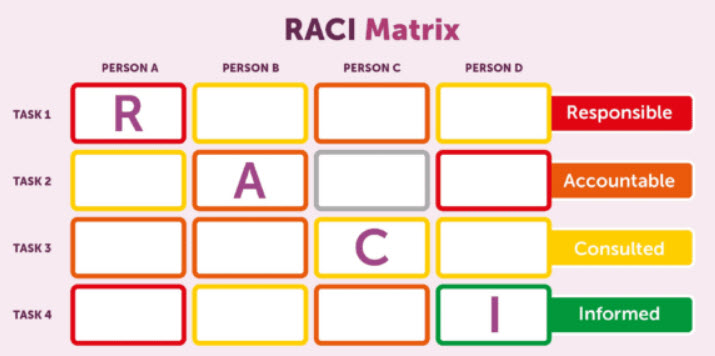
The RACI matrix—also known as a responsibility assignment matrix—is a strategic management tool designed to define the roles and responsibilities of each member in a project.
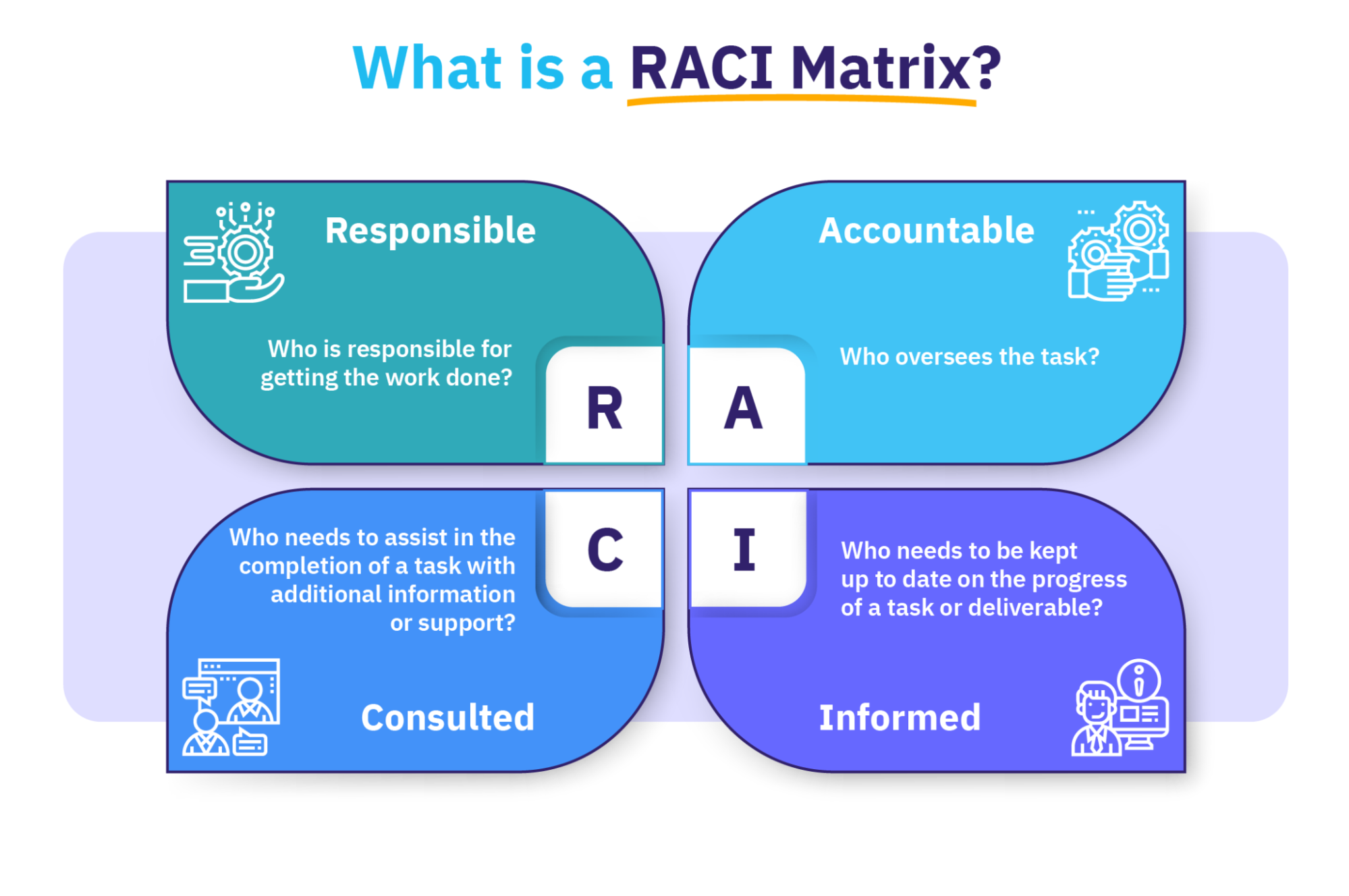
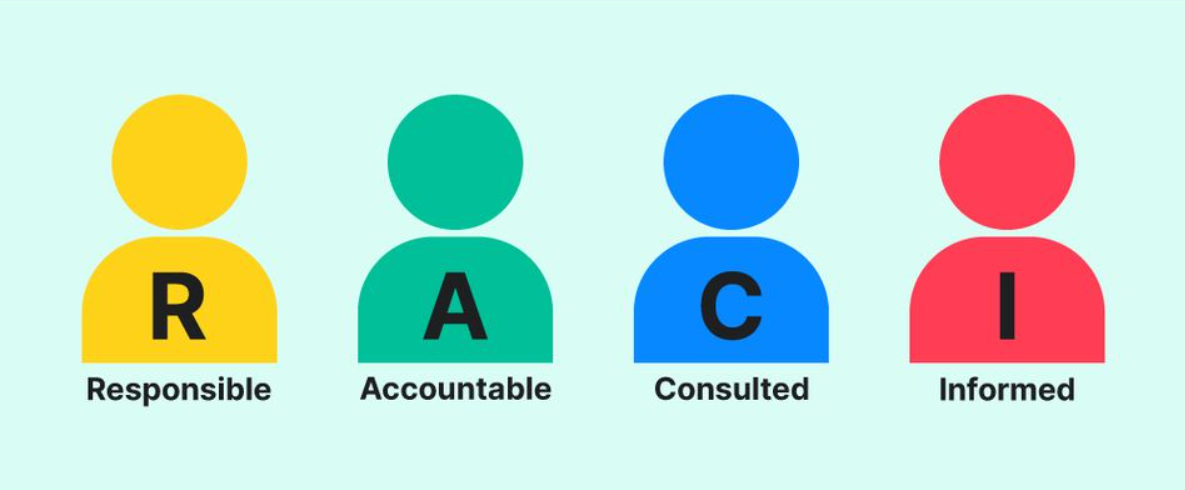
The acronym RACI includes four key roles:
- R – Responsible: The individual who directly executes the task
- A – Accountable: The person ultimately responsible for the outcome of the work
- C – Consulted: Individuals who provide expert opinions and advice
- I – Informed: Those who need to be updated on the project’s progress
By applying the RACI matrix, organizations can eliminate task overlap, enhance individual accountability, and optimize workflows.
Why Do Businesses Need to Use the RACI Matrix?
The RACI matrix offers many significant benefits for the project management process:
Clarify Responsibilities
Each member clearly understands their role and tasks, minimizing the risk of confusion or shirking responsibility. Clearly identifying who performs, who approves, and who is informed helps make the workflow coherent and efficient.
Optimize Communication
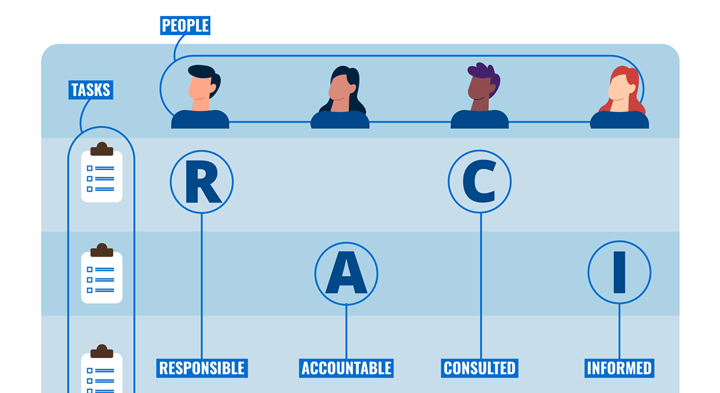
RACI creates a clear communication channel, ensuring the right people receive the right information at the right time. This helps minimize confusion and speeds up decision-making.
Enhance Management Efficiency
By precisely defining the role of each member, the RACI matrix helps managers monitor project progress closely and professionally.
What Types of Projects is the RACI Matrix Suitable For?
Although RACI can be applied to most types of projects, it is particularly effective in these areas:
- Information technology projects with multiple stakeholders
- Digital transformation projects within a business
- Marketing projects involving multiple departments
- Product development and construction projects
- Projects requiring cross-functional coordination
A Detailed Guide to Building an Effective RACI Matrix
To build a professional and effective RACI matrix, you need to follow these steps systematically:
Step 1: Define the Project Scope
Before starting to build the RACI matrix, it’s essential to clearly understand the scope and core elements of the project. This includes:
- List all specific tasks: Break the project down into smaller, detailed, and manageable activities (e.g., planning, design, implementation, testing). Ensure that no important steps are missed.
- Identify key milestones: Note the major completion points in the project (e.g., completion of the design phase, product handover).
- Describe expected outcomes: For each task or milestone, clarify the specific objective to avoid confusion about the scope of work.
For example: In a software development project, tasks might include “Gather customer requirements,” “Design user interface,” and “System testing.”
Step 2: Identify Participants
For the RACI matrix to work effectively, you need to fully identify all stakeholders involved in the project:
- Individuals: Includes members of the project team (such as team lead, engineers, designers) and external parties (such as clients, suppliers).
- Groups or departments: If a task involves a collective group (e.g., the marketing department, the IT team), list them as a participating unit.
- Determine hierarchy and influence: Note who has decision-making authority and who is only in a supporting role to avoid confusion when assigning roles.
For example: In a construction project, the list might include “Project Manager,” “Construction Engineering Team,” “Subcontractor,” and “Client.”
Step 3: Assign Roles
This is the core step in building a RACI matrix. For each task listed, assign RACI roles to each individual or team:
- Responsible: The person who directly performs the task and ensures the work is completed on time. There should only be one person primarily responsible for each task to avoid diffusion of responsibility.
- Accountable: The person who is ultimately answerable, approves the work, and is accountable for the results. Typically, this is a manager or senior leader, and there should only be one accountable person for each task.
- Consulted: Those who provide opinions, expertise, or necessary information to complete the task. This role is usually for experts or stakeholders who need to be consulted.
- Informed: Those who need to be updated on the progress or results of the task but are not directly involved in its execution.
- Avoid unnecessary overlap: Ensure that each task does not have too many people in the same role (e.g., multiple people being responsible) to avoid confusion and reduce efficiency.
For example: In the “Logo Design” task, the designer is Responsible, the marketing team lead is Accountable, the client is Consulted, and the sales team is Informed.
Step 4: Review and Adjust
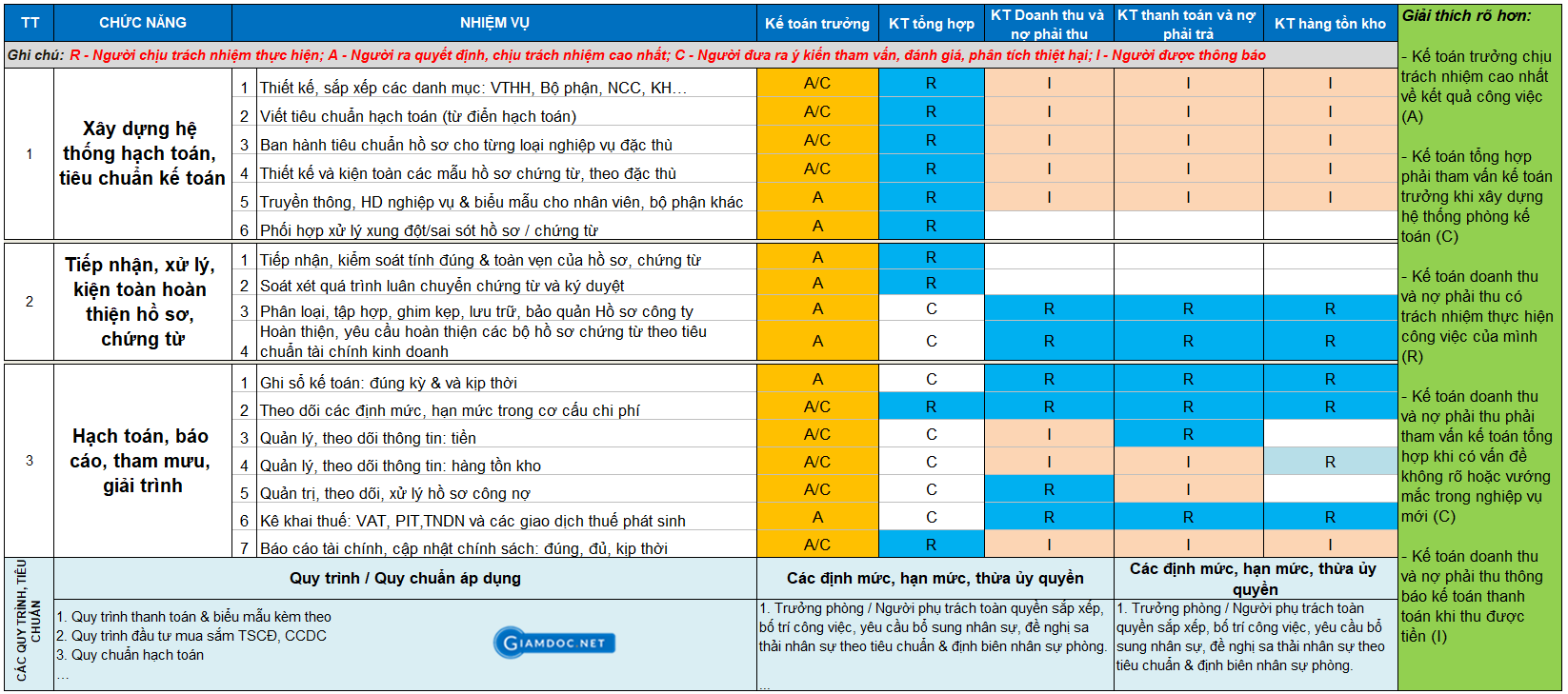
The RACI matrix is not a static document; it needs to be maintained and updated throughout the project:
- Periodic review: Organize team meetings to check if roles have been assigned correctly and are still relevant to the actual situation.
- Adjust as needed: If the project changes (e.g., new tasks are added, team members change), update the matrix immediately to reflect the new situation.
- Gather feedback: Solicit feedback from stakeholders to ensure everyone understands and agrees with their roles.
- Check for reasonableness: Ensure that no task lacks a responsible or accountable person, and avoid overloading one person with too many roles.
For example: If a team member leaves, reassign their roles and inform all relevant stakeholders.
Practical Example of a RACI Matrix
A small tech company is developing an online food ordering application. The project includes key tasks such as requirements gathering, interface design, application programming, testing, and deployment. The stakeholders include:
- Project Manager (PM): The person who oversees the entire project.
- Developer (Dev): The person who programs the application.
- Designer: The person who creates the user interface.
- QA Team: The quality assurance team.
- Client: The party that commissioned the application.
- Marketing Team: The team that promotes the application after completion.
Below is the RACI matrix presented in a table format:
|
Task |
PM | Dev | Designer | QA |
Client |
Marketing |
| Gather requirements | A | C | I | |||
| Interface design (UI) | A | R | C | I | ||
| Application development | A | R | ||||
| Application testing | A | R | ||||
| Application deployment | A | R | C | I | I | |
| Application promotion | I | I | R |
Explaining each task and role:
- Gathering requirements:
- Accountable (A): The Project Manager is ultimately responsible for ensuring requirements are gathered completely and accurately.
- Consulted (C): The client provides information about their needs and wants.
- Informed (I): The marketing team is informed to understand the product for future promotional strategies.
- UI Design:
- Responsible (R): The designer directly carries out the interface design work.
- Accountable (A): The Project Manager approves the final design.
- Consulted (C): The client is consulted to ensure the interface meets expectations.
- Informed (I): The marketing team receives information to prepare promotional materials.
- Application Programming:
- Responsible (R): The developer writes the source code and builds the application.
- Accountable (A): The Project Manager monitors progress and ensures source code quality.
- Application Testing:
- Responsible (R): The testing team performs tests to detect bugs.
- Accountable (A): The Project Manager is responsible for approving the test results.
- Application Deployment:
- Responsible (R): The developer deploys the application to the app stores (App Store, Google Play).
- Accountable (A): The Project Manager ensures the deployment process is successful.
- Consulted (C): The testing team confirms the application works well before deployment.
- Informed (I): The client and marketing team are notified when the application is officially launched.
- Application Promotion:
- Responsible (R): The marketing team executes the promotional campaign.
- Informed (I): The Project Manager and client are updated on the promotion progress.
Important Notes When Applying RACI
Keep the Matrix Simple and Focused
The RACI matrix is designed to clarify roles and responsibilities, but if it becomes too complex (including too many tasks or too many participants), it can cause confusion rather than provide support.
An overloaded matrix makes it difficult for team members to follow and easy for them to overlook their responsibilities.
- Risks of non-compliance: If you list dozens of minor tasks or assign roles to too many people who are not truly necessary, the team can feel confused and lose focus. For example, in a simple project like organizing an event, assigning a role for the “coffee maker” in the matrix is unnecessary.
- How to implement:
- Focus only on the main tasks and key milestones of the project.
- Limit the number of participants for each task, prioritizing those who have a direct impact on the outcome.
- For example: In an application development project, instead of listing small steps like “write line of code A,” group them into “Application Programming.”
Impact: Keeping the matrix simple helps everyone easily grasp their roles, saving time and increasing management efficiency.
Communicate Clearly and Ensure Consensus
The RACI matrix is only effective when all stakeholders understand and agree with their assigned roles. Without good communication, some people may not be aware of their responsibilities or may object to their assigned roles, leading to conflict or delays.
- Risks of non-compliance: If the project manager creates the matrix but doesn’t explain it clearly—for example, why the designer is “Responsible” for the interface and not the developer—the team may become dissatisfied or uncooperative. This reduces the tool’s effectiveness.
- How to implement:
- After completing the matrix, hold a meeting to present and explain each role.
- Encourage team members to ask questions or suggest adjustments if they feel a role is inappropriate.
- For example: When assigning the marketing team as “Informed” for the application deployment, explain that they need the information to prepare the promotional campaign.
Impact: Clear communication creates consensus, increases commitment, and minimizes misunderstandings throughout the project.
Regularly Review and Update the Matrix

Projects often change over time (new tasks are added, team members change, goals are adjusted), and the RACI matrix needs to accurately reflect the current situation.
An outdated matrix will lose its usefulness and can cause difficulties.
- Risks of non-compliance: If a team member leaves and the matrix is not updated, tasks can be missed. For example, if the lead developer resigns and no one is reassigned the “Responsible” role for programming, the project will stall.
- How to do it:
- Schedule regular matrix reviews (e.g., monthly or after each major milestone).
- When there are major changes (like adding a new feature to the application), update the matrix immediately and inform the team.
- For example: If the project expands to include developing a web version, add the task “Design web interface” and assign new roles.
Impact: Maintaining an updated matrix ensures it remains a living tool, supporting effective management throughout the project lifecycle.
1Office – Project Management 4.0 Software Applying the RACI Matrix
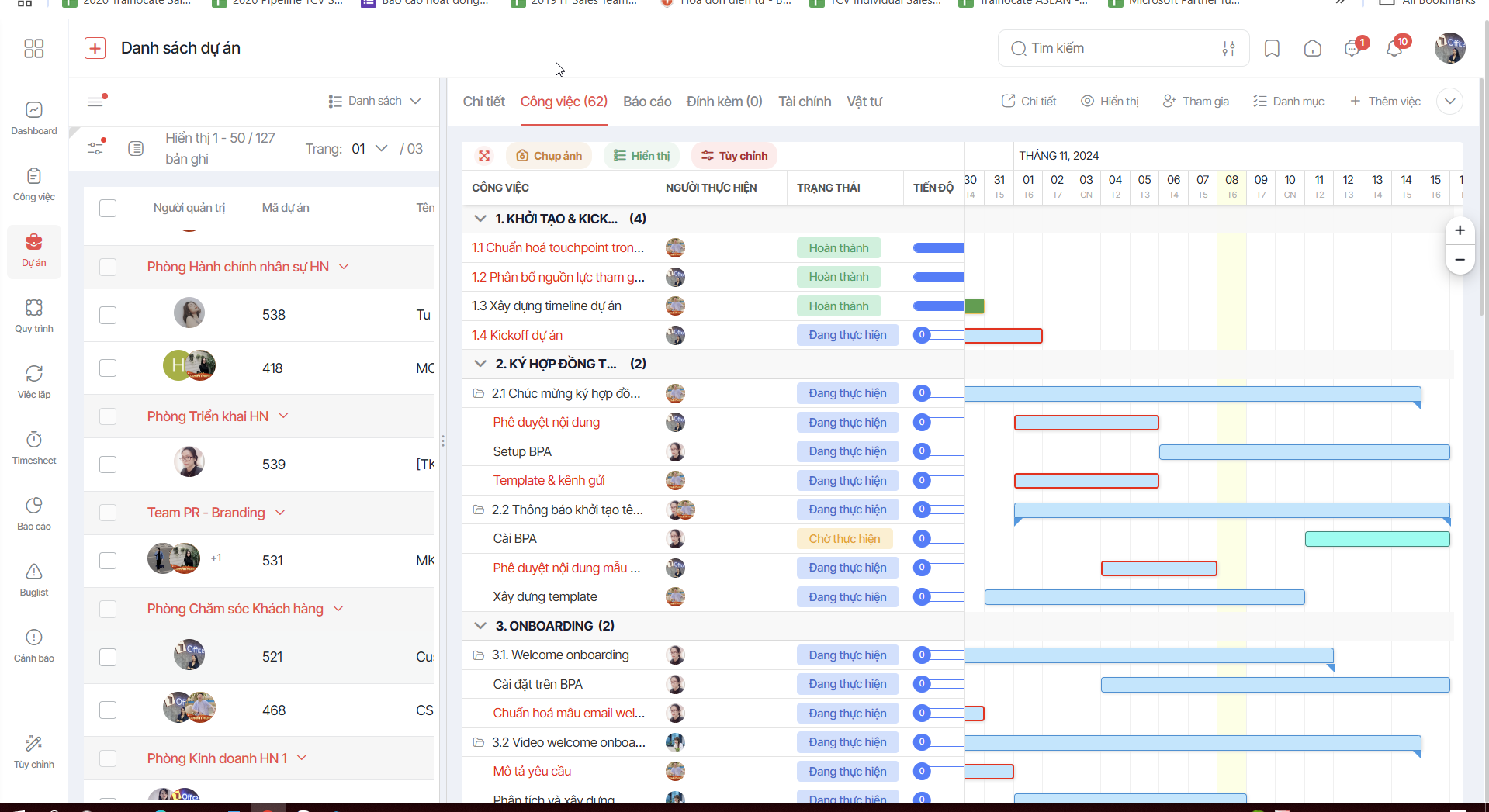
1Office is a comprehensive business management solution designed to help organizations optimize workflows and enhance project management efficiency in the digital age.
Register for a free 1Office Demo account!
Key features of 1Office for implementing the RACI matrix:
- Flexible RACI role customization: 1Office allows businesses to define and adjust RACI roles according to the specifics of each project, ensuring maximum suitability for their unique operational model.
- Clear and accessible RACI matrix presentation: The 1Office interface integrates the RACI matrix in a visual chart format, helping all members quickly identify their responsibilities and level of involvement in each task.
- Role-based performance management: The system provides tools to track work performance for each RACI role, helping managers evaluate work efficiency and allocate resources optimally.
- Enhanced team collaboration through technology integration: With real-time data synchronization and notification features, 1Office ensures seamless connection between members, supporting effective communication throughout the project execution process.
Thanks to these advantages, 1Office is not just a management tool but also a powerful assistant that helps businesses build and operate the RACI matrix scientifically and effectively.
———————————-
The RACI matrix is not just a management tool, but also a professional work philosophy. By applying RACI, businesses can enhance work efficiency, minimize conflicts, and create a transparent and effective work environment.
Start applying the RACI matrix today to unlock your team’s outstanding potential!
















