


 10/05/2026
  148 views
HRM software for the import-export industry will help import-export (XNK) businesses operate smoothly and coordinate perfectly between the office, warehouse, and transportation. However, human resource management in this industry faces many challenges. Let’s explore with 1Office the top 8 HRM software for the import-export industry and the core criteria for choosing the right strategic tool for your business.
Mục lục
1. TOP 8 specialized HRM software for the import-export industry
Specialized HRM software for the import-export industry plays a crucial role in the context of digital transformation, helping to automate processes and maintain employee engagement. Below are 8 leading solutions designed to meet the complex requirements of the import-export (XNK) industry.
Overall comparison table
| Software | Suitable Scale | Key Features |
| 1HRM (1Office) | Medium, large, corporate |
|
| VnResource HRM Pro | Medium, large, corporate |
|
| FPT.iHRP | Large, multi-branch corporations |
|
| Lạc Việt SureHCS HRM | Medium, large, corporate |
|
| MISA AMIS HRM | Medium and large in Vietnam |
|
| Base HRM+ | All scales |
|
| Bravo HRM | Medium and large |
|
| DigiiHR | Medium and large |
|
1HRM – A comprehensive HR management solution applying AI and Low-Code
For the complex HR operations of the import-export industry, 1HRM provides in-depth solutions, especially with the integration of Artificial Intelligence (AI) and Low-code:
- 1HRM supports all timekeeping methods, allowing employees to clock in via a mobile app using GPS or WiFi. Data from ports and warehouses is automatically synchronized to a centralized management system, enabling flexible shift management.
- The Payroll module of 1Office supports multiple salary calculation methods, including piece-rate pay (paid per project/shipment) and sales-based pay (commissions, revenue, KPIs). The system automatically inherits data from timesheets and KPI results to calculate salaries, completely eliminating manual errors.
- 1Office’s AI supports automatic CV screening, helping HR quickly recruit quality personnel.
- The Low-code platform (BPA) allows businesses to automate complex processes (such as document processing, advance payment requests) without needing IT.

VnResource HRM Pro
VnResource HRM Pro is a comprehensive HR management solution trusted by many large enterprises and logistics corporations in Vietnam.
Key features:
- This solution is very powerful in flexible timekeeping management, including mobile and GPS clock-in, suitable for field staff.
- VnResource HRM Pro is highly regarded for its strong integration capabilities with ERP, CRM, SAP, and Oracle systems, effectively solving the data synchronization challenges of the import-export industry.
FPT.iHRP
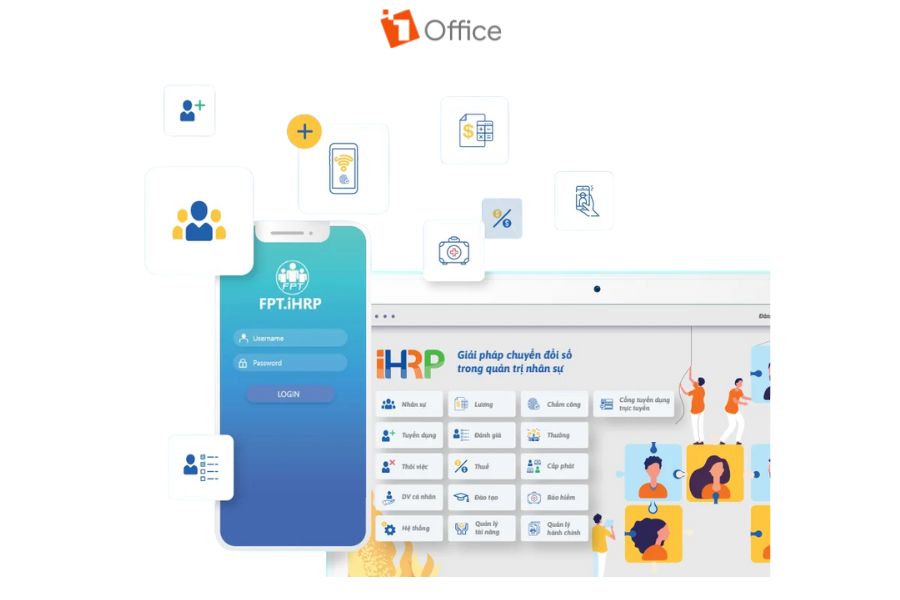
FPT.iHRP is an HRM software for the import-export industry specifically designed for large corporations and enterprises with complex organizational structures and multiple branches.
Key features:
- The software supports the management of the entire employee lifecycle and especially offers multi-branch and multi-language support. This is a key factor for multinational import-export and logistics companies.
- Deep integration with core systems like ERP, SAP, and Oracle ensures seamless flow of HR and operational data.
Lạc Việt SureHCS HRM (HR-Manager)
Lạc Việt SureHCS HRM is a comprehensive A-Z HR management solution aimed at medium-sized to large enterprises and corporations.
Key features:
- Highly customizable system to fit the specific business processes of the enterprise.
- The platform integrates Business Intelligence (BI) analytics tools and an AI Advisor, giving leadership deep insights into HR data.
- Ability to automate C&B payroll calculations and easily connect with ERP and finance systems.
MISA AMIS HRM
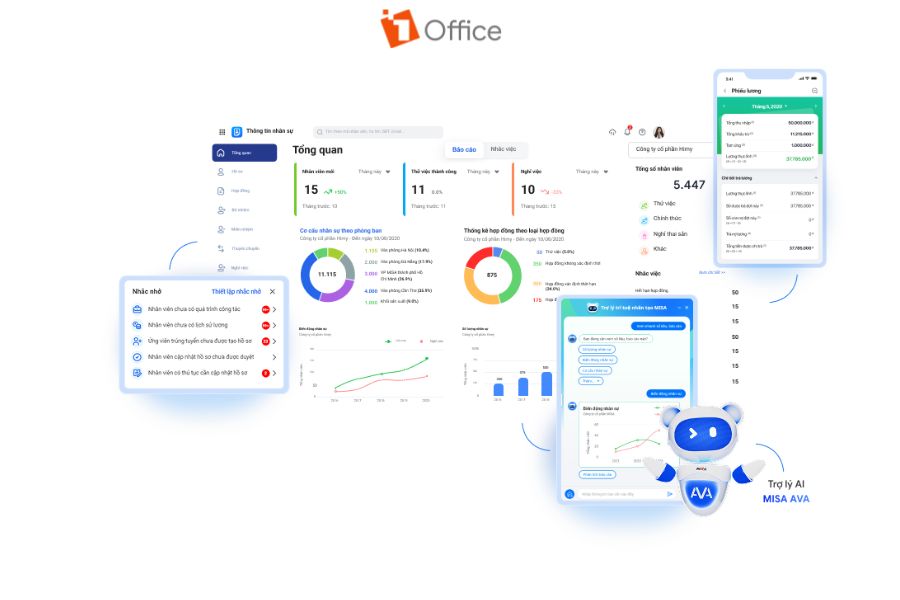
MISA AMIS HRM is a ‘purely Vietnamese’ solution, optimally designed for medium and large enterprises in Vietnam, with a particular strength in legal compliance.
Key features:
- Ability to automate payroll, insurance, and tax calculations, ensuring absolute compliance with Vietnamese labor laws.
- Provides smart timekeeping features like GPS and QR code, suitable for mobile import-export employees
Base HRM+
Base HRM+ is a comprehensive HR management platform built on a modular architecture, allowing businesses to select and implement features according to their needs.
Key features:
- Focuses on automating timekeeping and payroll with high accuracy.
- Strongly supports goal management (KPIs, OKRs), helping import-export businesses objectively measure the performance of sales and documentation departments.
- Easily integrates with other Base work management platforms (like Base Wework).
Bravo HRM
Bravo HRM is a module within Bravo’s comprehensive enterprise resource planning (ERP) solution, designed for medium and large-sized businesses.
Key features:
- Tight and powerful integration with the Bravo ERP system itself. This creates a completely synchronized system between HR – Accounting – Production/Logistics.
- The software effectively supports complex HR processes, suitable for import-export companies with large-scale production or warehousing operations.
DigiiHR
DigiiHR is a modern HRM software for the import-export industry, focusing on digitizing and automating core HR tasks for medium and large-sized businesses.
Key features:
- Provides centralized employee profile management and automates the timekeeping and payroll process.
- Supports important tasks such as KPI and competency assessments.
- Ability to connect data directly with Social Insurance and Tax authorities helps reduce the administrative workload for the HR department.
2. Specific HR Management Challenges in the Import-Export Industry
The import-export and logistics industry has extremely complex operational processes, with a workforce distributed across multiple locations, requiring HRM software to solve very specific problems.

2.1. Difficulties in Managing Timekeeping and Mobile Work Shifts
Employees in the import-export and logistics industry don’t just work in the office. They often have to travel to ports and ships to resolve incidents, or transportation staff (drivers, delivery personnel) are constantly on the move. Controlling the timekeeping and actual working hours of this group of employees becomes extremely difficult using only a fixed fingerprint time clock.
2.2. Complex Project-Based Payroll and Commission Calculation
The second challenge comes from the complexity of the salary and bonus structure. The import-export industry often deals with many different payroll calculation methods for each group of employees and departments.
For example, a sales employee’s salary is based on project or sales commissions, while a field employee’s salary includes various allowances and overtime pay. This complexity creates significant obstacles for the HR department in timekeeping and leave management, leading to frequent payroll delays and a high risk of errors.
2.3. High Demand for Business Data Integration
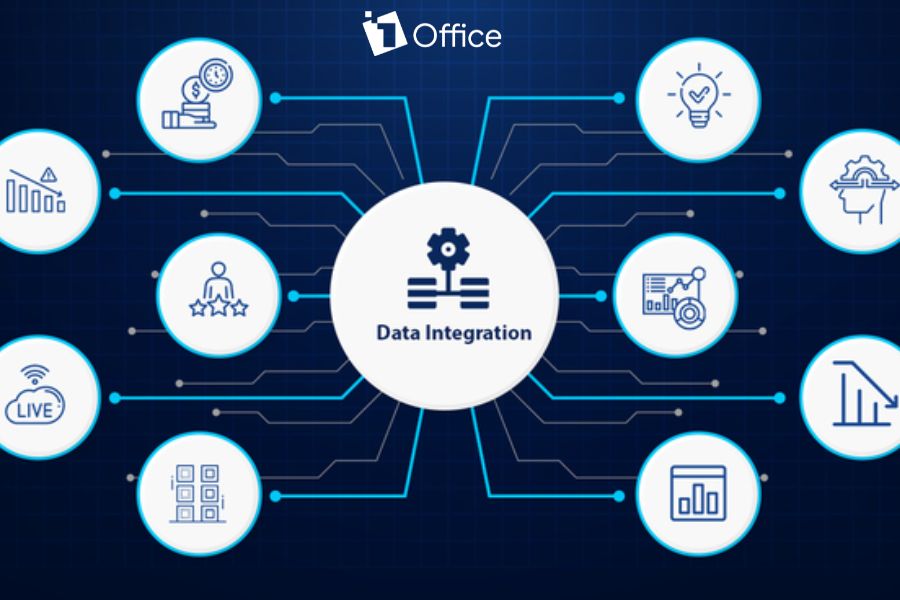
In the import-export industry, HR data cannot stand alone. Information such as salary costs, driver’s working hours, advance expenses, etc., needs to be tightly linked with other business systems like Finance, Accounting, Warehouse Management (WMS), and Transportation Management (TMS).
If businesses still use complex manual processes like Excel, data will be scattered and fragmented. This slows down the entire reporting and decision-making process for management, and manually processing large volumes of data (such as route maps, invoices) is also a major challenge.
3. Core HRM Features for the Import-Export Industry
To thoroughly address the three challenges above, an HRM software for the import-export industry needs to focus on automation and flexible management features to meet the industry’s complex nature.
3.1. Flexible Timekeeping and Work Time Management
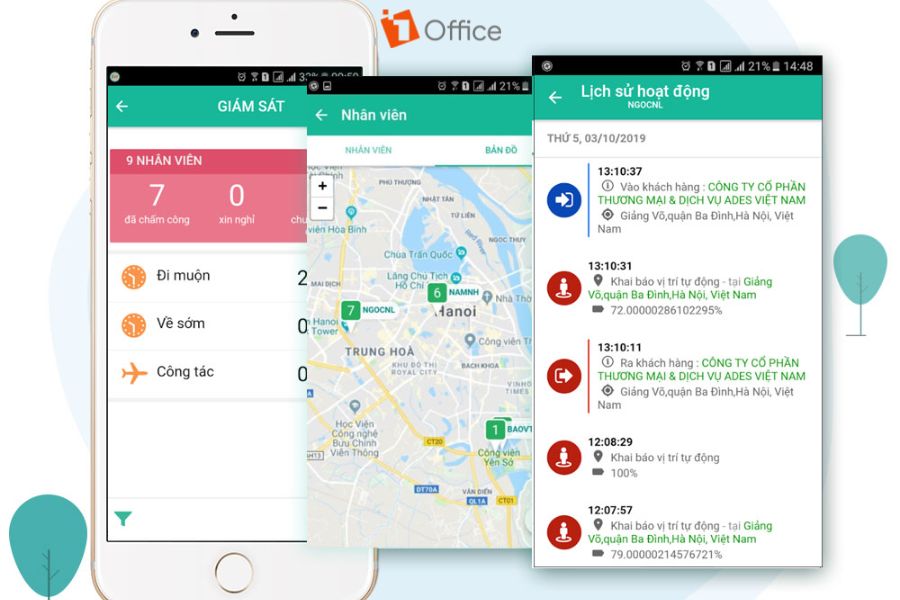
HRM software for the import-export industry must provide functionality to track working hours through automated timekeeping. The system must support various modern timekeeping methods such as GPS, Wi-Fi, or FaceID via a mobile app to serve the mobile workforce.
It must also allow the HR department to set up flexible work shifts (split shifts, night shifts). Finally, all timekeeping, leave, and overtime data must be automatically consolidated for accurate payroll calculation.
3.2. Automated Payroll with Dynamic Formulas
This feature fully automates the payroll process, ensuring accuracy and compliance with regulations. The system must support the creation of custom payroll formulas for each position, department, or company policy. For example, a commission formula for sales, or a piece-rate salary formula for drivers.
The software must automatically calculate all components: base salary, allowances, bonuses/penalties, personal income tax, and insurance. This helps optimize the process, reducing processing time from hours to just a few minutes.
3.3. Automation of Administrative Processes
Automation helps standardize operational processes, save effort for HR, and minimize errors. HRM software for the import-export industry needs to allow the setup of automated HR business processes such as: new employee onboarding, leave approval, salary increase proposals, or periodic performance reviews.
An essential feature is the Self-Service Portal, which allows employees to proactively manage their information, submit leave requests, and view their payslips directly on the mobile app.

3.4. Performance & Professional Training Management
In the context of rapidly changing technology, training and competency assessment are necessary for employees to adapt. The system should allow businesses to set performance measurement indicators (KPIs/OKRs) and track work progress transparently.
At the same time, the software should have a training program management feature, allowing for planning, tracking learning progress, and evaluating employee results after import-export professional training courses.
4. Core Criteria for Choosing HRM Software for the Import-Export Industry
When selecting an HRM solution, import-export and logistics businesses need to consider the following 4 core criteria to ensure the software correctly and thoroughly addresses industry-specific issues.
4.1. Automated Payroll Calculation for Complex Formulas
The top criterion is that HRM software for the import-export industry must solve the industry’s most complex problem: C&B (Compensation & Benefits). The system must have the flexibility to customize salary, bonus, and commission policies for each profession and project. It’s not just a basic payroll tool, but a dynamic system capable of handling various payroll scenarios.

4.2. Deep Integration with Existing Systems
Integration capability ensures a continuous flow of information throughout the entire supply chain. HRM software cannot be a data ‘island.’ It must be able to connect easily with other critical business systems such as ERP, Accounting software, and CRM.
4.3. Mobile Time & Attendance Management
Due to the nature of personnel frequently working outside the office (drivers, field staff at ports), the software must strongly support remote management. A mandatory requirement is a GPS/Wi-Fi location-based timekeeping feature.
Furthermore, the entire platform should be built on Cloud technology (Cloud-based), allowing managers and employees to access, approve, and view reports anytime, anywhere via a Mobile App.
4.4. Process Automation
Automation should not be limited to timekeeping and payroll but should encompass the entire HR process. HRM software for the import-export industry should be highly flexible to allow businesses to customize approval workflows. For example, the new employee onboarding process, leave approval process, travel expense advance process, etc., need to be automated.
Conclusion
Don’t let fragmented data and manual timekeeping hold your business back. An HRM software for the import-export industry is not just an administrative tool, but a strategic solution. Is it time for smarter, more synchronized management? Contact 1Office today for an in-depth consultation and a breakthrough!
















