10/05/2026
  184 views
Work performance evaluation is not just a metric for determining salary and bonuses, but also a foundation for building competency development plans for each individual employee. To evaluate work performance effectively and accurately, you need to implement this process systematically, methodically, and in a way that suits your business’s specific characteristics. Let’s explore with 1Office the 6 steps in the work performance evaluation process and popular methods to help conduct this assessment accurately.
Mục lục
- 1. Understanding the work performance evaluation process
- 2. Why is it necessary to conduct periodic work performance evaluations?
- 3. Methods for evaluating employee work performance
- 4. A 6-Step Process for Accurate and Fair Performance Evaluation
- 5. Notes on the employee performance evaluation process
- 6. Common Mistakes in Performance Evaluation and How to Avoid Them
- 7. How to Link Performance Evaluation with Competency Development & Career Progression
- 8. Conclusion
1. Understanding the work performance evaluation process
The work performance evaluation process is a series of steps or stages carried out to measure, analyze, and assess the effectiveness and work productivity of employees in an organization. The goal of this process is to determine the level of job completion, identify employees’ strengths and weaknesses, and provide feedback and personal development plans to improve work performance and achieve business objectives.

This process is usually conducted annually or semi-annually and plays a crucial role in:
- Recognizing and rewarding high-performing employees.
- Identifying employees’ strengths and weaknesses to provide suitable training and development solutions.
- Improving individual and team work efficiency.
- Boosting employee motivation.
- Planning for employees’ career development.
- Providing a basis for making decisions on promotions, salary increases, rewards, penalties, etc.
2. Why is it necessary to conduct periodic work performance evaluations?
Conducting periodic work performance evaluations brings many benefits to both the business and its personnel. Businesses need to conduct regular evaluations to achieve benefits such as:
- Helping to reduce waste and optimize resources in company and organizational operations.
- Helping to reduce costs by optimizing expenditures on time, effort, finances, etc.
- Helping businesses improve overall performance as employees, through performance evaluations, understand how to use resources to achieve set goals.
- Helping businesses optimize human resources through performance evaluations, thereby identifying low-performing employee groups to conduct additional training or make personnel decisions such as job transfers, salary/bonus reductions, dismissals, new hires, etc.
- Evaluating employee work performance also helps businesses create a competitive advantage in the market. Continuously optimizing overall performance will help the business excel and lead the market.
3. Methods for evaluating employee work performance

>>> See more: 11 popular methods for evaluating employee work effectiveness
3.1 Management by Objectives (MBO)
The MBO method focuses on setting specific objectives that employees need to achieve within a certain period. The MBO (Management by Objectives) method is suitable for companies and organizations with the following goals:
- Accurate and objective: MBO can become a tool for evaluating employee performance accurately and objectively.
- Accurate performance assessment: Helps employees clearly see their performance and work efforts within the broader context of the organization’s development.
- Alignment with objectives: Helps employees connect the achievement of their personal goals with the company’s overall objectives, thereby improving performance and the organization’s ability to focus resources.
- Enhanced focus and efficiency: Helps improve employees’ ability to concentrate intensely and use resources effectively to achieve their goals.
Advantages:
- Clear and measurable: Specific goals help employees know exactly what they need to achieve.
- Motivating: Employees with clear goals are often more motivated to complete their work.
- Fair evaluation: Performance is measured based on goal achievement, minimizing bias.
Disadvantages:
- Time-consuming and labor-intensive: Setting and tracking goals requires a lot of time and commitment from both sides.
- Inflexible and rigid: If the set goals become inappropriate or change, employees may find it difficult to adjust. It is also unsuitable for creative jobs or roles that cannot be measured by specific objectives.
3.2 360-Degree Feedback Method
The 360-degree feedback method is an employee evaluation approach that involves collecting feedback from multiple sources, such as colleagues, direct managers, subordinates, other departments, customers, and partners.
Advantages:
- Comprehensive: Provides a holistic view of an employee’s performance from various perspectives.
- Personal development: Employees receive detailed and diverse feedback, helping them become more aware of their strengths and weaknesses.
- Improved communication: Encourages a culture of open feedback within the organization.
Disadvantages:
- Time-consuming and costly: Collecting and processing feedback from multiple sources requires significant time and resources.
- Potential for bias: Feedback from colleagues can be influenced by personal factors.
- Difficult to manage information: Requires strong data management and analysis skills to avoid misunderstandings or conflicts.

3.3 Competency-Based Evaluation
Competency-based evaluation is a method of assessing employee performance based on specific competencies required for the job, including skills, knowledge, and behaviors. This method focuses on identifying and measuring the key competencies an employee needs to perform their job effectively.
Advantages:
- Focus on competencies: Helps employees clearly understand the necessary competencies and focus on developing them.
- Fair and transparent: Evaluation is based on specific and objective criteria.
- Aligned with strategy: Ensures employees have the necessary skills to achieve the company’s strategic goals.
Disadvantages:
- Complex and costly: Establishing competency criteria and evaluating them requires significant effort and resources.
- Subjective: Competency assessment can be influenced by the evaluator’s subjectivity.
- Difficult to measure: Some soft skills, such as leadership or communication, are difficult to measure accurately.
4. A 6-Step Process for Accurate and Fair Performance Evaluation
Step 1: Develop a Set of Performance Evaluation Criteria
The first step in the employee performance evaluation process is to establish a set of performance standards. These standards will be used as the basis for assessing an employee’s actual performance. By comparing the employee’s actual results against these standards, managers can clearly see how the employee is performing and whether they are contributing to the organization’s overall goals.
>>> See more: Detailed Set of Work Performance Evaluation Criteria for Businesses
To establish a suitable set of performance evaluation standards, you need to ensure the following requirements are met:
- Clear: The evaluation criteria must be clear to minimize the risk of confusion during implementation.
- Easy to understand: All departments, managers, and employees should be able to quickly understand the evaluation criteria.
- Measurable: The evaluation results will be compiled for leadership to make personnel decisions, so the criteria must be measurable, quantifiable, and easy to summarize.
- Verifiable: The criteria must be verifiable to ensure the most objective and accurate employee performance evaluation.
- Fair: The evaluation criteria for employees in the same position or department must be consistent. The criteria must ensure fairness to avoid conflicts and issues from employees during the evaluation process.
- Achievable: The evaluation criteria should be within a range that employees can achieve, consistent with the company’s and employees’ actual resources. For example, with the company’s current product quality and resources, a sales employee might be able to achieve new contract revenue of around 10 billion VND/year. If you set the criterion at 50 billion VND/year, it would be impossible and unrealistic.
Step 2: Communicate the criteria set to all employees
You should communicate and share with employees the job evaluation standards that the company expects them to achieve. When employees clearly understand their job roles and know exactly what the company expects of them, they will direct their efforts correctly, achieving higher performance and work efficiency.

Communicating standards should be done right from the recruitment stage. When identifying a new job position to be filled, you should ask the specialized departments to specify the necessary skill and experience standards for that position. Hiring the right person from the beginning will help the business minimize long-term costs such as training costs and re-recruitment.
In the job evaluation process, the step of communicating the evaluation standards should be carried out about 1–2 weeks before the evaluation period, or within a timeframe suitable for each business, so that employees can promptly understand and prepare for the evaluation.
Step 3: Determine the employee’s actual performance
To determine an employee’s actual performance, you need to ensure continuous monitoring of work results throughout the evaluation cycle (3/6/12 months). Employee performance monitoring should occur continuously throughout the entire evaluation cycle, not just in the 1–2 weeks before the evaluation period.
Step 4: Compare with the job standards set
After determining the employee’s actual performance, compare this performance with the job standards set. This helps you determine whether the employee has met the company’s expectations.
Regarding the comparison method, you can ask the employee to complete the evaluation form themselves first. Afterward, the manager and the employee will sit down together to evaluate and discuss in order to achieve the most accurate results that reflect reality.
With this approach, employees will have the opportunity to express their views in the job evaluation. Their work will also be perceived more accurately from the perspective of the person performing it.
Step 5: Discuss the evaluation results with the employee
The purpose of step 5 – discussing the results – is to address any work-related issues the employee is facing. Through this, managers can motivate employees to work better, increasing their motivation, performance, and efficiency.
This step also creates an opportunity for managers and employees to share their perspectives on the work results. Employees will better understand the evaluation results, avoiding potential conflicts or issues.

In practice, many businesses conduct employee evaluations but omit or improperly execute the results discussion step, leading to employee dissatisfaction. They may not understand why the company evaluated their work in a certain way, which can lead to resignations or working in a state of frustration, opposition, and decreased performance.
Consider the results discussion step as an opportunity for both managers and employees to frankly share their views, aiming to determine the evaluation result that best fits the reality of the employee’s work. Without this step, the company will find it difficult to achieve the core objective of the job evaluation process, which is to increase employee performance and efficiency.
Step 6: Make a decision
In this step, the process will include a discussion for the HR department to contribute opinions and provide information, and for management to make decisions regarding rewards, promotions, demotions, or job position changes for the employee.
5. Notes on the employee performance evaluation process
Evaluating employee performance is a complex task. You should note some of the details below when implementing evaluations:
- Evaluation frequency: In the traditional evaluation method, the frequency is often quarterly, twice a year, or even just once a year. This frequency makes it difficult for managers to quickly and timely grasp employee performance. Therefore, many businesses have now switched to the continuous performance management (CPM) method. With CPM, managers conduct weekly performance evaluations, helping employees improve their performance immediately and in the future.
- Accurate evaluation: Objectivity and transparency are the top principles to ensure that employee performance evaluation yields accurate results. Only with accurate results can the company establish, determine, or adjust development plans and optimize organizational resources appropriately and in a timely manner.
- Effective performance evaluation: The employee performance evaluation process is only considered effective when it provides a new basis for managers to set new goals for employees. At the same time, through the evaluation, employees gain a positive awareness of their work, such as: what needs to be improved, and how they need to strive in terms of knowledge, skills, and attitude at work to achieve the organization’s goals and expectations.
6. Common Mistakes in Performance Evaluation and How to Avoid Them
During the performance evaluation process, many businesses unintentionally make mistakes that lead to biased results and demotivate employees. Below are 5 common errors and effective solutions to make the evaluation process more transparent and fair.
6.1. Personal Bias
Symptoms: Managers evaluate based on feelings, recent impressions, or personal favoritism instead of actual performance.
Consequences: Creates unfairness among employees, discouraging high performers and reducing motivation.
Solution:
-
Apply a standardized rating scale with specific behavioral descriptions for each criterion.
-
Incorporate multi-source feedback (360° feedback) from colleagues, clients, and superiors.
-
Organize calibration meetings among managers to standardize scoring criteria.
Example: Before rating “Work Attitude,” managers must provide specific evidence such as customer feedback, internal survey results, or team reports.
6.2. Unclear Criteria
Symptoms: Evaluation criteria are vague, not clearly defining what constitutes “good performance” or “exceeds expectations.”
Consequences: Evaluation results are inconsistent across departments, easily leading to disputes or dissatisfaction.
Solution:
-
Develop KPIs based on the SMART principle (Specific, Measurable, Achievable, Relevant, Time-bound).
-
Link evaluation criteria to job descriptions and departmental goals.
Example: For a Sales employee, KPIs should include both “achieving 500 million in monthly sales” and “customer satisfaction score ≥ 4.5/5” to ensure evaluation covers both results and service quality.
6.3. Focusing Only on Metrics, Ignoring Competencies
Symptoms: The business focuses only on quantitative results like sales figures or deadlines, overlooking skills and work attitude.
Consequences: Employees with long-term development potential who haven’t met their KPIs may be unfairly underrated.
Solution:
-
Combine quantitative KPI evaluation with competency-based assessment.
-
Record specific behavioral evidence to reflect actual competencies.
Example: In addition to sales KPIs, add criteria for “negotiation skills” and “team collaboration ability” to provide a comprehensive reflection of employee performance.
6.4. Lack of Two-Way Feedback
Symptoms: Managers only announce evaluation results without discussing or listening to feedback from employees.
Consequences: Employees do not clearly understand their strengths and weaknesses and don’t know how to improve in the next period.
Solution:
-
Organize 1:1 feedback sessions after each evaluation period to discuss strengths, areas for improvement, and development plans.
-
Record employee feedback in the HRM system to serve as a basis for the next period.
Example: After each evaluation period, the team leader meets with each employee for 30 minutes to agree on goals for the next quarter and a personal development plan.
6.5. Infrequent Evaluations
Symptoms: The business only conducts evaluations once a year, missing opportunities for timely adjustments and recognition of effort.
Consequences: Performance information becomes “outdated,” and employees do not receive timely guidance during their work process.
Solution:
-
Maintain regular monthly or quarterly check-ins.
-
Use HRM software to track KPIs in real-time and set automatic evaluation reminders.
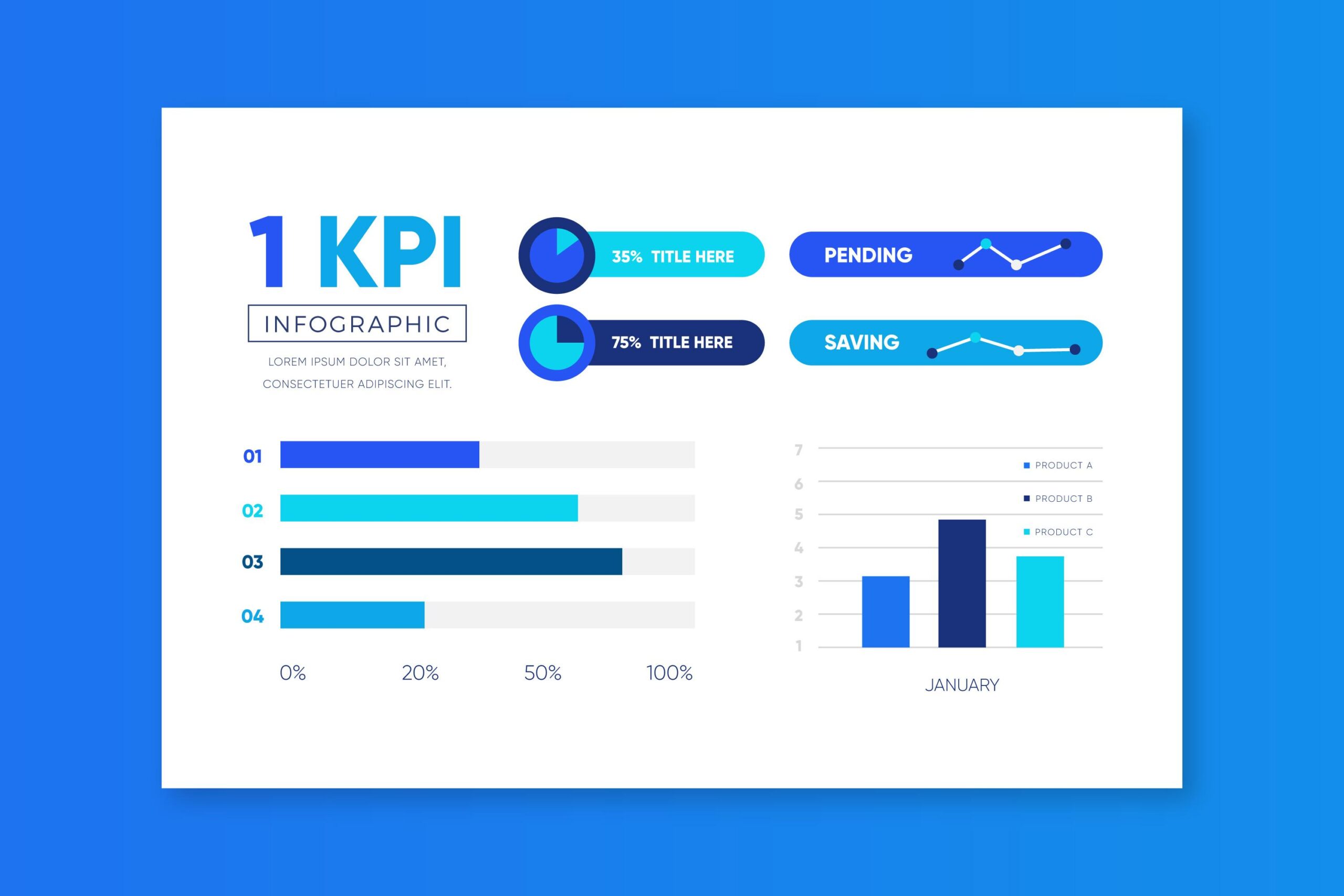
For example: Many businesses use 1Office HRM to create KPI tracking dashboards, helping managers and employees proactively update progress and avoid last-minute rushes.
7. How to Link Performance Evaluation with Competency Development & Career Progression
Performance evaluation is not just a process of “grading” employees, but also a strategic tool that helps businesses discover, develop, and retain talent. When closely linked to the competency framework and career progression path, evaluation results become the foundation for training, mentoring, and succession planning.
7.1. Build a Competency Map
A competency map is the foundation that helps businesses clearly define the requirements for each position, thereby effectively connecting to the performance evaluation process.
-
Define core, professional, and leadership competencies for each role.
-
Establish a rating scale (usually from 1–5) to assess the proficiency level of each competency by rank.
For example: The Business Team Leader position requires a “leadership competency” at level 4 and “communication skills” at level 5. This provides HR with an objective basis for evaluation, and employees clearly understand the expectations they need to meet.
7.2. Analyze Competency Gaps
After defining the target competencies, the next step is to compare the current competencies of each employee to identify the “gaps” that need development.
-
Identify the strengths and areas for improvement of each individual.
-
Prioritize training investments for skills with the largest gaps compared to the standard.
For example: Employee A has a “project management competency” at level 2/5 while the requirement is 4/5 → they need to attend training and receive direct mentoring from the project leader.
7.3. Create an Individual Development Plan (IDP)
An Individual Development Plan (IDP) helps turn evaluation results into practical actions for employees to improve their competencies.
-
Define learning objectives or skills to be achieved within a specific period.
-
Plan training, participation in practical projects, or suitable mentoring programs.
For example: Employee B needs to develop “leadership skills” → it is recommended they join a people management course and lead a small team for 6 months for hands-on practice.
7.4. Link to Career Progression and Rewards
To ensure fairness and transparency, businesses should combine performance evaluation results with individual competency development when making decisions about promotions, salary increases, or rewards.
-
Promotions based on meeting performance standards + achieving required competencies.
-
Use IDP results and competency assessments as a clear basis, avoiding subjectivity.
For example: An employee who achieves a KPI of ≥90% and a “leadership” competency of 4/5 for two consecutive periods → is eligible for consideration for the Team Lead position.
7.5. Measure and Continuously Improve
Performance evaluation is not the final step, but a continuous improvement process. HR needs to regularly monitor and update development plans to ensure employees are always making progress.
-
Track IDP progress quarterly, updating as goals change.
-
Evaluate training effectiveness based on actual KPIs, plan completion rates, and employee feedback.
For example: The HR department measures the percentage of employees who complete their IDPs, the internal promotion rate, and satisfaction levels after training programs to optimize the process for the next cycle.
8. Conclusion
The above is the complete employee performance evaluation process to help businesses assess performance accurately, appropriately, and effectively. We hope this information is helpful for your upcoming employee performance reviews.