11/05/2026
  7711 views
Did you know that Highlands Coffee holds about 11.6% – 12% of the coffee market share in Vietnam? This success comes not only from its products but also from a well-structured and consistent marketing strategy. In this article, 1Office will join you in a comprehensive analysis of Highlands Coffee’s marketing strategy, from brand positioning to implementation methods that help the business achieve sustainable growth.
Mục lục
- 1. Introduction to Highlands Coffee
- 2. Highlands Coffee’s Segmentation and Target Customers
- 3. Highlands Coffee’s SWOT Model
- 4. Highlands Coffee’s Marketing Strategy: 4 Pillars of Brand Development
- 5. Combining the 7P Marketing Mix to create brand love
- 6. Highlands Coffee’s Advertising Strategy
- 7. What can F&B businesses learn from Highlands Coffee?
- 8. Comparing Highlands, The Coffee House, Starbucks & Phúc Long: How Do Their Marketing Strategies Differ?
- 8.1. Highlands Coffee – Success Through “Modernized Vietnamese Identity”
- 8.2. The Coffee House – Strong in Storytelling and Building an Emotional Community
- 8.3. Starbucks Vietnam – Global Experience, Insufficient Local Flexibility
- 8.4. Phúc Long – Accelerating with a Retail Ecosystem, Facing the Risk of Mass-Market Dilution
1. Introduction to Highlands Coffee
Highlands Coffee is known as a symbol of love and pride for Vietnam’s coffee heritage, carrying the mission of connecting traditional beauty with a modern lifestyle. Not just limited to quality coffee products, Highlands Coffee has grown into a franchise coffee shop chain with a cozy and sophisticated atmosphere where customers can enjoy an authentic coffee experience.
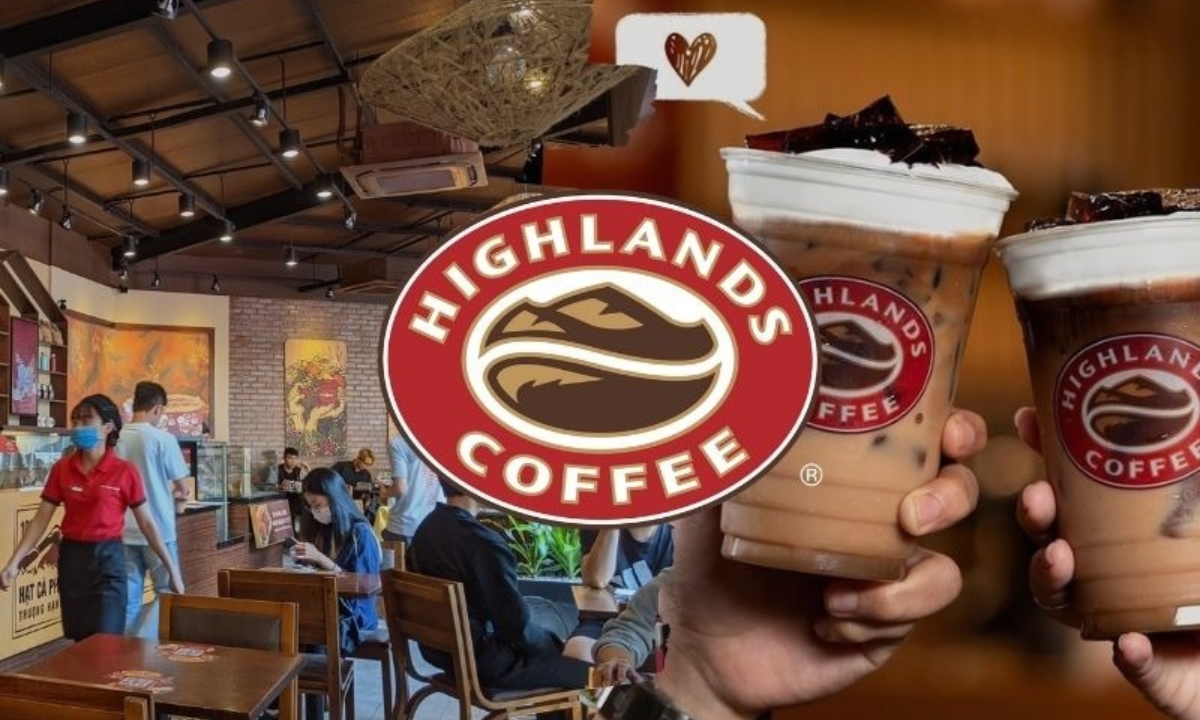
Highlands Coffee operates on a comprehensive franchise model. Accordingly, franchisees are granted the right to use the brand, coffee products, brewing recipes, and operational standards from Highlands Coffee. In return, they pay franchise and management fees to the brand.
Currently, Highlands Coffee has over 400 stores across 32 provinces and cities nationwide, creating a high frequency of presence, especially in major cities like Hanoi and Ho Chi Minh City. This not only helps Highlands Coffee build a strong brand position but also creates familiar experiences, connects communities, and delivers a rich coffee flavor that suits the Vietnamese palate.
2. Highlands Coffee’s Segmentation and Target Customers
When it first entered the market, Highlands Coffee focused on the high-end customer segment. However, the brand later shifted its focus to the mid-range segment, catering to a broad audience of students, office workers, and families. This strategic adjustment helped Highlands Coffee achieve great success, even during the difficult period of the pandemic.
Highlands Coffee’s Market Segmentation
Highlands Coffee has developed a clear and effective market segmentation strategy, focusing on three main criteria: geographic location, demographics, and customer psychographics.
Demographic Segmentation
Highlands Coffee serves many different target groups:
- Young people: Students and office workers are the main customer group, who enjoy modern spaces and a diverse beverage menu.
- Middle-aged customers: Those who love traditional coffee, often choosing products like phin coffee or “bac siu” (Vietnamese white coffee).
- Foreign tourists: This group is interested in experiencing Vietnamese coffee culture through service style and products like iced milk coffee.
Behavioral Segmentation
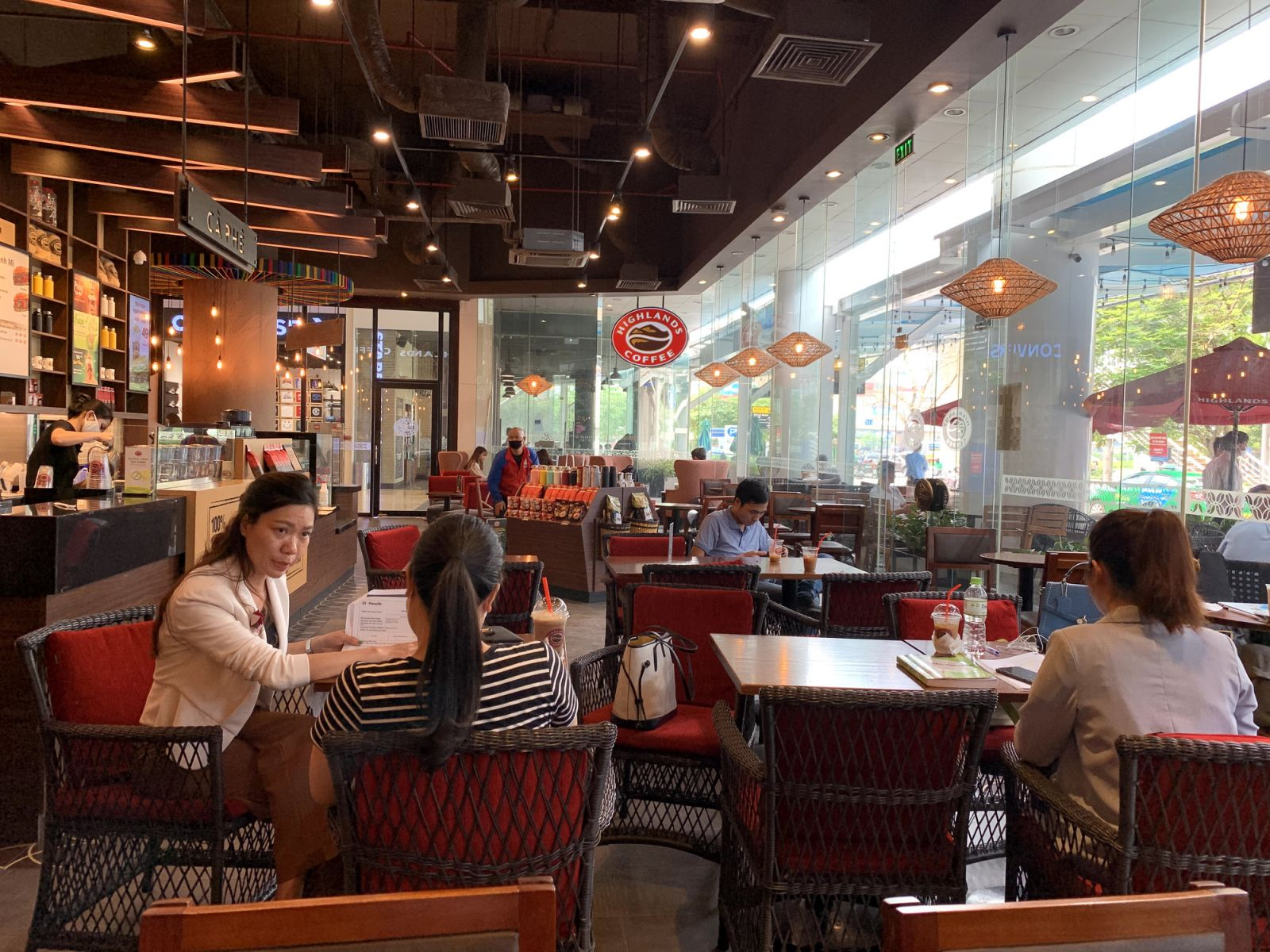
- Users needing a space to work/study: Highlands cafes often have spacious, comfortable areas and free Wi-Fi, suitable for meetings or individual work.
- Those seeking convenience: Development of take-away services and ordering through delivery apps.
- Value-conscious users: A diverse menu of coffee, tea, and pastries at reasonable prices compared to other premium brands.
Psychographic Segmentation
Highlands Coffee designs its cafes in a classic style combined with natural scenery, creating a relaxing and friendly atmosphere that caters to diverse lifestyles:
- Ages 15-25: Suited for an active, youthful lifestyle, Highlands is an ideal place to meet friends.
- Ages 25-40: Focusing on quality and meticulousness, customers in this age group come to Highlands to enjoy a comfortable working environment.
- Ages 40-65: With a lifestyle focused on enjoyment, older customers often have strict requirements for beverage quality and service.
Highlands Coffee also offers a wide range of products to suit different personalities – from dynamic and vibrant to sophisticated and strong.
Geographic Segmentation
Highlands Coffee focuses mainly on large cities and densely populated areas.
- Major cities: Hanoi, Ho Chi Minh City, Da Nang… are key markets.
- Strategic locations: Cafes are often located in shopping malls, residential areas, or places with convenient transportation.
Highlands Coffee’s Target Customers
When it first entered the market, Highlands Coffee focused on the high-end customer segment. However, the brand later shifted its focus to the mid-range segment, catering to a broad audience of students, office workers, and families. This strategic adjustment helped Highlands Coffee achieve great success, even during the difficult period of the pandemic.

Highlands Coffee’s current target customers are individuals with middle to high income, including teenagers, office workers, entrepreneurs, and families living mainly in major cities like Hanoi, Ho Chi Minh City, and Da Nang. Highlands particularly attracts customers who appreciate a comfortable, convenient space with a style that is both classic and modern, suitable for meetings, work, or relaxation.
With a primary target audience aged 15 to 40, the brand aims at dynamic individuals who care about the quality of their experience and have a modern lifestyle.
3. Highlands Coffee’s SWOT Model
SWOT is an acronym for four factors: Strengths, Weaknesses, Opportunities, and Threats – a well-known analysis model that helps businesses evaluate and build effective business strategies. In the SWOT analysis of Highlands Coffee, the brand possesses several strengths to leverage, weaknesses to overcome, opportunities to seize, and threats to navigate, as follows.
Strength

Highlands Coffee has many outstanding strengths that help the brand maintain and grow in the Vietnamese coffee market:
- Strong brand recognition: Highlands Coffee is a well-known brand in Vietnam with a loyal customer base.
- Wide distribution network: The company has an extensive network of stores throughout Vietnam and other countries.
- High-quality products: Highlands Coffee is famous for its high-quality coffee and beverage products.
- Creative marketing: The company uses innovative marketing strategies to attract and retain customers.
Weaknesses
Despite its many strengths, Highlands Coffee also faces some weaknesses that need to be addressed to compete more effectively:
- High competition: The coffee market in Vietnam is fiercely competitive with many domestic and international brands.
- Dependence on the domestic market: A large portion of Highlands Coffee’s revenue comes from the domestic market, making the company vulnerable to local economic fluctuations.
- Limited product diversification: The company primarily focuses on coffee and related beverages, limiting its product diversification.
Opportunities
The Vietnamese and international coffee markets offer many opportunities for Highlands Coffee to expand and grow:
- Expansion into new markets: There is potential for Highlands Coffee to expand into new regions and countries.
- Product diversification: Introducing new products such as food or non-coffee beverages can attract more customers.
- E-commerce growth: Boosting online sales through e-commerce platforms can increase revenue and reach.
With the advantage of being a domestic brand, Highlands Coffee has a deep understanding of the local culture and consumer habits. This allows the brand to introduce suitable products and strategies, better meeting the needs and preferences of the domestic market compared to foreign brands.
Threats
Besides opportunities, Highlands Coffee also has to face many challenges in its development process:
- Economic instability: Economic downturns can affect consumer spending on non-essential items like coffee.
- Changes in legal regulations: Changes in regulations related to the food and beverage business can affect the company’s operations.
- Health concerns: Increased health consciousness among consumers may lead to a decrease in coffee consumption.
4. Highlands Coffee’s Marketing Strategy: 4 Pillars of Brand Development
To achieve its current success, Highlands Coffee has effectively applied the Marketing Mix strategy based on the 7P model. So, what are the elements that make up Highlands Coffee’s marketing strategy?
Product – Product Strategy
Highlands Coffee has built its reputation by offering high-quality coffee products that suit the taste of Vietnamese consumers. The brand is known for maintaining consistent quality from raw materials to the brewing process. Highlands’ coffee is made from high-quality beans, carefully selected from famous coffee-growing regions in Vietnam, such as Lam Dong and Buon Ma Thuot.

One of Highlands Coffee’s signature products is ‘phin’ coffee, brewed in the traditional style, offering a rich, familiar flavor to the Vietnamese people. Additionally, Highlands continuously innovates with modern coffee types like espresso, cappuccino, and latte, catering to the diverse needs of customers, from traditional coffee lovers to young people who prefer Western-style coffee.
Highlands Coffee also expands its product portfolio by introducing non-coffee beverages like tea and soft drinks, along with pastries and snacks. This helps create a rich and diverse selection for customers visiting Highlands.
Price – Price Strategy
Highlands Coffee employs a premium pricing strategy, setting prices higher than many of its competitors. This helps the brand differentiate itself in terms of quality and customer experience. The high price also creates an impression of the product’s value and uniqueness.
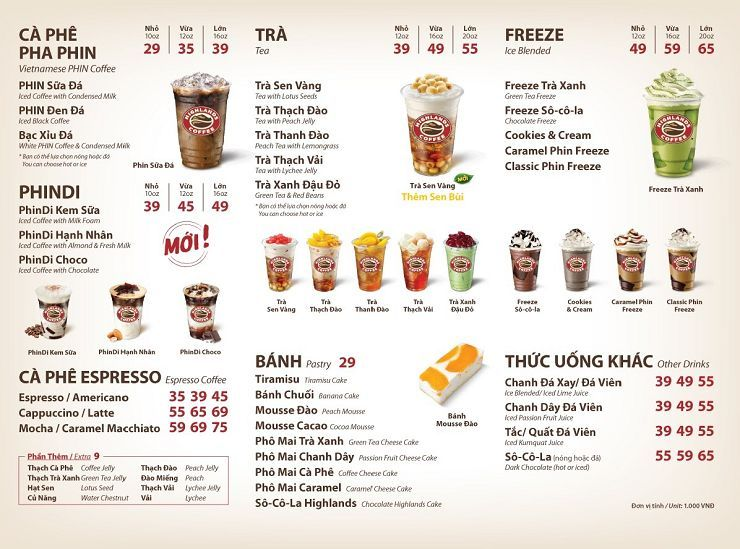
Highlands Coffee also applies a market-based pricing strategy. They continuously update and adjust coffee prices according to the season, raw material costs, and customer demand. This helps them maintain competitiveness and align with customer preferences.
Compared to its competitors, Highlands Coffee has succeeded in building its brand and creating a quality distinction. However, the high-price strategy may also limit accessibility for some potential customers.
>>> See more: What is a Pricing Strategy? – Pricing Strategy in Business Marketing
Additionally, for a large brand like Highlands Coffee, the cost of producing a cup of coffee includes not only raw materials but also various other expenses such as rent and promotional activities.
Place – Distribution System Strategy
Highlands Coffee’s distribution system strategy plays a crucial role in creating value and establishing the brand’s strong influence in the Vietnamese coffee market. Highlands Coffee has built an extensive distribution network, not only focusing on major cities but also expanding to other provinces.
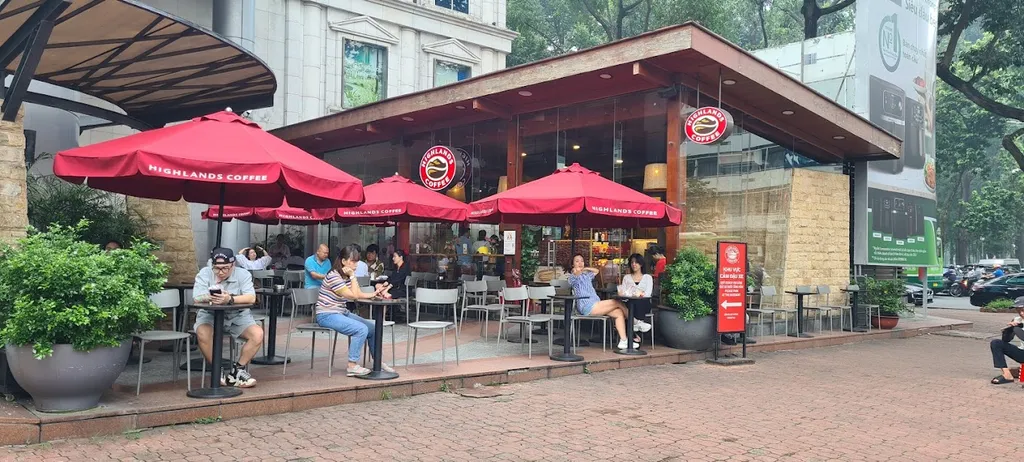
Store System: Highlands Coffee has a strong presence with hundreds of stores nationwide. Highlands Coffee stores are often located in prime, easily accessible locations such as shopping malls, downtown areas, and tourist spots. This strategic location selection helps Highlands Coffee reach more customers, from local residents to tourists.
Highlands serves the domestic market by maintaining reasonable and accessible prices, spreading coffee culture to all customer segments — similar to Hao Hao noodles’ marketing strategy, where the instant noodle brand achieved widespread coverage from urban to rural areas with an easy-to-use, popular, and familiar product.
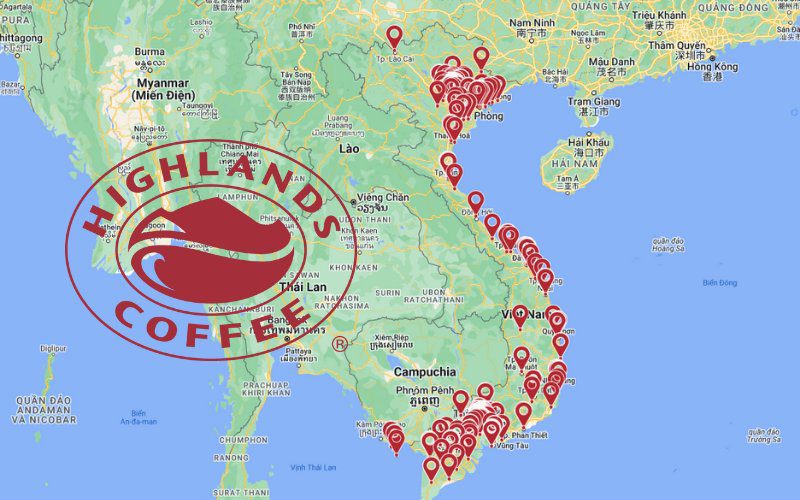
Franchise Model: Highlands Coffee also uses a franchise model to expand its distribution system. This model allows the brand to scale up quickly and effectively while reducing financial and management risks. Highlands Coffee’s franchise partners receive thorough training and full support to ensure service and product quality.
Influence: Highlands Coffee’s extensive and professional store system has helped the brand build a strong presence in the Vietnamese coffee market. Each store is not just a point of sale but also a part of the brand’s story, delivering not only economic but also emotional value to customers. The consistent experience across stores helps strengthen Highlands Coffee’s reputation and image, making the brand familiar and beloved by many consumers.
>>> See more: What is a distribution channel? The 4 most popular channels today
Not limited to direct sales at stores, Highlands Coffee also distributes packaged products in supermarkets and convenience stores. In addition, the brand partners with delivery services like Shopee Food, Baemin, GoFood, and Grab, making it easy for customers to order from home. This was particularly useful during the complex developments of the Covid-19 pandemic, helping Highlands Coffee maintain sales during that period.
Promotion – Integrated Promotion Strategy
Highlands Coffee has built a strong brand image through creative and engaging advertising campaigns. The brand uses a variety of media channels, including television, print, billboards, and digital media, to reach a diverse customer base. Highlands Coffee’s advertisements often focus on product quality, the rich flavor of the coffee, and the friendly, comfortable atmosphere of its cafes. This helps create a consistent and easily recognizable brand image.

In addition, Highlands Coffee actively engages in social media activities, especially on platforms like Facebook, Instagram, and YouTube. The brand uses these platforms to interact with customers, introduce new products, share coffee brewing recipes, and organize contests and promotions. This not only enhances Highlands Coffee’s online presence but also builds a loyal and engaged community of fans.
Highlands Coffee also implements event-based marketing campaigns to attract customer attention. For example, during major holidays like Lunar New Year (Tet), Christmas, or special events like anniversaries, Highlands Coffee often launches special products and promotions. These campaigns not only boost sales but also generate excitement and anticipation from customers.
Furthermore, Highlands Coffee also focuses on collaborating with strategic partners and celebrities to enhance communication effectiveness. Partnering with influencers in the food, fashion, or entertainment industries helps Highlands Coffee reach a broader audience and create a strong viral effect.
5. Combining the 7P Marketing Mix to create brand love
In addition to its significantly effective 4P marketing mix strategy, Highlands Coffee also implements a 7P marketing mix strategy, expanding to include three more elements: People, Process, and Physical Evidence, which has brought outstanding success.
People – Highlands Coffee’s People Strategy
Highlands Coffee focuses on employee recruitment and training. The company not only seeks candidates with the right skills but also emphasizes attitude and customer service abilities. A thorough recruitment process helps Highlands Coffee select employees with potential and a passion for the coffee industry.
Highlands Coffee implements systematic and continuous training programs. Employees are equipped with coffee knowledge, brewing skills, and the art of customer service. These training courses focus not only on hard skills but also on developing soft skills such as communication, problem-solving, and teamwork. Investing in training helps Highlands Coffee ensure that every employee can deliver a high-quality service experience to customers.
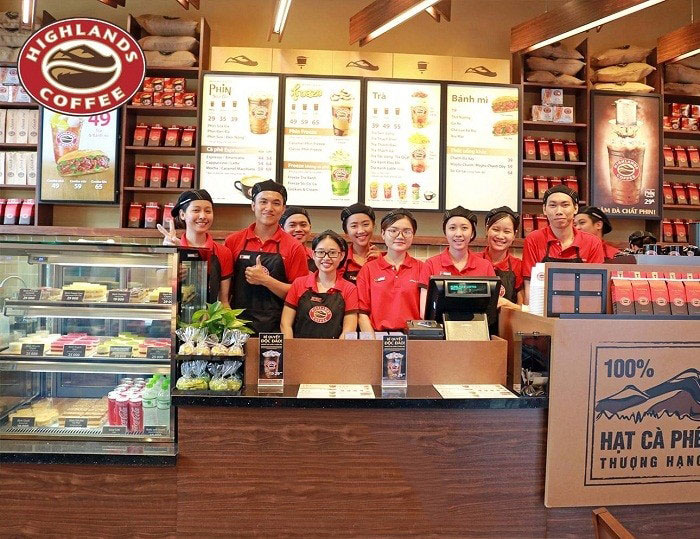
Performance evaluation and recognition of employee contributions are an integral part of Highlands Coffee’s people strategy. The company uses fair and transparent performance appraisal systems, while also providing constructive feedback to help employees improve and develop. Outstanding employees with significant contributions are recognized and rewarded, which motivates them and strengthens their commitment to the company.
Another key element in Highlands Coffee’s people strategy is building a corporate culture. Highlands Coffee promotes a work culture of collaboration, respect, and mutual support. This culture not only creates a positive work environment but also helps ensure consistency and unity in customer service and in upholding the brand’s values.
Process – Process Strategy
In the 7P marketing mix, “Process” plays a crucial role in creating and maintaining the customer experience while optimizing the business’s operational efficiency. Highlands Coffee has effectively applied its process strategy to ensure service and product quality, thereby building customer trust and loyalty.
To enhance operational efficiency, Highlands Coffee utilizes modern technology and management systems. The ordering, payment, and inventory management systems are automated and tightly integrated, helping to minimize errors and increase service speed. The application of technology not only improves management efficiency but also creates a convenient experience for customers at Highlands Coffee.
The customer service process at Highlands Coffee is also meticulously designed to create the best experience. From welcoming customers and advising on products to handling requests and complaints, every process is built with a customer-centric approach. Highlands Coffee always listens to customer feedback and continuously improves its processes to meet their expectations.
In addition, Highlands Coffee applies strict quality control processes. From inspecting raw materials and the preparation process to the final quality check, every step is closely monitored. This quality control process ensures that every Highlands Coffee product meets the highest standards before reaching the customer.
Physical Evidence – Strategy for Physical Facilities and Infrastructure
Highlands Coffee has invested significantly in the design and layout of its stores. Highlands Coffee stores are designed to be modern, comfortable, and friendly. The combination of lighting, colors, and furniture not only creates a cozy atmosphere but also conveys a sense of professionalism and elegance. The store layout is arranged to ensure easy access and movement for customers, from the order counter to the seating area. The coffee shop design also reflects the brand’s style and identity, creating a lasting impression on customers.
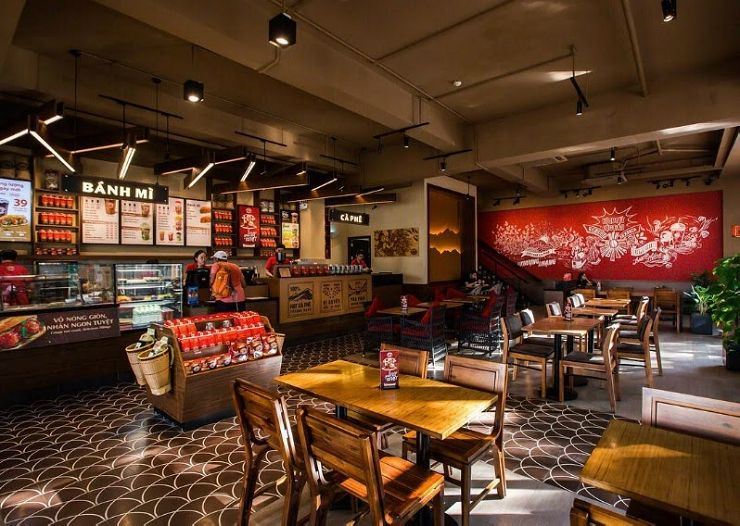
The indoor space has an elegant and cozy style, perfect for customers who prefer privacy and quiet. Along with that, soft music is also an ideal choice for this space. In contrast, the outdoor space offers a feeling of being close to nature, suitable for those who enjoy a dynamic and bustling atmosphere.
The uniforms of Highlands Coffee employees are designed to be elegant, professional, and comfortable, creating a sense of unity and professionalism in service. The service style of the staff is also an important part of Physical Evidence. Employees are trained to serve customers in a friendly, polite, and dedicated manner, providing a positive and memorable experience.
The Highlands Coffee menu is designed to be clear, easy to read, and appealing, helping customers easily choose their products. Information boards, posters, and other in-store media are also used to introduce new products, promotions, and brand information. These elements not only provide useful information but also contribute to building the brand image and creating a friendly store environment.
6. Highlands Coffee’s Advertising Strategy
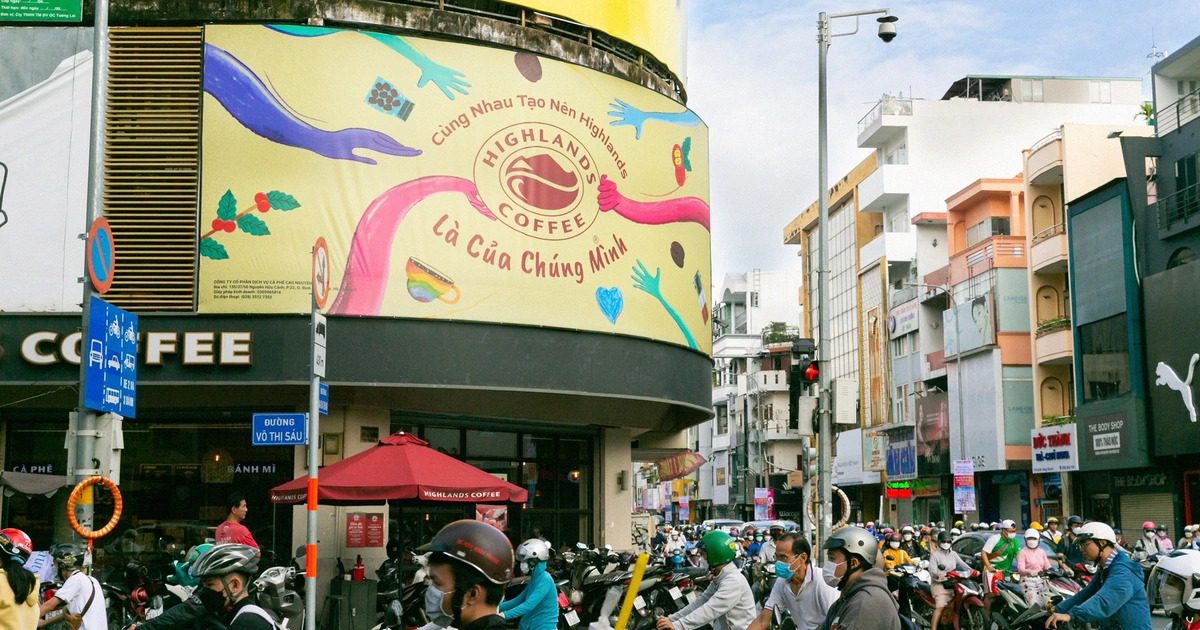
Highlands Coffee’s advertising strategy is a crucial part of helping the brand build and maintain its strong position in the Vietnamese coffee market. Highlands Coffee uses a variety of media channels to reach its target customers, including both traditional and digital, from television, newspapers, and billboards to social media platforms like Facebook, Instagram, and YouTube. Diversifying its media channels helps Highlands Coffee reach different customer segments and enhance brand recognition. Television advertising campaigns often focus on introducing new products, the quality of the coffee, and the atmosphere of Highlands Coffee shops. In addition, Highlands Coffee leverages the power of digital advertising and social media to increase customer interaction and create rich, engaging content.
Highlands Coffee often launches marketing campaigns based on special events such as the Lunar New Year, Christmas, or anniversary celebrations to generate excitement and anticipation from customers. The brand also collaborates with celebrities and strategic partners to enhance communication effectiveness, helping to reach a wider audience and create a strong viral effect. Besides advertising, Highlands Coffee also focuses on the in-store experience, from the modern, comfortable, and friendly design of its shops to the professional service style of its staff, creating an ideal environment for customers to enjoy coffee and form a lasting impression of the brand. Highlands Coffee’s advertising strategy has been and continues to be a significant contributor to building and maintaining its brand image, attracting customers, and competing effectively in the Vietnamese coffee market.
7. What can F&B businesses learn from Highlands Coffee?
The success of Highlands Coffee comes not just from prime locations or familiar products, but from a well-structured marketing mindset and the ability to connect the brand emotionally with the Vietnamese people.
From Highlands’ story, F&B businesses can draw many practical lessons for their brand development strategies.
7.1. Vietnamese Identity as a Long-Term Competitive Advantage
Highlands doesn’t try to “Westernize” its brand to chase after Starbucks, but instead subtly leverages Vietnamese cultural traits – from the flavor of phin coffee and its characteristic warm red-brown color palette, to the familiar layout reminiscent of a “local spot” for Vietnamese people. Domestic F&B brands should leverage local identity (cuisine, culture, consumer habits) to create a distinct mark and build pride in a Vietnamese brand.
The way Highlands builds its image as a ‘modern Vietnamese brand’ has similarities to how VinFast implements its marketing strategy, especially in elevating Vietnamese value in the market. You can read more in the article on VinFast’s marketing strategy
7.2. Clear Positioning
Highlands targets the mid-range segment, aiming for office workers and young urbanites. Meanwhile, Starbucks serves the high-end segment, and The Coffee House targets students and creative professionals. Clearly defining the segment and understanding “who the core customers are” will help businesses focus their investments correctly in products, space, and communications.
7.3. Consistent Online and Offline Experience
From the loyalty app and platform-based delivery to the in-store experience – Highlands maintains consistency in its image, tone & mood, helping customers recognize the brand at every touchpoint. F&B businesses should invest in digital marketing transformation – using CRM, Loyalty Apps, and social media to create a seamless experience, instead of just running isolated ads.
7.4. A Customer-Centric Approach Instead of Just “Selling Coffee”
Highlands doesn’t just sell a product; it sells a “moment of connection.” The brand positions itself as a “familiar meeting place” – where people meet, chat, and work. A “customer experience first” mindset needs to be applied consistently in all decisions – from menu design and store layout to communication campaigns.
Highlands’ focus on store ambiance, user experience, and the emotions of enjoying coffee shows they are building something similar to Apple’s marketing strategy — a consumption style based on experience rather than simply buying a product.
8. Comparing Highlands, The Coffee House, Starbucks & Phúc Long: How Do Their Marketing Strategies Differ?
Each coffee brand in Vietnam pursues its own marketing strategy to win over different customer segments.
Below is a comparative analysis of the 4 largest brands in the market, helping businesses clearly see how they position and develop their brands.
8.1. Highlands Coffee – Success Through “Modernized Vietnamese Identity”
Highlands is a rare brand that maintains its “Vietnamese soul” while still keeping up with international trends. While competitors chase foreign styles, Highlands chooses a comprehensive localization approach:
- Product: focuses on phin coffee – a familiar drink for Vietnamese people, while modernizing it with contemporary packaging, brewing methods, and quick service, yet still preserving the traditional flavor.
- Space Experience: each store is a “familiar meeting spot,” with a warm, well-lit design suitable for working or chatting.
- Marketing Strategy: Highlands builds its brand around the emotion of Vietnamese pride — through campaigns like “Vietnamese People’s Coffee”, emphasizing a spirit of closeness, simplicity, and resilience.
The key takeaway: Highlands doesn’t compete on price or promotions, but focuses on optimizing the multi-channel customer experience (online – offline): loyalty app, loyalty card, online ordering, and social media engagement. This is a prime example of a smart localization strategy, where “Vietnamese identity” becomes a long-term competitive advantage, not just a recognition factor.
8.2. The Coffee House – Strong in Storytelling and Building an Emotional Community
The Coffee House started nearly a decade after Highlands but quickly made its mark with an emotional communication strategy.
- Brand Focus: The “second home” for creative youth, a place to share ideas, meet friends, and experience positive emotions.
- Content Strategy: the brand skillfully uses storytelling – from campaigns like “Go to Return”, “Let’s Meet at The Coffee House” – to tap into the need for connection among Millennials and Gen Z.
- Space: open, modern design with a minimalist feel, creating a comfortable and “Instagrammable” atmosphere – a factor that helps the brand spread organically on social media.
However, high marketing costs and large space investments require The Coffee House to constantly innovate to maintain its appeal. The current challenge is to restructure the model and improve efficiency per store, while leveraging technology (loyalty app, in-house delivery) to expand revenue beyond traditional stores.
The Coffee House succeeded thanks to “emotional marketing,” but for sustainability, it needs to combine storytelling with operational efficiency and customer data (data-driven marketing).
8.3. Starbucks Vietnam – Global Experience, Insufficient Local Flexibility
Starbucks is a global symbol of the “third place” experience – a space between home and work. In Vietnam, the brand maintains that spirit: luxurious spaces, professional service, and internationally consistent products.
However, this global consistency makes Starbucks less flexible to Vietnamese consumer culture:
- High product prices, unsuitable for the majority of Vietnamese people.
- The coffee menu is heavily American-style, less suited to the Vietnamese taste for “strong, less sweet phin coffee.”
- Marketing focuses on a lifestyle image, without strongly leveraging local cultural elements.
Despite this, Starbucks remains a symbol of a modern lifestyle, suitable for high-end customers, foreigners, and high-income office workers.
In summary: Starbucks still holds its position as a “standard global brand,” but for sustainable growth in Vietnam, the brand needs to increase localization – for example, by launching a “phin coffee” menu or collaborating with Vietnamese content creators to expand its young customer base.
8.4. Phúc Long – Accelerating with a Retail Ecosystem, Facing the Risk of Mass-Market Dilution
Phúc Long Coffee & Tea emerged strongly in the 2020–2024 period thanks to its partnership strategy with Masan Group, opening hundreds of kiosks within the Winmart+ chain.
- Product: A combination of milk tea, coffee, and convenience drinks – diversified to reach young customers.
- Distribution: The “mini-kiosk” model helps to scale up quickly, achieving nationwide coverage at a lower cost than opening traditional stores.
- Brand: Maintaining a premium image while simultaneously increasing mass-market reach.
However, this rapid expansion also brings the risk of brand dilution: inconsistent experiences at kiosks, reduced service quality, and the fading identity of the “traditional Phúc Long.”
Lesson: Rapid growth must be accompanied by consistent brand management and customer experience. Otherwise, the brand can easily lose its “uniqueness” – the very factor that once made Phúc Long popular.
| Brand | Market Positioning | Key Marketing Strategy | Strengths | Challenges |
|---|---|---|---|---|
| Highlands Coffee | Mid-range – “Coffee for modern Vietnamese” | Vietnamese identity, expanding community spaces, loyalty app, emotional marketing | Strong coverage, relatable brand, suitable for the masses | Maintaining a consistent experience during rapid expansion |
| The Coffee House | Mid-range – Creative, youthful community | Storytelling, social media, modern design, emotional connection | Friendly, has a loyal community | Pressure for continuous innovation, high costs |
| Starbucks Vietnam | High-end – A lifestyle symbol | Global brand, premium experience, diverse menu, digital loyalty | Strong international brand, loyal customers | High prices, not yet popular with the Vietnamese masses |
| Phuc Long | Mid to high-end – Modern coffee & tea | Combining milk tea & coffee, partnering with Masan & Winmart+, expanding kiosk model | Rapid expansion speed, leveraging the retail ecosystem | Risk of diluting brand experience due to massive expansion |
—————————————-
Highlands Coffee, one of the most famous coffee brands in Vietnam, has achieved significant success through the implementation of an effective marketing strategy. In this article, 1Office has provided a detailed analysis of Highlands Coffee’s marketing strategy, including an analysis of their Unique Selling Proposition (USP) and SWOT model, as well as their Marketing Mix strategy. We hope this knowledge will help you better understand Highlands Coffee’s marketing strategy and apply it to implementing effective marketing strategies for your own business.