11/05/2026
  731 views
Researching consumer buying behavior is a way for businesses to create effective marketing strategies. So, how can you analyze buying behavior correctly and professionally? What are the different types of buying behavior? Let’s find out with 1Office in the article below!
Mục lục
- 1. What is consumer buying behavior?
- 2. Why is it necessary to analyze consumer buying behavior?
- 3. Internal Business Factors Affecting Consumer Buying Behavior
- 4. External Factors Influencing Consumer Buying Behavior
- 5. Consumer Buying Behavior Model
- 6. Examples of Consumer Buying Behavior
- 7. Consumer Buying Trends in the 4.0 Era
- 8. Consumer Buying Behavior Characteristics by Industry Group
- 9. Frequently Asked Questions about Consumer Buying Behavior
- 10. Conclusion
1. What is consumer buying behavior?
Consumer buying behavior refers to all the actions that individuals exhibit during the decision-making process of purchasing a business’s products/services. This behavior includes steps such as selecting, searching, comparing, shopping, as well as using and evaluating the product.
Alternatively:
Consumer buying behavior is the way users approach, select, purchase, and use products or services to satisfy their needs. Consumer buying behavior can vary based on individuals, timing, and specific contexts, thereby creating diversity in how consumers decide to shop.
2. Why is it necessary to analyze consumer buying behavior?
By studying buying behavior, businesses can develop suitable marketing strategies to attract and retain customers.

Here are some reasons why businesses need to analyze consumer buying behavior:
- Understand customer needs and wants: By analyzing buying behavior, managers can better understand what customers are looking for, thereby creating products and services that meet their needs.
- Identify the target market: The target market is the group of customers a business wants to reach. Businesses need to analyze consumer buying behavior to define their target market.
- Build effective marketing strategies: Effective marketing strategies must be based on customer needs and wants. This helps in creating effective communication and marketing campaigns, along with promotional programs to attract customers.
- Improve the customer experience: The customer experience is a crucial factor in a business’s success. By understanding customer needs, businesses can identify areas for improvement and provide a better experience.
- Increase customer loyalty: Analyzing buying behavior helps businesses understand how customers interact with their brand and products. This enables businesses to improve customer care, deliver value, and ensure customer satisfaction.
>> See more: Top 10 Most Effective Marketing Management Software in 2023
3. Internal Business Factors Affecting Consumer Buying Behavior

3.1. Product Quality
Product quality is a crucial factor in a consumer’s purchasing decision. It influences 50% of the buying decision. Buyers often look for high-quality products or services to ensure satisfaction and value for their money.
Therefore, businesses must prioritize “quality.” A quality product is evaluated based on the following criteria:
- Features: Does the product have features that meet consumer needs?
- Performance: Does the product work well?
- Durability: Can the product be used for a long time?
- Design: Does the product have an attractive design that suits consumer needs?
3.2. Product Price
Price is a decisive factor in the purchasing process. Consumers often compare the prices of products or services among different options and make a purchase decision based on a price that fits their personal budget.
3.3. Social Proof
95% of buyers read online reviews before making a purchase, and 91% of consumers say they trust reviews on the Internet. This shows that social proof, specifically reviews from previous consumers, online ratings, and feedback from acquaintances, has a significant impact on purchasing decisions.
Positive reviews often make buyers feel more confident in purchasing a product or service. Therefore, as a business owner, you should have customer care strategies to increase their satisfaction and experience.
>> Reference: Top 20 Best Omnichannel CRM Customer Care Software
3.4. Payment Policy
The payment process and methods will directly affect the user experience and their purchasing decisions. Consumers today tend to prefer convenient and secure payment methods such as online payments with e-wallets, credit cards, etc., instead of using cash.
3.5. Delivery, Exchange, and Return Policy
A policy of fast, free delivery, and support for exchanges, returns, and refunds is what consumers always desire when purchasing a product or service. This is because buyers always want flexibility and assurance when there are issues with the products or services they purchase.
Establishing a delivery, exchange, and refund policy will build trust in product quality while also increasing the brand’s credibility in the market and enhancing its competitive edge against rivals.
3.6. Promotions and Discounts
Promotions, discounts, and special offers are the fastest stimuli for purchasing decisions. Consumers are often interested in saving money and getting better value.
3.7. Warranty Policy
The warranty policy and after-sales support services can influence purchasing decisions. Buyers want to know that they are assured of product quality and have support when issues arise with the goods.
4. External Factors Influencing Consumer Buying Behavior
4.1. Personal Factors
Personal factors are those that pertain to the consumer themselves, including:
- Demographics: Includes age, gender, income, occupation, education level, etc.
- Lifestyle: Reflected in the consumer’s activities, interests, and opinions in life.
- Psychological Factors: These are factors related to the consumer’s thoughts, emotions, and behaviors, including perception, beliefs, attitudes, needs, wants, etc.
Social factors are those related to the consumer’s relationships with others, including:
- Reference Groups: Reference groups are groups that influence a consumer’s thoughts and behaviors. For example, friends, family, colleagues, etc.
- Family: Family is the most important reference group; consumers often consult their family before making a purchase.
- Friends: Friends are also an important reference group for consumers; individuals often buy according to their friends’ trends.
4.3. Cultural Factors
Cultural factors are those related to the values, beliefs, and customs of a society, including:
- Culture: Culture is the most fundamental factor influencing consumer buying behavior. Typically, consumers in different countries will have different values and beliefs, leading to differences in buying behavior.
- Customs and Traditions: Customs and traditions also influence consumer buying behavior. For example, in some countries, consumers often shop seasonally or for holidays.
>> See more: 7 Effective Sales Pitching Methods for Leaders and Sales Professionals
5. Consumer Buying Behavior Model
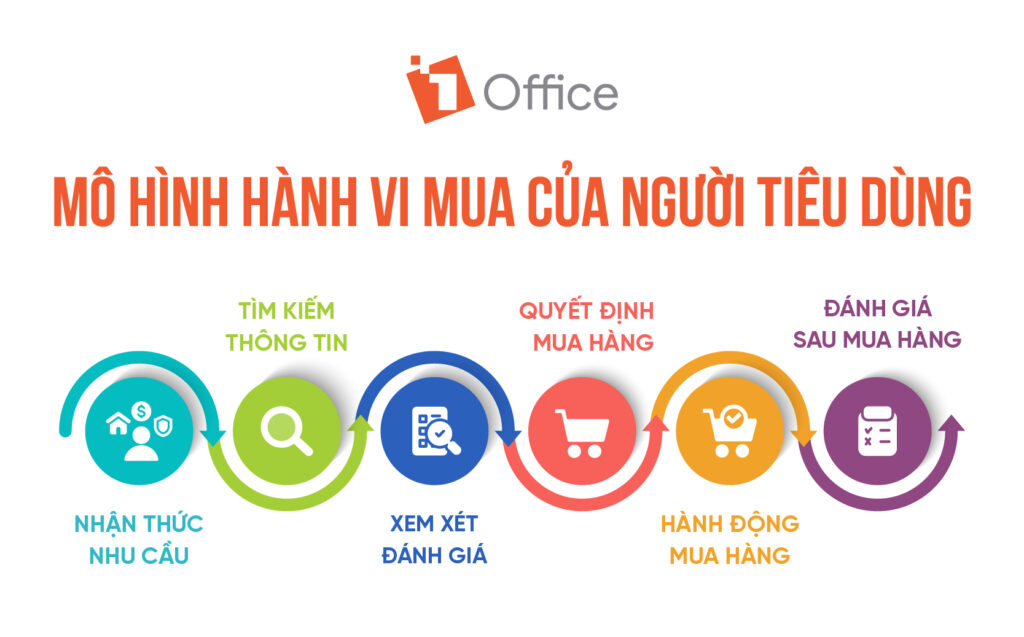
Step 1: Need Recognition
This step begins when consumers realize they have a need or want that needs to be satisfied. The need can be triggered by many factors, including:
- Physiological Needs: Basic needs for survival, such as the need for food, water, sleep, etc.
- Safety Needs: The need to be protected from external threats, such as the need for housing, insurance, etc.
- Social Needs: The need to connect with others, such as the need for love, friendship, etc.
- Esteem Needs: The need to be valued and recognized, including achievements, status, etc.
- Self-Actualization Needs: The need to express oneself and one’s personality, for example, the need for fashion, hobbies, etc.
Bước 2: Tìm kiếm thông tin
Once a need is recognized, consumers will start searching for information about products or services that can meet that need. Information can be sought from many sources, such as:
- Personal experience
- Information from friends, family, and colleagues
- Information from media such as newspapers, television, the internet, etc.
Step 3: Evaluation of Alternatives
After gathering information, consumers will begin to review and evaluate the available options. They will consider factors such as price, quality, features, brand, etc., to make a purchase decision.
Step 4: Purchase Decision
Based on the review and evaluation, the consumer will make a purchase decision. This decision can be made quickly or may take a long time.
This decision is influenced by many personal and external environmental factors.
Step 5: Purchase Action
Once the purchase decision is made, the consumer will take the action of buying. The purchase can be made directly at a store or online.
Step 6: Post-Purchase Evaluation
After the purchase, the consumer will evaluate their satisfaction with the product or service. The consumer’s level of satisfaction will influence their likelihood of repurchasing the product or service in the future.
6. Examples of Consumer Buying Behavior
Here are some examples of consumer buying behavior:
- A consumer is looking for a new phone. They will start by searching for information about different types of phones, comparing prices and features. After gathering enough information, they will make a purchase decision.
- A consumer is shopping for dinner. They will go to the grocery store and look at different products, then consider the price, quality, and taste of the products before making a purchase decision.
- A consumer is buying a gift for a friend. They will consider their friend’s preferences and their budget before making a purchase decision.
Or a more specific example of factors influencing consumer buying behavior:
- Personal factors: A young consumer tends to buy the latest technology products, while an older consumer tends to buy durable and cost-effective products.
- Social factors: A consumer may buy a product because they see their friends or family using it.
- Cultural factors: A consumer in a culture that values cost savings may tend to buy cheaper products, while a consumer in a culture that values quality may tend to buy more expensive products.
- Psychological factors: A consumer may buy a product because they believe it will make them feel better about themselves.
7. Consumer Buying Trends in the 4.0 Era
The 4.0 era is the age of information technology and the Internet, with the strong development of mobile devices and online platforms. This has led to major changes in consumer buying behavior.
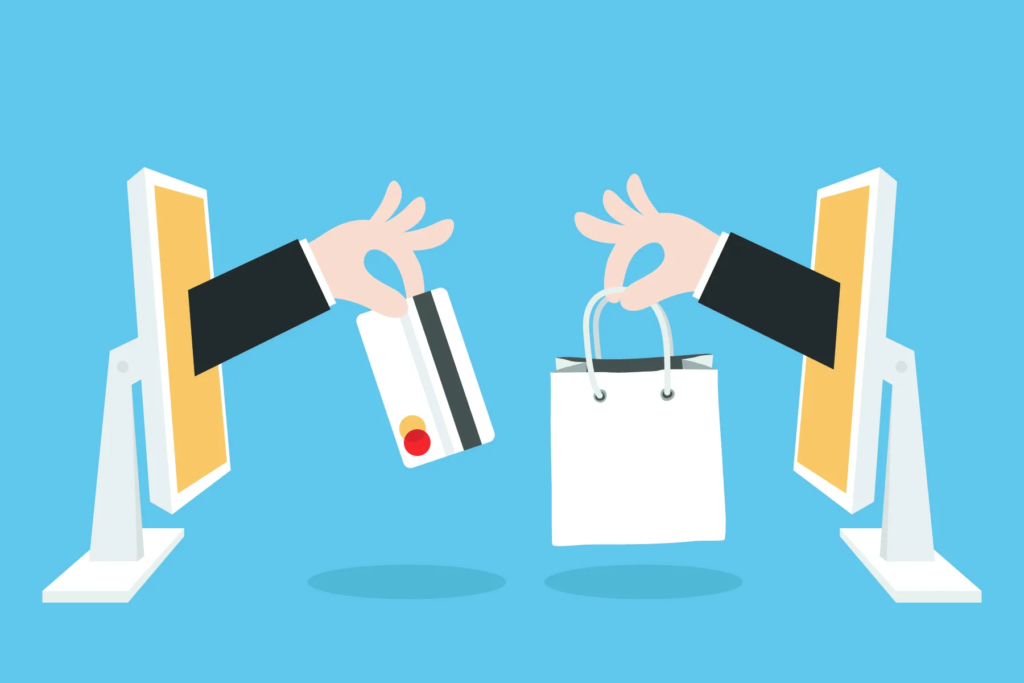
- Online information search: Before making a purchase decision, consumers often use search engines, review websites, and social media to gather information about products and services.
- Online purchasing: Consumers can easily buy products online from anywhere, at any time. Businesses can also reach a global customer base through online shopping channels.
- Social interaction & multi-channel approach: The current trend for consumers is to access information and shop through various channels, including online, in-person, and social media. Businesses need to build a multi-channel strategy to meet consumer demands.
- User experience & post-purchase reviews: These are two important factors influencing consumer purchase decisions in the 4.0 era. Businesses need to focus on user experience and collect post-purchase reviews to improve the quality of their products and services.
- Online marketing and digital advertising: These are two powerful tools that help businesses reach and attract customers in the 4.0 era. Managers need to use these tools effectively to reach the right target audience and achieve business goals.
8. Consumer Buying Behavior Characteristics by Industry Group
8.1. Consumer Buying Behavior in the Retail Industry
In the retail sector, consumer buying behavior is fast-paced and directly influenced by emotions and in-store experiences. Consumers are often attracted by product displays, promotional programs, reviews from others, and shopping convenience. Factors such as price, sales staff, and after-sales policies play a crucial role in the purchasing decision.
Example: Consumers tend to choose products placed at the front of the shelf or those with a “shocking sale” sign.
8.2. Consumer Buying Behavior in the B2B Sector
In the business-to-business (B2B) model, consumer buying behavior is often more complex and prolonged. The purchase decision is not made by a single individual but is usually the result of a multi-step approval process. Buyers will conduct thorough research, compare solutions, request demos, get quotes, and ensure the product is compatible with their existing systems.
Example: The buying behavior often involves multiple touchpoints such as seminars, telesales, email marketing, and direct consultations.
8.3. Consumer Buying Behavior in the Service Industry
In sectors like education, healthcare, spas, or beauty, consumer buying behavior is heavily influenced by personal experiences and emotional factors. Consumers often spend a lot of time researching, reading reviews, and listening to feedback from relatives or the community before making a decision. Trust in the brand, expert reputation, and consistency in the experience (online & offline) are key factors in the consumer’s decision-making process.
Below are 5 frequently asked questions (FAQs) about buying behavior with concise, practical solutions:
9. Frequently Asked Questions about Consumer Buying Behavior
How to accurately collect customer behavior data?
Combine data from website tracking tools and the 1Office CRM system. Centralized storage of interaction history helps you create customer personas and automatically forecast shopping habits.
Why do customers abandon their carts at the checkout step?
It’s often due to hidden shipping fees, a cumbersome checkout process, or a lack of flexible payment methods. Optimize the order interface and use automated reminder messages to bring customers back to complete their transactions.
How to forecast user shopping demand?
Businesses need to analyze historical purchase data combined with market variables. Smart reporting tools on a comprehensive management platform, especially the 1CRM module, help managers identify recurring behavior patterns, thereby forecasting inventory needs and launching marketing campaigns to scientifically anticipate trends.
What factor has the strongest impact on online buying behavior?
It’s social proof (reviews, feedback from other users) and convenience. A transparent return policy along with a genuine review system will help increase conversion rates faster than any advertisement.
How to manage customer behavior consistently across multiple channels?
10. Conclusion
Thus, the above is all the content that 1Office has compiled about “consumer buying behavior”. We hope that through this article, managers can accurately identify their target customer personas and develop effective marketing strategies. We wish your business success!