


 12/05/2026
  317 views
Employee empowerment is not just a modern management trend but also the key to helping businesses break through. When empowered, employees not only work effectively and creatively but also become more proactive and committed to the business in the long term. So, how can you empower employees effectively and ensure performance? In this article, 1Office will share with you the secrets, strategies, and methods for leaders and managers to empower effectively and build a strong team!
Mục lục
- 1. What is employee empowerment?
- 2. Benefits and limitations of employee empowerment
- 3. 10+ Effective Methods for Employee Empowerment
- 3.1. Clearly Define Roles and Responsibilities
- 3.2. Provide Training and Skill Development
- 3.3. Create a Trusting and Supportive Environment
- 3.4. Provide Supporting Tools and Resources
- 3.5. Empower Gradually and Monitor Progress
- 3.6. Encourage and Recognize Achievements
- 3.7. Create Space for Experimentation and Mistakes
- 3.8. Build a Culture of Open Communication
- 3.9. Measure Effectiveness Regularly
- 4. Tools and Models to Support Managing Empowered Employees’ Work
- 5. Common Mistakes When Empowering Employees
- 6. Employee Empowerment is the Future Trend for Managers
- 7. Conclusion
1. What is employee empowerment?
Employee empowerment (Empowerment) is a management method in which a manager or leader delegates authority and responsibility to their employees, allowing them to be autonomous in decision-making or task execution. Thus, employee empowerment is not just about assigning tasks; it also involves providing the necessary tools, information, and support for them to make their own decisions and achieve maximum efficiency in their work. This not only helps employees feel trusted but also encourages them to maximize their abilities and creativity.

Examples of employee empowerment:
- Google: Implements a culture of empowerment by allowing employees to spend 20% of their work time on projects they are passionate about. This policy has resulted in the creation of many groundbreaking products like Gmail and Google Maps.
- Starbucks: Allows in-store employees to handle customer complaints without waiting for approval from superiors, thereby enhancing the customer experience.
2. Benefits and limitations of employee empowerment
2.1. Benefits of empowerment
Enhances proactivity and creativity
- When empowered, employees feel trusted and become more proactive in decision-making. This encourages creativity and innovative solutions at work.
Improves work performance
- Empowerment allows employees to resolve issues quickly without spending too much time waiting for approval from superiors. This minimizes delays, increases operational efficiency, and boosts work performance.
Builds a positive work culture
- By empowering employees, business owners and managers help them feel like an important part of the organization, leading to greater long-term commitment and dedication. An empowering environment also fosters transparency and encourages collaboration to achieve larger goals.
Reduces the management burden
- Managers can focus on long-term strategies instead of getting bogged down in minor daily tasks when they have empowered their employees. At the same time, empowerment also allows leaders to develop potential successors for the future.
Meets personal development needs
- Empowerment is an opportunity for employees to hone their skills, take on new challenges, and advance their careers.
2.2. Limitations of empowerment
Risk of poor decisions
- If employees lack experience or misunderstand their tasks, empowerment can lead to major mistakes, affecting work outcomes and organizational operations.
Lack of control
- If businesses and leaders empower excessively or without supervision, it can lead to a loss of control. This is particularly risky in fields requiring strict compliance, such as finance or legal.
Jealousy within the team
- If empowerment is not carried out fairly or transparently, it can lead to internal conflicts within the team.
Risk of power abuse
- In some cases, employees may abuse their empowered authority for personal gain rather than for the collective benefit of the organization.
Difficulties in training and communication
- Not all employees are ready or skilled enough to take on newly assigned authority. If managers do not provide adequate tools and support, empowerment can be counterproductive.
3. 10+ Effective Methods for Employee Empowerment
3.1. Clearly Define Roles and Responsibilities
Employees need to clearly understand their duties, authority, and responsibilities when empowered. A detailed job description and expectations will help employees have a clearer direction, goals, and motivation at work.
- Example: Set specific KPIs (Key Performance Indicators) for each assigned project or role.
3.2. Provide Training and Skill Development

Empowerment is not just about delegating authority; it also requires equipping employees with the necessary skills to perform their tasks well. Businesses and managers need to invest in training programs and professional workshops so employees can be more confident when taking on responsibilities.
- Example: Provide leadership skills courses for employees assigned to manage projects.
3.3. Create a Trusting and Supportive Environment
Trust is the core element of empowerment. Employees need to feel they have support from their superiors and colleagues when needed to carry out and complete their work.
- Example: Regularly hold meetings to listen to feedback and address difficulties promptly.
3.4. Provide Supporting Tools and Resources
Employees cannot work effectively without the necessary tools, information, or resources. The business should ensure that everything is ready for them to complete their tasks.
- Example: Provide work management software like 1Office, Trello, or Asana to help track progress.
3.5. Empower Gradually and Monitor Progress
Employees should start with small tasks or limited authority to gradually get used to new responsibilities. Managers can then progressively increase the scope of empowerment as they demonstrate their capabilities.
- Example: Set milestones to evaluate results and make adjustments if necessary.
3.6. Encourage and Recognize Achievements
When employees complete their assigned tasks well or excellently, recognize their contributions. This encouragement will boost their motivation and confidence.
- Example: Organize ceremonies to honor outstanding employees or offer direct praise.
3.7. Create Space for Experimentation and Mistakes
A work environment that helps employees feel confident and not afraid of making mistakes will encourage creativity and innovation. Instead of criticizing employees, managers can view mistakes as opportunities for them to learn and improve.
- Example: Offer solutions for improvement instead of penalties or disciplinary actions if an employee makes a mistake while performing a task.
3.8. Build a Culture of Open Communication
An open communication environment makes it easy for employees to share opinions and feedback. This helps superiors promptly understand difficulties or risks during the empowerment process.
- Example: Organize regular meetings to exchange ideas and listen to feedback.
3.9. Measure Effectiveness Regularly
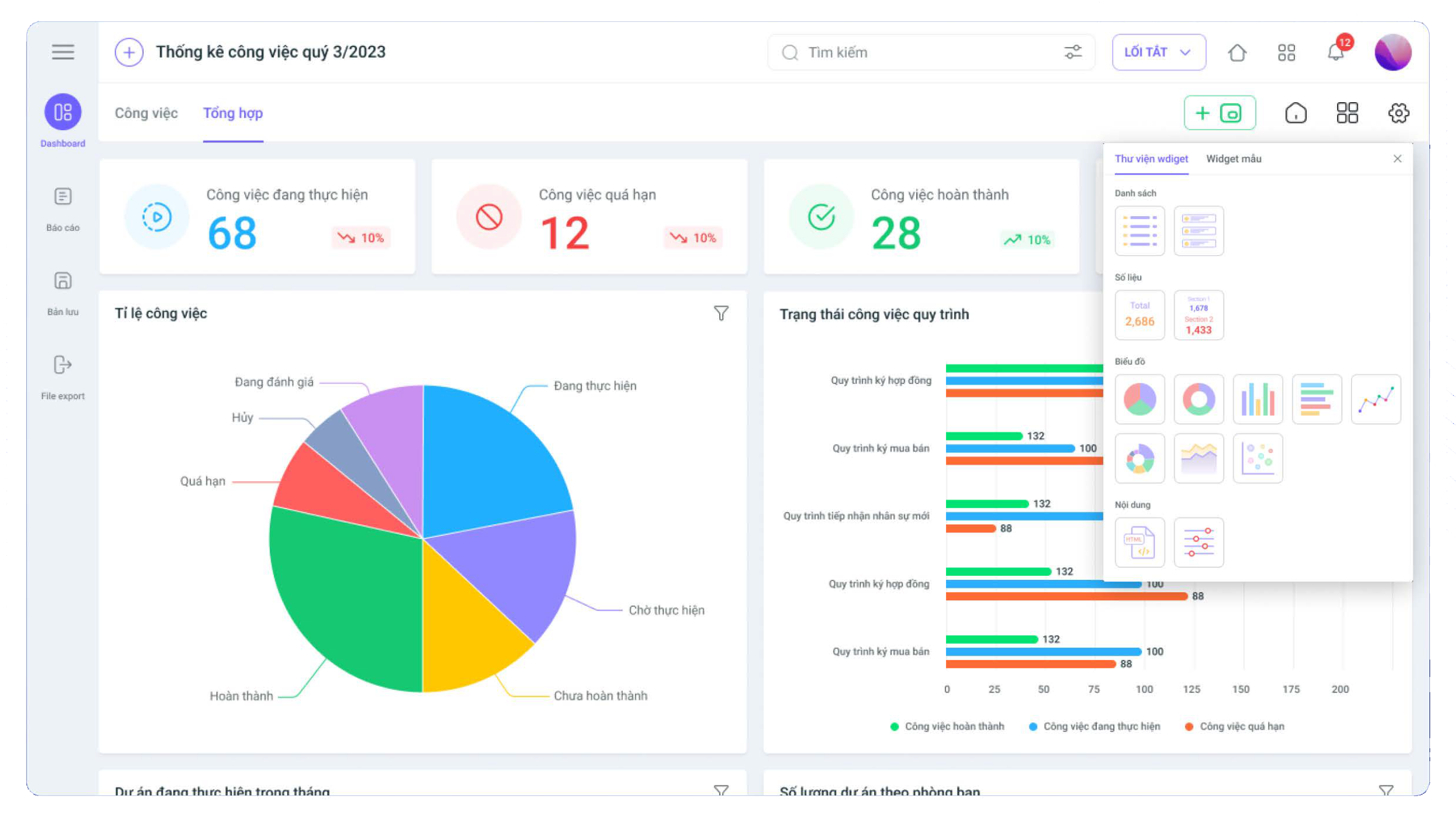
Continuously evaluating the results of empowerment allows for adjustments and improvements to the method. Analytical tools like work reports and internal surveys will provide the necessary data.
- Example: Use performance reporting software to measure work progress and employee satisfaction.
3.10. Demonstrate a Guiding Leadership Role
Superiors and managers should act as guides rather than controllers. You can support employees when needed and let them make their own decisions within their assigned scope of responsibility.
- Example: Instead of solving all problems, managers provide suggestions and guidance to help employees find their own solutions.
4. Tools and Models to Support Managing Empowered Employees’ Work
4.1. Tools and Software to Support Empowerment
In today’s context, work and process management software plays an increasingly important role in empowering employees. These tools not only help leaders and managers organize work more effectively but also create conditions for employees to be autonomous and develop their personal capabilities.
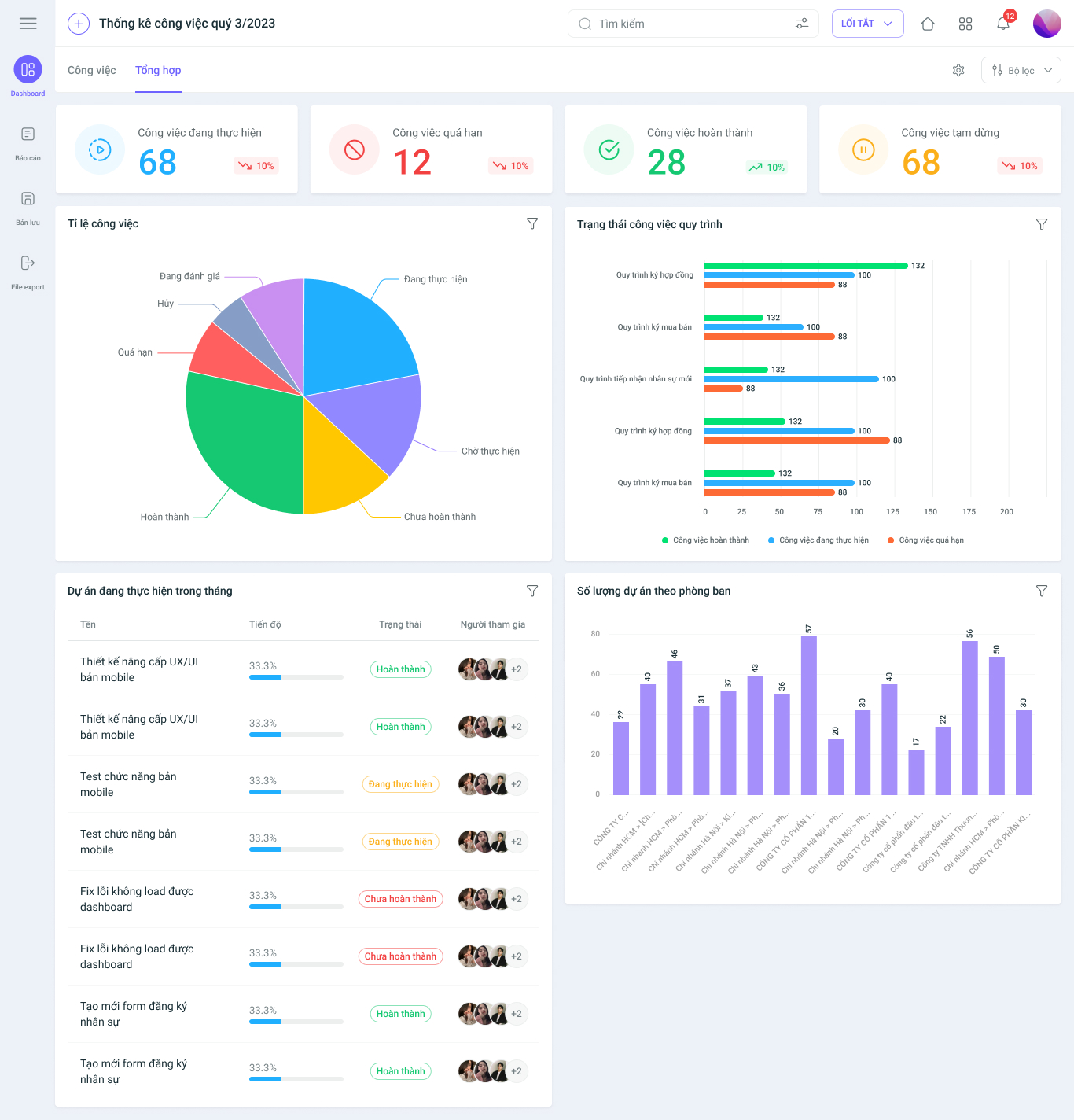
1Work is one of today’s leading solutions that helps businesses empower employees effectively while optimizing work management processes with outstanding features such as:
- Clear task assignment: Each employee knows their exact role and responsibilities in the assigned project or task.
- Increased transparency: Provides complete, synchronized information so employees can make their own decisions without depending on superiors.
- Progress and performance tracking: Employees can check their own work efficiency, while managers can easily monitor without direct intervention.
- Improved communication and coordination: Connects teams, minimizing confusion and conflicts at work.
- Comprehensive integration: Seamlessly connects with other modules such as HR management, projects, and documents, helping to synchronize all activities on a single platform.
4.2. Applying Empowerment Support Models
4.2.1. RACI: A Model for Clear Delegation
RACI (Responsible, Accountable, Consulted, Informed) is a framework that helps define specific roles and responsibilities for each task:
- Responsible: The person who performs the task.
- Accountable: The person ultimately responsible for the outcome.
- Consulted: The person who is consulted when needed.
- Informed: The person who needs to be updated on progress.
Applications of the model:
- Apply RACI to complex projects to avoid confusion in roles and responsibilities.
- Use in combination with software like 1Work to easily track roles and responsibilities.
4.2.2. OKRs (Objectives and Key Results)
OKRs is a Goal-Setting Method: this is a tool to orient employees toward goals when they are empowered.
- Objectives: What needs to be achieved (clear direction).
- Key Results: How to measure the success of the objective.
Advantages of OKRs:
- Helps employees understand the larger goals and their contribution to the big picture.
- Promotes autonomy and creativity as employees grasp the results that need to be achieved.
Example:
- Objective: Increase team performance.
- Key Results: 100% of projects completed on time/Reduce time spent processing tasks via email by 20%.
>>> Read more: What are OKRs? The most accurate way to evaluate using the OKR model
5. Common Mistakes When Empowering Employees

Empowering without providing clear guidance
Managers assign tasks and responsibilities to employees but do not provide enough information about goals, expectations, or implementation processes. This makes employees feel confused, pressured, and unsure where to start, leading to results that do not meet expectations.
Solution: Ensure every assigned task comes with detailed instructions, specific goals, and necessary resources.
Not tracking progress and providing timely support
After empowering, managers “leave everything” to employees without a mechanism for tracking or providing support when needed. This causes work to be delayed and errors to go undetected and unresolved in a timely manner.
Solution: Maintain progress update meetings or use a management tool like 1Work to track tasks and provide support when needed.
Empowering the wrong person
Managers may make the mistake of assigning tasks to employees who lack the necessary skills, experience, or are not a good fit for the given responsibility. The consequence is reduced performance and unnecessary pressure and stress for the employee.
Solution: Thoroughly assess the employee’s capabilities, skills, and experience before empowering them, and provide training if necessary.
Shifting responsibility
When a problem occurs after empowerment, the person who empowered them may “abandon” the difficult task without providing support or taking responsibility for the incident. This makes employees feel pressured and lose motivation because they do not receive support or protection from their superiors.
Solution:
- Establish a clear process where the manager remains ultimately responsible and supports the employee when needed.
- Ensure employees understand they are not “alone” but always have the support of their team and superiors.
6. Employee Empowerment is the Future Trend for Managers
Employee empowerment is no longer a foreign concept but has become a core strategy in modern management. As businesses increasingly transform towards digitalization and flexibility, empowerment is changing significantly to align with new trends and practices.
6.1. Digitalization and Automation of Workflows

Applying work management tools and software like 1Work, Trello, Asana, or Microsoft Teams helps automate processes and clarify the roles and responsibilities of each employee.
- Digital tools help employees clearly understand their tasks within the entire process.
- Managers can easily track progress, provide timely support, and make adjustments as needed.
6.2. Focusing on Agile Mindset and Flexible Work Models
Agile is not just a software development method but has also become a management philosophy that encourages employees to be proactive and creative in their work.
- Empowering employees more to make quick, on-the-spot decisions.
- Businesses apply Scrum or Kanban models to improve work efficiency.
6.3. Enhancing Workflow Personalization
Businesses can create conditions for employees to leverage their strengths and work in a way that best suits them individually.
- Personalized skill development programs and work plans.
- Using analytics data to understand and optimize the performance of each employee.
6.4. A Corporate Culture that Encourages Empowerment
Currently, many businesses are practicing an “open door” culture to encourage employees to confidently voice their opinions and suggestions. This helps build a trustworthy work environment where employees feel safe when empowered and challenged.
7. Conclusion
With the support of technology and modern management thinking, empowerment is not just about assigning tasks but also a way for businesses to fully tap into their team’s potential. Flexibly applying digital tools, management models, and a culture of empowerment will help businesses build a team of employees that is more autonomous, creative, and cohesive than ever before.
















