12/05/2026
  506 views
Boosting revenue is always a problem that businesses distributing products and services need to solve. So, have you ever heard of the concept of “Cross sales“? During the purchasing process, you might have come across phrases like “You might also be interested in…” or “You can buy this bundled product for just…” And this is precisely the sales skill used by many large corporations in the market to increase the value obtained from a customer’s purchase transaction.
Mục lục
- I. Differentiating Between Cross-Selling and Up-Selling
- II. Common Mistakes When Applying Cross-Selling
- III. Steps to Cross-Sell Products
- IV. 5 Common Cross-Selling Methods to Boost Sales
- V. Amazon’s Case Study in Applying Cross-selling
- VI. Connection with 1Office’s CRM Solution
I. Differentiating Between Cross-Selling and Up-Selling
-
The Concepts of Cross-Selling and Up-Selling
Cross Sales, also known as Cross-selling, is the process of selling a different product or service to a customer to make them spend more in a single transaction. Cross-selling doesn’t just happen when the customer is buying the main product; it can also continue throughout the customer’s product consumption journey.
Related Term
UpSell (Up-selling): This is when a salesperson introduces more premium and expensive products or services to the buyer, causing them to spend more than originally intended.
Learn more about: The Art of Up-Selling
-
Differentiating Cross-Selling vs. Up-Selling
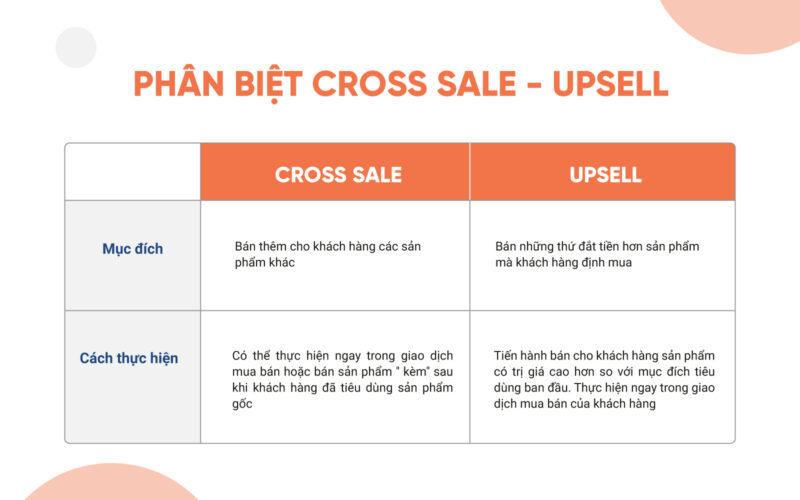
Let’s analyze an example of these two terms to help you understand them better.
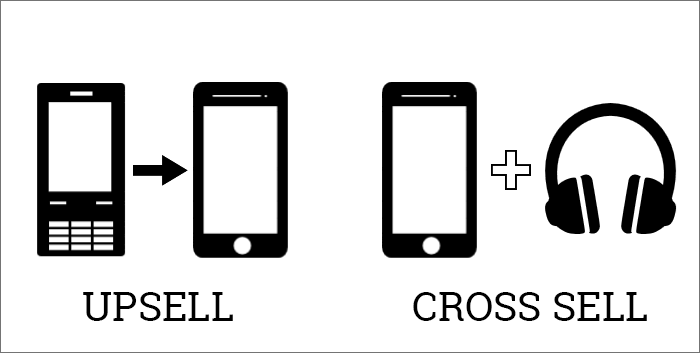
A customer wants to buy a feature phone, but by flexibly using soft skills and persuasive language, you successfully sell them a smartphone of higher value than the amount they initially intended to spend. That is up-selling.
A customer wants to buy a smartphone, but you also proceed to sell them a pair of headphones, causing the customer to spend more than they originally intended. This is cross-selling.
It can be said that this is a sales technique that helps businesses increase their revenue. However, no method is entirely perfect. Therefore, let’s examine the advantages and limitations of Cross-Selling in practice in the next section.
II. Common Mistakes When Applying Cross-Selling
Besides the easily recognizable advantages of applying Cross-selling in a business, such as:
- Increasing revenue for the business.
- Increasing customer satisfaction:
- Increasing Customer Lifetime Value (CLV)
we can also identify some limitations of Cross-selling that an organization might encounter:
-
Ineffective in Increasing Sales Volume
Cross-selling does not always increase customer satisfaction. When you offer a promotion to buy a bundled product at a discounted price, but the two products are unrelated, it can annoy customers and thus fail to increase the business’s CTA rate.
-
Annoying for Consumers
In many cases, when sales staff try to insist or pester customers who have no need for the bundled product, it can also make discerning consumers feel annoyed.
-
Increases Revenue but Causes a Decrease in Company Profit

Cross-Selling helps customers increase sales during the selling process
While applying Cross Sales can help increase a company’s revenue, for some industries, applying Cross-selling will increase their operating costs, forcing the company to “shoulder” the costs of the bundled product.
For example: In retail businesses, bundled products are often priced very low (even below cost) to encourage consumer behavior. Therefore, when too many bundled products are sold, it means the business has to cover the costs for that deficit.
-
Increased Costs for the Buyer
Typically, products for Cross-Selling are identified based on consumers’ niche needs. However, how to encourage customer behavior is another issue. Determining the maximum cost a customer is willing to spend on an add-on product is a difficult problem that businesses need to solve.
III. Steps to Cross-Sell Products
After getting a general overview of Cross-Selling, do you know how to implement it? Typically, to be able to cross-sell, a business will need to follow 3 steps.
Step 1: Identify Suitable Products and Services for Cross-Selling
Before applying Cross-selling to the business’s sales process, managers need to answer a few questions:
- What do customers often buy as add-on products/services?
- Which product groups are often bundled and consumed together?
- Which products on the market have successfully applied cross-selling?
- What communication skills at work are necessary for Cross-Selling?
For example: As a business that distributes mobile phones, you can identify some related services: screen protectors, phone cases, device cleaning, and 1-year or 2-year extended warranty packages. These are also the product groups that are often bundled together. Therefore, the business can identify the aforementioned products and service packages as add-on products for Cross-Selling.
Step 2: Identify the appropriate customer segment for the business’s Cross-Selling model.
After completing the first step of the product Cross-Selling process, the manager must then identify which audience is suitable for the company’s program.

To identify the target customer segment, the business will “datafy” the information you collect from your customers on their product/service consumption journey.
The identification is based on the following criteria:
- Consumer’s personal information
- Digital information that your company collects
- Purchase history
- Customer’s browsing history
=> Clearly defining the above criteria helps the business filter out the most suitable customer segment for the organization’s Cross-Selling program.
Step 3: Develop a cross-selling campaign and build the customer’s consumption journey
For a successful Cross-Selling campaign, you must identify the following factors:
- Provide customers with additional products/services that truly create added value for them
- Effectively use the customer data that the business has
- Encourage cross-selling by creating interaction between employees and customers
- Use existing PR and Marketing campaigns to provide information about the products being cross-sold
Besides, managers must determine the most appropriate time to apply Cross-selling to their sales cycle. There is no specific metric or formula for determining this period, but you can refer to the following criteria:
- The business offers many complementary products: The phrase “You might also need…” will trigger emerging niche needs, and you will be able to sell more products through this method.
- Run post-purchase email campaigns
- Advertise add-on products on the checkout page
- Remarketing
Applying this to a real-world process, we can build some cross-selling campaigns by industry:
Let’s consider the banking industry:
Possessing a huge volume of customer data collected from selling individual products and services, banks can predict, recommend, and meet all financial needs, from daily transactions and money transfers to loans, investments, and savings, to maximize the potential of existing customers.
For example: VPBank frequently invites customers to try new services and offers promotions for using additional products. They continuously launch product packages like VPPower—a combination of three individual products: a payment account, a credit/debit card, and VPBank Online services, along with attractive cashback policies and free services for customers who purchase and use them.
In F&B businesses:
customers will feel comfortable and happy when side dishes are offered at a reduced price. These cross-selling strategies help customers order items they might have previously skipped to save money. For diners, this is an opportunity to order more dishes during their meal without feeling “tricked” or “trapped” by the seller. The seller’s revenue will increase significantly from these special cross-selling strategies.
The 3 steps above form a cycle for implementing Cross-Selling in a business. We can determine that to successfully cross-sell, managers must clearly identify the target audience, the group of products to be offered, and build a detailed, effective campaign. In addition, managing customer data also helps businesses create a competitive advantage in cross-selling products.
See more: The Standard 7-Step B2B Sales Process for Every Business
IV. 5 Common Cross-Selling Methods to Boost Sales
-
Offer additional services
A simple way to cross-sell to customers is to offer additional services. These supplementary service packages are often free, or customers only have to pay a very small fee to enjoy the benefits.
For example: Purchases include same-day delivery service, or free delivery within 2 hours for orders from 300,000.
-
Offer complementary items (Bundle sale)

Cross-Selling Method

Product bundling is another common method to increase a company’s sales. Grouping products into a single package not only helps increase revenue but can also enhance customer satisfaction.
Typical examples of bundle sales include optional packages when buying a car or set meals at a restaurant.
-
Provide data-driven recommendations
Another method mentioned in this section is that businesses can rely on past customer data to decide whether to cross-sell to them. This data includes past interactions, customer information searches on the website, and successful transactions between the customer and the organization.
For example: If you notice a customer is searching your website for articles on digital advertising techniques and downloading related documents, you can proceed to consult with them about your PPC service.
-
Cross-sell with the company’s promotional services
The main goal of this method is to drive the sales volume of the product/service you are currently running a promotion for. This approach highlights a sales event rather than targeting a specific customer segment.
For example: If your business is running a promotion for a Black Friday sale, you can announce it to your customers. Customers may be interested in the program and share it with others, acting as a form of product promotion.
-
Guide and advise customers
In many cases, customers may not fully understand the added value they will receive when purchasing Cross-Selling products. Therefore, your role is to educate them about your entire product/service range and how it can be applied to their needs. When consumers clearly see the value they can gain, their willingness to spend will increase.
Thoroughly understand the cross-selling methods. In addition, you can also refer to these 3 tips to make the cross-selling process more effective:
- Use drip emails: The golden window for cross-selling is 3 to 5 weeks after the initial sale. To achieve the best results for cross-selling in a B2B model, you can send emails beforehand detailing the features of the cross-sold product to give customers a clear understanding of the value they will receive, and then follow up with a sales consultation.
- Sell the core product first and offer “cross-sell” products later: After working with a customer’s projects for a period of time, they will have formed their own opinions about your product. From there, the sales pitch becomes simpler because they have already thoroughly evaluated the original product.
- Align services with the customer’s goals: For a successful cross-selling transaction, you need to identify the customer’s goals and determine if your product/service package is a good fit.
V. Amazon’s Case Study in Applying Cross-selling
The company is widely known for its optimal implementation of cross-selling.When shopping on Amazon, you’ll notice that every time you add an item to your cart, the company suggests other products with phrases like “You might also be interested in…” or “Frequently bought together.” This application of cross-selling is extremely effective because the additional items are relevant to what you already intend to buy.
VI. Connection with 1Office’s CRM Solution
In today’s digital age, CRM is the leading solution that helps businesses comprehensively optimize their sales processes and effectively care for customers. Therefore, business sectors such as real estate, insurance, tourism, and restaurants can all use the software to increase sales, marketing, and customer support.

The main functions of CRM customer relationship management software from 1Office:
- Manage customer information on the software, making customer lookups easy and convenient
- Create order and contract information directly on the system
- Integrate with smart features such as sending emails, making calls, or texting customers, and conveniently signing and approving quotes and contracts directly on the software.
- The feature to set up and manage an effective sales process helps businesses easily capture every sales opportunity at any time, quickly increasing sales care efficiency. By building and customizing sales processes through the 1Office CRM customer management software, businesses can optimize even the most complex processes.
- Manage potential customers and contact addresses
The article above has given readers a specific look at Cross-Selling and how to implement a cross-selling campaign within a business.
To register for a trial of the CRM customer relationship management software that helps manage information, data, and optimize professional customer care processes, please leave your phone number. The 1Office team of experts will contact you for a consultation today.
For more detailed information, please see:
Hotline: 083 483 8888
Fanpage: https://www.facebook.com/1officevn/
Youtube: https://www.youtube.com/channel/UCeTIRNqxaTwk0_kcTw6SxmA