


What is Headcount Planning? Calculation and Building Process


Headcount planning is a crucial step if a business wants to allocate human resources effectively and control costs better. If you want to understand what headcount planning is and how to implement it in practice, this article will provide you with the most accurate information.
Mục lục
- 1. What is headcount planning?
- 2. Objectives of headcount planning
- 3. The importance of headcount planning
- 4. The role of headcount planning
- 5. What are the conditions for calculating personnel headcount?
- 6. Headcount Planning Principles and Specific Examples
- 7. How to Calculate Workforce Size Using Different Methods
- 8. An Effective Workforce Planning Process for Businesses
- 9. Some accurate and effective workforce planning templates to apply
- 10. Optimize workforce planning management with 1Office software
1. What is headcount planning?
Headcount planning is the process of determining the necessary number and structure of personnel to meet the job requirements and business goals of an organization, company, or enterprise. This process includes analyzing and assessing human resource needs based on factors such as workload, capabilities, necessary skills, as well as the organization’s development objectives.
In other words, headcount planning is the alignment of human resources with the strategic purposes and goals of the organization to perfect business processes, develop an organizational culture of innovation and flexibility, and create a competitive advantage in the market.
Through this, it helps businesses evaluate personnel and cut unnecessary costs. Based on headcount planning activities, businesses will know how to balance revenue and expenditure, plan training, or reduce staff groups that do not bring significant value to the company.
Read more: What is the ASK model? How to apply the ASK model in human resource management

2. Objectives of headcount planning
The main objective of headcount planning is to ensure there is a sufficient number of personnel with the appropriate qualifications and skills to complete work effectively, while optimizing labor costs and using resources as efficiently as possible. This helps the organization maintain a balance between meeting work demands and saving costs, while also supporting the future growth and expansion of the business.
3. The importance of headcount planning
Headcount planning plays a crucial role in the management and development of an organization’s or business’s human resources. Below are some reasons that show the importance of headcount planning:
- Optimize personnel costs: Headcount planning helps accurately determine the necessary quantity and quality of personnel, avoiding situations of surplus or shortage of manpower. This helps the organization save costs related to recruitment, training, and personnel maintenance, while minimizing the waste of human resources.
- Enhance work performance: When an organization has a personnel structure that matches the workload and job requirements, employees will work more efficiently, minimizing overlap, distributing tasks reasonably, and optimizing labor productivity. This also helps reduce stress and increase job satisfaction for employees.
- Meet the development needs of the business: Headcount planning supports the short-term and long-term development strategies of the business. When there is a need for growth or expansion, correctly identifying the required number and type of personnel will help the business adapt quickly and implement plans effectively.
- Support risk management: Correctly determining the number and structure of personnel helps businesses easily respond to unexpected changes such as market fluctuations, changes in labor policies, or increases/decreases in product/service demand. Good headcount planning helps minimize personnel-related risks such as skill shortages, resource scarcity, or disruptions in business operations.
- Improve the quality of recruitment and training: Through headcount planning, businesses can clearly identify the positions that need to be filled, and the necessary skills and competencies for each position. This helps improve the quality of the recruitment and training process, ensuring that the selected personnel are suitable for the job requirements and company culture.
- Enhance transparency and clarity in the organization: Headcount planning provides a clear view of the organizational structure, helping to clearly define the roles and responsibilities of each position, thereby minimizing conflicts and disputes at work and creating conditions for effective collaboration between departments.
- Create a basis for employee evaluation and development: With a clear headcount plan, businesses can build effective performance appraisal and employee development programs in a scientific, fair, and transparent manner. This helps motivate employees to develop their personal capabilities and contribute better to the organization.
As can be seen, headcount planning is an indispensable part of strategic human resource management. This will help the business operate efficiently, optimally, sustainably, and develop in the long term.
4. The role of headcount planning
Headcount planning plays an extremely important role in human resource management because it stems from the role of people, who help operate the organization and determine its success or failure. It is clear that resource management will not be effective if the organization does not plan its resources well.
Through this, effective workforce planning brings many benefits to the agency, organization, and employees, as follows:
4.1. For businesses and organizations
- Helps determine the number of personnel needed in the future, the current number, and the ability to meet future needs based on employee capabilities
- Serves as a basis for recruitment, appointment, or promotion of personnel to build a personnel training plan
- Helps monitor the personnel situation
- Workforce planning is the basis for building salary budgets and other social costs related to people (insurance, social welfare)
4.2. For employees
- Helps employees clearly understand their own capabilities, enabling them to properly perform their assigned tasks and duties
- Helps employees orient and develop their personal capabilities
5. What are the conditions for calculating personnel headcount?
At the company level:
- A clear strategic direction for HR development is required
- A specific business plan with a budget and plans for change is needed
At the departmental level:
- Defined job positions, tasks, and authority
- An understanding of task frequency and efficient execution processes
- Defined proficiency levels and estimated outputs for each position
- The level of automation applied in job execution and the data management system
| Read more: HR Policy: The Secret to Retaining Talent for Every Business |
6. Headcount Planning Principles and Specific Examples
For different organizations, the headcount planning process also differs significantly. However, businesses can determine their headcount accurately by appropriately applying the following principles:
6.1. The Correlation Ratio Principle
| Principle | Illustrative Example |
|
|
|
|
|
|
6.2. Principles of labor norms
| Principle | Illustrative Example |
|
|
|
|
|
|
6.3. Principles of Frequency and Duration
| Principle | Illustrative Example |
|
|
7. How to Calculate Workforce Size Using Different Methods
To calculate workforce size, you need to apply a specific process that includes assessing, analyzing, and determining the workforce needs that align with the company’s business goals and strategy. Below are the common methods for calculating workforce size:
7.1. Workload Analysis Method
This method is based on determining the total workload that needs to be completed and then calculating the number of employees required to finish that work within a specific timeframe.
Steps:
- Determine the workload: List all tasks that need to be performed for each position, department, or project.
- Calculate the completion time for each task: Measure the average time required to complete each task. This can be based on actual data or estimates.
- Determine the total time required: Calculate the total time needed to complete all the work within a specific period (week, month, quarter).
- Calculate the required number of employees:
- Required number of employees = Total time required / Average working hours of one employee in the same period.
- Adjust the number of employees to align with the necessary quality, skill, and experience requirements.
Example:
If a department needs to complete 1,000 work hours per month, and each employee works an average of 160 hours per month, the required number of employees is:
Required number of employees = 1000/160 = 6.25 ≈ 7 people
(The number is usually rounded up to ensure sufficient manpower.)
7.2. Standard Labor Norms Method
This method is based on standard labor norms that have been predefined or established for each type of job. These standards can be based on the industry, past experience, or organizational regulations.
Steps:
- Determine labor norms: Research and apply standard labor norms for each specific job or title (e.g., number of products per hour, number of customers served per day, etc.).
- Assess work demand: Calculate the total labor demand based on the workload or production/business goals.
- Calculate the required number of employees: Use the formula: Required number of employees = Projected workload / Standard labor norm
Example:
If the standard labor norm requires one employee to produce 100 products per day, and the production demand is 1,000 products per day, the required number of employees will be:
Required number of employees = 1000/100 = 10 people
7.3. Benchmarking Method
The benchmarking method involves comparing your workforce structure with that of other companies in the same industry or with industry standards to determine appropriate staffing needs.
Steps:
- Collect data from similar organizations: Determine the number of employees by department, title, or job type in other organizations within the same industry.
- Analyze and compare: Evaluate the differences between your company’s workforce structure and that of other organizations in the industry to determine a reasonable number and structure for your staff.
- Adjust accordingly: Adjust the number of employees based on your company’s specific scale, strategy, and business goals.
Example:
If your business is similar in scale to another company in the industry that has 200 employees, with 50% of them in the production department, you might consider using a similar ratio.
7.4. Revenue or Production Ratio Method
This method uses the ratio between revenue (or production output) and the number of employees to calculate workforce needs.
Steps:
- Determine the standard ratio: Research the revenue-per-employee (or output-per-employee) ratio within your industry or from your company’s historical data.
- Forecast revenue or production: Estimate the revenue or production output the company aims to achieve in the next period.
- Calculate the required number of employees:
Required number of employees = Projected revenue / Average revenue per employee
Example:
If a business aims to achieve $10 million in revenue and the average employee generates $200,000 in revenue per year, the required number of employees is:
Required number of employees = 10,000,000 / 200,000 = 50 people
7.5. Current Staff Analysis Method
This method relies on analyzing the capabilities and performance of existing personnel to determine whether additional staff recruitment is necessary.
Implementation steps:
- Assess current performance and capabilities: Determine the level of job completion, skills, and work performance of current employees.
- Compare with job requirements: Cross-reference with job requirements and business goals to identify positions that need improvement, supplementation, or replacement.
- Determine personnel needs: Based on the analysis results, identify positions that require additional staff, enhanced training, or restructuring.
The above methods can be used independently or in combination, depending on the specific situation of the business. Workforce planning is a continuous process that requires flexibility to adapt to changes in the business and the business environment.
8. An Effective Workforce Planning Process for Businesses
After learning about the concept of workforce planning and the common principles businesses apply today, let’s explore the 5-step process for accurate workforce planning in this section:
Step 1: Forecast Human Resource Needs
The first step in workforce planning is for the business to accurately forecast the organization’s future human resource needs. Here, the business needs to clearly understand which future goals the organization wants to achieve, which activities need to be prioritized, and the scale of production.
Once you have a clear and firm grasp of this information, you need to determine the business’s personnel needs, such as:
- Time: When are they needed?
- Quality: What qualities and skills are important?
- Quantity: How many personnel are needed for each position and department?
Step 2: Analyze the Current State of Human Resources
Analyzing the current state of personnel will help you identify the strengths and weaknesses of the business’s human resources at the present time. During the analysis, you need to consider factors such as: system-related analysis factors and process-related analysis factors.

System-related factors
- Quantity, structure, qualifications, experience, and work attitude
- Types of activities, responsibilities, authority, and work relationships
- Includes human resource management policies such as: recruitment, training, rewards, and discipline
Process-related factors
- The attractiveness of the job to employees
- Employee satisfaction with the job
- Company culture and work environment
- The clarity and specificity of the goals set by the business
- Difficulties or problems faced by the business
- Improvements in human resource management activities for the business.
Step 3: Decide on Increasing or Reducing Personnel
In this step, you need to compare the current state of the business’s human resources with current personnel needs to determine if there is a shortage or surplus of staff. From there, the business can get a comprehensive view of the personnel landscape, helping to devise the best solutions to address the surplus or shortage, or to make appropriate adjustments to the human resource plan.
Example: If your business has 60 sales employees, but due to the need to expand the market for new projects and fields, that number is insufficient to handle the workload. At this point, the HR department needs to decide to recruit more people to meet the work demands.
Step 4: Create an Implementation Plan
After completing the three steps above, the business now needs to create a plan to implement the workforce plan. If the workforce planning steps are carried out correctly, the HR department can maximize cost savings and recruit the right number of personnel to fit the company’s actual needs.

To create a workforce plan, you need to build the following basic content:
- Recruitment plan and recruitment methods
- Personnel promotion and rotation
- Arranging organizational structure, number of employees, and departments
- Reducing underperforming human resources that do not bring high value to the company
- Downsizing low-competence labor that does not create value for the company
Step 5: Evaluate plan implementation
Evaluating the plan will help you identify any discrepancies between the set goals and the plan’s implementation process. This allows you to analyze the causes of those deviations.
During the implementation process, the business needs to pay attention to the following issues:
- Causes of deviations
- Risks that arise during the implementation process
- Solutions for adjusting the plan and its execution
- Finding and allocating appropriate personnel to be ready for plan organization and implementation when needed
| Read now: What is HR Planning? The Role and Benefits of HR Planning in a Business |
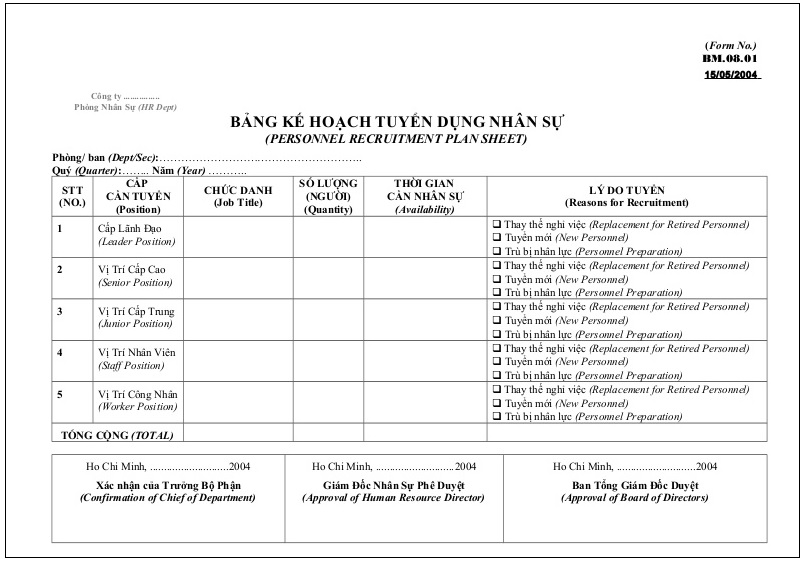
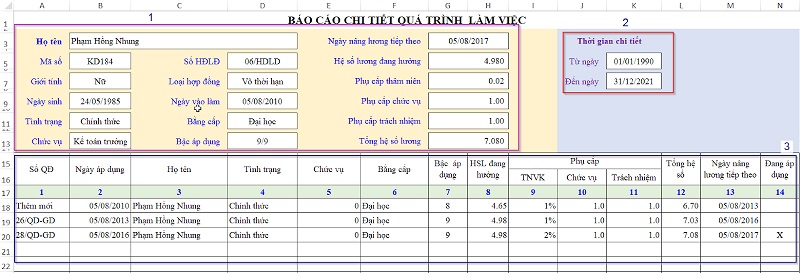
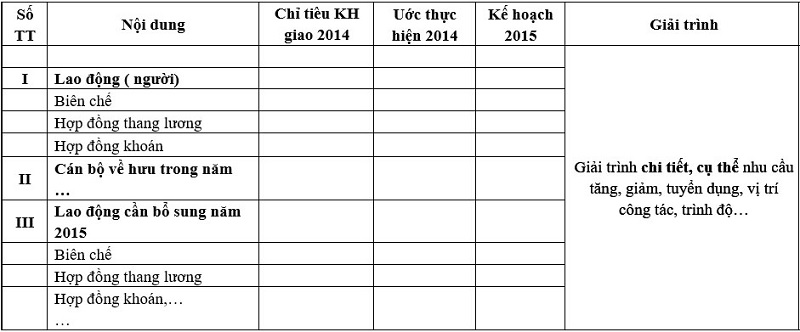
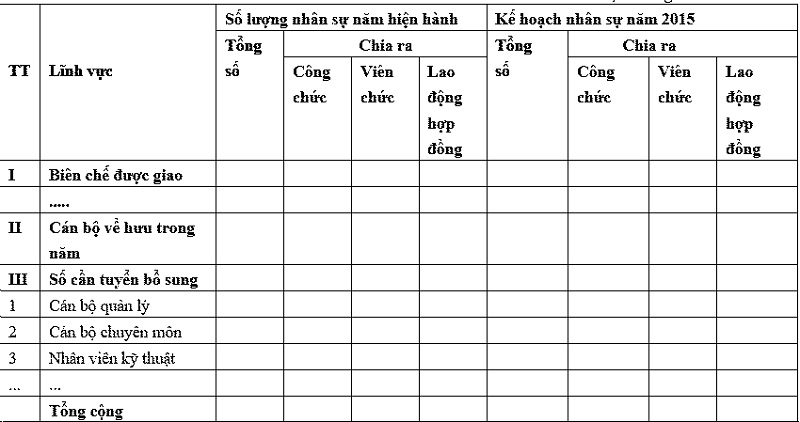
9. Some accurate and effective workforce planning templates to apply
To implement workforce planning effectively, you can refer to some of the templates below
10. Optimize workforce planning management with 1Office software
Today, in the human resource management activities of companies and businesses, workforce planning plays a crucial role in implementing effective recruitment policies and human resource strategies. However, applying it within a business is not an easy task.
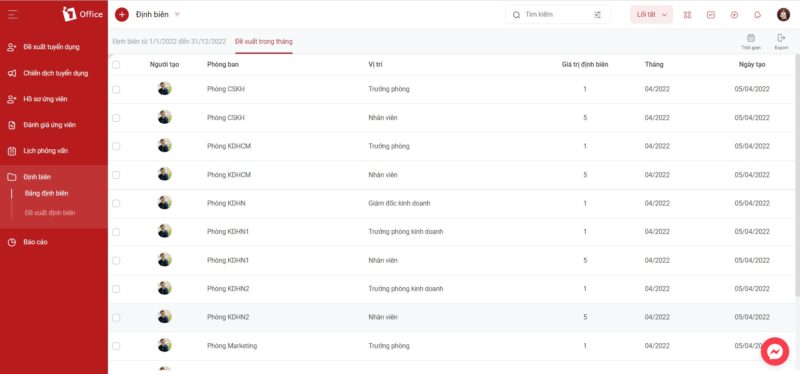
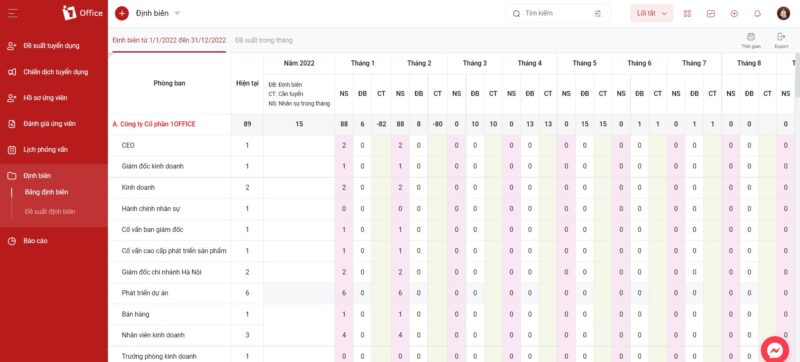
HRM Software 1Office is a comprehensive solution that helps businesses effectively implement workforce planning. With just a few simple steps, businesses can easily determine their recruitment needs for personnel with the right qualities and expertise to meet specific future job requirements.

- Easily create monthly recruitment proposals with information fields: creator, department, position, headcount value, month…
- The monthly workforce planning table helps you track the total number of personnel needed for each department
Thus, we have shared with you important information about what workforce planning is and how to apply it effectively. We hope this useful content will provide you with valuable information to apply in planning and building a comprehensive human resource strategy for your business.
For more detailed information, please see:
- Hotline: 083 483 8888
- Fanpage: https://www.facebook.com/1officevn/
- Youtube: https://www.youtube.com/channel/UCeTIRNqxaTwk0_kcTw6SxmA




