


 12/05/2026
  424 views
Churn Rate is a metric that indicates the rate at which customers stop using a product or service within a specific period. For businesses, tracking Churn Rate helps assess customer retention capabilities, forecast revenue, and detect issues in the customer experience early on. This article will help you understand what Churn Rate is, how to calculate it, and effective methods for improvement.
Mục lục
1. What is Churn Rate?

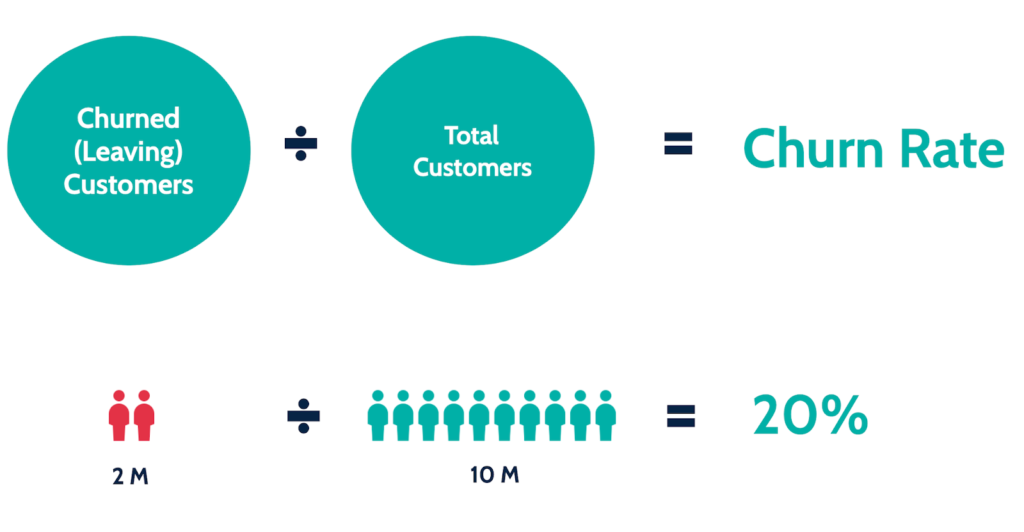
Churn Rate is the percentage of customers who stop using a company’s product/service within a specific period. In other words, Churn Rate is the ratio of customers who stop using the product/service to the company’s total number of existing customers.
Churn Rate is a crucial business metric, often applied in companies that use a subscription-based payment model. Currently, based on customer churn behavior, this rate is divided into the following two types:
- Customer Churn Rate: Measures the number of customers who stop using a company’s product or service within a specific period. It reflects the company’s effectiveness in retaining customers.
- Revenue Churn Rate: Measures the value of revenue lost due to customers stopping their use of a company’s product or service within a specific period. It reflects the financial impact of customer loss, specifically how much MRR (Monthly Recurring Revenue) the company is losing.
>> See more: What is Retention Rate? Methods to Effectively Improve Customer Retention Rate
2. The Significance of the Churn Rate Metric
Churn Rate plays a crucial role in evaluating business performance and building development strategies for a company. Here are some of the roles of this metric:
- Assessing and forecasting business “health”: Based on the Churn Rate, a company can forecast its future business situation and implement appropriate adjustments.
- Reflecting the “true” quality of the product/service: A high Churn Rate indicates that customers are dissatisfied with the product/service, and the company needs to improve its quality to meet customer needs.
- Effective customer segmentation: Churn Rate can be used to segment the customer base by the risk of cancellation, which helps in identifying the most potential customer segments.
- Building customer retention strategies: The Churn metric helps businesses identify the reasons why customers cancel products or services, enabling them to build strategies, create promotional programs, enhance service quality, personalize the customer experience, and more.

Additionally, Churn Rate also affects several other important business metrics, including:
- MRR (Monthly Recurring Revenue): When customers leave the product/service, a high Churn Rate leads to a decrease in MRR, affecting the company’s profitability and growth potential.
- CLV (Customer Lifetime Value): The revenue per user lifecycle for the company will also decrease when customers churn (high Churn Rate).
- CAC (Customer Acquisition Cost): A high Churn Rate implies that the product or service is not performing well, forcing the company to spend more money to acquire new customers.
3. Churn Rate Calculation Formula
Churn Rate is a difficult metric to capture accurately because not all customers who stop using a product or service inform the company. Furthermore, this metric can also vary among different customer groups based on demographics, geographic location, or service usage behavior.
Accurately capturing the Churn Rate will help a business better understand customer behavior, improve service quality, and increase business efficiency.
3.1. How to Calculate Revenue Churn Rate
Revenue Churn Rate is a metric that measures the percentage of recurring revenue lost due to customer cancellations within a specific period (usually a month or year). RCR helps businesses assess the financial severity of customer loss.
Revenue Churn Rate answers the question, “How much MRR (Monthly Recurring Revenue) is the business losing each month?” It is a widely used metric in B2B business models, especially the SaaS model. The formula for calculating Revenue Churn Rate is applied from MRR as follows:
| Revenue Churn Rate | = | (MRR at the beginning of the month – MRR at the end of the month) – MRR from upsells/cross-sells |
| MRR at the beginning of the month |
Where:
- MRR at the beginning/end of the month: Total monthly recurring revenue from all customers as of the beginning and end of that month.
- Upsell/cross-sell MRR: Revenue from upselling or upgrading service packages from existing customers during that month.
3.2. How to Calculate Customer Churn Rate
Customer Churn Rate is a metric used to measure the percentage of existing customers who leave, reflecting the stability of the company’s customer base. This metric is often applied to B2C businesses, directly reflecting the quality of products and services in the eyes of customers.
Customer Churn Rate answers the question, “How many users is the business losing over a specific period?”. Apply the following formula:
| Customer Churn Rate | = | Churned Users in the month | = | Churned Users in the month |
| Users at the start of the month | (Users at the start of the month + Users at the end of the month)/2 |
Depending on different cases, businesses will choose the appropriate Customer Churn Rate formula. However, the limitation of the first formula is that it can easily misrepresent the product churn level when the product experiences user growth. Conversely, using the second formula will help you “neutralize” user growth over a specific period (1 month)
4. Notes on Analyzing Churn Rate
When analyzing Churn Rate, businesses should note the following points to ensure accurate and effective results:
- Determining the appropriate type of Churn Rate, whether it’s Customer Churn Rate or Revenue Churn Rate, will help you more accurately assess the impact of customer loss on the business.
- Define the analysis period by month, quarter, year, or any other timeframe that suits your analysis goals. It is also necessary to ensure consistency in using the timeframe when comparing Churn Rate across different periods.
- Analyze by customer segment because Churn Rate can vary between different customer segments (e.g., by age, region, service type). This helps identify customer groups with a high risk of churning to focus retention efforts on them.
- Identify the reasons for churning using methods such as surveys, interviews, collecting online feedback, etc., to better understand why they churn and then develop appropriate improvement solutions.
5. 6 Ways to Improve Churn Rate – The Customer Attrition Rate

Method 1: Enhance Customer Service
Excellent customer service not only helps retain existing customers but also attracts potential ones. By ensuring that all customer issues and requests are resolved quickly and effectively, you can build trust and satisfaction, thereby reducing the churn rate.
Method 2: Personalize the Customer Experience
Each customer has unique needs and desires. By personalizing the experience, you create a more intimate environment for customers, increasing their interaction and commitment to your product or service.
Method 3: Exclusive Privileges for Existing Customers
Creating special offers and promotional programs exclusively for existing customers is an effective way to increase loyalty and reduce the likelihood of them switching to competitors. For example, create special offers such as discounts, gifts, reward points, or free shipping exclusively for current customers. This shows appreciation and care, encouraging them to continue purchasing and using your services.
Method 4: Provide Thorough Training for the Sales Team
A professional sales staff knowledgeable about the product and service will be able to advise and support customers in the best way possible. This creates a good impression and helps maintain a long-term relationship with customers.
Method 5: Improve Product and Service Quality
Feedback from customers helps you better understand what they expect and need. By continuously improving product and service quality, you not only meet customer needs but also increase their satisfaction and loyalty.
Method 6: Use a Customer Management Tool
Customer management software helps you track and manage customer relationships more effectively. You can create interaction strategies based on customer data, thereby enhancing engagement and reducing the churn rate. For example, in some businesses today, using the 1Office CRM customer relationship management software has helped them accelerate the sales lifecycle and effectively increase conversion rates.
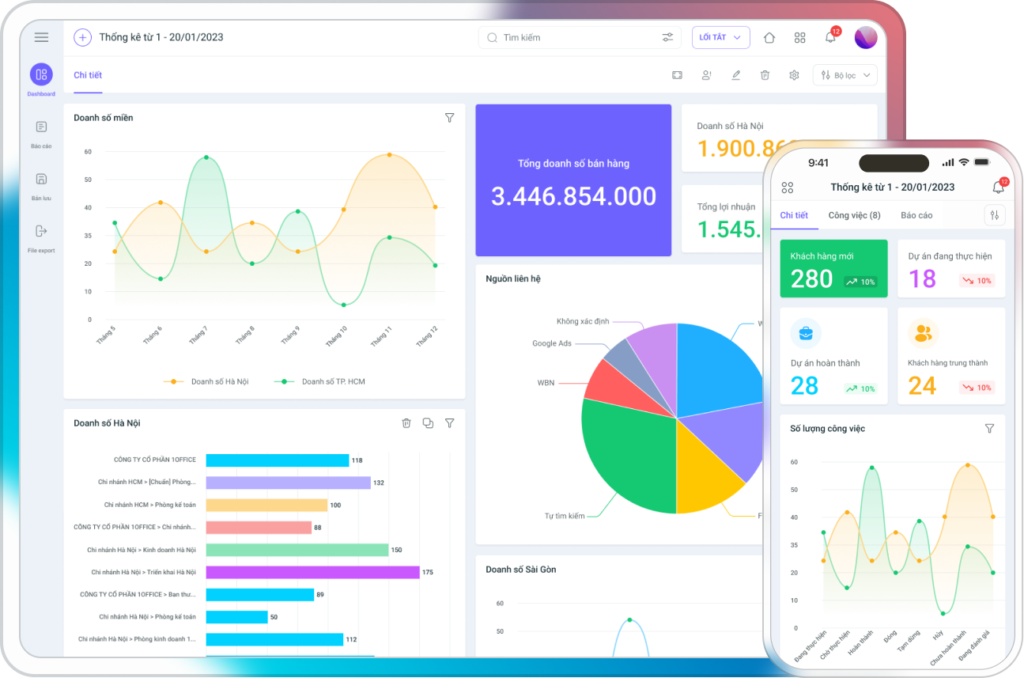
Sign up to experience the 1Office CRM software – A comprehensive customer management tool that minimizes customer churn.
6. Frequently Asked Questions
What is a good Churn Rate?
A “good” Churn Rate depends on many factors, including:
- Business type: B2B businesses typically have a lower Churn Rate than B2C.
- Customer Lifetime Value (CLV): A high CLV allows a business to accept a higher Churn Rate.
- Industry: Some industries have higher Churn Rates than others.
- Business goals: A business focused on rapid growth may accept a higher Churn Rate than one focused on profitability.
However, in general, a Churn Rate below 5% is considered good for most businesses. Businesses need to monitor their Churn Rate regularly and compare it with benchmarks to evaluate business performance.
Negative Churn Rate?
A negative churn rate occurs when the number of new customers gained is greater than the number of customers who cancel the service within a specific period. This is a positive indicator that the business is effectively attracting customers and retaining them well.
















