12/05/2026
  459 views
Talent Acquisition is an increasingly popular concept in modern HR, but not everyone clearly understands how it differs from traditional recruitment. This article will help you understand the role, tasks, and practical value of this position.
Mục lục
1. What is Talent Acquisition?

Talent Acquisition, also known as attracting talent, is a term in the HR industry that refers to building relationships with potential candidates who are suitable for vacant positions within a company by building the corporate image. It also involves creating a system to find and develop capable individuals to become suitable for the company’s current and future recruitment needs.
This work is continuous, ensuring a quality human resource pool to serve the business in the long term. It is a new recruitment method, differing from traditional recruitment in its long-term and strategic nature.
2. Differentiating Talent Acquisition from Traditional Recruitment
In the first section, we understood the concept of Talent Acquisition. In this section, the article will help you differentiate between Talent Acquisition and Traditional Recruitment.
Traditional recruitment typically involves short-term campaigns, consisting of basic, self-contained activities such as recruiters advertising job openings. After candidates apply for positions, the process moves to screening resumes. Then, candidates are scheduled for interviews, and finally, a suitable person is selected.
Talent Acquisition is also a recruitment method, but it differs from conventional recruitment in its strategic nature. Talent Acquisition aims to build an employer brand in the labor market. This helps the company attract a pool of followers. Communicating the values the company creates, combined with building relationships with human resources, helps the business form a potential talent pool. This approach provides the company with a sustainable, long-term supply of talent.
See more: HOW TO BUILD AN HR DEPARTMENT FOR SMEs
3. The Significance of a Talent Acquisition Specialist in a Business

As mentioned above, Talent Acquisition is a long-term process with a strategic vision for before and after recruitment. Talent Acquisition is not just about finding personnel for current positions; it is a process that includes sourcing candidates, screening, selecting personnel, and continuing to follow up with unselected candidates to potentially recruit them for a future position.
In other words, Talent Acquisition helps businesses create a sustainable candidate pool, preparing human resources for long-term operations rather than being confined to a short-term recruitment drive. Moreover, by building its image and brand with candidates, the company also promotes its name and reaches more customers.
>> See more: Senior-level recruitment: Costs? How to recruit? Mistakes to avoid
4. Why Talent Acquisition is Gradually Replacing Traditional Recruitment
In traditional recruitment, there is a relatively common ratio of 15/5/3/1. This means that for every 15 applicants, 5 are interviewed, the company selects 3, and ultimately signs a contract with 1. Thus, for each recruitment drive, a company needs many candidates to find one suitable person.
Furthermore, to get a pool of applicants, companies have to post job ads on channels like Facebook, job service websites, etc., which costs a significant amount for intermediaries. Combined with the considerable costs of advertising on social media and websites, we can see that traditional recruitment is very expensive and only solves the immediate staffing problem.
In contrast, Talent Acquisition allows a business to select personnel for both the short and long term, thanks to the process of tracking and nurturing candidates. It helps the company establish its brand in the minds of candidates and save on recruitment costs. Although it takes effort to build, this method delivers a quality that is far superior to both headhunting and standard recruitment.

5. How to Apply Talent Acquisition in a Business

First and foremost is enhancing the company’s employer brand. To build a good relationship with potential candidates, you must ensure they have a positive impression of the company from the very first images they see. To achieve this, the company needs a professional recruitment website that fully displays company information, specific details about job openings and related benefits for full-time employees, and social media accounts like Facebook, LinkedIn, etc., to create high engagement with candidates.
Next is building a candidate pool. It can be said that recruitment activities are no longer about sitting and waiting for candidates to arrive. Instead, Talent Acquisition specialists need to be proactive in searching for candidates on social media or online community forums.
Additionally, recruiters should not overlook seminars, workshops, and networking events to find promising candidates. Another source for building a potential candidate pool is the candidates who were rejected in previous recruitment drives. Selected candidates need to be tracked by HR, and relationships should be built with them for easy contact when there are staffing needs.
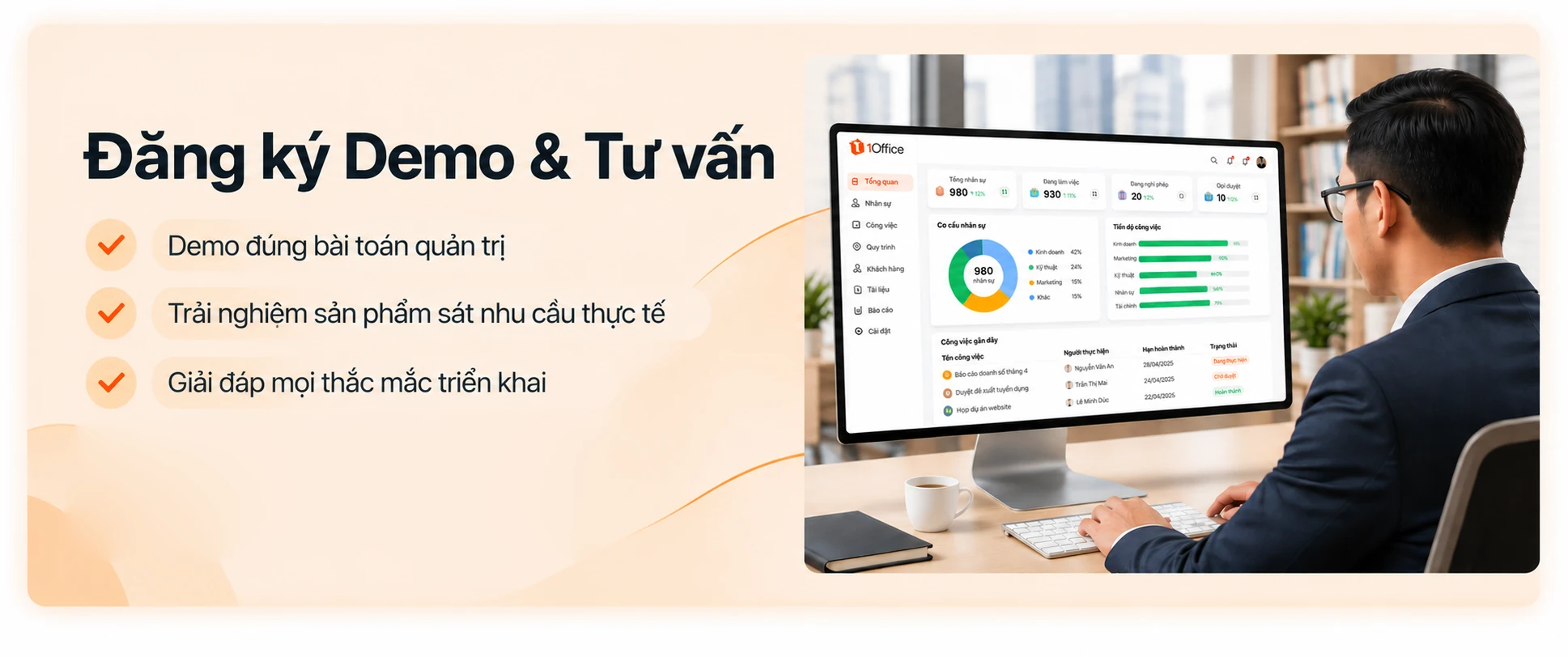
Today, technological development has impacted every area of business. Organizations can use HR management software to easily create HR management campaigns, supporting the selection and management of the recruitment process completely automatically.
Conclusion
We hope this article from 1Office has provided you with some general knowledge to understand what Talent Acquisition is and why businesses need to optimize their resources. How can you avoid missing out on promising candidates? Additionally, if your business needs methods and tools to optimize resources, you can leave your information after clicking the button below for a free consultation.
Contact us:
- Hotline: 083 483 8888
- Website: https://1office.vn/
- Fanpage: https://www.facebook.com/1officevn
See more related articles:
Onboarding and things HR professionals should know
Differentiating between Recruiters and Headhunters in recruitment