


 13/05/2026
  548 views
A business operating system is like the backbone of an organization – connecting all activities, people, processes, and technology to create value. A well-designed system not only helps the business run smoothly but also opens up opportunities for sustainable growth, minimizing waste, and optimizing productivity.So, where do you start when building a business operating system? What operating models are commonly used worldwide? Let’s find out with 1Office in the following article.
Mục lục
- 1. What is a business operating system?
- 2. 6 Steps to Build a Well-Structured Business Operating System
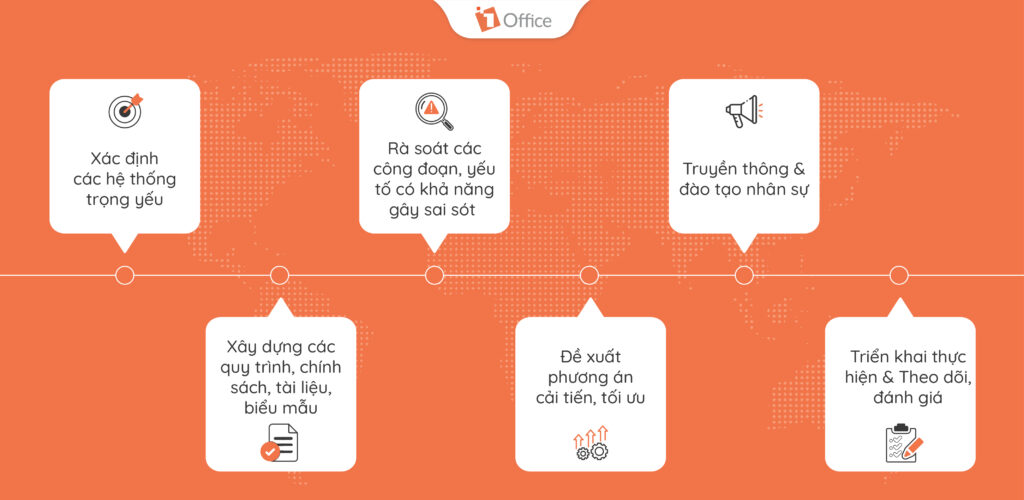
- Step 1. Identify key activities in the operating system
- Step 2. Develop processes, policies, documents, and forms
- Step 3. Review stages and factors that could potentially cause errors
- Step 4. Propose improvement and optimization solutions
- Step 5. Communicate and train personnel
- Step 6. Implement, monitor, and evaluate
- 3. What models do businesses operate on?
- 4. Example of a successful business operating model
- 5. 1Office – The market-leading solution for business operations automation
- Frequently Asked Questions about Business Operations
- 7. Conclusion
1. What is a business operating system?
A business operating system is the entirety of activities, processes, tools, and people coordinated to run an organization effectively. It is the “lifeblood” that helps a business maintain stable operations and achieve sustainable growth.
Regardless of size or industry, a well-structured operating system must be built on the following 4 foundational pillars:
Processes
Processes are the links that help the operational machinery run smoothly. They connect the organization’s individual, separate activities into a unified whole to produce specific results. Processes define the steps employees must follow to maintain and ensure work performance. A well-defined, clear process ensures that activities are carried out in the correct sequence and minimizes errors.
For example: Proposal approval processes, recruitment processes, or internal task assignment and acceptance processes all need to be standardized to avoid errors and repetition.
People
No system can function without the human element. From leadership to operational staff, every individual is a crucial link. An effective system must ensure that personnel clearly understand their roles, are properly empowered, are well-trained, and are aligned with common goals.
Equipment and Management Software
Technology and machinery are indispensable tools in business operations. An operating system lacking tools and equipment will find it difficult to grow and improve labor productivity. For modern businesses, ERP systems are increasingly being widely applied. With smart technology, this management software provides a comprehensive overview, helping managers systematize operational processes for departments, as well as monitor, evaluate, and improve the operational processes of any unit.
Infrastructure
From offices and machinery to network connectivity and the work environment – infrastructure provides the physical conditions for processes to be executed smoothly. Businesses need to ensure reasonable and synchronized investment to avoid creating “bottlenecks” in operations.
See more: 4 management functions you need to know when running a business
2. 6 Steps to Build a Well-Structured Business Operating System
A well-structured operating system doesn’t form on its own. Businesses need a clear implementation roadmap – from identifying core focuses to standardizing processes and continuous improvement. Below are 6 essential steps to build a solid operating system for any organization.
Step 1. Identify key activities in the operating system
An organization’s operational flow is defined by a series of processes and tasks. Among these, functional activities play a leading role in the operating system, determining the business’s performance. The manager’s task is to identify which are the main activities that directly create value and which are supplementary activities that help “lubricate” the operational machinery and support the main activities.
Typically, a business operating system revolves around the following key activities:
- Production
- Supply Chain
- Logistics
- Marketing & Sales
- Service
A commonly applied formula for identifying key activities and functions in a business model is the Pareto principle, also known as the 80/20 rule. This principle states that 20% of activities will determine 80% of the results. Based on this, managers will focus on the key 20% of activities to develop the business operating system.
Step 2. Develop processes, policies, documents, and forms
Processes determine the sequence and manner in which activities are performed to produce a specific output. Employees must strictly adhere to and follow the processes to create a synchronized and unified operational flow within the organization.
To build a standardized process, managers can follow the BPM Life Cycle model:
- Process Design: Determine which stage needs to be done first, which will be performed later, and the relationship between tasks
- Process Modeling: Model the process in the form of diagrams and flowcharts with illustrative drawings and specific instructions
- Process Implementation: Apply the process to the operational activities of departments
- Monitoring and Evaluation: Assess the quality and effectiveness of the process by tracking work performance and output results
- Adjustment and Optimization: Improve any unreasonable points in the process
Establish regulatory policies to align employee behavior and awareness with company standards. Policies that need to be issued include: workplace regulations, reporting/accountability responsibilities, work assignment regulations, etc.
Additionally, documents and forms for all operational tasks should be well-designed to serve as resources for employees and as evidence of the company’s activities.
Step 3. Review stages and factors that could potentially cause errors
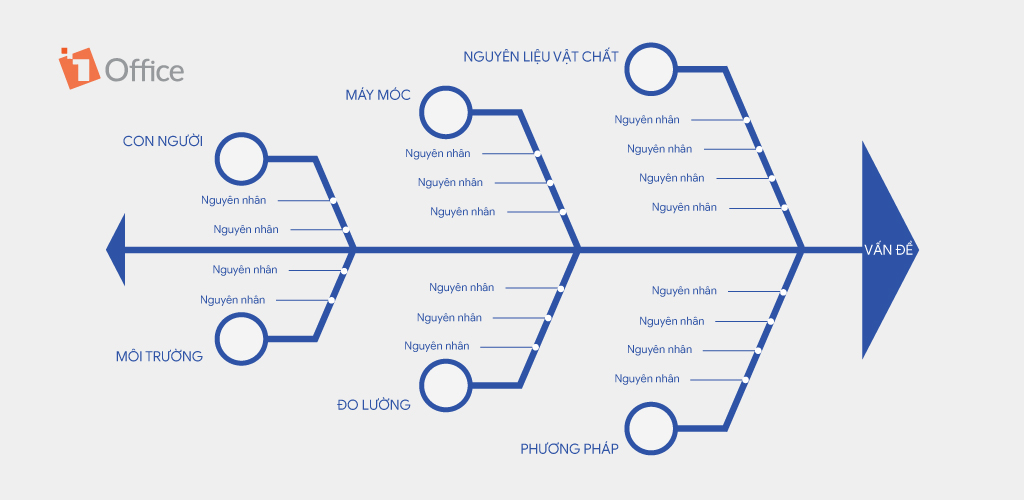
In the next step, it is necessary to review all elements within the business management system to identify errors and potential risks that could affect operations. To identify the root causes of potential errors, managers can use the Ishikawa cause-and-effect diagram (fishbone model). In this model, the causes of a problem are categorized into 6 basic groups:
- People
- Materials
- Machinery
- Methods
- Measurement
- Environment
Step 4. Propose improvement and optimization solutions
Solutions to address errors and outstanding issues in the operational model will be developed based on the factors identified in the fishbone diagram, corresponding to the 6M criteria.
Step 5. Communicate and train personnel
After the operational system is finalized, the next step is to communicate with and train the staff – the people who will “activate” and put the operational machinery into action. It is essential to ensure that all employees clearly understand their functions and responsibilities in the operation and are provided with all the necessary tools and instructions to perform effectively.
Step 6. Implement, monitor, and evaluate
The final step is to put the business operational system into practice, applying it to daily production and business activities. It should be noted that no operational system is perfect from the start. Therefore, the manager, in their role as a key leader, must constantly monitor and evaluate the system’s effectiveness to make improvements and changes that align with the company’s development needs.
A professional and well-structured operational system will be evaluated based on the following criteria:
- Activities and tasks are specialized.
- Departments and divisions can connect and support each other in performing tasks.
- There are no breakdowns or interruptions in the process.
- Resources are used efficiently with optimal productivity.
| Read more: What is Micromanagement? Should You Apply Micromanagement in Your Business? |
3. What models do businesses operate on?
Businesses today primarily operate based on two core models: automated digital operations to optimize performance and flexible work (WFA) to adapt to the modern remote work trend.
The automated, digital model – an inevitable trend in operational management
Currently, along with the strong digital transformation wave in the market, the automated, digital business operating model is becoming an inevitable trend in operational management. This operating model has brought businesses into the era of digital technology with a work style that is many times more streamlined, efficient, and powerful. The major improvement in this modern business operating model compared to traditional models lies in 2 factors:
- Automation: Automating steps in the workflow, replacing human labor with machinery and artificial intelligence, helping to cut down on all manual tasks and free up the workforce.
- Digitization: Digitizing all business-related data and information onto cloud computing platforms and server systems, aiming to build a paperless office, and enabling management and work with data and information anytime, anywhere.
WFA – The business operating model of the future
Since the COVID-19 pandemic, the WFA – Work From Anywhere model has become the new operational standard for millions of businesses worldwide. This model not only helps save office costs but also creates flexible working conditions and retains talent.
- WFH (Work from home) – Work from home
- Satellite Office – Satellite Office
- Neighborhood – Shared office
- Mobile Worker – Mobile work
To successfully apply this model, there are 2 important factors that businesses need to focus on:
- Building a suitable human resource management model: Because the nature of the WFA model is to allow employees to choose their work environment and space. Therefore, the key point is how to engage the team and ensure work performance even without meeting in person.
- Supporting technology: With the WFA model, technology is the key factor determining success. It is the tool employees use daily to work and connect with each other. To ensure the model operates effectively, businesses need to be well-prepared in terms of network systems, transmission lines, and work software.
4. Example of a successful business operating model
Facebook (Meta) is a prime example of a modern, flexible, data-driven operating system. Their global success comes not only from their technology products but also from how they organize and operate a large-scale apparatus with high efficiency.

Operational management at Facebook is developed and maintained based on strategies and goals of efficiency and continuous improvement in all areas the company pursues.
- Product improvement: Part of Facebook’s development strategy is to continuously innovate its products. Constantly releasing new updates to optimize the user experience and meet user preferences is considered a strategic approach to ensure the company’s long-term competitiveness. Additionally, the philosophy of continuous improvement in operations helps Facebook fix product flaws and become more complete.
- Process automation: As an owner of online products, Facebook decided to apply an automation model in its operations. With the resources of a tech company, Facebook has developed an AI system to “track” users, record their interests and habits to automatically provide suitable recommendations. In addition, Facebook’s virtual assistants are also a key strategy for user retention. The application of technology in automation is the core factor that helps Facebook optimize the customer experience and establish its position as a leader in the technology market.
- Strategic location: Facebook’s operational management goal is to optimize access to resources and markets. In Facebook’s case, market access is not an issue as the company’s social media services are accessible worldwide via the Internet. Therefore, Facebook focuses on building a system to connect with resources in the quickest and easiest way. The company’s headquarters is located in Silicon Valley, which provides optimal access to equipment suppliers, the labor market, energy, and suitable operating conditions.
- Human resource development: Facebook’s operating model is people-centric. Therefore, the company’s goal is to maintain a professional and high-potential workforce for its online media business. For example, Facebook uses a continuous recruitment strategy and implements internship programs that allow students to work at the company’s offices.
5. 1Office – The market-leading solution for business operations automation
In a business’s structure, technology is one of the key factors determining the success or failure of its operating system. Therefore, more and more businesses are willing to invest in management software to apply to their operational framework.
1Office is not just software, but an integrated business operations platform:
- Lowcode Platform – Allows businesses to build processes as imagined: drag – drop – create tasks without coding
- Smart AI Agent – Automatically suggests, reminds, creates reports, and checks for errors, helping to reduce manual tasks and increase processing speed
- All-in-one toolkit: Human Resources (HRM), Work, Finance (CRM – Sales – Orders), Internal Communication, etc.
It can be said that 1Office is a modern management software that provides the most in-depth toolkit for managers to confidently operate their businesses effectively, helping to save time and reduce operational costs.
Frequently Asked Questions about Business Operations
How to know if the current operating system is effective?
Businesses can evaluate through KPIs, work completion rates, processing times, and coordination between departments.
What are common mistakes when building an operating system?
Common errors include non-standardized processes, lack of clear authorization, not measuring performance, and implementing unsuitable technology.
Do small businesses need to build a formal operating system?
Yes. Despite their small scale, businesses still need an operating system to control work, reduce errors, and facilitate future expansion.
What technologies are commonly used to optimize business operations?
Tools like ERP, CRM, HRM, and process management help businesses automate operations and synchronize data; with 1Office, you can manage everything on a SINGLE platform that integrates a flexible AI Agents system and No-code platform to help businesses save costs and reduce dependency on IT.
Register for a free feature demo!
What is the difference between an operational process and an operating system?
A process is the individual steps to perform a specific task, while an operating system is the overall structure comprising processes, people, tools, and infrastructure.
7. Conclusion
Through the article above, 1Office has provided readers with the most comprehensive perspective on how to operate a business. At the same time, it offers a superior technology solution to help leaders run their businesses effectively. For a free consultation and to experience a trial of the leading business management software today, please contact us with the following information:
















