


 13/05/2026
  236 views
The hotel industry has become increasingly popular in recent years. Becoming a skilled hotel manager is not easy. It requires you to have the necessary professional knowledge and skills. This article will help you shorten the time it takes to become a manager through the 4 effective hotel management methods below.
Mục lục
What is Hotel Management?
Hotel management is managing tasks and projects related to the operational cycle of a hotel. From managing revenue and expenses, and being responsible for customers, to business operations… The manager must also be concerned with arranging personnel effectively. They must understand how the reception checks in guests, how housekeeping serves rooms, and so on.
A manager will need professional knowledge in advertising, finance, and customer service. This makes it easier to coordinate implementation. At the same time, they also need to establish disciplinary standards and set an example for employees. Trends in the hotel industry change daily. Therefore, the owner must have effective hotel management methods to adapt and respond appropriately.
Major Challenges in Hotel Management
Every industry has its own pressures and difficulties. The challenges of the hotel industry come from many different factors. These can be: customers, employees, tasks, competitors…
-
Customer Complaints
The customer is king. But the king is not always satisfied with what you serve. Frustration with room cleaning occurs very often. They are dissatisfied with the room quality, the decor, the cleanliness…

Complaints can also arise from issues like lost luggage or employee attitudes. These reasons mostly stem from poor asset control and customer service. Many customer incidents arise from seemingly trivial reasons. The manager needs to pay attention and understand the customer to resolve issues as thoroughly as possible.
-
Overworked Staff
The situation where some people work while others don’t is common in many hotels. This is because mid-level managers don’t have templates to summarize each employee’s work. Managers only assign tasks verbally or through traditional chat methods. Therefore, the workload is not distributed reasonably. And sometimes, staff avoid or pass on tasks, leading to work overload for others.
The sales department accepts guests but doesn’t immediately transfer the information to the reception department to assign rooms. When they transfer too many guests at once, the housekeeping department becomes reactive. And an overload of assigned rooms leads to an overload of guests, causing incidents. This is a typical example of unreasonable work arrangement that negatively affects the hotel.
-
Financial Losses
Financial transparency is something every hotel desires. But not everyone can achieve it. Especially for small and medium-sized hotels that manage finances manually or through spreadsheets. Receptionists or cashiers can collude to enter incorrect data, falsifying the revenue collected for that shift. This is truly an alarming situation that hotel owners and managers need to consider and address.
The hotel industry is full of potential but also many challenges. Managers must always stay updated on trends and come up with effective hotel management methods to coexist and grow.
Simple Hotel Management Methods
-
Control Tasks
Controlling employee tasks helps managers understand the situation and provides a basis for proposing the next steps. There are many different ways to control tasks in a hotel. The administrator can manage by job title, position, project, or by the target to be achieved. Each task will have a different completion time. The administrator evaluates based on the progress and quality assessment criteria of the task.
Besides dividing tasks for control, managers need to know how to assign tasks and delegate authority. This means defining who will do what, to what extent, and who has oversight over whom. This will help limit overlapping tasks, ensuring that both the assigned person and their management department are aware of the task to help each other complete it.
-
Observe and Listen
To avoid unnecessary customer incidents, a manager must be very subtle in observing and listening. Observe to see the customer’s attitude and reaction to the hotel’s service quality. Listen to the surroundings to gain a multi-faceted understanding of the cause of the incident. This skill is extremely necessary, helping the manager to remain calm to consider and investigate. From there, they can propose appropriate solutions.
-
Communicate and Interact
It’s impossible to fully understand why employees behave a certain way without communicating and interacting with them. Internal interaction helps managers grasp employee psychology, offering them useful insights and advice. When the entire hotel system communicates and interacts, work becomes less rigid. This contributes to promoting internal cultural activities, helping staff bond with each other and increasing their loyalty to the company.
Leveraging the advantages of the 1Office management platform in hotel management
Industry 4.0 has taken over, and managers need to fully leverage the advantages of management software to optimize their work. The 1Office comprehensive management platform for the hotel industry was created to thoroughly address the limitations of this sector. Specifically:
-
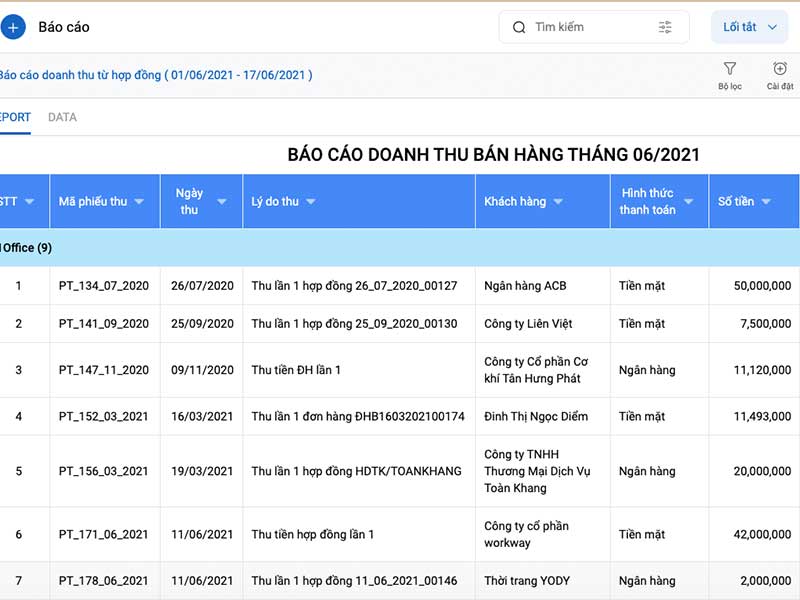
Strictly control inventory and financial revenues/expenditures
Struggling with financial and material losses? Now, 1Office provides an effective inventory and sales management system. All equipment issue/receipt vouchers are created online, with assigned permissions for management and approval, preventing fraud. Notably, the sales management system records customers and rooms based on actual revenue, which cannot be edited, ensuring that sales revenue is accurately maintained.
-
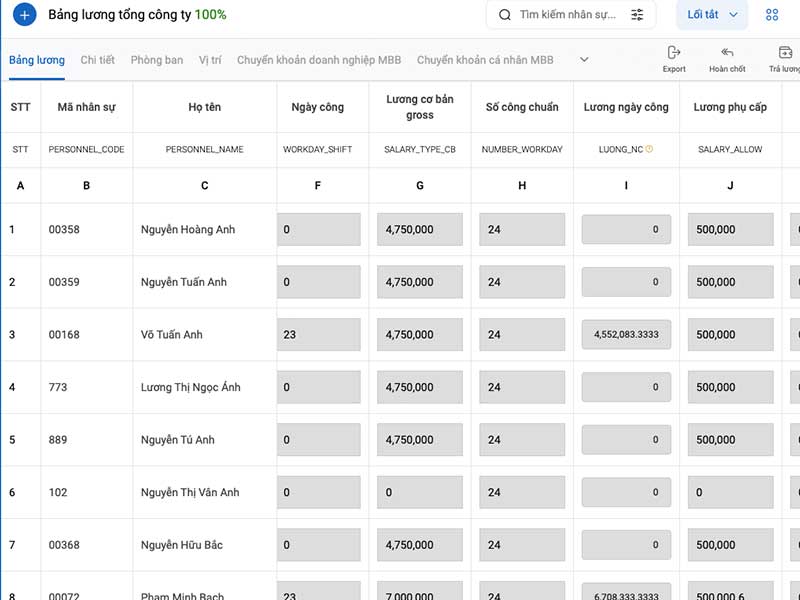
Timekeeping for multiple shifts, automatically linked to payroll
A major challenge in the hotel industry is the large number of different shifts and varying staff schedules. Day shifts, night shifts, straight shifts, split shifts… How can you track and compile all this? 1Office has optimally solved this by automatically transferring data from various shifts into the timesheet and accurately linking it to the payroll. You no longer need 2-3 employees for compilation; now, one system can do it all.
-
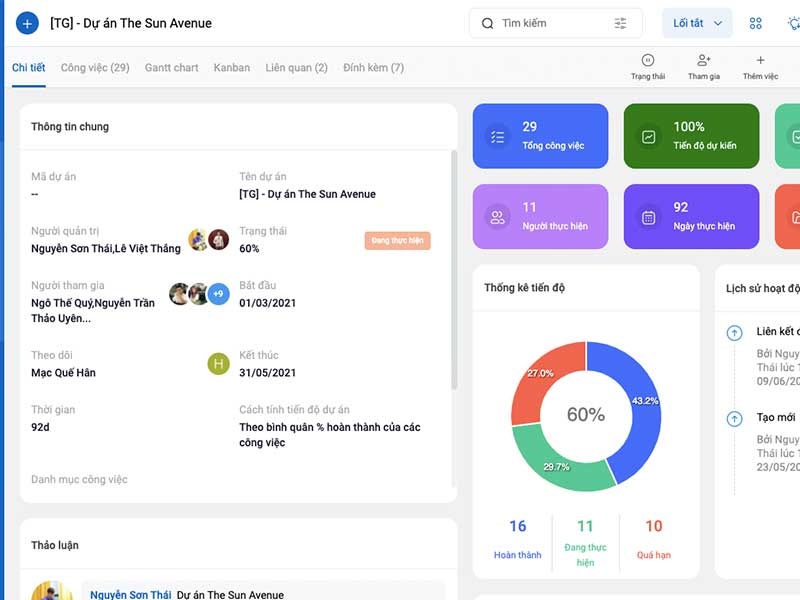
1Office allows for flexible work management
The Workplace module helps you manage work and your business remotely. You can assign tasks by project or by employee. With Gantt chart and Kanban views, it’s easy to see the entire work progress of your staff. Moreover, employees can interact and provide feedback on work quality to their managers on the same platform. This helps shorten work time and increase productivity.
- Build interaction and internal culture
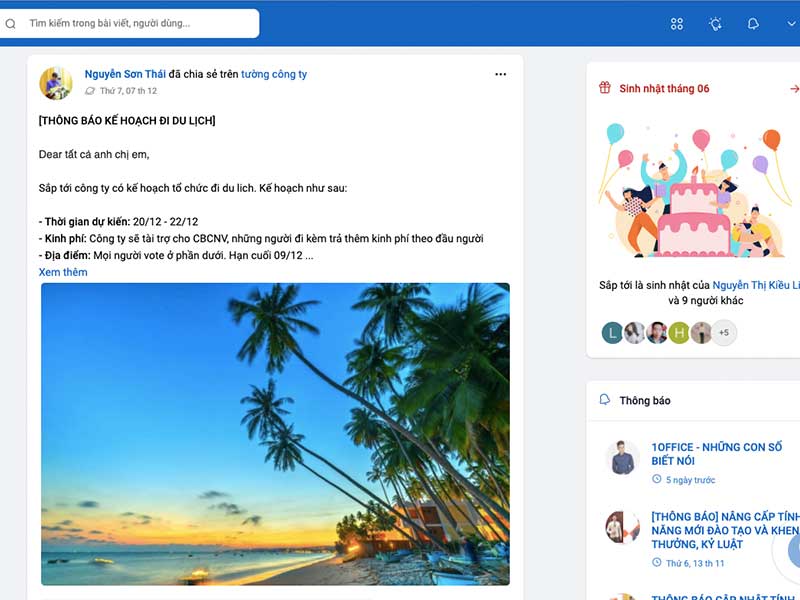
1Office has a Social feature – like an internal social network for the hotel system to interact and discuss directly. You can build internal cultural activities on it, or create discussion posts. Instead of employees having to switch to a Facebook group for internal information, a Zalo group for interaction, or a chat box… now, they can do it all on one screen. This saves time and avoids work distractions.
Conclusion:
There are many effective hotel management methods. Managers need to be discerning and flexible to select and apply them appropriately. Contact 1Office – The comprehensive management platform for hotels or call 083 483 8888 for the most dedicated consultation.
















