


 11/05/2026
  12622 views
In the course of business, late payments from customers or partners are almost unavoidable. At this point, a debt payment request form plays a crucial role in helping businesses send reminders and reconcile debts in a professional and clear manner.
The article below compiles the 5 latest templates, complete with free downloadable files and detailed writing instructions.
Mục lục
- 1. What is a debt payment request form?
- 2. Compilation of the 05 Latest Debt Payment Request Forms
- 3. How to Fill Out a Payment Request Form to Send to Customers
- 4. What to Note When Creating a Debt Payment Request?
- 5. Strategy for Tracking and Managing Debt After Sending a Payment Request
- 6. How to Handle a Customer Who Doesn’t Respond to a Payment Request?
- 7. Frequently Asked Questions
- 8. Conclusion
1. What is a debt payment request form?
A debt payment request form is a document sent to a party that is late with payment or nearing the payment deadline, with the purpose of prompting payment as agreed in the contract.
A debt payment request form is typically used after a business has delivered goods or provided services to the buyer, and subsequently requests the buyer to pay the costs as stipulated in the contract.
2. Compilation of the 05 Latest Debt Payment Request Forms
2.1 Debt Payment Request Form Template
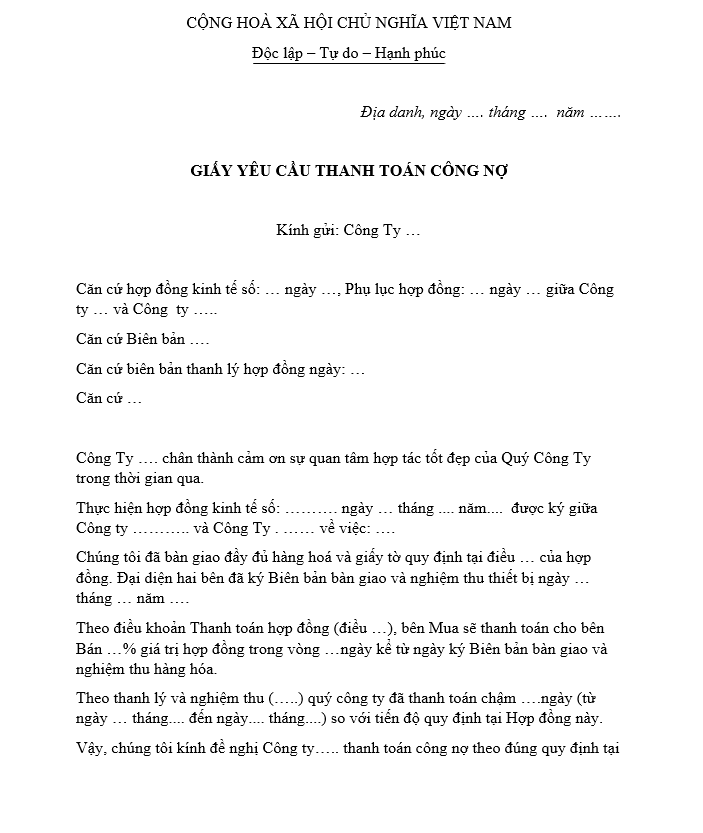
Download debt payment request template #1
2.2 Debt Payment Request Form Template by Invoice
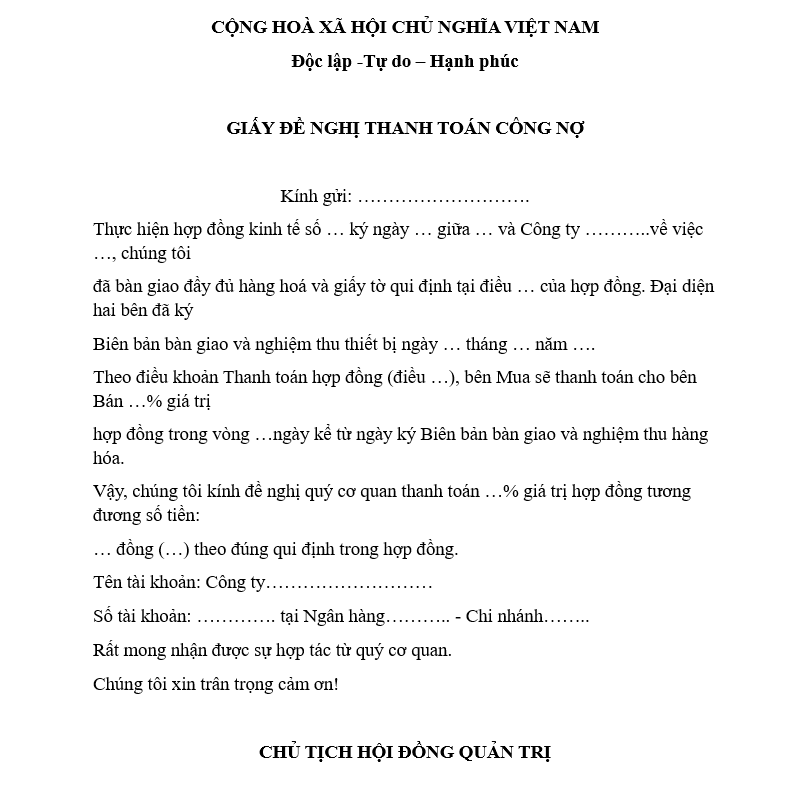
Download debt payment request template #2
2.3 Official Letter Requesting Debt Payment Template
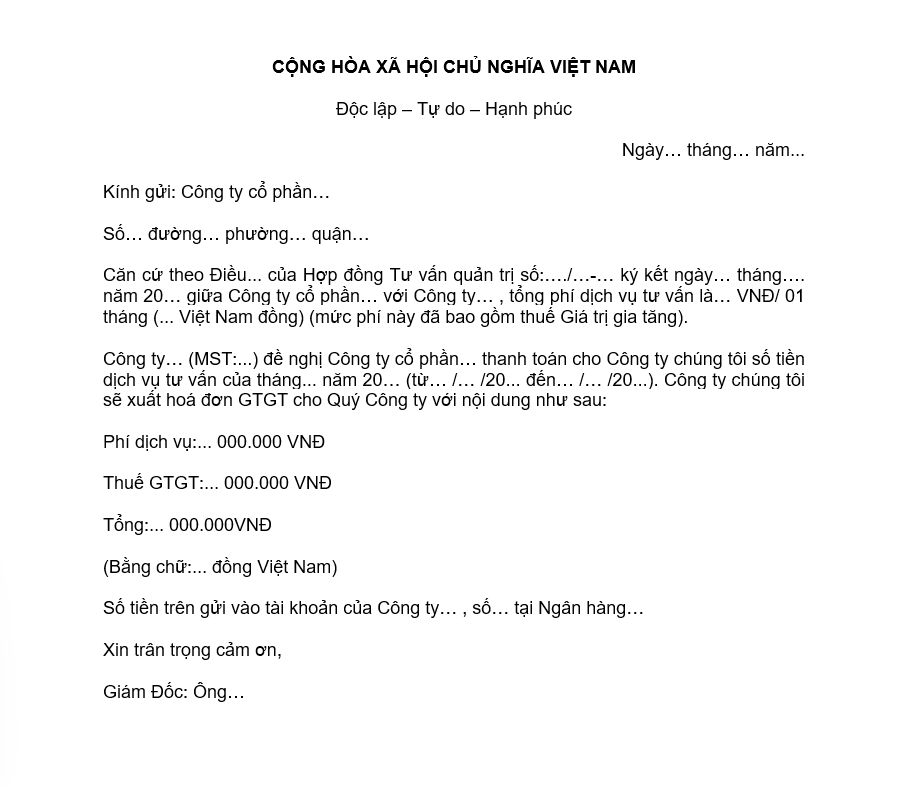
Download debt payment request template #3
2.4 Payment Request Template #4
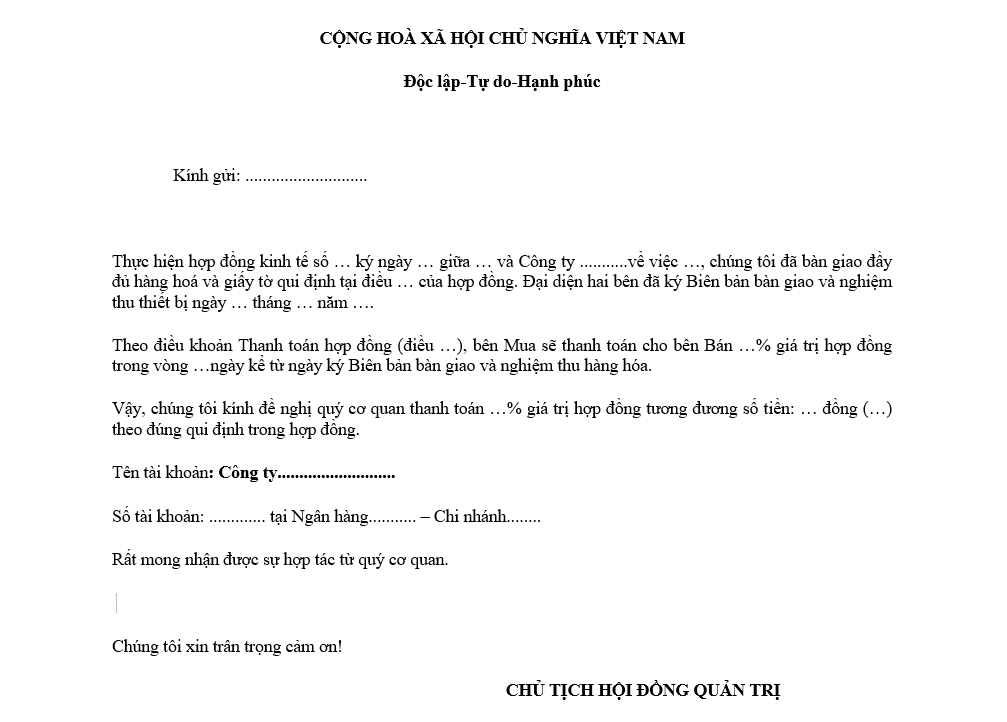
Download debt payment request template #4
2.5 Payment Request Letter Template
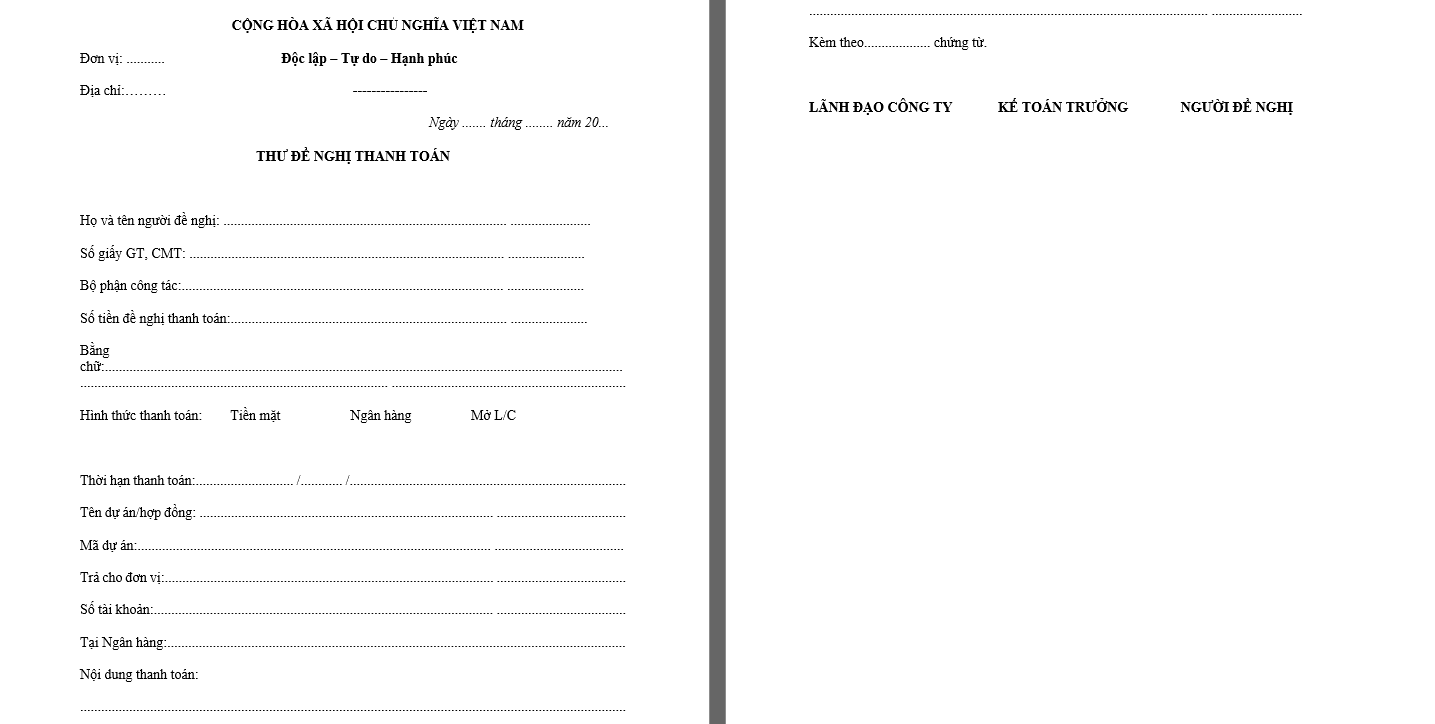
Download debt payment request template #5
3. How to Fill Out a Payment Request Form to Send to Customers
A payment request form must adhere to the following standards and conditions regarding content and format:
Regarding the format, the payment request form must meet all the following requirements for style and language:
- Use formal and professional language (correct grammar, spelling, appropriate vocabulary, and proper sentence structure). The document must accurately convey its intended message.
- The presentation format must include all necessary content and adhere to standard document conventions.
Regarding the content, there may be different payment request form templates depending on the specific case. However, in general, payment request forms sent to customers should include the following main components:
- Name of the unit, business, and department requesting payment.
- Full name and department of the individual requesting payment.
- The main content of the form, which includes documents related to the payment.
- Clearly state the total amount requested for payment in both numbers and words to serve as a basis for payment.
- The number of original documents attached, and submission of invoices/vouchers or copies of invoices.
See also:
- Latest Debt Reconciliation Record Template 2025【Compilation】
- 7 Most Accurate and Effective Debt Management Software in 2025
4. What to Note When Creating a Debt Payment Request?
When creating a debt payment request, the requesting party must ensure that all detailed information regarding the contract number and the specific terms of each section of the previously signed contract is included.
The request must clearly and fully state the names and addresses of both businesses. Additionally, the debt payment request document must specify the date the contract was signed by both parties.
The contract must clearly state the amount the partner needs to pay the business, written in both numbers and words. When sending the payment request to the customer/partner, the debt payment request form must provide full and detailed information about the requesting party’s bank account so the buyer can make the payment via bank transfer.
5. Strategy for Tracking and Managing Debt After Sending a Payment Request
Sending a debt payment request is just the first step. It is more important to track and manage the debt afterward to ensure the customer pays on time. If this stage is overlooked, the business may face delayed cash flow, the emergence of bad debt, and difficulty controlling financial reports.
An effective management strategy often begins with creating a detailed tracking list for each debt: amount, due date, and response status. Then, the accountant should proactively send a reminder 3–5 days before the due date via email or phone, allowing the customer time to prepare. For overdue payments, it is necessary to proceed to the formal reminder stage (resending the request with a gentle warning about the consequences of late payment).
To improve efficiency, many businesses use debt management software. The software allows for real-time tracking of each debt’s status, automatically sends due date reminder emails, and even integrates cash flow reports. This helps minimize the risk of oversight and saves the accountant’s effort.
Managing debt after sending a request is not just about “sitting and waiting for the customer to pay,” but requires a systematic process: tracking – reminding – reconciling – handling. This approach helps ensure stable cash flow and limits the occurrence of bad debts.
6. How to Handle a Customer Who Doesn’t Respond to a Payment Request?
When a customer does not respond to a debt payment request, the accountant should not let the situation drag on. Instead, there should be a clear, step-by-step process, ranging from gentle to firm.
Method 1. Call or email as a reminder:
- How-to: Contact the customer directly within 3–5 days of sending the request.
- Note: Maintain a polite tone, emphasize the due date, and ask for the reason for the delay.
Method 2. Resend the payment request with a debt reminder letter:
- How-to: If there is still no response, draft a formal debt reminder letter, clearly stating the amount, due date, and the basis (contract/invoice).
- Note: Include the company’s signature and seal to increase its legal standing.
Method 3. Set a final deadline (Payment Deadline):
- How-to: Send a document clearly stating the final deadline for the customer to fulfill their obligation.
- Note: Clearly communicate the consequences of continued late payment (e.g., late payment interest, suspension of services).
Method 4. Temporarily suspend services or delivery:
- How-to: Apply this to customers who are intentionally delaying.
- Note: Provide prior written notice to avoid future disputes.
Method 5. Transfer the case to the legal department or a third party:
- How-to: If the customer remains silent, transfer the file to the internal legal department or a debt collection agency.
- Note: Prepare all necessary documents: contract, invoice, payment request, and debt reminder letters.
Method 6. Take legal action in accordance with the law:
- How-to: As a final step, file a lawsuit with the competent court.
- Note: This step is time-consuming and costly, so it should only be used for large debts and when the customer intentionally refuses to pay.
7. Frequently Asked Questions
How does a debt payment request differ from a debt reminder letter?
A debt payment request is typically used to ask a customer to pay an amount that is due according to a contract or invoice. Meanwhile, a debt reminder letter is usually more formal and firm in tone, and is used when the debtor is late with payment or has not responded to a previous request.
Should a debt payment request template include the contract and invoice?
Yes, it should. The request template should be accompanied by original documents, invoices, or copies of invoices. It should also clearly state the contract number and relevant terms so the partner can easily cross-reference and pay the correct amount.
Should a debt payment request be sent via email or as a hard copy?
Businesses can send it via email for speed, easy tracking, and follow-up. However, for significant debts or when more formality is needed, a hard copy with a signature and seal should also be sent.
Does a debt payment request template need a company seal?
It is not mandatory in all cases. However, if it is a formal document sent to a customer or used in a subsequent reminder step, having a signature and seal will make the document more official.
How many days before the due date should a business send a payment reminder?
A business should proactively remind the customer 3–5 days before the due date via email or phone to give the customer time to prepare the payment.
8. Conclusion
Above are the details of 5 debt payment request templates that your business can download for free and use immediately, along with instructions on how to fill them out and some notes to keep in mind when creating a debt payment request. We hope this article from 1Office will be helpful to your business!
















