


 12/05/2026
  258 views
In today’s business landscape, building an effective marketing strategy is a prerequisite for a business to survive and thrive. It is not just a tool for reaching customers; a marketing strategy also reflects the depth of thought and understanding of the market in which the business operates. In this article, we will explore the key factors in building the most suitable and effective marketing strategy.
Mục lục
- 1. What is a Marketing Strategy? Differentiating Between a Marketing Strategy and a Marketing Plan.
- 2. The Role and Importance of a Marketing Strategy
- 3. The Correlation Between Marketing Strategy and Business Strategy
- 4. 5+ Steps to Building an Effective Marketing Strategy
- 5. Examples of Successful Marketing Strategies from Major Brands
- 6. Popular Trends in Marketing Strategy Development
1. What is a Marketing Strategy? Differentiating Between a Marketing Strategy and a Marketing Plan.
A marketing strategy is a comprehensive, all-encompassing, and long-term plan that businesses use to guide their development in attracting customers and growing revenue. Building a marketing strategy is crucial for any business that wants to grow and expand in today’s competitive market, and is especially essential when a business wants to create consistency and a clear direction in promoting its sales activities.
Many people often confuse a marketing strategy with a marketing plan. Although both are important elements that help a business achieve its business goals, they have entirely different roles, scopes, and implementation methods.
| Criteria | Marketing Strategy | Marketing Plan |
| Definition | A comprehensive and long-term action framework that defines the company’s direction for attracting and retaining customers. | A detailed, short-term roadmap for executing the established marketing strategy. |
| Vision and Timeframe | Long-term, focuses on guiding overall development. | Short-term, focuses on specific activities. |
| Objectives | Sets broad, long-term goals, such as increasing market share and building the brand. | Achieves specific, short-term goals, such as increasing sales during an advertising campaign. |
| Scope | Covers all of the company’s marketing activities. | Details the specific activities needed to execute the strategy. |
| Execution | Requires the involvement of senior leadership to shape the direction. | Requires the involvement of implementation staff to carry out specific activities. |
An effective marketing strategy not only guides current activities but also prepares for future fluctuations and challenges, ensuring that the business is always ready to adapt and grow. This enables businesses to maintain a strong market presence and achieve long-term success.
2. The Role and Importance of a Marketing Strategy

A marketing strategy is not just a foundation for sustainable business development but also a tool for optimizing resources, creating a competitive advantage, and building a strong brand. From a business owner’s perspective, it’s crucial to understand that a marketing strategy plays a core role in ensuring the success and adaptability of the business in a volatile market:
- Direction and Resource Optimization: A marketing strategy helps businesses clearly define their goals and market approach, thereby allocating resources reasonably and avoiding waste on ineffective activities.
- Building a Sustainable Competitive Advantage: Through strategy, businesses can position their brand, develop differentiated products, and create superior value, helping to maintain their market position against competitors.
- Enhancing Brand Value and Loyalty: An effective marketing strategy not only increases sales but also builds customer engagement, creating a strong brand and a long-term advantage.
- Adapting to the Market and Mitigating Risks: A marketing strategy requires businesses to continuously monitor trends, seize opportunities, and develop contingency plans, ensuring they can adapt well to market fluctuations.
3. The Correlation Between Marketing Strategy and Business Strategy
Marketing strategy and business strategy have a close, mutually supportive relationship, forming a solid foundation for the comprehensive development of a business. Each strategy has its own role but both aim for the common goal of achieving sustainable growth and a competitive advantage in the market.
Marketing Strategy Shapes and Specifies Business Strategy
Marketing strategy and business strategy have a two-way relationship, where marketing specifies plans based on business objectives and is guided by business priorities. For example, if a tech company’s business strategy is to expand into the global market, marketing will conduct international market research and develop appropriate messaging.
Conversely, business strategy also influences marketing strategy. For instance, if the goal is to grow market share, marketing will focus on customer acquisition through promotions and advertising. If the objective is to optimize profit, the marketing strategy will emphasize enhancing brand value and leveraging loyal customers. The seamless coordination between these two strategies helps optimize efficiency and align business goals.
Marketing Strategy Reflects Market Realities to Adjust Business Strategy
Business strategy is based on a long-term vision, but the market is constantly changing. It is the marketing strategy, with its market research activities and campaign performance measurement, that provides crucial data to help the business adjust its business plan according to the current situation.

For example, a food company might set a business strategy to expand into Southeast Asian countries. However, upon implementing their marketing strategy, they realize that the Vietnamese market prefers products with higher nutritional value than their current offerings. Consequently, the business strategy may be adjusted to prioritize developing products better suited to local needs.
Marketing Strategy Drives the Execution of Business Strategy
A business strategy cannot be effective without appropriate marketing strategies. Through brand building, communication optimization, and the implementation of specific campaigns, marketing strategy transforms business plans on paper into tangible results, measurable by revenue and market share.
Marketing Provides Data to Adjust Business Strategy
The market is always in flux, and changes in customer needs or competitor actions can impact business strategy. A marketing strategy, with its continuous research and measurement activities, provides real-world data that helps the business adjust its business strategy in a timely manner, ensuring flexibility and adaptability.
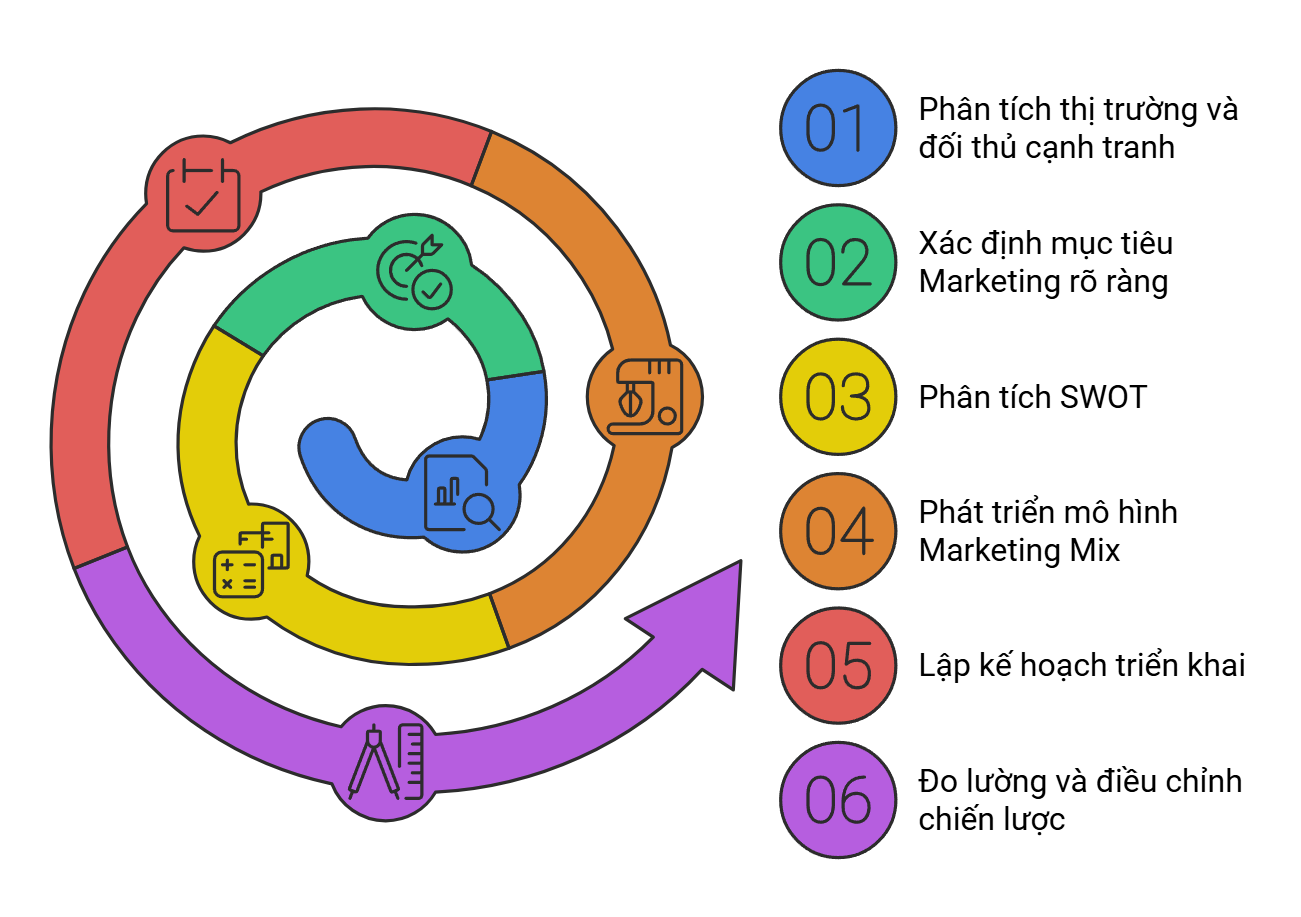
4. 5+ Steps to Building an Effective Marketing Strategy
An effective marketing strategy must be built on a solid foundation, comprising many important, closely linked components. Understanding each component not only helps a business achieve its goals but also creates differentiation and sustainability in a competitive market. Below are the core elements required for a comprehensive marketing strategy.
Step 1: Analyze the Market and Competitors
Market analysis is a crucial first step that helps businesses clearly understand their target customers, including their needs, behaviors, and consumption trends. For example, in the e-commerce industry, analyzing a competitor’s discount strategy during major holidays can help a business develop a more suitable pricing strategy, thereby maintaining its market share. Businesses should start by analyzing the demographic factors, needs, and consumption trends of their target customers, as well as macroeconomic factors affecting the market such as politics, economics, and technology. This helps identify development opportunities and factors that could influence the Marketing strategy.
Additionally, businesses need to identify direct and indirect competitors, assess their strengths and weaknesses, and from there, learn from successful strategies and find exploitable gaps. Analytical tools like SWOT or market research will help businesses make accurate decisions, while also identifying macroeconomic impacts from the surrounding environment to optimize their Marketing strategy.
Step 2: Define clear Marketing objectives
Marketing objectives must align with the overall goals of the business and be specific and measurable. For example, objectives could be to increase revenue, expand market share, or build brand awareness. Defining clear objectives helps focus all efforts and resources on activities with real value. A clear Marketing objective helps an organization define a specific, measurable destination and execute its strategy in an organized manner.
Common Marketing objectives often include:
- Increase sales revenue: This is the most common objective. Businesses need to clearly define the desired growth rate, for example, a 20% increase in sales within 6 months.
- Enhance brand awareness: This can include increasing the number of people who know the brand, improving the brand image, or expanding the target market.
- Attract and retain customers: Increase customer return rates and enhance the customer experience to build brand loyalty.
- Expand the market: Penetrate new markets or increase market share in existing ones.
Defining clear Marketing objectives requires a thorough and realistic analysis of the business’s capabilities, customer needs and wants, and the competitive environment. A good objective must meet the SMART criteria (Specific, Measurable, Achievable, Relevant, Time-bound). This not only helps the business head in the right direction but also makes it easier to evaluate the effectiveness of Marketing campaigns.
Step 3: SWOT Analysis – Brand positioning and defining core values
SWOT analysis (Strengths, Weaknesses, Opportunities, Threats) is an important tool for evaluating a business’s current situation. This step helps identify the strengths, weaknesses, opportunities, and threats the business is facing. SWOT analysis helps a business find its competitive advantages and areas for improvement in its Marketing strategy.

Brand positioning is how a business establishes its distinctiveness in the minds of customers. Clear positioning not only creates a competitive advantage but also helps customers easily recognize and remember the brand. For example, the Nike brand not only positions itself as a sportswear manufacturer but also conveys a message of breaking limits and a strong athletic spirit.
Step 4: Determine the Marketing strategy model (Marketing Mix)
A basic Marketing strategy should be built on 4 key elements: Product, Price, Place, and Promotion. This is known as the 4P Marketing model – the core model in every Marketing strategy. Defining and optimizing the 4Ps not only ensures the product reaches the right target customers but also maximizes business efficiency.
- Product: Focus on developing products that meet the exact needs of customers.
- Price: Build a competitive pricing strategy or create value commensurate with quality.
- Place: Ensure the product reaches the right target customers through appropriate channels.
- Promotion: Implement creative promotional campaigns that resonate with customer psychology.
Famous brands like Samsung and Highlands Coffee are prime examples of successfully applying the 4P marketing model. Samsung has optimized its 4P strategy to achieve a perfect combination of quality products, reasonable prices, widespread distribution, and a strong communication strategy. Similarly, Highlands Coffee has built a solid marketing strategy with the 4Ps, from developing beverage products that suit customer needs to implementing creative communication campaigns and distributing products in strategic locations.
>>> See more:
- Highlands Coffee’s marketing strategy: An A-Z analysis
- Decoding Samsung’s marketing strategy: What makes it effective?
Step 5: Create an Implementation Plan
A clear action plan helps ensure that marketing activities are implemented at the right time and achieve high efficiency. An implementation plan is not just a list of activities but also a management tool that helps coordinate and control the entire process of executing the marketing strategy. A detailed and logical implementation plan will help the business easily track progress, detect emerging issues early, and make timely adjustments to optimize results.
The key elements in creating an implementation plan include:
- Message Consistency: All marketing activities must ensure they convey a consistent message that aligns with the brand. Inconsistent messaging can cause confusion and reduce the strategy’s effectiveness.
- Establish a Timeline: Create a detailed schedule for each activity, defining start and end times, and ensuring that activities are carried out on schedule. A clear timeline helps with effective time management and minimizes the risk of delays.
- Resource Allocation: Identify the necessary resources for each marketing activity, including personnel, finances, technology, and time. Proper allocation helps optimize efficiency and avoid waste.
- Assign Responsibilities: Clearly define who will be responsible for carrying out each task. This ensures that everyone knows their role and can coordinate effectively with each other.
- Inter-departmental Coordination: Ensure close coordination between departments within the business, such as Marketing, Sales, and Customer Service, so that everyone is working towards a common goal. This synchronization helps improve efficiency and avoid internal conflicts.
- Risk Management: Have a contingency plan for potential risks, such as market changes, stronger competition, or shifts in customer behavior. This helps the business be prepared to respond and maintain stability during implementation.
- Monitoring and Evaluation: Establish key performance indicators (KPIs) to track the progress and effectiveness of activities. Regularly evaluate and adjust the plan as needed to ensure marketing objectives are met effectively.
Step 6: Measure, Evaluate, and Adjust the Strategy
Regularly evaluating results is a decisive factor in the success of a marketing strategy. Businesses need to use metrics such as revenue, conversion rates, or brand awareness to track effectiveness. For instance, if a social media advertising campaign does not achieve the expected results, the business can adjust the content or communication channels to optimize outcomes.
5. Examples of Successful Marketing Strategies from Major Brands
Apple’s Successful Marketing Strategy: Building an Innovative Ecosystem

Apple is one of the world’s leading brands, not only for its top-tier technology products but also for its powerful and innovative marketing strategy. Apple’s marketing strategy revolves around building an innovative ecosystem, encompassing everything from product design and brand messaging to the customer experience.
- Product Design and Ecosystem: Apple has always focused on creating products with elegant designs and optimal functionality. They don’t just focus on a single product but build an ecosystem that includes both hardware and software, from the iPhone and iPad to macOS and iOS. This ecosystem allows users to transition seamlessly between Apple devices, creating a smooth and convenient experience.
- Brand Message: Apple has built a clear and powerful brand message: “Think Different.” This is a message that encourages creativity and innovation, resonating with Apple’s target audience—those who love technology and want to stand out. Apple has consistently maintained this message across its marketing campaigns, from traditional advertising to online events and social media.
- Customer Experience: Apple has always prioritized the customer experience. They focus not only on the product but also on how customers interact with the brand. The Apple Store is a prime example, where customers can experience products firsthand, receive support from professional staff, and have a memorable shopping experience.
- Campaign Creativity: Apple is renowned for its creative and impressive marketing campaigns. For example, iPhone launch events regularly capture global attention, with detailed and admired advertising and social media campaigns. Apple also uses online and social media campaigns to create engaging videos and articles that attract customer attention.
- Building Loyalty: Apple has succeeded in creating a loyal customer community through continuously improved products and services. Apple Music, Apple TV+, and other services not only add value for customers but also encourage them to continue using Apple’s products and services.
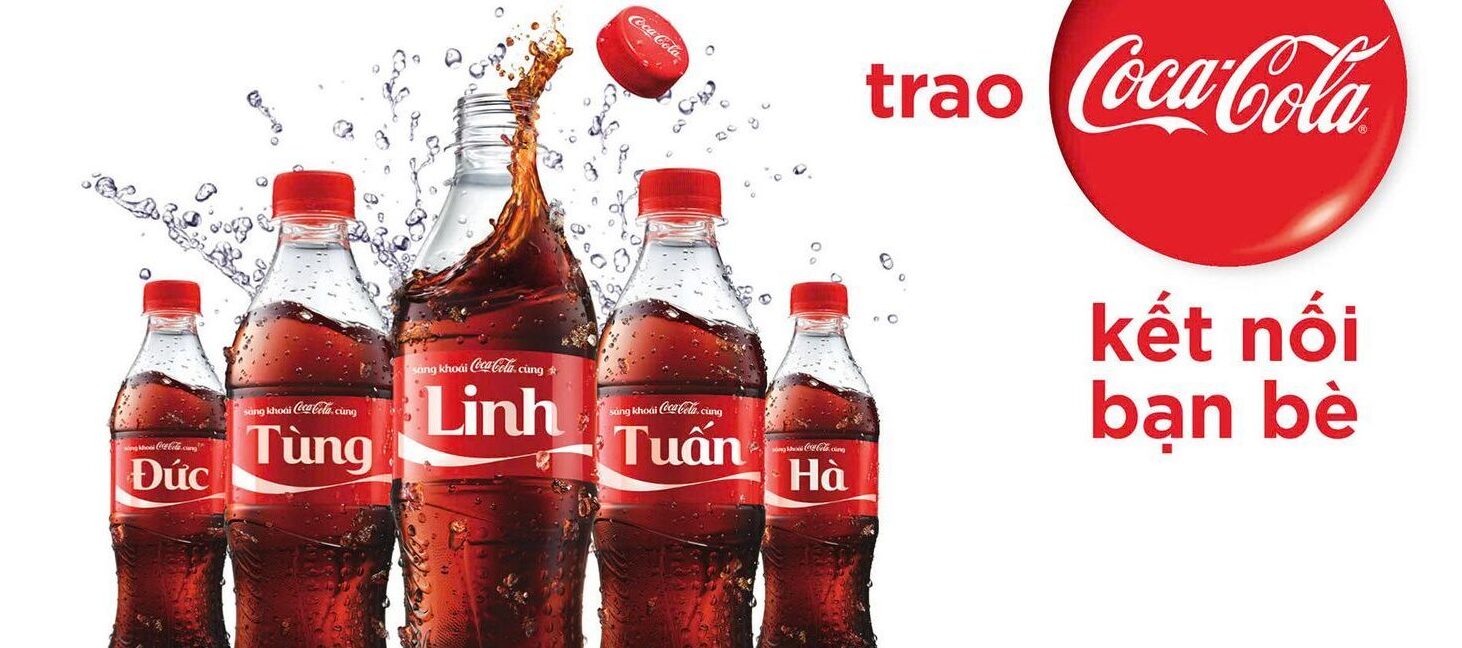
Coca-Cola launched the “Share a Coke” campaign in 2011, starting in Australia and later expanding globally. The brand replaced its logo on bottles with popular first names, as a personalized invitation for consumers to share a Coca-Cola with friends and family.
Success Factors:
- Personalization: Printing individual names on the product made consumers feel connected to the brand. Personalization is a powerful trend in modern marketing, and Coca-Cola fully leveraged this element.
- Driving Social Interaction: The excitement of finding their name on a bottle or sharing it with friends encouraged consumers to interact, generating viral content on social media.
- Word-of-Mouth Effect: The campaign encouraged users to share both directly (through the bottle) and indirectly (through online platforms).
Personalization not only strengthened emotional connections but also generated natural User-Generated Content, helping the campaign spread widely without significant investment in paid advertising.
The “Just Do It” Campaign – Nike
Nike launched the “Just Do It” slogan in 1988. It’s not just an advertising message but a brand manifesto, emphasizing the will to overcome challenges and achieve personal accomplishments.
Success Factors:
- Strong Brand Ideology: “Just Do It” is associated with a positive lifestyle and belief in personal strength, helping Nike build an image as a companion on every journey to overcome challenges.
- Emotional Marketing: Instead of focusing on product features, Nike tells inspiring stories of athletes and ordinary people pushing their limits.
- Strategic Partnerships: Nike signs contracts with famous athletes like Michael Jordan, Serena Williams, and more recently, Colin Kaepernick, to convey its message through inspirational figures.
A successful marketing strategy sells not just a product, but also an ideology and an emotion. Nike has perfectly combined storytelling and powerful symbolism to build long-lasting bonds with customers.
6. Popular Trends in Marketing Strategy Development

The Hyper-Personalization Trend
Personalization based on customer data has become a standard in marketing. However, in the future, brands will upgrade this to the level of “hyper-personalization,” using artificial intelligence (AI) and Big Data to deliver unique messages and experiences to each customer. Personalized marketing is a clear trend, but success will depend on the ability to manage data and build trust with customers.
Advantages:
- Strengthens personal connections, helping customers feel understood and cared for.
- Improves conversion rates as messages are better tailored to consumer needs.
Challenges:
- Requires advanced technology systems and the ability to process large amounts of data.
- Issues regarding privacy and personal data security can lead to user dissatisfaction if not managed properly.
The Trend of Focusing on Sustainability Marketing
Modern consumers are increasingly concerned about social and environmental issues. Therefore, future marketing strategies will prioritize sustainability, transparency, and social responsibility. Sustainability marketing is a long-term trend, but success requires consistency between brand commitments and actual actions.
Advantages:
- Builds stronger connections with customers who care about social values and business ethics.
- Increases loyalty and builds a positive brand image.
Challenges:
- Requires significant investment to adjust the supply chain, production, and operations towards sustainability.
- If not transparent, the brand may face accusations of “greenwashing.”
Influencer Marketing Trend – Focusing on Micro and Nano Influencers
Instead of investing in major celebrities, businesses will focus on micro and nano influencers (those with 1,000 to 50,000 followers). These individuals often have closer engagement with their communities. Micro and nano influencers are a cost-effective choice for optimizing expenses and building authentic connections with customers.

Advantages:
- Higher engagement rates compared to major influencers.
- Lower collaboration costs, suitable for many small businesses.
Challenges:
- Managing multiple small influencers simultaneously can be complex.
- Limited scalability in terms of reach.
Community-Centric Marketing Trend
Instead of solely focusing on product promotion, brands will build loyal consumer communities and encourage them to participate in value creation. Community-based marketing offers long-term benefits, especially as consumers increasingly want to be involved in a brand’s development process.
Advantages:
- Enhances loyalty through deep connections with consumers.
- Generates User-Generated Content, helping to save on production costs.
Challenges:
- It takes time to build a strong community and maintain engagement.
- Difficult to control the message if the community is dissatisfied.
Data-Driven Marketing Trend
Data-driven marketing is a strategy that uses customer and market data to optimize promotional campaigns, personalize messages, and predict consumer behavior. Data collected from various sources such as websites, social media, mobile apps, and e-commerce platforms is analyzed to make evidence-based decisions.
Advantages:
- Deeper personalization: With detailed data, brands can create content, products, and services that are fully customized to individual needs. For example, Netflix uses user viewing data to recommend suitable movies, enhancing the personalized experience.
- Scientific-based decision-making:Data analysis helps identify trends, evaluate campaign effectiveness, and make faster, more accurate decisions.
- Cost-effectiveness:Optimizes advertising investments by targeting the right audience at the right time, reducing resource waste.
- Predicting customer behavior: Historical data helps predict future trends, thereby improving the ability to meet customer needs even before they realize them.
Challenges:
- Privacy and legal compliance: Regulations like GDPR (Europe) or CCPA (California) require businesses to be transparent about how they collect and use data. Violations can lead to a loss of trust and heavy penalties.
- Data quality and accuracy: Inaccurate or outdated data can lead to flawed decisions, causing damage to the brand.
- Technology systems and resources: Implementing Data Management Platforms (DMPs) or Big Data Analytics requires significant investment and a team of experts.
—————————–
Building an effective marketing strategy is a complex but essential process for the sustainable growth of any business. Through the 7+ basic steps that 1Office has analyzed above, we hope that CEOs and managers can apply and implement optimal marketing strategies to achieve success in their business fields. We wish you success!
















