


 11/05/2026
  22441 views
Apple’s business strategy – an icon in the world of technology and the world’s most successful electronic products. From the iPhone to the Mac, from iTunes to the Apple Watch, Apple has demonstrated its power by creating products/services that not only meet customer needs but also shape an entirely new consumer culture. In this article, let’s join 1Office to explore the decisive factors behind the success of this business strategy.
Mục lục
- 1. Overview of Apple – The “Giant” of the Tech Industry
- 2. What Are the Highlights of Apple’s Business Strategy?
- 3. Apple’s SWOT Model
- 4. Overview of Apple’s Global Business Strategy
- 5. Why is Apple’s global business strategy so effective?
- 6. Apple’s Business Strategy in the Vietnamese Market
- 7. The Impact of Apple’s Business Strategy on the Tech Industry
- 8. Lessons from Apple’s Business Strategy for Vietnamese Businesses
- 9. Frequently Asked Questions about Apple’s Business Strategy
- 10. Conclusion
1. Overview of Apple – The “Giant” of the Tech Industry
Apple Inc. is a technology corporation founded on April 1, 1976, headquartered in Cupertino, California, USA. Apple’s first product lines were personal computers, sold for $666.66.

Having gone through many fluctuations to date, Apple continues to develop and launch many other successful products on the market such as the iPhone, iPad, MacBook, Apple Watch, AirPods, and more. This has contributed to making Apple one of the largest technology companies in the world, with a market value of over $2 trillion.
Apple’s product lines include:
- Smartphones: iPhone
- Tablets: iPad
- Laptops: MacBook
- Desktop computers: Mac
- Music players: iPod
- Smartwatches: Apple Watch
- Headphones: AirPods
- Smart speakers: HomePod
- Services: iCloud, Apple Music, Apple TV+, Apple Arcade, Apple Fitness+
In 2024, Apple has been and continues to innovate to develop its product lines. The company always strives to bring users the best products and services.
Similarly, in the fast-moving consumer goods (FMCG) sector, Vinamilk applies a product diversification strategy—from milk for children, milk for adults, to condensed/traditional milk—to cover multiple customer segments. You can see more details in the article on Vinamilk’s business strategy.
2. What Are the Highlights of Apple’s Business Strategy?
Apple asserts its leading position through a product differentiation strategy, focusing on the high-end customer segment and building a closed ecosystem to optimize the user experience on a global scale.
2.1. Apple’s Strategic Objectives
Apple’s strategic objective is to become the world’s leading technology company, providing users with the best products and services. To achieve this goal, Apple focuses on the following factors:
- Innovation: Striving to innovate products/services to meet user needs.
- Quality: Always focusing on the quality of its products and services.
- Design: Apple is famous for the elegant and sophisticated design of its products.
- Brand: It is one of the most valuable technology brands in the world.
2.2. Apple’s Target Customers
Apple’s target customers are consumers with high incomes who love technology and desire to own high-quality products. Apple focuses on developing products and services that meet the needs of its target customers.
2.3. Apple’s Target Market
Apple’s target market is global, and they have built a strong presence around the world. However, there are some key markets where Apple has focused and invested heavily, such as high-income countries like the US, China, Canada, India, Japan, and more.
3. Apple’s SWOT Model
Apple’s SWOT model is used to assess the current situation and potential of a business. Below is a SWOT analysis of this brand:
Strengths:
- Strong Brand: Apple has a unique and powerful brand with a global influence and customer loyalty.
- Breakthrough Products and Design: Apple is famous for producing beautifully designed products with integrated advanced technology.
- Product Ecosystem: Apple’s products work well together through the iOS and macOS systems, creating convenience for users.
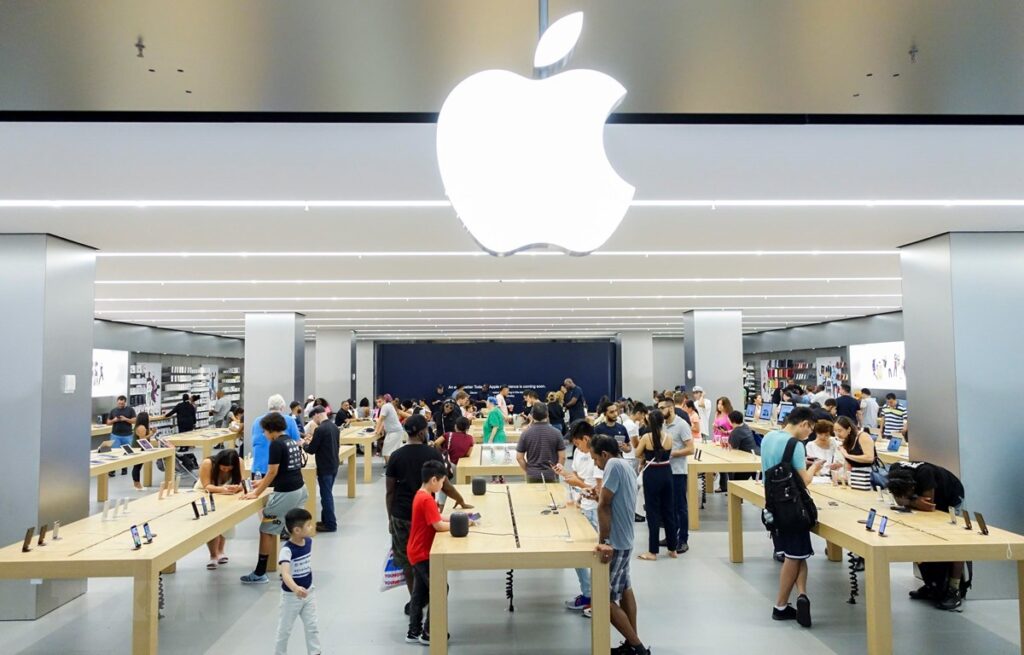
- Retail Store Network: Apple has an extensive retail store network worldwide, helping them interact directly with customers.
Weaknesses:
- High price: Apple’s products are often priced higher than competitors, making them not a suitable choice for all customer segments.
- Dependence on the iPhone: Apple relies too heavily on iPhone sales, which puts them at risk of significant impact if iPhone sales decline.
- Data privacy and security: Apple’s policies on personal data protection and privacy have caused some controversy and created pressure from countries and governments.
Opportunities:
- Market expansion in new countries: Apple can focus on expanding its presence in new markets, especially developing markets like India and China.
- Brand loyalty: The customer retention rate is very high, up to 92%. Apple’s product launch events are always met with an extremely strong response.
- Development of digital services and content: Apple has the potential to further develop services like Apple TV+, Apple Music, and Apple Arcade to create new revenue streams.
- Research and development of new products: The company has the opportunity to continue innovating and developing new products and services to attract customers.
Threats:
- Strong competition: Technology is a competitive industry, and Apple faces competition from many strong rivals such as Samsung, Google, and Microsoft.
- Changes in politics and regulations: Political and regulatory changes in international trade can create business risks for Apple’s global operations.
- Supplier dependency: Apple depends on many suppliers, especially for components from China, which can be affected by changes in the supply chain.
4. Overview of Apple’s Global Business Strategy
4.1. Apple’s Business Philosophy
Apple’s business philosophy focuses on innovation, beautiful design, and an excellent user experience. The company always strives to create products and services that meet customer needs and change the way they interact with technology. This philosophy is demonstrated through Apple’s continuous investment in research and development to create breakthrough products and integrate the best hardware and software.
4.2. Apple’s Strategic Business Objectives
Apple’s strategic objective is to become the world’s leading technology company, providing users with the best products and services.
- Creating excellent products and services: With the goal of producing superior products/services, focusing on performance, design, and experience.
- Expanding the global market: Focusing on expanding their presence in new and developing markets like India and China.
- Creating a strong ecosystem: Building an ecosystem of products and services to create convenience for users and increase loyalty.
On a global scale, Amazon is also a prime example of a comprehensive business model — including e-commerce, logistics, cloud… This Amazon business model is different but aims to create an ecosystem that serves customers comprehensively.
4.3. Scope of Apple’s Business Strategy
The scope of Apple’s business strategy is global. They focus on serving customers worldwide and have a network of retail stores and after-sales services in many countries. In addition, Apple segments the market based on customer criteria, targeting key demographics such as trendy young people who love high-tech, business professionals, business owners, and office workers who need to communicate frequently.
Like Apple, Coca-Cola is a global brand with a very strong internationalization strategy — from developed to developing markets. Referring to Coca-Cola’s international business strategy will help to better understand how a major brand expands & maintains its global market share.
4.4. Apple’s Competitive Advantages

Apple has several key competitive advantages, including:
- Strong brand: Apple is one of the most valuable technology brands in the world, associated with quality, innovation, and design.
- Differentiated pricing strategy: By pricing products higher than competitors, customers are willing to pay for high-quality products that deliver the best experience.
- Focus on customer experience: The brand always focuses on the customer experience. The company provides excellent customer service and creates products and services that are easy to use and offer a seamless experience.
- Emphasis on quality and simple design: Famous for its product quality and simple design. Apple’s products are made from premium materials and have a sophisticated, luxurious design.
4.5. Apple’s Business Strategy Activities
Apple has been implementing the following business strategy activities to achieve its goals:
- Investing in research and development: Apple is always willing to invest heavily in research and development to create new products/services.
- Market expansion: In addition to developed countries, the company also focuses on expanding its market in new and developing nations.
- Developing the ecosystem: Apple develops a diverse ecosystem of products and services to create convenience for users and increase their loyalty.
- Customer care: The brand provides after-sales service and customer care to maintain good relationships with users.
- Supply chain optimization: Apple works closely with its supply partners to ensure stability in its supply chain.
- Developing digital services and content: Currently, Apple is expanding services like Apple TV+, Apple Music, and Apple Arcade to create new revenue streams.
5. Why is Apple’s global business strategy so effective?
Apple’s business strategy achieves optimal effectiveness through a combination of continuous innovative thinking and the ability to connect with users’ emotions, helping to turn technology devices into symbols of a creative and classy lifestyle.
5.1. Marketing Strategy
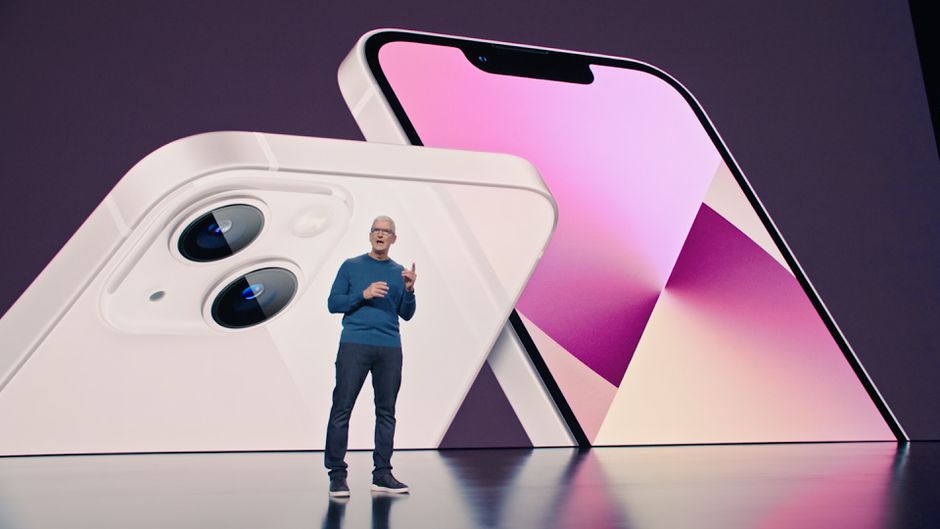
Apple focuses on creating unique and impressive marketing experiences for customers. The company often uses creative and humanistic advertising campaigns.
1. Differentiation strategy focused on improving product quality:
Apple always aims to improve the quality of its products to maintain its position as one of the world’s leading technology corporations. This strategy includes:
- Continuous research and development: Apple invests heavily in research and development to ensure its products always meet the highest standards of performance and innovation. This includes hardware and software improvements, regular bug fixes, and the integration of new technologies.
- Ensuring design quality: Product design is one of Apple’s key factors in creating beautifully and elegantly designed products. This not only appeals to customers but also enhances the user experience.
- Controlling production quality: Apple maintains strict control over the production process to ensure that every product achieves the best possible quality. This is done by working closely with suppliers and establishing rigorous production processes.
2. Advertising content strategy focused on customer benefits:
A key part of Apple’s marketing strategy is focusing on conveying the benefits customers can receive from using their products. This strategy includes:
- Focusing on user experience: Creating advertising content that focuses on how their products and services can improve users’ lives and work. They often show how products help users work more efficiently, be more creative, and connect with each other easily.
- Using stories and emotions: To convey the message about product benefits by telling touching stories about how the products have changed users’ lives.
- Highlighting individuality and creativity: Apple connects with customers by focusing on their individuality and creative potential. Advertising campaigns often encourage users to think differently and be creative.
5.2. “Think Different” Brand Positioning Strategy
One of the key elements in Apple’s brand positioning strategy is the message Think Different. This is not just a slogan but the company’s core philosophy. Apple creates a sense of uniqueness and creativity in all its products and services.
- Innovation: The company often introduces new products and services that consumers have never seen before.
- Breakthroughs: The brand constantly innovates and releases products that can change the way we use technology and live our daily lives.
- Integration of technology and design: Apple focuses on integrating advanced technology into beautiful and elegant designs.
- Confidence: Apple’s brand positioning strategy helps them build confidence in maintaining their position as one of the world’s leading technology corporations.
The “Think Different” brand positioning strategy helped Apple identify its target audience and establish the brand’s creativity and innovation in their minds.
6. Apple’s Business Strategy in the Vietnamese Market
Vietnam is a potential market with a young population, rising income, and a high rate of smartphone usage. According to Statista, the Vietnamese smartphone market is projected to reach a value of $10.8 billion in 2023. Apple has recognized this potential and is actively expanding its market presence in Vietnam. Apple’s business strategy in Vietnam can be summarized as follows:
- Focusing on the premium segment: Aiming to attract high-income, tech-savvy customers, Apple focuses on distributing high-end products like the iPhone, iPad, MacBook, etc., in Vietnam.
- Strengthening marketing activities: To promote its brand and products in Vietnam, Apple has opened an online store in Vietnam and partnered with major retailers for product distribution.
- Investing in infrastructure: To support its business operations, the brand has opened authorized service centers in the two major cities of Hanoi and Ho Chi Minh City.
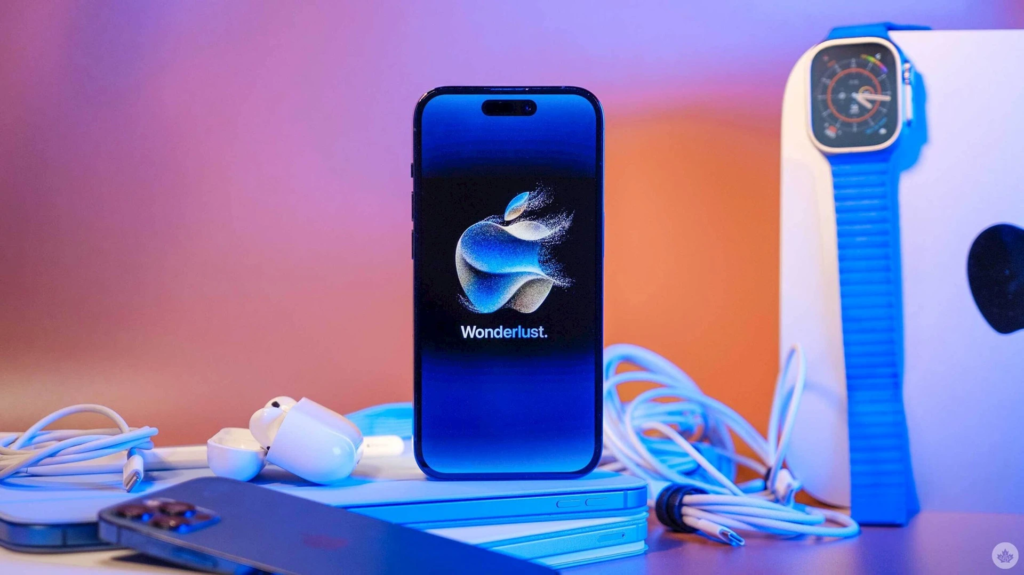
Additionally, regarding Apple’s strategy for the iPhone – its flagship product line that accounts for a large portion of the company’s revenue. Apple has implemented specific business strategies for its development, which include:
- Expanding price segments: Apple has expanded the iPhone’s price segments to meet the needs of various customer groups. By launching more affordable iPhone models like the iPhone SE and iPhone 13 mini, it aims to attract customers with lower incomes.
- Enhancing features: The brand continuously improves iPhone features to attract customers. Apple has integrated new features such as OLED screens, the A16 Bionic chip, etc., into new iPhone models.
- Improving user experience: The iPhone is a product line where Apple focuses on enhancing the user experience. Apple has optimized the iOS operating system to provide users with a smooth and user-friendly experience.
These business strategies have helped Apple achieve certain successes in the Vietnamese market. iPhone sales in Vietnam have grown continuously in recent years. According to IDC statistics, the iPhone’s market share in Vietnam increased from 10% in 2020 to 15% in 2022.
7. The Impact of Apple’s Business Strategy on the Tech Industry
Apple’s business strategy not only generates hundreds of billions of dollars in revenue annually but also creates significant waves of change in the global technology industry. With its “Think Different” philosophy, Apple has reshaped how tech companies develop products, approach customers, and build ecosystems.
Apple doesn’t just sell devices; it sells a complete experience: integrated hardware, software, and services. This is a model that many other tech giants like Samsung, Huawei, and Google are learning from and implementing.
7.1. Apple and the Global Trend of Innovation
Apple is consistently among the world’s top R&D spenders, with $29.9 billion in 2023 (Statista). Thanks to this heavy investment in research and development, Apple frequently leads new technology trends:
- The iPhone pioneered the era of touchscreen smartphones (2007).
- The App Store opened up the global mobile application economy.
- Apple’s self-designed M1/M2 chips made a mark on the microprocessor market.
- Apple Vision Pro (2024) ushers in the era of augmented/virtual reality (AR/VR).
This innovation not only changes user behavior but also forces the entire global tech industry to race to keep up.
7.2. Apple’s Impact on the Smartphone Business Model
Before Apple, many companies focused solely on competitive pricing. But with the iPhone, Apple reshaped the smartphone business model in the following ways:
- Premium positioning: The average price of an iPhone is twice that of an Android smartphone (Counterpoint Research, 2023).
- Integrating value-added services: iCloud, Apple Music, App Store → turning every iPhone into a gateway to the ecosystem.
- Creating brand loyalty: According to CIRP, over 90% of iPhone users in the US continue to buy the next generation of iPhones.
This strategy has forced other companies like Samsung and Xiaomi to shift from “selling products” to “selling experiences + ecosystems.” This is Apple’s greatest impact on the entire modern smartphone business model.
8. Lessons from Apple’s Business Strategy for Vietnamese Businesses
Apple’s business strategy offers many valuable lessons for Vietnamese businesses, especially in the context of increasingly fierce competition and strong globalization trends. It’s not just about technology; Apple has proven that long-term success comes from thinking differently and providing a superior customer experience.
These lessons are fully applicable to Vietnamese businesses in many fields, from manufacturing and retail to services.
8.1. Differentiated Thinking in Product Innovation
Apple doesn’t chase product quantity; it focuses on breakthrough innovation. The iPhone, iPad, and MacBook have all redefined industry standards. This shows that Vietnamese businesses don’t necessarily need huge resources; what’s important is knowing how to create differentiation that offers real value to customers.
For example:
- VinFast not only manufactures cars but also positions its electric vehicles with a battery rental ecosystem – a differentiator from its competitors.
- Masan doesn’t just sell food; it builds a “Point of Life” that combines retail, consumer goods, and finance.
8.2. Investing Heavily in Customer Experience
Apple succeeds by putting the customer at the center of everything, from product design to after-sales service. Apple users don’t just buy a device; they buy the feeling of being cared for, convenience, and synchronization.
Vietnamese businesses can learn by:
- Optimizing the customer journey: from initial contact → purchase → after-sales care.
- Building an accompanying service ecosystem: warranties, flexible returns, customer care applications.
- Creating a consistent customer management experience from offline to online (Omni-channel).
For example: Thế Giới Di Động makes a strong impression with its flexible return policy and after-sales customer care, helping to maintain trust and achieve sustainable growth.
9. Frequently Asked Questions about Apple’s Business Strategy
Why does Apple persist in building a “closed ecosystem” instead of expanding connectivity?
The closed ecosystem (like iOS, macOS, iCloud) allows for complete control over the experience, enhances security, and ensures smooth synchronization between devices. This strategy creates high “switching costs,” making customers who already own one product more likely to buy other devices within the same system to leverage the convenience.
How does Apple’s “Price Skimming” strategy work?
Apple sets a very high price for products at launch to capture the segment of customers willing to pay a premium for new technology. Later, the company releases lower-priced models or discounts older versions to reach more price-sensitive segments while maintaining its premium brand positioning.
How does Apple maintain a brand loyalty rate of over 90%?
The secret lies in the combination of durable hardware and continuously updated software. Apple creates a sense of “belonging to a creative community” through humanistic marketing messages, turning its products into lifestyle symbols and forging strong emotional connections with customers.
What is different about Apple’s supply chain that helps it lead the industry?
Apple focuses on design and control rather than direct manufacturing. The company maintains close relationships with a few top suppliers and accurately forecasts market demand, which helps minimize inventory and respond flexibly to global fluctuations.
What can Vietnamese businesses learn from Apple’s multi-channel customer management?
Businesses should digitize every touchpoint, from online to in-person, to personalize the experience.
Applying the 1Office solution with the 1CRM module, integrated with No-code and AI Agents, helps automate care processes and analyze data to deliver a “right person, right time” strategy, similar to how Apple dominates the market.
Sign up for a free feature Demo!
10. Conclusion
Through analyzing Apple’s business strategy, we can see that Apple has taken the right direction and achieved tremendous success in both the Vietnamese and international markets. In the future, Apple needs to continue improving its products/services to meet the ever-increasing demands of customers and to compete with other rivals to maintain its position.
















