


 11/05/2026
  141 views
Customer care after a sale not only helps businesses retain existing customers but also directly affects brand reputation. If you’re looking to improve the post-sale experience, this article will give you practical and easy-to-apply insights.
Mục lục
- 1. The importance of a post-sales customer care process for businesses
- 2. Building a professional post-sales customer care process
- 2.1. Send a thank-you letter to customers after the sale and consultation
- 2.2. Ask for customer feedback after they experience the product
- 2.3. Maintain communication and provide useful information to customers
- 2.4. Improve customer support to be dedicated and fast
- 2.5. Combine promotion for new products/services
- 3. Popular after-sales customer care channels
- 4. Key Metrics for Measuring Post-Sale Customer Care Effectiveness
- 5. 3 Key Considerations for Implementing a Post-Sale Customer Care Process
1. The importance of a post-sales customer care process for businesses
Post-sales customer care, also known as “after-sales service,” involves activities aimed at interacting with customers after a sale. This is the responsibility of the sales team after the transaction and consultation period with the customer.
Many readers ask, what’s the point of contacting customers after the transaction is complete? Especially with potential customers who didn’t decide to become customers of the business? It is this mindset that leads many businesses to neglect post-sales customer care, resulting in a gradual decline in business performance.
In reality, the post-sales customer care process plays a crucial role for businesses. Specifically:
- Helps businesses strengthen customer relationships
Thoroughly resolving customer issues and ensuring consumers have the best possible experience is a smart move that helps businesses build a base of loyal customers.
While acquiring new customers to expand the potential customer base is always a goal for many businesses, it doesn’t mean that existing customers should be left behind.
A study from Harvard has shown that acquiring a new customer is 5 to 25 times more expensive than selling to an existing one. To be more precise, existing customers need to receive more respect and dedicated care to maintain the relationship for the future.
-

The role of the post-sales customer care process

- Acts as a bridge to increase the conversion rate of customers into business partners
Statistics show that 65% of new customers learn about a brand through referrals from others. These are the people who are satisfied with your products/services.
Through this bridge, relationships with existing customers become more useful and effective as they can help the business expand its customer base.
- Helps businesses improve product/service quality
In reality, no product or service launched on the market can fully meet all customer needs. Therefore, through consumer feedback, businesses have the opportunity to improve and satisfy the market with higher quality products that deliver more value.
Through the post-sales customer care process, customer feedback helps businesses gain a clearer understanding of how users perceive their products/services.
This is also a way to build trust with those who are new to the brand. As a result, the conversion rate increases, and demand disruption is reduced.
Read more: Win over customers with 45+ effective situational customer care question templates
2. Building a professional post-sales customer care process
Given the roles mentioned above, creating a professional and detailed script for a post-sales customer care process is essential.
In practice, preparing a post-sales customer care script depends on the specific product, industry, and business sector of each company. However, there are standardized, easy-to-apply steps that every business can use to enhance its business performance.
-
5 effective post-sales customer care steps

The 5 steps in the post-sales customer care process below can be combined into a single process or can be a form of care for the business. The choice of which method to apply effectively will depend on the business sector and the company’s conditions.
2.1. Send a thank-you letter to customers after the sale and consultation
Sending thank-you letters to customers in business is never redundant for any care service, even in the digital age. Besides showing appreciation to customers, this action also sets the stage for the next steps in the post-purchase customer care process.
A thank-you letter can be sent in handwritten form or as a thank-you email. Depending on the product and industry your business operates in, the thank-you note can be handwritten or sent via email.
For B2C businesses, thank-you letters are often handwritten and included with the product, showing sincerity to the customer.
Conversely, B2B businesses typically contact customers via email or phone, so they often send thank-you letters by email with formal content and meticulous presentation to express their sincerity to the customer.
2.2. Ask for customer feedback after they experience the product
To develop the product in a better direction, the sales team needs to proactively contact customers to survey their experience with the product the business is providing. Depending on the product requirements, you can contact customers at different times.
For example:
For essential daily goods, you can call the customer immediately after the sale to see if they have any questions or problems with the company’s product and provide necessary guidance.
If the business provides software or technology services, give customers time to experience it. You can contact them again after one to two months to inquire and record feedback and any difficulties they experienced.
2.3. Maintain communication and provide useful information to customers
Maintaining contact with customers is a smart move to boost the business’s operations.
The sales team can continue to stay in touch with customers by providing valuable information through various means. From sending weekly emails to sending messages about special offers, the business can provide useful information to customers.
This step is not just about providing information. More importantly, it’s a way to make the brand familiar in the customer’s mind. Currently, content creation is a popular method. It will indirectly nurture and promote consumer demand by:
- Focusing 80% of the content on providing valuable information that users want.
- The remaining 20% for the purpose of suggesting and promoting the brand and products.
See now: Professional CRM Customer Relationship Management Software – 1Office
2.4. Improve customer support to be dedicated and fast
Sometimes, customers will encounter problems during use. They may need to call you to resolve complaints or questions. With a professional care process, the staff needs to have a positive outlook.
Understanding and finding a quick fix is the top priority. Try to do your best not to lose the customer’s trust.
In addition, support staff need to quickly identify the customer’s profile and history. All necessary data is already in the storage system. This helps you avoid asking too many questions and focus on solving the problem.
In post-purchase customer care methods, you must build a truly professional customer support team, ready to receive complaints and thoroughly resolve them anytime, anywhere. At the same time, you also need to expand your support channels and means so that consumers can access them as easily as possible.
For example:
One of the prominent names to mention for effective after-sales customer support is Mobile World. This company’s customer care team is large and always available 24/7 to answer customer inquiries.
Moreover, all customer issues are stored in their purchase history identification system, so the next time support is needed, the user’s experience will be smoother and faster.
2.5. Combine promotion for new products/services
The after-sales customer care process shows that the business always pays special attention and values existing customers, providing them with exclusive information that regular customers cannot access.
Besides, this is also an effective method that businesses can leverage to pre-promote future products/services.
The business can send special product-related offers to your loyal customer group. All users like to receive offers, so in addition to strengthening customer relationships, it is also a very simple and effective method to stimulate demand.
3. Popular after-sales customer care channels
After completing a transaction, a business cannot “abandon” the customer but needs to maintain interaction through various channels. Each channel has its own characteristics, helping to enhance the experience and retain customers long-term.
1. Email marketing:
- A traditional but still extremely effective channel, used to send thank-you letters, new product information, user guides, or periodic newsletters.
- Research by Campaign Monitor shows that the ROI of email marketing can reach 4200% ($1 spent on email brings in $42 in profit).
- Businesses can send a series of after-sales care emails (thank-you mail → survey mail → promotion mail).
2. Phone & Call Center:
- Helps businesses respond to inquiries quickly, while creating a feeling of “personalized attention”.
- Mobile World maintains a customer return rate of over 50% thanks to its dedicated call center support system.
- Call after delivery to ask about their experience, or to remind them of maintenance or warranty schedules.
3. Chatbot & Live Chat:
- Real-time interaction, resolving issues instantly on the website/app.
- Lazada Vietnam implemented an automated chatbot, helping to reduce response time by 30% compared to human agents.
- Support orders, provide user guidance, and handle frequently asked questions quickly.
4. Social media (Facebook, Zalo, Instagram…):
- A place where customers can easily leave feedback and expect a quick response.
- According to Sprout Social, 79% of customers expect a response within 24 hours when contacting via social media.
- Businesses can create community groups, organize minigames, or set up a Zalo OA channel to care for existing customers.
5. SMS & Push Notifications:
- Convey concise and timely information: promotions, appointment reminders, service status updates.
- Banks and insurance companies often send payment reminders via SMS, helping to reduce the rate of missed payments.
- Send discount codes to loyal customers, reminding them to return to the store.
4. Key Metrics for Measuring Post-Sale Customer Care Effectiveness
To evaluate whether a business is providing effective post-sale customer care, subjective feelings are not enough. Businesses need specific metrics to determine satisfaction levels, the likelihood of return, and the long-term impact on profits. The metrics below serve as a “compass” to help track and optimize the customer experience.
One of the most popular metrics is NPS (Net Promoter Score) – which measures the likelihood of customers recommending the brand to others. A high NPS means the business has many “free promoters” and can easily achieve breakthrough growth. Additionally, CSAT (Customer Satisfaction Score) indicates immediate satisfaction after a customer experiences a service. This is a quick signal, allowing businesses to make immediate adjustments if there are issues. Furthermore, Churn Rate is also a crucial metric: just a 5% reduction in this rate can increase profits by up to 95% (Harvard Business Review).
Beyond that, businesses need to look at CLV (Customer Lifetime Value) to understand how much profit each customer brings in the long run. In parallel, FRT (First Response Time) reflects the professionalism of the service. The faster a customer receives a response, the higher the retention rate. By synchronously combining these metrics, businesses can not only measure but also proactively improve the effectiveness of post-sale care, turning satisfaction into loyalty and loyalty into profit.
5. 3 Key Considerations for Implementing a Post-Sale Customer Care Process
1. Call customers with appropriate frequency
Calling customers during the contract period, even after it’s completed, shows your concern and makes them feel continuously cared for.
After signing a contract or any transaction with a customer, or even after a consultation period where they didn’t choose your product/service, be sure to thank them and call on necessary occasions to maintain the relationship.
2. Maintain a polite attitude and listen sincerely
When receiving complaints or feedback, customer care staff need to remain calm and avoid reacting immediately. They should thoroughly investigate the cause of the issue and provide the quickest possible solution.
-
Considerations for post-sale customer care

Negative feedback and complaints can sometimes yield positive results if the business knows how to listen, resolve the issue, and improve its products and services, leading to greater customer satisfaction.
3. Provide transparent information and focus on customer benefits
During transactions, conversion-related issues may sometimes arise. Always ensure that the customer’s benefits remain as stated in the original contract, or are even better.
Providing clear and accurate information helps customers feel secure because their rights are guaranteed. Therefore, this step is indispensable in the post-sale customer care process.
In practice, a post-sale customer care process involves many stages and tasks. The article above has provided you with 5 steps to create a standardized and detailed post-sale customer care script. Based on these steps, businesses can customize them to fit their specific industry.
Additionally, applying CRM customer care software to business operations has become common for most large and small businesses today.
1Office CRM customer care management software is proud to be a companion to thousands of large businesses, offering many modern features from storing customer information and profiles to automatic contact reminders. This allows sales and customer care teams to update information regularly and answer customer inquiries quickly and thoughtfully.
When providing post-sale customer care, a business not only needs a CRM tool to maintain relationships but also requires close coordination between departments, from the customer care team to logistics or finance. A standalone CRM system cannot provide comprehensive control over internal tasks and inter-departmental workflows.
To solve this problem, 1Office offers a comprehensive solution with two powerful modules: 1WORK and 1HRM. The 1WORK module helps optimize workflows from order processing to after-sales customer care, automates tasks, and allows employees to track job statuses, delivery schedules, and report incidents quickly. This helps minimize delays and ensures customers receive timely support.
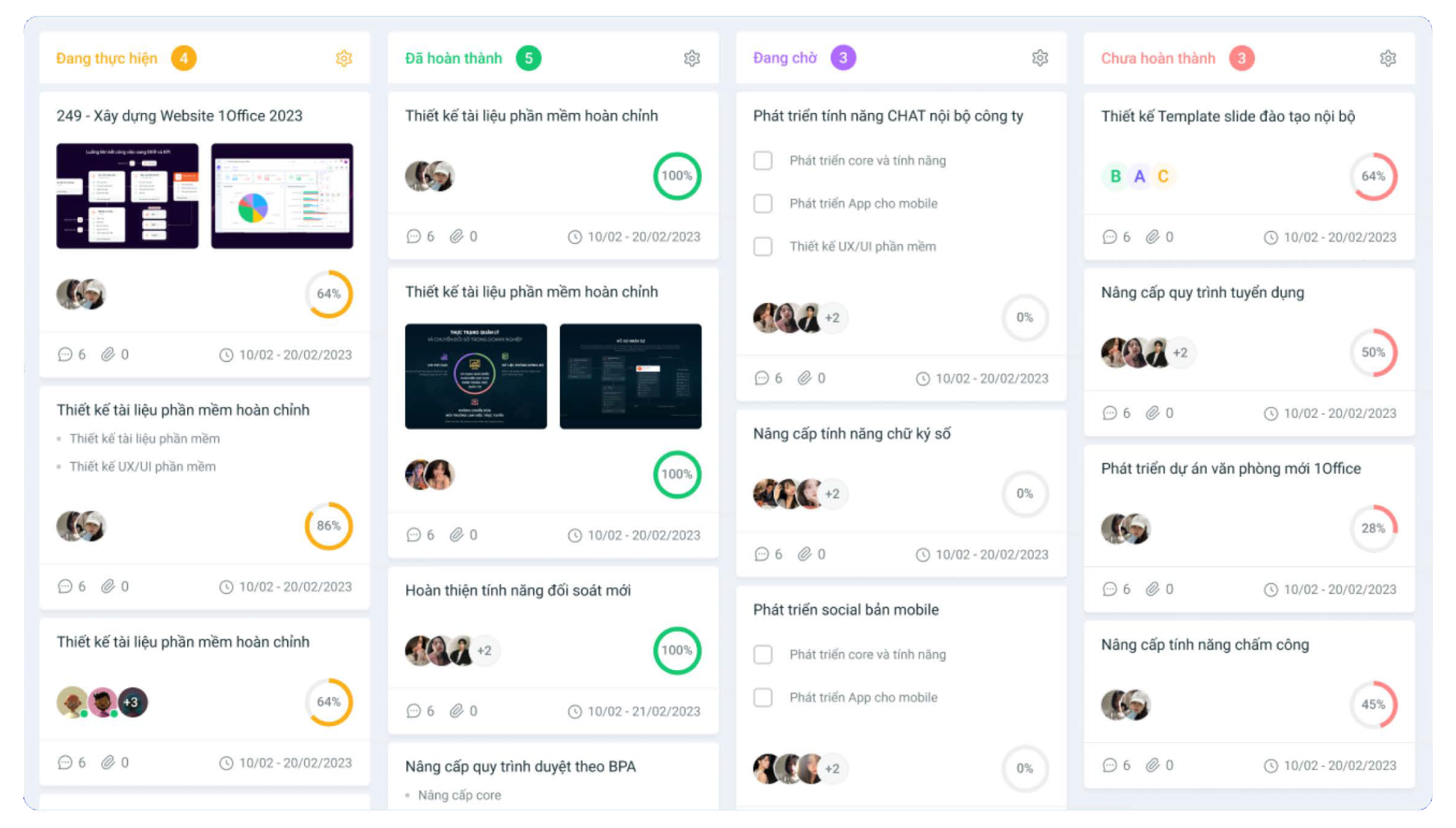
Meanwhile, the 1HRM module helps manage and track the performance of the customer care team. Evaluating and improving employee productivity through 1HRM not only enhances service quality but also helps businesses maintain customer satisfaction and long-term loyalty. The combination of 1WORK and 1HRM will help businesses not only provide better customer care but also increase work efficiency and improve coordination between departments.
For more details, please contact:
- Hotline: 083 483 8888
- Fanpage: https://www.facebook.com/1officevn/
- Youtube: https://www.youtube.com/channel/UCeTIRNqxaTwk0_kcTw6SxmA
















