


 12/05/2026
  303 views
Effective management is the key to helping SMEs overcome difficulties and achieve success. So, how can you manage small and medium-sized enterprises effectively? Join 1Office in this article to discover the secrets of managing small and medium-sized enterprises that will help managers improve their skills and lead their businesses to sustainable growth.
Mục lục
- 1. What is small and medium-sized enterprise management?
- 2. How to manage small and medium-sized enterprises effectively?
- 3. Management Principles for CEOs of Small and Medium-Sized Enterprises
- 4. Mistakes to Avoid When Managing Small and Medium-Sized Enterprises
- 5. The Best Management Solution for Small and Medium-Sized Enterprises Today
- 6. Conclusion
1. What is small and medium-sized enterprise management?
Small and medium-sized enterprise management encompasses all activities related to planning, operating, managing, and monitoring a business’s operations and development roadmap. To operate effectively and succeed in today’s competitive business environment, a company needs a professional management team with a full range of skills and practical experience.

According to the General Statistics Office, as of 2023, Vietnam had over 800,000 small and medium-sized enterprises, accounting for 97% of the total number of businesses in the country. Of these, small enterprises accounted for 71.3%, and micro-enterprises accounted for 28.6%. This figure demonstrates the significant role of SMEs in the economy, contributing to GDP, creating jobs, and promoting local economic development.
Small and medium-sized enterprises are a crucial driver for the development of Vietnam’s economy. However, these businesses also face many challenges. Businesses need to invest in building an effective management system to enhance their competitiveness, attract investment, and achieve sustainable growth.
Read more: TOP 7 Quality Business Administration Courses for CEOs
2. How to manage small and medium-sized enterprises effectively?
In the context of an increasingly volatile and competitive economy, managing small and medium-sized enterprises (SMEs) presents many challenges. To survive and thrive, leaders need to focus on the following factors:
2.1. Define goals and plan development strategies

In a business environment, goals and strategies shape the company’s direction, identify opportunities and challenges, and thereby lead to sound strategic decisions. This not only helps managers build internal consensus but also makes it easier for the business to work towards long-term achievements.
Businesses need to set specific and measurable goals, including defining sales revenue, profit, market share, and other indicators related to growth and business performance. Goals should reflect the company’s long-term vision and clearly define the value it aims to bring to customers and the community.
The strategic development planning process must carefully consider the market, competitors, and business trends. Seizing opportunities and setting appropriate strategies helps a business build a competitive advantage and define its position in the industry.
2.2. Manage human resources effectively
Human resources are the most important asset of a business, especially for SMEs. HR management requires a combination of recruiting, training, promoting development, and maintaining employee satisfaction. This helps enhance productivity and employee commitment to the company’s common goals.
Performance management is a crucial part of tracking and evaluating employee performance, creating conditions for personal development, and sharing constructive feedback. Businesses need to create a dynamic workspace that fosters creativity and positive interaction among team members. Additionally, benefits policies and career development opportunities are decisive factors in retaining employees and motivating them to work.
2.3. Manage finances intelligently
Effective financial management is extremely important for SMEs to ensure financial stability and scalability. This process requires tight control and specific financial strategies to face the volatile challenges of the market. This includes managing cash flow, optimizing capital, managing financial risks, and more.

Financial risk management is an indispensable part for small and medium-sized enterprises, where managers need to assess and prepare for potential negative impacts. Building financial reserves and implementing risk protection measures helps businesses ensure stability in an unpredictable business environment.
2.4. Build a brand development strategy
Building and maintaining a strong brand can help a business create a competitive advantage and attract new customers. This requires CEOs to invest in understanding the market and target customers, along with developing appropriate brand messages and imagery.
Focusing on brand marketing strategies is a crucial way to ensure that the business maintains its footing in a competitive market, holding its position and a positive image in the minds of customers.
2.5. Research & product development
Research & product development plays a vital role in creating uniqueness and added value for a business, especially for small and medium-sized enterprises (SMEs). Investing in this process not only helps optimize the product but also creates a competitive advantage and the ability to respond quickly to market fluctuations.
This process doesn’t just stop at research; it also includes testing and evaluating the product to ensure quality and effectiveness. The CEO’s flexibility in adjusting the product based on customer and market feedback is a key factor for the product to continue meeting needs and achieving satisfaction.
2.6. Apply comprehensive enterprise management software
In the Industry 4.0 era, comprehensive enterprise management software plays an extremely important role in optimizing business processes and enhancing the work performance of small and medium-sized enterprises.
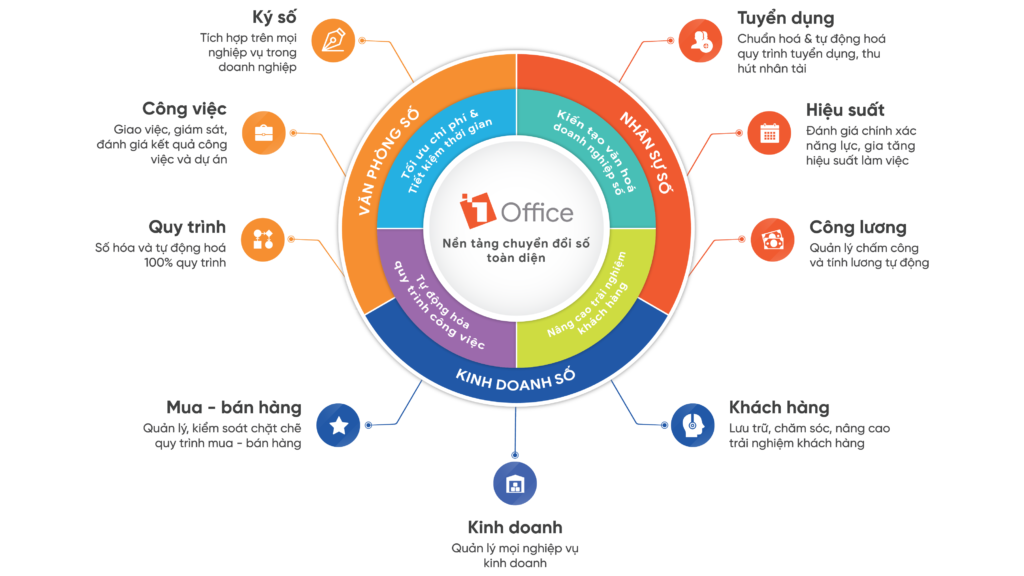
Comprehensive management software gives businesses a holistic view of all activities, from customer management and human resource management to financial management. This not only helps strengthen consensus within the organization but also helps ensure decisions are made based on accurate data and a deep understanding of all aspects of the business.
|
Over 5,000 businesses have used 1Office software to enhance management and accelerate digital transformation. Register for a trial today! |
3. Management Principles for CEOs of Small and Medium-Sized Enterprises
3.1. Transparency and Fairness in All Operations
The principle of transparency and fairness in all business operations is a crucial key to building trust and stability within an organization. Here are some ways to implement this principle:
- Provide regular and important information updates through meetings, newsletters, and internal communication channels.
- Make decisions transparently, clearly explaining the reasons and decisions within the company’s strategy.
- Encourage feedback from employees and partners on all aspects of the business.
3.2. Managing Innovation within the Enterprise
Innovation has always been a factor in business growth. However, in the current context, innovation is happening faster, creating greater potential for market breakthroughs, and has become a necessary capability for any business to survive and succeed. To build innovation capacity, businesses can consider the following key activities:
- Develop an innovation strategy
- Develop capabilities that support innovation
- Maintain innovation as a part of the corporate culture
3.3. Upholding Business Ethics Standards
Business ethics is a system of standards and principles applied to evaluate and regulate the attitudes and behaviors of business leaders. Business ethics emphasizes honesty and respect for partners and the business itself, thereby enhancing a company’s reputation.
A small or medium-sized enterprise that possesses this “key” will always have a solid direction and achieve its own success in today’s market—a market that highly values the ethical standards of both collectives and individuals.
3.4. Ensuring Consistency in All Plans
In a business environment, managers must always ensure consistency in policies, plans, vision, and mission between existing and future values. This is a key factor in achieving efficiency and consensus within the enterprise, while also creating a standard framework for action and behavior, generating the core values of a small and medium-sized enterprise, so that the management process operates most effectively.
3.5. Building a Positive Corporate Culture
Building a positive corporate culture is a crucial process that helps create a positive, creative work environment, supporting the development and long-term commitment of employees. Here are some ways to implement this principle:
- Leaders should lead by example, demonstrating a positive, optimistic spirit and a willingness to face challenges.
- Encourage leadership at all levels, from central to organizational, to embody positive values in their decisions and actions.
- Create an open workspace and encourage positive interaction among team members.
- Develop personal development and training programs to help employees grow their skills and careers.
- Develop policies that support remote work, flexible hours, and employee benefit programs.
See more: 10+ Essential Leadership and Management Competencies for Business Managers
4. Mistakes to Avoid When Managing Small and Medium-Sized Enterprises

In managing small and medium-sized enterprises, one of the common mistakes is inefficient resource management. A lack of control and thorough evaluation of capital management often leads to waste and loss of control over costs, significantly affecting the financial health of the business. To overcome this, management needs to create a detailed budget plan, propose measures to improve capital utilization efficiency, and establish criteria for evaluating cost-effectiveness.
Secondly, fear and reluctance to change are enormous risks in any business, especially in the management of small and medium-sized enterprises. Conservatism and a negative mindset can create a bottleneck in adapting to an ever-changing and volatile environment. To overcome this mindset, management needs to create a supportive environment, encourage creativity, and provide training and support so that employees can adapt to change flexibly and positively.
Additionally, applying manual work processes and fragmented management is a limitation in business administration. This inefficiency can lead to many errors and reduce employee productivity. Currently, the trend of applying science and technology to all industries and business scales, including small and medium-sized enterprises, is being heavily emphasized. In particular, with the advent of modern management software for small and medium-sized enterprises, the difficult problems of businesses seem to have found a solution.
5. The Best Management Solution for Small and Medium-Sized Enterprises Today
In today’s context, managing small and medium-sized enterprises requires leaders to be flexible and effective to face the increasingly volatile challenges of the market. One of the most groundbreaking and superior solutions available today is using the 1Office all-in-one business management software, which helps CEOs optimize performance and confidently face a challenging business environment.

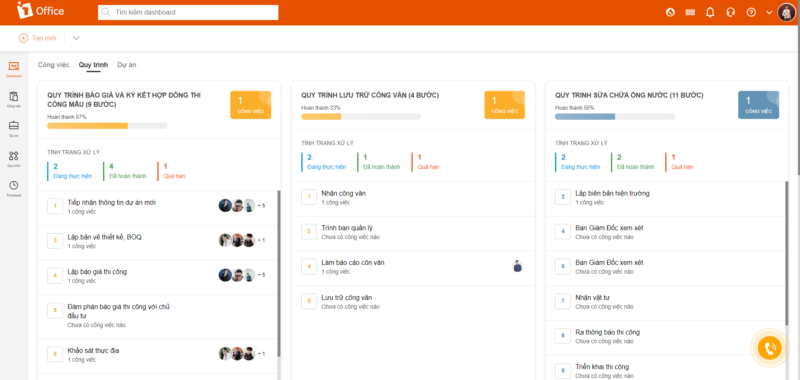
1Office provides a comprehensive ecosystem, integrating all management functions from financial, human resources, and sales management to tasks, projects, customers, and many other features, giving businesses a holistic view of all operations.
Experience a free trial today!
The software allows users to customize features according to the specific needs of each business. With 1Office, small and medium-sized enterprises not only save time and effort but also achieve transparency and efficiency in management. The simplicity, flexibility, and comprehensive integration of this software mean that businesses have more resources to focus on innovation and sustainable growth in a competitive market.
6. Conclusion
Thus, to effectively manage small and medium-sized enterprises, the collaboration of the CEO, leaders, managers, and staff is always necessary. At the same time, businesses need to continuously learn, innovate, and adapt to the ever-changing business environment to achieve sustainable success. We wish you success!
If your business needs more detailed consultation on comprehensive business management software, please contact 1Office via:
- Hotline: 083 483 8888
- Facebook: https://www.facebook.com/1officevn/
- Youtube: https://www.youtube.com/@1office-chuyendoisodn
















