


 10/05/2026
  1107 views
Top 10 remote employee management software will be reviewed in detail by 1Office to help you make the most informed decision. As the remote work model becomes an inevitable trend, choosing a remote human resource management software is a crucial factor that determines the operational efficiency of a business. A suitable tool will help eliminate geographical barriers, automate processes, and maintain team cohesion.
Mục lục
- 1. Top 10 remote employee management software leading the market in 2025
- 2. 6 essential features for remote employee management software
- 3. Guide to Choosing the Most Suitable Remote Employee Management Software
- Step 1: Identify Core Problems and Usage Goals
- Step 2: List “Must-Have” and “Nice-to-Have” Features
- Step 3: Evaluate Consolidation and Scalability (Prioritize All-in-One)
- Step 4: Prioritize User Interface and Experience (UI/UX)
- Step 5: Consider Total Cost of Ownership (TCO) and ROI
- Step 6: Request a Demo and a Live Trial
- Step 7: Check the Vendor’s Reputation and Support Services
- 4. Remote HR Management Trends in Vietnam and Globally
- Conclusion
1. Top 10 remote employee management software leading the market in 2025
As the boundaries of the traditional office blur, businesses need a “digital command center” to ensure all operations run smoothly. Let’s explore the 10 leading remote employee management solutions on the market today.
| Software Name | Core Features | Strengths | Suitable For |
| 1Office | HRM, Workplace (Tasks), CRM | An AI and Low-code integrated business management platform that solves the problem of fragmented data | Any Vietnamese business wanting comprehensive management on a single platform. |
| Fastwork HRM | HRM, Task Management | Managing field teams (sales, technical) | Businesses with highly mobile employees who work outdoors. |
| MISA AMIS | HRM, Accounting, Sales | Deep synchronization with MISA Accounting – Finance | Businesses already using the MISA ecosystem, prioritizing accounting operations. |
| Viindoo HRM | HRM, Project Management | Systematic human resource management and development | Businesses focused on building competency frameworks and personnel training. |
| Slack | Chat, video calls, file sharing | Instant team communication and powerful integrations | Any team needing a communication tool, not HRM management. |
| Trello | Task Management (Kanban) | Simple, intuitive | Individuals and small teams managing projects that are not overly complex. |
| Time Doctor | Accurate time tracking, screen capture | Detailed and accurate productivity monitoring | Outsourcing companies, teams that work by the hour. |
| Scoro | Project management, finance, CRM | Comprehensive management of the project lifecycle and finances | Professional service companies (agencies, consulting, law). |
| LV-DX Collab | Process digitization, online approvals | Optimizing and automating operational processes | Large organizations and enterprises undergoing digital transformation. |
| CoDX Task | Task assignment, task management | Systematizing task assignment and tracking | Teams that need a tool to clarify job responsibilities. |
1.1. 1Office HRM
Topping the list is 1Office, an All-in-One business management platform specifically designed for the Vietnamese market. Instead of using multiple separate tools, 1Office provides a unified solution that thoroughly solves the problem of fragmented data and optimizes the entire operational process on a single platform.
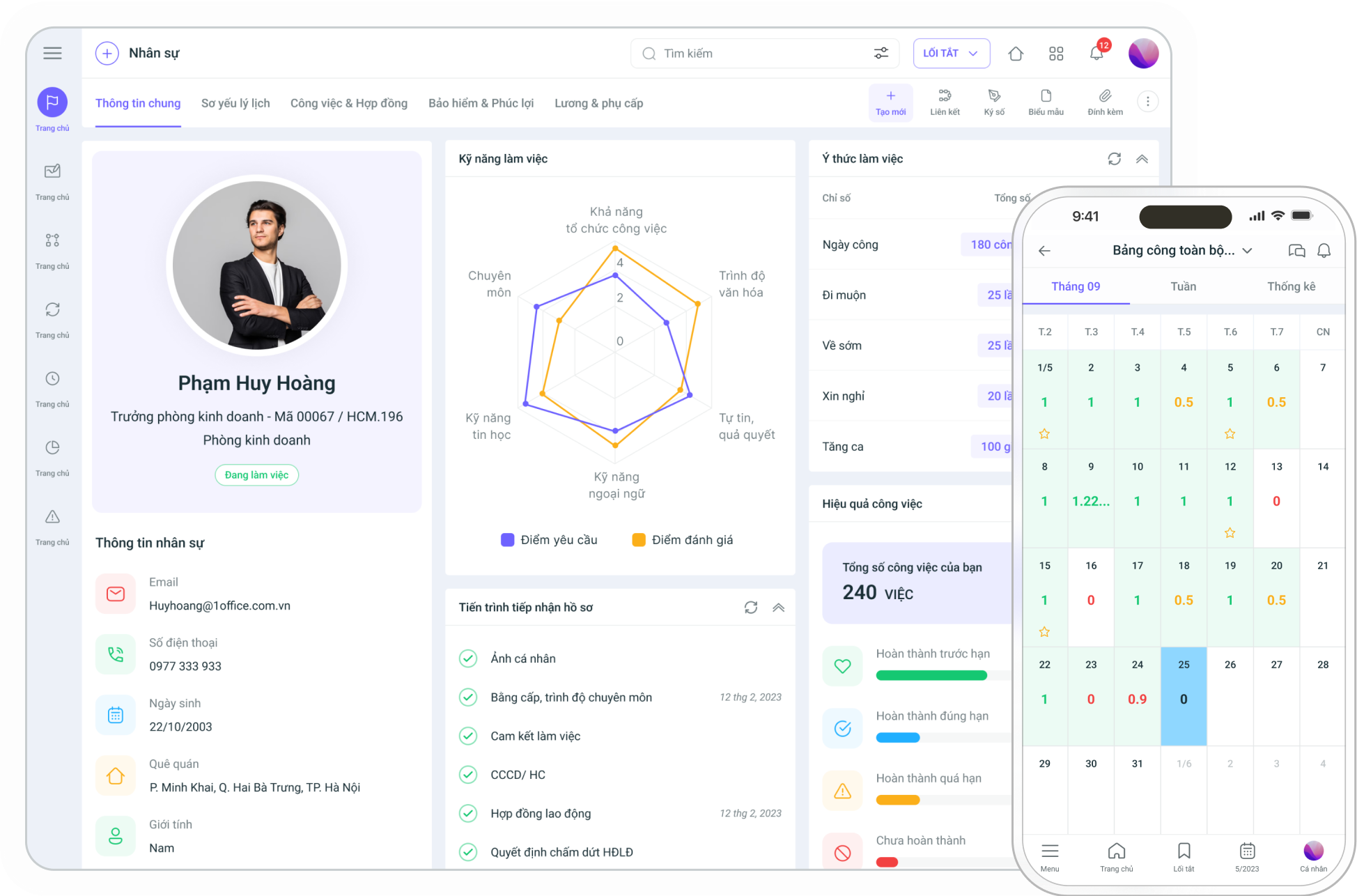
Key features:
- Timekeeping & Discipline Monitoring: The GPS and facial recognition (FaceID) timekeeping feature on the mobile app ensures the authenticity of working hours, completely eliminating concerns about discipline when employees are not at the office.
- Digitize the entire HR process: All requests (leave, business trips, overtime, etc.) are created and approved 100% online. Managers can approve them directly on their phones, preventing workflows from being stalled by geographical barriers.
- Manage work and project progress: track work progress, providing a comprehensive management system for crucial project aspects – progress, workload, supplies and goods, revenue and expenditure, etc.
- Objective performance evaluation: Set up and track KPIs/OKRs in real-time, making remote employee evaluations fair, transparent, and based entirely on work results rather than subjectivity.
- AI Integration: Allows for accurate and instant data retrieval, analysis, and reporting, thereby helping managers and leaders make decisions and identify bottlenecks more quickly and effectively.
1.2. Fastwork HRM
FastWork is an effective software for businesses with frequently mobile employees, such as field sales or technicians. The software focuses heavily on real-time remote work management and monitoring features.
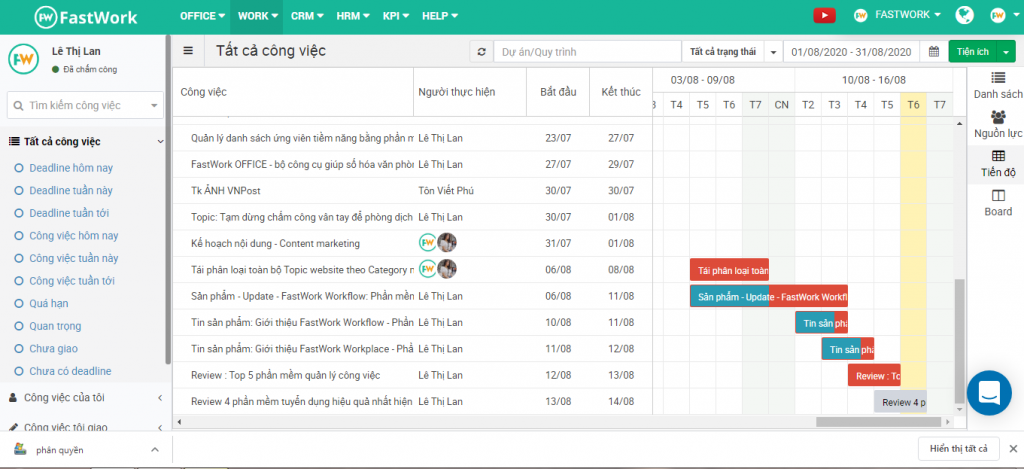
Key features:
- Mobile employee management: Track employee locations on a map, GPS timekeeping, check-in/check-out at customer locations.
- Flexible work management: Assign tasks, track progress, interact, and attach report images directly from the field.
1.3. MISA AMIS
MISA is a familiar brand to Vietnamese businesses, particularly strong in accounting and financial solutions. MISA AMIS is a business management ecosystem, in which the HRM module provides a methodical and professional set of HR management tools.
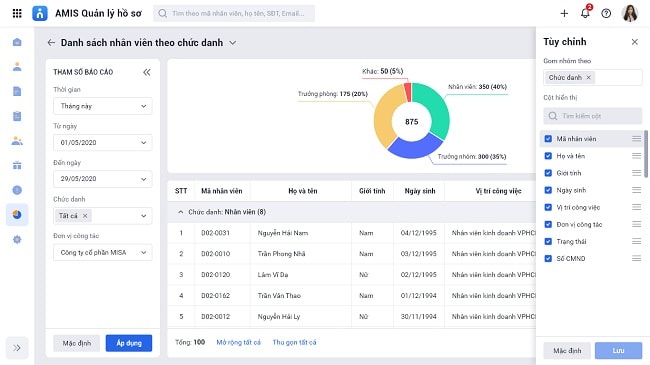
Key features:
- In-depth HR operations: Automates the processing of complex policies regarding social insurance, personal income tax, leave policies, etc., ensuring employee benefits and corporate compliance.
- HR – Accounting data synchronization: Salary and allowance data is automatically transferred to the accounting system, minimizing errors and the burden of manual reconciliation – a common issue in remote management.
1.4. Viindoo HRM
Without direct interaction, retaining and developing employees becomes a major challenge. Viindoo HRM addresses this problem by focusing on building career paths and developing competencies for each individual.
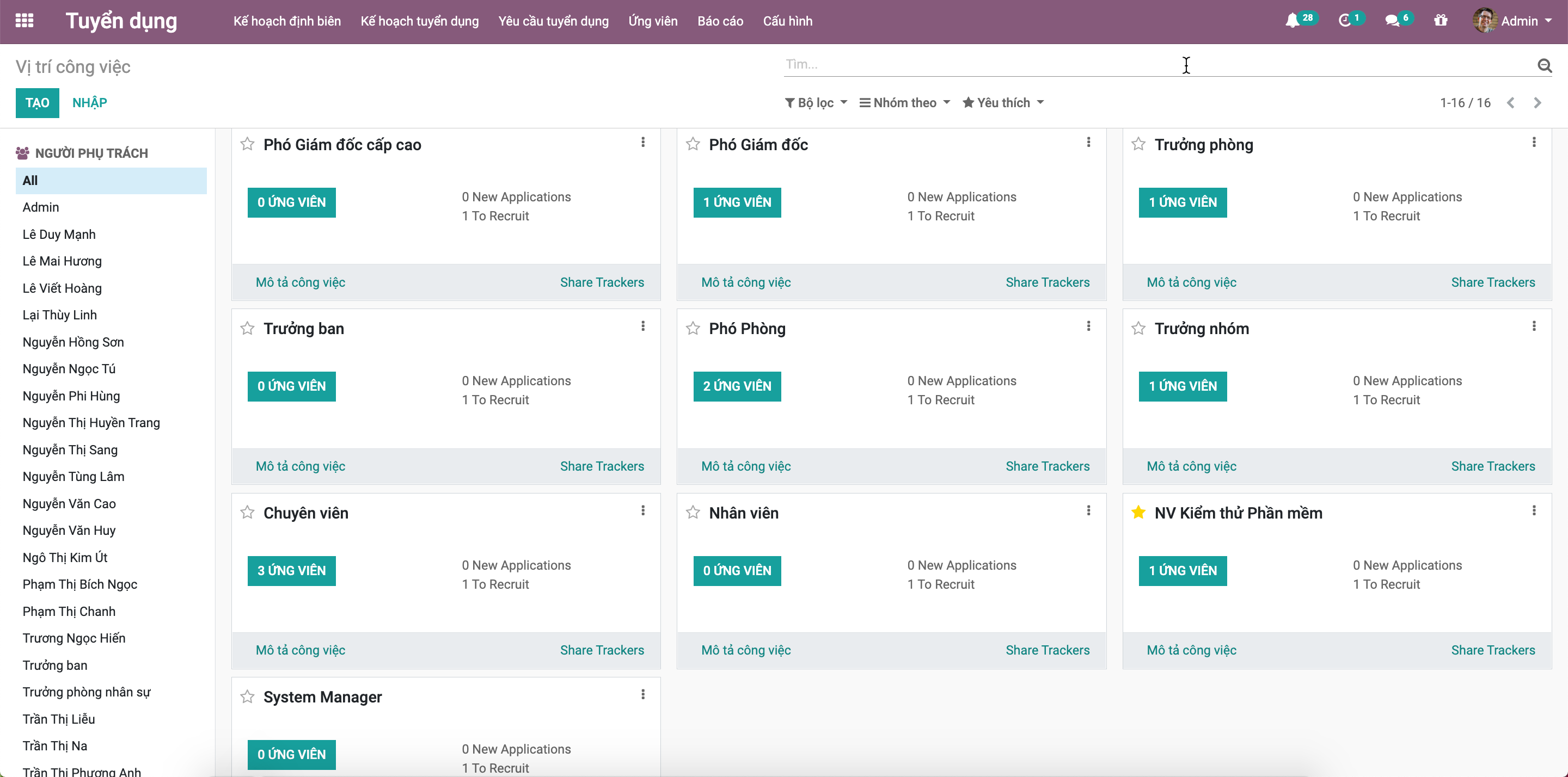
Key features:
- Build competency frameworks and promotion paths: Provides a clear picture of the development path, helping remote employees feel valued and have goals to strive for, thereby strengthening engagement.
- Online training management: Organize and track online courses, create competency assessment tests, ensuring the team continuously improves their skills even when not in the office.
1.5. LV-DX Collaboration
LV-DX Collaboration is a platform focused on digitizing processes and optimizing inter-departmental collaboration within a business.
Key features:
- Process digitization: Build and automate workflows and online approval processes.
- Inter-departmental collaboration: Create a shared workspace, enabling seamless data flow between departments.
- High security: Ensures the safety of company data and internal processes.
This is a powerful platform for optimizing operational processes, but it may not be as specialized as software designed specifically for human resource management.
1.6. Time Doctor
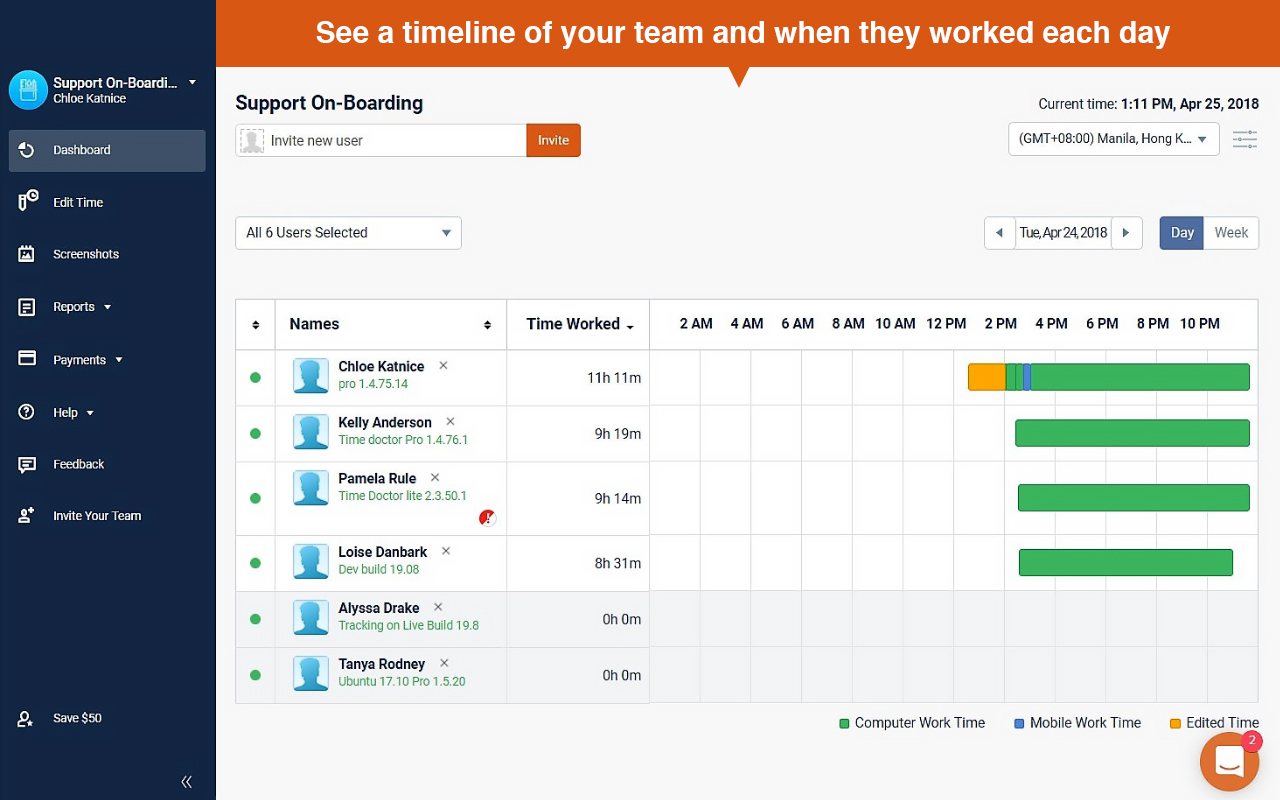
Time Doctor provides essential transparency for both managers and employees. It helps managers rest assured that work is being done, while also helping employees demonstrate their performance and focus.
Key features:
- Detailed time tracking: Accurately records time spent on each task and project.
- Screenshots: Optional random screenshots to ensure employees are focused on their work.
- Performance reports: Provides detailed reports on productivity, active/inactive time.
1.7. Scoro
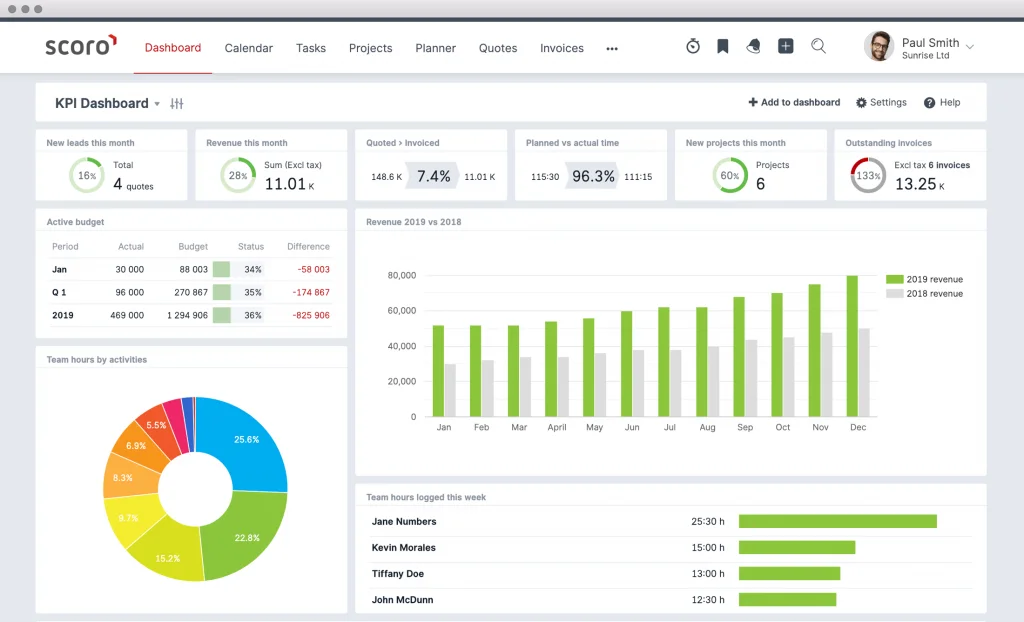
For service-based companies, controlling project time and budget while working remotely is crucial. Scoro provides a control hub to ensure every project stays on track and remains profitable.
Key features:
- Real-time tracking for each project: Helps accurately compare estimated time versus actual time, allowing for early detection of cost risks.
- Visual financial dashboard: Gives managers an instant overview of the financial “health” of each project without waiting for month-end reports.
1.8. CoDX Task
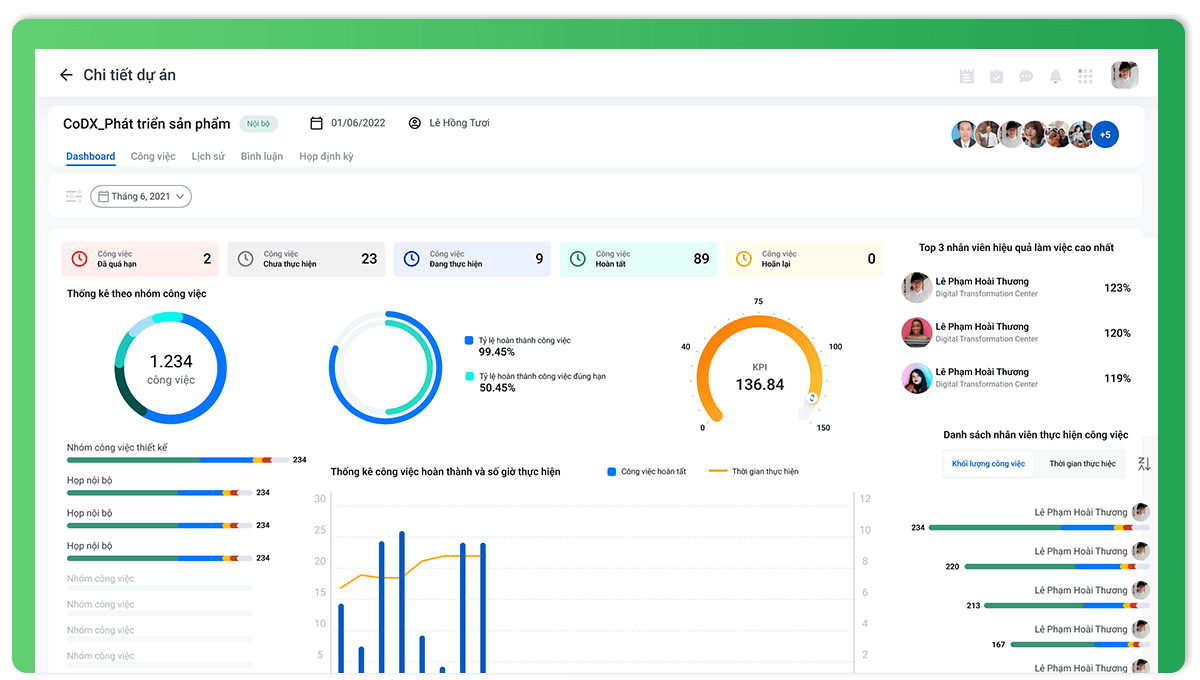
CoDX Task is a software within the CoDX digital transformation ecosystem, focusing primarily on assigning and managing tasks.
Key features:
- Versatile task assignment: Assign tasks to individuals or departments with complete information, deadlines, and attached documents.
- Visual progress tracking: Manage tasks in list, Kanban board, or Gantt chart views.
- Interaction and reporting: Allows for direct discussion on each task and quick generation of progress reports.
As a solution specializing in task management, CoDX Task needs to be combined with other modules like CoDX HR to become a complete human resource management toolkit.
1.9. Slack
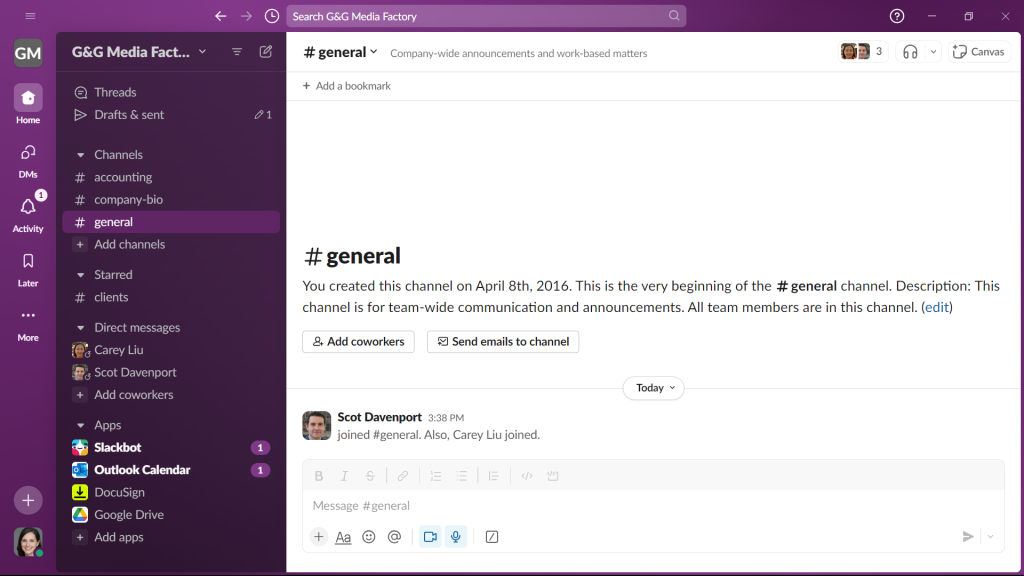
Slack is the “king” of team communication and collaboration. It is not a comprehensive remote employee management software, but it is an indispensable tool for maintaining connection and company culture in a distributed work environment.
Key features:
- Contextual communication: Create channels for each project or department, ensuring information doesn’t get lost and everyone understands the context of the conversation.
- Culture building: Non-work-related chat channels and custom emojis help maintain social interaction and company culture, combating feelings of isolation.
However, Slack completely lacks core HRM features like timekeeping, payroll, and profile management. Businesses are forced to purchase other software for management.
1.10. Trello
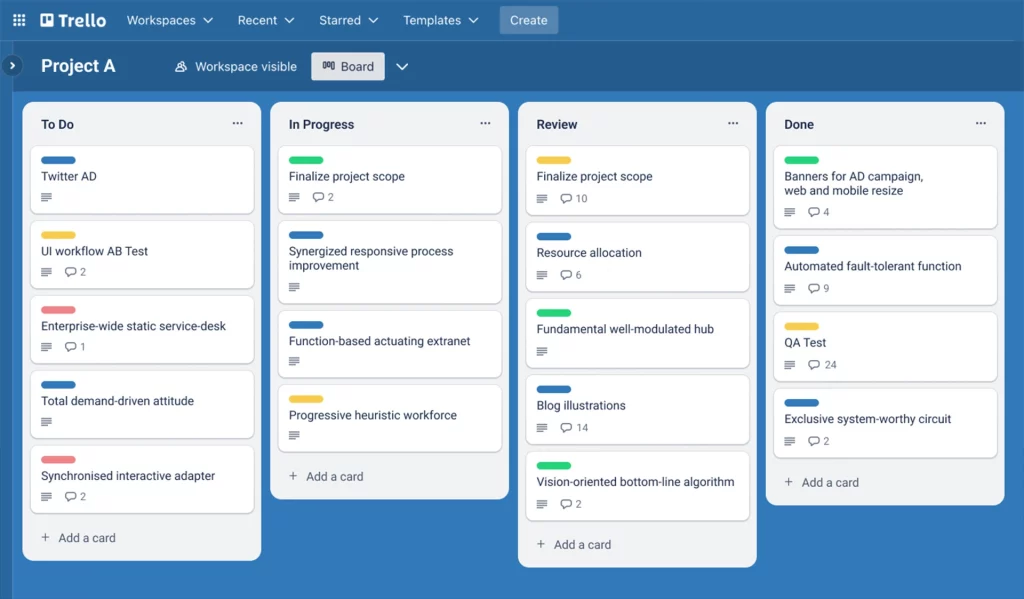
Trello solves one of the biggest problems of remote work: the lack of transparency in work progress. It acts as a digital whiteboard that anyone can look at to see “what is where.”
Key features:
- Workflow visualization: Everyone on the team, regardless of location, can see the big picture of project progress, who is doing what, and which tasks are bottlenecks.
- Instant status updates: Simple drag-and-drop actions allow employees to easily update their work status, helping managers track progress without constant follow-ups.
Similar to Slack, Trello only solves the task management problem. The software lacks any features for timekeeping, HR management, or in-depth performance reporting.
2. 6 essential features for remote employee management software
To be considered an effective remote employee management software, the tool must be more than just a timekeeping or task assignment app. It must be a comprehensive system that helps businesses solve the core challenges of a distributed work model. Here are 6 essential features that a top solution must have:

Work performance management
When direct supervision isn’t possible, results-based management becomes more important than ever. The software needs to allow managers to assign tasks, set goals (KPIs/OKRs), and track progress in real-time.
A good system will provide intuitive dashboards, helping to immediately identify bottlenecks and accurately measure individual performance in line with the overall goals of the department and company.
Timekeeping and time management
This is a basic but extremely important feature for ensuring discipline and transparency. Modern methods like clocking in via a mobile app with GPS, FaceID, or clocking in from home via Wi-Fi can completely eliminate manual processes.
More importantly, timekeeping data must be automatically linked to timesheets and the payroll system to minimize errors and ensure accurate benefits for employees.
Team communication and collaboration
Communication breakdown is the biggest barrier in remote work. Therefore, the software needs to integrate tools that allow the team to exchange information quickly. Instead of switching between multiple apps (Zalo, Messenger, Email), a good platform will allow for discussions, document sharing, and direct feedback on specific tasks and projects, keeping the flow of information seamless and focused.
HR profile & recruitment management
All employee information, from contracts, personal details, salary and bonus history, to career progression paths, needs to be digitized and stored centrally on a single system. This not only makes it easier for HR to manage but also serves as a “source of truth” for leadership to make accurate personnel decisions.
In-depth tracking capabilities
A superior software doesn’t just collect data; it must also know how to “tell a story” with numbers. The reporting system and intuitive dashboards are powerful tools that help leadership instantly grasp the HR situation, work performance, and workload levels of each department. From there, the business can make strategic decisions based on real data rather than intuition.
Integration and Security
An ideal software is an All-in-One platform where all features are already consolidated. However, if not, it must be able to connect with other tools (accounting, CRM…). Nevertheless, integrating multiple separate software always carries risks related to cost and data synchronization errors.
Additionally, the chosen platform must have a detailed permission system, data encryption, and comply with security standards to ensure the absolute safety of the company’s information.
3. Guide to Choosing the Most Suitable Remote Employee Management Software
Choosing the right remote employee management software is a strategic investment. To avoid wasting time and budget, follow this 7-step process:

Step 1: Identify Core Problems and Usage Goals
First, answer the question: “What is our biggest problem with remote management?” Is it timekeeping? Task assignment? Or the lack of connection between departments? List the problems and set clear goals (e.g., reduce payroll processing time by 50%, increase task completion efficiency by 20%…).
Step 2: List “Must-Have” and “Nice-to-Have” Features
Based on the 6 mandatory features mentioned above and your goals, create a list of requirements. Clearly distinguish between “must-have” features and “nice-to-have” ones.
Step 3: Evaluate Consolidation and Scalability (Prioritize All-in-One)
Ask yourself: “Do I want a single solution or am I willing to manage multiple separate tools?” In the long run, a consolidated (All-in-One) platform will help you save costs, reduce risks, and easily scale as your company grows.
Step 4: Prioritize User Interface and Experience (UI/UX)
Software with a complex interface will not be well-received by employees. Choose a tool with an intuitive design that is easy for everyone to use, and it must especially have a smooth Mobile App so employees can work anytime, anywhere.
Step 5: Consider Total Cost of Ownership (TCO) and ROI
Don’t just look at the monthly cost; calculate the total cost of ownership, including installation, training, maintenance, and integration fees (if using multiple software). A slightly more expensive software that delivers a higher return on investment (ROI) through automation and increased efficiency is a wise choice.
Step 6: Request a Demo and a Live Trial
Never buy software you haven’t experienced. Contact the vendor, request a product demo, and sign up for a trial account. This is the best way to check if the features really work as advertised and fit your workflow.
Step 7: Check the Vendor’s Reputation and Support Services
Finally, choose a reputable vendor with experience implementing solutions for businesses in the same industry. In particular, prioritize providers with a support team in Vietnam, ready to assist you quickly when issues arise during use.
4. Remote HR Management Trends in Vietnam and Globally
Remote work is no longer an option, but a reality shaping the future of every business. To master that future, let’s look at the current flow of the labor market.

4.1. The Recent State of Remote Work in the Labor Market
By the end of 2025, the “office vs. home” debate has effectively concluded. The winning model belongs to neither side, but to the compromise known as Hybrid Work. This flexible combination has become the gold standard, requiring management tools to be smart enough to operate smoothly in both environments.
At the same time, the race for talent has shifted to a new front: employee experience. Flexibility, streamlined digital workflows, and a work environment not limited by geography have become crucial benefits, sometimes more valuable than salary. Businesses that fail to adapt to this expectation will find themselves at a disadvantage in the war for talent.
This maturity is most evident in how Vietnamese companies have moved beyond using fragmented, free tools. They are now proactively seeking strategic management platforms and remote employee management software that can accompany and scale with their business growth.
4.2. The 5 biggest challenges of remote HR management
Despite its many benefits, controlling remote employees has become a major challenge for managers. The five most common difficulties are as follows:
Communication barriers and collaboration difficulties
- Problem: Without face-to-face interactions, information can easily become fragmented across multiple chat channels and emails, leading to miscommunication and slowing down inter-departmental coordination.
- Solution: An effective remote employee management software centralizes all communication, attaching discussions directly to specific tasks and projects. This creates a seamless, contextual, and easily searchable flow of information.
Difficulty in tracking and evaluating actual performance
- Problem: Managers cannot “see” employees working, making it difficult to assess performance fairly. This can lead to two dangerous extremes: either stressful micromanagement or complete neglect.
- Solution: Shift from managing “hours worked” to managing “results.” Modern platforms allow for transparently setting and tracking goals (KPIs/OKRs) and provide visual dashboards on progress, making evaluations objective and data-driven.
Risk of employees feeling isolated and disconnected
- Problem: The lack of spontaneous conversations and social interactions at the office can make employees feel lonely and disconnected from colleagues and the company culture, leading to decreased motivation.
- Solution: While it cannot fully replace human interaction, software can help with features like an internal social network, non-work-related chat channels, and online recognition and reward programs to maintain engagement.
Information security issues
- Problem: Company data scattered across personal devices and insecure home Wi-Fi networks creates a massive security vulnerability.
- Solution: A centralized platform acts as a “digital fortress.” It enforces universal security standards, encrypts data, and allows for detailed access permissions, ensuring the company’s intellectual property remains protected, no matter where employees are working.
4.3. The difference between traditional and modern management cultures
- Problem: Sometimes, the biggest barrier is mindset. Traditional managers find it difficult to trust a team they cannot see.
- Solution: Technology is the bridge to building trust. A transparent system where all goals and work progress are clearly updated gives managers data-driven peace of mind while empowering employees with the autonomy and flexibility to perform their best.
Conclusion
Remote employee management software not only helps eliminate data fragmentation and automate processes from A to Z, but it also saves on operational costs. It provides leadership with a 360-degree view of the business’s “health.”
















