


 11/05/2026
  153 views
Cost of Goods Sold (COGS) is a crucial metric that reflects the direct costs of creating a product or service. Understanding what Cost of Goods Sold is, what it includes, and how to calculate it accurately will help businesses control profits more effectively. In this article, 1Office will provide a detailed guide on the concept, components, and calculation formula with easy-to-understand examples.
Mục lục
- 1. What is Cost of Goods Sold?
- 2. What Does Cost of Goods Sold Include?
- 3. Why Do Businesses Need to Determine the Cost of Goods Sold?
- 4. Detailed Standard Method for Calculating Cost of Goods Sold
- 5. Example of calculating the cost of goods sold
- 6. Frequently Asked Questions about Cost of Goods Sold (COGS)
- 7. Factors Causing Fluctuations in the Cost of Goods Sold
- 9. Methods for allocating production costs to COGS
- 10. Trends in managing COGS in the digital age
- 10.1. Automating accounting and inventory management with ERP
- 10.2. Applying AI in cost forecasting and cost of goods sold optimization
- 10.3. Real-time cost of goods sold management with IoT and sensors
- 10.4. Connecting cost of goods sold data with the entire supply chain
- 10.5. Analyzing Big Data to predict fluctuations in raw materials and costs
- 11. Conclusion
1. What is Cost of Goods Sold?
Cost of Goods Sold (COGS) is the direct cost a business incurs to produce or purchase the goods and services it has sold during an accounting period. It is a key financial metric on the income statement that helps determine a company’s gross profit.
Alternatively, Cost of Goods Sold can be understood as the capital a business uses for the production of goods to be sold. This capital includes costs for raw materials, labor, business management, goods transportation, and more.
Cost of Goods Sold is a critical item on the financial statements and directly impacts a company’s profitability. Therefore, managers need to calculate the cost of goods sold accurately to make appropriate business decisions

2. What Does Cost of Goods Sold Include?
Cost of Goods Sold is the sum of all direct costs to create a product or service, including input material costs, production labor wages, factory operating fees, and purchasing costs incurred during the formation of goods.
The structure of the components that make up the cost of goods sold is typically categorized as follows:
- Direct material costs: Includes costs directly related to product manufacturing, such as the cost of main raw materials, input materials, packaging materials, etc.
- Direct labor costs: Costs directly related to the production of products and goods, including wages, salaries, allowances, etc., for employees.
- Manufacturing overhead costs: Costs related to the product and goods manufacturing process that cannot be directly attributed to specific products, including depreciation, maintenance, repair of machinery and equipment, electricity, water costs, etc.
- Purchasing costs: Includes costs related to purchasing goods and services that have been sold, such as purchase costs, transportation costs, loading and unloading costs, etc.
Among these, direct material costs and direct labor costs are the two main components of the Cost of Goods Sold. Manufacturing overhead costs and purchasing costs can be allocated to specific products and goods or allocated according to a certain ratio.
3. Why Do Businesses Need to Determine the Cost of Goods Sold?
Determining the Cost of Goods Sold is the basis for calculating gross profit, setting accurate product prices, and providing foundational data for investment or production decisions.
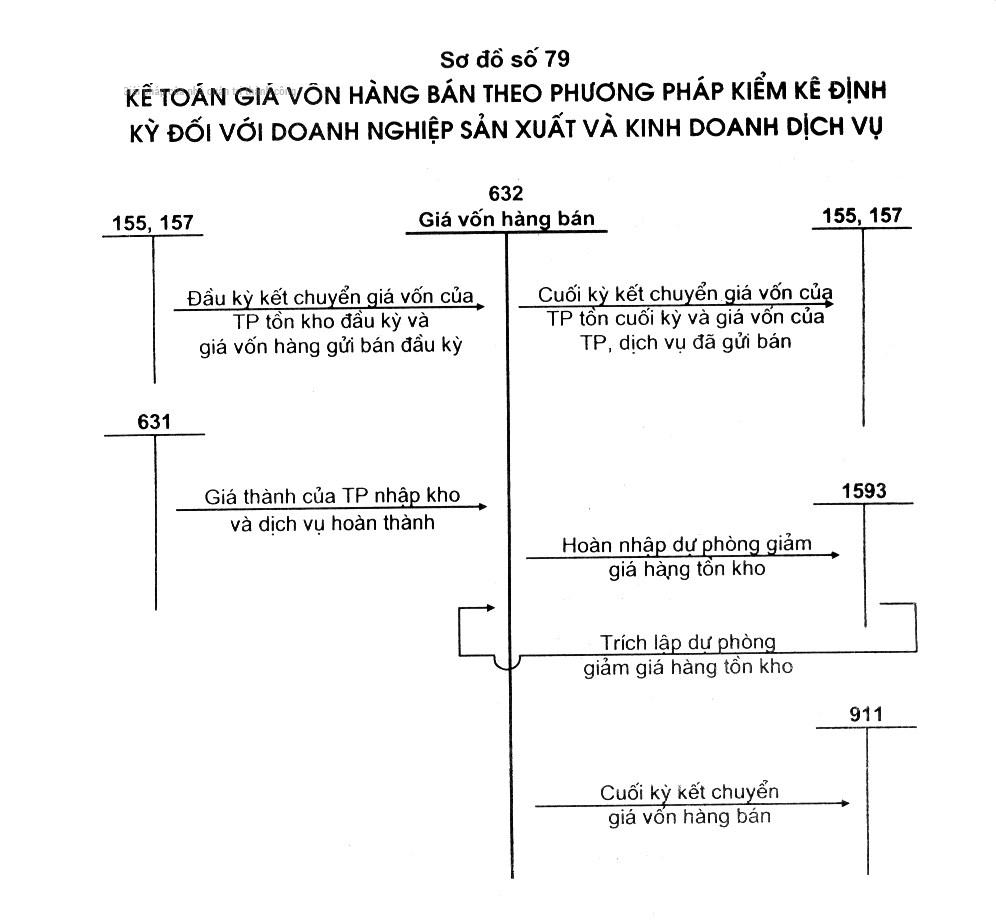
Profit is one of the most important indicators for evaluating a business’s performance. The Cost of Goods Sold is one of the metrics used to determine business profit. The lower this metric, the higher the profit. Therefore, businesses need to implement measures to reduce the Cost of Goods Sold, such as finding raw material suppliers with more competitive prices, increasing labor productivity, reducing manufacturing overhead costs, etc.
The COGS metric is also the basis for pricing a company’s products or services. If the market selling price is lower than the cost of goods sold, the business will incur a loss. Therefore, the selling price of products and services must be higher than the Cost of Goods Sold for the business to make a profit.
Additionally, the Cost of Goods Sold is a factor that needs to be considered when a business makes business decisions, such as production decisions, purchasing decisions, or pricing decisions, to ensure feasibility and the best possible profit for the company.
4. Detailed Standard Method for Calculating Cost of Goods Sold
The formula for Cost of Goods Sold will vary depending on the specific business characteristics of each company. However, in general, the Cost of Goods Sold will be calculated using the 3 common formulas below:

4.1. First-In, First-Out Formula – FIFO
The FIFO (First-In, First-Out) method is a formula for calculating the Cost of Goods Sold based on the price of the first products and goods entered into inventory, with a corresponding quantity. If the quantity is insufficient, the next price in sequence will be used. The First-In, First-Out – FIFO formula is calculated as follows:
| Cost of Goods Sold = The cost of the first products and goods entered into inventory |
The FIFO method is often applied to manufacturing businesses with products that have a short shelf life, such as food, beverages, etc. The advantages and disadvantages of this FIFO calculation method are as follows:
| Advantages | Disadvantages |
| – Accurately reflects the actual value of goods sold. – Allows for specific control over the quantity of goods for each dispatch. – Enables forecasting based on the price of the first products and goods received into inventory. |
– May not accurately reflect the actual value of ending inventory if prices fluctuate significantly. – Calculating costs from a much earlier period can impact revenue. |
Example: A leather shoe manufacturing and trading business has:
- Beginning inventory: 100 products at a price of 100,000 VND/product.
- First purchase: 50 products at a price of 120,000 VND/product.
- Second purchase: 150 products at a price of 90,000 VND/product.
The cost of goods sold for the 150 products sold is determined by the following formula:
(100,000 x 100) + (120,000 x 50) = 16,000,000 VND.
4.2. Last-In, First-Out (LIFO) Method
The LIFO (Last-In, First-Out) method is a formula for calculating the cost of goods sold based on the price of the most recently purchased products or goods. If there is a shortfall, the price of the previous batch is used. Therefore, using the LIFO method helps managers accurately reflect the actual value of the ending inventory.
The Last-In, First-Out (LIFO) formula is determined as follows:
| Cost of Goods Sold = Cost of the last products and goods entered into inventory |
The LIFO method is suitable for manufacturing businesses with items that frequently change models or products with a long shelf life. This is because products with a long shelf life often have high value and slow price fluctuations, helping businesses minimize risks from price changes.
| Advantages | Disadvantages |
| – Minimize the impact of inflation on the cost of goods sold. – The balance sheet value is close to the market value, and the purchase cost is close to the actual cost of goods when sold. |
– The cost of ending inventory may not match the market price. – May not accurately reflect the actual value of ending inventory if prices fluctuate significantly. |
Example: A leather shoe manufacturing and trading business has:
- First stock-in: 20 products at a unit price of 100,000 VND/product.
- Second stock-in: an additional 25 products at a unit price of 110,000 VND/product.
- Afterward, the company sells 30 products
Applying the LIFO method, the cost of goods sold for the 30 products dispatched is calculated as follows:
(20 x 100,000) + (10 x 110,000) = 3,100,000 VND.
4.3. Weighted Average Cost Formula
The weighted average method is a formula for calculating the cost of goods sold based on the average cost of all goods available in stock. Currently, this is a very popular formula used by many businesses, both large and small.
Under this method, the cost of goods sold is determined by the average price of all products and goods in inventory at the time of sale and is applied using the following formula:
| Average cost of goods sold | = | Total inventory value before import + Total value of new import |
| Total inventory quantity before and after import |
The weighted average method is suitable for manufacturing businesses whose products have stable prices without significant fluctuations during the period, such as electronics, refrigeration appliances, etc. This method aims to accurately reflect the actual value of products and inventory.
The pros and cons of this method include:
| Advantages | Disadvantages |
| – Simple, easy to calculate. – Cost of goods sold can be forecasted based on the average price of inventory. |
– Lacks time flexibility for accountants as calculations must be done periodically. |
Illustrative example: A leather shoe manufacturing and trading business has:
- Beginning inventory: 100 products at a price of 100,000 VND/product.
- First purchase: 50 products at a price of 120,000 VND/product.
- Ending inventory: 150 products.
We have:
1. The average cost of inventory is determined as follows:
(100 x 100,000 + 50 x 120,000) / (100 + 50) = 108,000 VND/product
2. The cost of goods sold for the 150 products sold is:
108,000 x 150 = 16,200,000 VND.
5. Example of calculating the cost of goods sold
Calculating the cost of goods sold (COGS) is a crucial metric in accounting and finance, reflecting the direct costs related to producing the goods and services a business has sold during an accounting period. Below is a specific example of how to calculate the cost of goods sold:
Example 1: Retail Store
Input Information:
- Beginning inventory balance: 50,000,000 VND
- Purchases during the period: 100,000,000 VND
- Ending inventory balance: 30,000,000 VND
Formula for calculating Cost of Goods Sold (COGS):
COGS=Soˆˊ dư đaˆˋu kyˋ+Mua haˋng trong kyˋ−Soˆˊ dư cuoˆˊi kyˋCOGS = text{Beginning inventory} + text{Purchases during the period} – text{Ending inventory}
Applying the formula:
COGS=50.000.000+100.000.000−30.000.000=120.000.000VNĐCOGS = 50.000.000 + 100.000.000 – 30.000.000 = 120.000.000 VNĐ
Explanation:
- Beginning inventory is the value of goods the store has on hand at the start of the period.
- Purchases during the period is the amount the store spent to buy more goods during the period.
- Ending inventory is the value of goods remaining after sales during the period.
Therefore, the cost of goods sold for this period is 120,000,000 VND.
This means the store incurred costs of 120 million VND for the goods sold during this period.
Example 2: Manufacturing Company
Input Information:
- Beginning balance of raw materials and supplies: 200,000,000 VND
- Raw materials purchased during the period: 150,000,000 VND
- Labor costs during the period: 50,000,000 VND
- General manufacturing overhead during the period: 30,000,000 VND
- Ending balance of raw materials and supplies: 100,000,000 VND
Formula for calculating Cost of Goods Sold (COGS):
COGS=Beginning Balance+Raw Materials Purchased+Labor Costs+General Manufacturing Overhead−Ending BalanceCOGS = text{Beginning Balance} + text{Raw Materials Purchased} + text{Labor Costs} + text{General Manufacturing Overhead} – text{Ending Balance}
Applying the formula:
COGS=200.000.000+150.000.000+50.000.000+30.000.000−100.000.000=330.000.000VNDCOGS = 200.000.000 + 150.000.000 + 50.000.000 + 30.000.000 – 100.000.000 = 330.000.000 VND
Explanation:
- Beginning balance is the raw materials, supplies, and other production assets remaining from the previous period.
- Raw materials purchased during the period is the cost of purchasing raw materials to produce goods.
- Labor costs are the wages of workers directly involved in production.
- General manufacturing overhead includes indirect costs such as electricity, water, and machinery maintenance.
- Ending balance is the value of remaining raw materials not yet used in production.
Therefore, the cost of goods sold (which can be understood as the cost of finished and sold products) is 330,000,000 VND.
6. Frequently Asked Questions about Cost of Goods Sold (COGS)
What cost components are included in the cost of goods sold?
The cost of goods sold includes 3 main components: direct material costs, direct labor costs, and manufacturing overhead (machine depreciation, factory utilities, transportation, etc.).
What are the most common methods for calculating the cost of goods sold today?
Businesses often apply one of three formulas: First-In, First-Out (FIFO), Last-In, First-Out (LIFO), or Weighted Average (calculated based on the average cost of inventory).
Why do businesses need to accurately determine the cost of goods sold?
Determining the cost of goods sold is the basis for calculating gross profit, setting appropriate product selling prices, and providing important data for strategic production or investment decisions.
What causes fluctuations in the cost of goods sold?
The cost of goods sold often changes due to fluctuations in raw material prices, changes in labor wages, increased transportation costs, or external factors such as exchange rates and inflation.
How can we effectively control and lower the cost of goods sold?
Businesses should optimize their supply chain, improve production processes to reduce waste, and apply technology solutions like 1CRM to automate cost management, thereby minimizing manual errors and increasing operational productivity.
7. Factors Causing Fluctuations in the Cost of Goods Sold
The cost of goods sold is not a fixed number but changes frequently depending on many objective and subjective factors. Understanding these factors helps businesses better predict and control fluctuations. Below are the main factors that directly affect the cost of goods sold, which businesses need to monitor closely.
7.1. Fluctuations in Raw Material Input Prices
Raw materials account for a large proportion of the cost of goods sold, especially in the manufacturing, construction, and F&B industries. When raw material prices rise, input costs increase, causing the cost of goods sold to go up and profits to shrink. Conversely, if raw material prices fall, businesses can take advantage of this to increase their profit margins.
For example: A construction company during a period when steel prices increase by 30% will be forced to adjust contracts or accept reduced profits. Businesses that know to stockpile raw materials in advance have a greater competitive advantage.
7.2. Labor Productivity and Labor Costs
Direct labor is a component of the cost of goods sold, especially in manufacturing and services. If productivity is low, working hours are extended, and overtime increases, labor costs will rise, driving up the cost of goods sold. Conversely, when training, standard processes, or automation are applied, the labor cost per unit of product decreases, helping to lower the cost of goods sold.
For example: A garment factory applying a Lean production line can reduce the sewing time per product by 15%, thereby saving significant labor costs.
<h3 data-start="1
Controlling the cost of goods sold is one of the keys to improving gross profit margin. The better a business manages the costs that make up COGS, the more competitive it becomes. Some solutions below help businesses save costs while maintaining the quality of their products and services.
8.1. Optimizing the supply chain and raw material sources
The supply of raw materials is the largest component of the cost of goods sold. If a business depends on a single supplier, it becomes vulnerable to price fluctuations. Diversifying supply sources and negotiating long-term contracts helps reduce risks and stabilize input costs.
In fact, many F&B businesses in Vietnam have chosen to sign contracts to import raw materials from various countries to prevent a sudden price increase in one market from affecting their entire production. This is not only a cost-saving solution but also creates flexibility when the supply chain is disrupted.
8.2. Applying technology and cost management software
Modern technology helps businesses control costs in real-time. ERP (Enterprise Resource Planning) systems that integrate inventory management, accounting, and sales allow for automatic cost recording and COGS calculation. This enables managers to track every expense as it occurs.
For example, a textile company using an ERP system discovered that machinery maintenance costs accounted for 8% of its total COGS. They then restructured their maintenance schedule to save 3% in costs annually.
8.3. Improving productivity and reducing production waste
Low labor productivity and unscientific production processes increase the cost per product unit. Applying management philosophies like Lean Manufacturing, 5S, and Kaizen helps eliminate redundant steps and reduce raw material waste, thereby lowering the cost of goods sold.
A prime example is Toyota, which, thanks to its Lean production system, cut raw material waste by 25%, enabling a competitive COGS while maintaining quality.
9. Methods for allocating production costs to COGS
In accounting, production costs must be allocated reasonably to determine an accurate cost of goods sold. Choosing an allocation method not only ensures compliance with accounting standards but also accurately reflects production efficiency. The following cost allocation methods are commonly used, depending on the specific characteristics of each type of business.
9.1. Direct allocation method by product or order
This method assigns production costs directly to each product or contract. Its advantage is that it accurately reflects the COGS of each unit, but its disadvantage is that it is labor-intensive for accounting, especially with a large number of orders.
Example: A machine shop that processes custom orders allocates all labor, material, and utility costs directly to that specific order.
9.2. Coefficient method for multiple products from the same raw material
When multiple different products are created from a single type of input material, businesses use a coefficient to allocate costs. This method ensures fairness when the products have different values.
Example: In the oil refining industry, crude oil can produce gasoline, kerosene, and asphalt. Allocating costs based on a conversion coefficient for each product type helps to accurately reflect the COGS.
9.3. Proportional method based on standard costs
Businesses establish standard cost norms for each product and then allocate production costs based on this proportion. At the end of the period, they compare actual costs with the standard costs to make adjustments. The advantage is that it’s easy to control; the disadvantage is its dependence on the accuracy of the initial standard.
Example: A sneaker manufacturer calculates that one pair of shoes requires 0.5m² of cowhide and 1.2 hours of labor. If actual costs exceed this standard, it’s a warning sign that the process needs adjustment.
10. Trends in managing COGS in the digital age
Technology is changing how businesses calculate and manage the cost of goods sold. From manual record-keeping, businesses can now apply software, AI, and big data to control costs more effectively. Below are prominent trends that help businesses manage COGS in a modern and sustainable way.
10.1. Automating accounting and inventory management with ERP
ERP helps automate the COGS calculation process, from inventory receipts and issues to accounting entries. Thanks to data integration, businesses not only reduce manual errors by 70–80% but also shorten the time to prepare financial reports from several days to just a few hours.
Example: A trading company that implemented SAP ERP reduced the time for reconciling data between the warehouse and accounting by 50%, while also eliminating the need for 2 data entry personnel.
10.2. Applying AI in cost forecasting and cost of goods sold optimization
AI can analyze historical data, combined with market fluctuations, to forecast raw material price trends. This helps businesses know when to purchase inventory to optimize costs.
For example: In the food industry, AI can predict agricultural seasons, thereby recommending that businesses purchase raw materials before prices increase.
10.3. Real-time cost of goods sold management with IoT and sensors
IoT, barcodes, and RFID allow for instant inventory data updates. This helps businesses not only know their actual inventory levels but also calculate the cost of goods sold accurately at the moment of dispatch.
For example: Amazon uses an RFID system to track inventory in its massive warehouses, ensuring that the cost of goods sold is accounted for accurately down to the minute.
10.4. Connecting cost of goods sold data with the entire supply chain
Today, managing the cost of goods sold is not limited to internal operations but extends to the entire supply chain. When data on raw materials, logistics, and distribution is synchronized, actual costs are updated more quickly and transparently.
10.5. Analyzing Big Data to predict fluctuations in raw materials and costs
Big Data combines market data, macroeconomic policies, exchange rates, etc., to create models for predicting future cost of goods sold. Businesses can proactively adjust their production and purchasing strategies based on these forecasts.
11. Conclusion
We hope that through this article, you have gained a better understanding of the cost of goods sold and the accurate calculation formula shared by 1Office. This is a crucial indicator for evaluating the efficiency of a company’s production and business operations. Fluctuations in the cost of goods sold can directly impact a company’s profitability. Therefore, businesses need to implement measures to manage their purchasing and sales processes.
Among them, 1Office CRM software is one of the most comprehensive solutions available today to help businesses manage and control their purchasing and sales processes effectively. Proud to be the software used by over 5,000 businesses, 1Office has helped many companies manage all operations and achieve outstanding business efficiency.
















