


 10/05/2026
  157 views
Customer care is not just a service but also the art of building trust and credibility with customers. In today’s fiercely competitive era, an effective customer care strategy is the key to helping businesses gain a competitive edge and maintain market share. Let’s explore customer care and effective methods and strategies with 1Office in the article below!
Mục lục
- 1. What is customer care?
- 2. The role of customer care
- 3. Components of a Customer Care System
- 4. What is a Customer Service Representative?
- 5. Common Types of Customer Care Today
- 6. The Standard Customer Care Process
- 7. Effective Customer Care Strategies for Businesses
- 8. Differentiating Between Customer Care and Customer Service
- 9. Frequently Asked Questions about Customer Care (FAQ)
- 10. Effective Customer Care Solution for Sales
1. What is customer care?
Customer Care refers to the activities a business implements to meet the needs and desires of customers, helping to increase their trust, satisfaction, and loyalty to the brand. Customer care activities take place throughout the pre-sale, during-sale, and post-sale processes.

Customer care is also understood as a department within a business, specifically responsible for activities related to customers. A business with good customer care service will create a positive experience for new customers and retain existing customers longer.
2. The role of customer care
In today’s fiercely competitive era, customer care is a crucial factor determining a business’s success. Therefore, businesses need to focus on investing in customer care services to provide the best shopping experience.
2.1. Building relationships with customers
The relationship between a business and its customers is extremely important. Effective customer care helps businesses build strong relationships with customers, making them feel respected and valued.
Unlike focusing solely on building customer relationships based on business goals, customer care emphasizes supporting and attending to customers’ needs. This encourages customers to return at different stages of the purchasing process.
2.2. Creating a positive shopping experience
The customer’s shopping experience is the entire process of their interaction with the business, from the moment they become aware of the business until they use its products/services. Effective customer care helps businesses create a positive shopping experience for customers, leaving them satisfied and willing to return.
2.3. Building reputation and brand
Customer care is also an opportunity to communicate the company’s core values to customers. Reputation and brand are crucial factors that determine a business’s success. Effective customer care helps businesses build a positive reputation and brand, leading customers to trust and highly value the business.

2.4. Retaining existing customers
Retaining existing customers is a crucial task for any business. Existing customers are more likely to continue purchasing from the business than new customers. Effective customer care helps businesses retain existing customers, reducing the cost of acquiring new ones.
2.5. Attracting potential customers
Attracting potential customers is an important task for a business. Effective customer care helps businesses attract potential customers, making them feel satisfied and want to purchase from the business.
2.6. Improving operational efficiency
Effective customer care helps businesses minimize marketing and advertising costs. When customers are satisfied with a business’s products/services, they will be willing to recommend them to friends and family. This helps the business reach more potential customers, improve operational efficiency, and increase revenue and profit.
> Read more: Win over customers with 45+ effective customer service question templates for every situation
3. Components of a Customer Care System
A customer care (CSKH) system is a combination of tools and solutions used to interact with and support customers effectively. Below is an analysis of the three main components of a standard customer care system:
3.1. Customer Care Support Call Center
A customer care support call center is the direct communication hub between a business and its customers via telephone. This system is responsible for receiving and handling customer inquiries and issues quickly and professionally. The main communication channels are typically phone, email, text messages, and the company’s official social media networks.
A customer support call center is the direct communication hub between a business and its customers via telephone. It is responsible for receiving and handling customer inquiries and issues quickly and professionally. The features of a support call center include:
3.2. Call Management System
A call management system is a tool that helps businesses control and optimize the handling of incoming and outgoing calls. It is a crucial platform that enables the call center to operate efficiently and in an organized manner. Some features of a call management system include:
- Analyze and track the number of calls, average handling time, successful call rate, and other performance indicators.
- Call traffic management: Supports routing calls to the appropriate departments and agents to reduce wait times and increase service efficiency.
- Automatically route, queue calls, or even provide automated responses for certain situations via chatbot.
- Integrate with a CRM system to store customer data, helping agents better understand customers and provide superior service.
3.3. Customer Relationship Management (CRM)
CRM (Customer Relationship Management) is a system that allows businesses to manage and analyze customer interactions. CRM not only helps store customer information but also plays a crucial role in enhancing the customer experience. Some features of a CRM system include:
- Storing customer information: customer details, purchase history, etc.
- Tracking all business-customer interactions
- Segmenting customers based on criteria such as order value and interaction level, helping businesses develop appropriate care and sales strategies.
- Automating processes from sending emails to setting up event-triggered actions.
4. What is a Customer Service Representative?
A customer service representative is a crucial position within a business, belonging to the customer service department. They are the ones who interact directly with customers to answer questions, resolve complaints, and address requests and desires regarding the company’s products/services.
Customer service representatives are responsible for ensuring that customers are satisfied with their purchasing experience, thereby helping the business retain existing customers and attract new ones.
4.1. Job Description of a Customer Service Representative
In a business, a customer service representative will have the following responsibilities:
- Receive and resolve customer requests, inquiries, and complaints through various channels such as phone, email, online chat, etc. They will listen carefully and empathetically to customers, identify the problem, and provide a suitable solution.
- Provide customers with information about the company’s products/services, including details on features, pricing, usage instructions, etc.
- Assist customers in using the product/service, such as providing user guides, troubleshooting product errors, etc.
- Build and maintain long-term relationships with customers, regularly contacting them to check on their product/service usage.
- Respond to reviews and inquiries about the brand’s products/services on forums and social media platforms owned by the business.
- Encourage repeat purchases by proactively offering promotions, special offers, etc., to existing customer groups.
4.2. Essential Skills for a Customer Service Representative
To become a professional customer service representative, here are some essential skills this position requires:

Communication Skills: Customer service representatives need excellent communication skills, both verbal and written. They must be able to listen carefully and empathetically to customers while conveying information clearly and coherently.
Problem-Solving Skills: Customer service representatives need to be able to solve problems quickly and effectively. This includes the ability to analyze issues, identify root causes, and propose suitable solutions.
Listening Skills: Good listening skills help customer service representatives accurately understand customer needs and desires. This makes it easier to ask open-ended questions to identify the problem and offer an appropriate solution.
Teamwork Skills: Customer service representatives often work in a team, so they need strong teamwork abilities. They must be able to coordinate with colleagues, share information, and collaborate to achieve common goals.
Stress Management Skills: Customer service representatives often face stressful situations, such as when dealing with customer complaints. Therefore, an essential skill is the ability to manage stress effectively to avoid impacting the quality of the company’s service.
Additionally, customer service representatives also need a basic knowledge of the company’s products/services and regulations.
4.3. Factors for Becoming a Customer Service Representative
Attitude is the most important factor for a customer service representative. A positive, professional, and helpful attitude is essential for making a good impression on customers.
- Proactively understand customer needs and desires, and proactively resolve their issues.
- Patiently listen to customers, maintaining focus and composure even when they are complaining.
- Focus on the customer and their problem, avoiding distractions to show respect and care.
- Be tactful in communication with customers to avoid unnecessary misunderstandings or conflicts.
- Be flexible and adaptable in handling situations, including unexpected ones.

Expertise is the second most important factor for a customer service representative. Specifically, as a customer service representative, you need to have:
- Knowledge of the company’s products/services, including their features, functions, advantages, and disadvantages.
- Knowledge of company policies and regulations, such as return policies, warranty policies, promotional programs, etc.
- Foreign language skills to communicate in multinational environments, which also creates opportunities for future advancement.
4.4. Career Opportunities for Customer Care Staff
According to some behavioral studies by McKinsey & Company, about 70-80% of Vietnamese consumers are willing to pay more for products and services from businesses with good customer care, even when cheaper products are available on the market.
The growth of the customer care service industry has created many job opportunities for customer care staff. However, in reality, the supply of high-quality human resources in this field is still limited. This is due to the increasingly fierce competition among businesses to attract and retain customers.
Along with this, the development of technology, especially the Internet and mobile devices, has changed the way businesses and customers communicate. Businesses are increasingly using various channels to provide customer care services, such as call centers, email, social media, chatbots, etc. This requires customer care staff to have multi-channel communication skills and be proficient in using technological tools.
In addition, businesses are also increasingly focusing on personalizing customer service to provide the best experience. With such development opportunities, the customer care service industry will be one of the professions with high demand for human resources in the future.
5. Common Types of Customer Care Today

5.1. In-Person Customer Care
In-person customer care is a traditional form where customer care staff interact directly with customers at stores, service centers, etc.
This type of customer care offers many benefits to businesses, such as building trust and loyalty with customers, enhancing sales capabilities, and easily collecting customer feedback.
5.2. Customer Care via Phone
The phone is the most common form of customer care today, where staff interact with customers over the phone. This method offers convenience and cost savings for customers, thereby enhancing sales capabilities.
5.3. Customer Care via Email and Messaging
Email and messaging are forms of customer care where customer service staff interact with customers via email or messages. With this method, businesses can send product and service information to many customers at once, providing a higher reach than other methods.
5.4. Customer Care via Social Media
Social media is a form of customer care where staff interact with customers through social media platforms like Facebook, TikTok, Twitter, Instagram, etc.
5.5. Customer Care via Live Chat
Live Chat is a form of customer care where customer service staff interact directly with customers through live chat applications like Facebook Messenger, Zalo, WhatsApp, etc.
Integrating Chatbots or Live Chat is gradually becoming a comprehensive and effective customer care tool. This method helps improve customer service efficiency, answer questions automatically, and provide immediate support responses.
5.6. Customer Care via Forums
Forums are a form of customer service where staff participate in customer forums to answer questions and address complaints. At the same time, this is the best way for businesses to promote products for free and achieve high efficiency.
6. The Standard Customer Care Process

6.1. Pre-Sales Stage
The pre-sales stage is when a business reaches out to and attracts potential customers. During this stage, the business needs to focus on the following activities:
- Identify customer needs and wants: The business needs to conduct market research to clearly understand the needs and wants of potential customers.
- Build brand and image: The business needs to build a professional and reputable brand and image to attract customers.
- Reach customers: The business can use traditional marketing channels like advertising, PR, etc., or modern marketing channels like online marketing, email marketing, etc., to reach potential customers.
- Interact with customers: The business needs to communicate effectively with potential customers to provide information about products/services and answer their questions.
6.2. Post-Sales Stage
The post-sales stage is when the business delivers the product/service to the customer and continues to provide care after the sale. During this stage, the business needs to focus on the following activities:
- Send a post-sale thank-you letter and provide advice: Immediately after a customer makes a purchase, the business should send a thank-you letter to show appreciation. Additionally, the thank-you letter can include some useful advice for the customer on using the business’s product/service.
- Ask for customer feedback after they experience the product: This helps the business better understand its product/service and improve its quality.
- Maintain communication and provide useful information to customers: This information exchange can occur through channels like email, SMS, or social media. The business can provide customers with useful information about products/services, promotional programs, or company activities.
- Improve customer support services: Good support service will make customers more satisfied with the business’s product/service and increase the likelihood of them making repeat purchases.
- Combine promotions for new products/services: During the post-sales customer care process, the business can combine promotions for its new products/services to enhance sales efficiency and boost revenue.
> Read more: Professional After-Sales Customer Care Process
7. Effective Customer Care Strategies for Businesses
To build effective customer care strategies, leaders and managers can apply the following strategies in their businesses:
Establish a Vision for Customer Care Standards
Businesses need to establish a clear and consistent vision, such as becoming a “leading service provider,” and convey this message and vision to the entire staff. This will be the foundation for all customer care activities within the company to be implemented and executed in line with this motto. Simultaneously, communicating this vision to customers is also essential to strengthen their trust in the company’s reputation.
Focus on the Customer Experience
Training employees to record and handle customer feedback quickly and effectively is necessary and important for any business. Businesses can learn from companies that have succeeded in providing customer care services. Combining listening to customers and learning from other businesses will create a comprehensive and high-standard customer care system.
Identify Factors Affecting Customer Satisfaction
Businesses will need to set specific standards such as response time, service accuracy, and a quick and effective complaint resolution process. This not only creates transparency in the customer care process but also helps employees focus fully on their tasks—the key factors affecting customer satisfaction.
Assign Experienced Staff
To ensure the quality of customer care, assign tasks to employees with extensive experience and expertise. These employees not only share their experience but also supervise and support colleagues in delivering customer care services, thereby maintaining high standards.
Motivate Employees Through Reward Programs
Creating reward programs to recognize and encourage employees with outstanding achievements will promote healthy competition within the company, thereby enhancing the quality of customer care services.
Apply Technology in Customer Care
Applying technology and CRM software will help businesses manage and interact with customers more easily, thereby enhancing the customer experience. At the same time, modern technologies will increase convenience and efficiency in handling customer issues, significantly improving service quality.
8. Differentiating Between Customer Care and Customer Service
| Characteristics | Customer Care | Customer Service |
| Concept | Customer care is a continuous process that includes all of a business’s activities aimed at meeting the needs and wants of customers before, during, and after a purchase. | Customer service is a part of customer care, focusing on providing support and resolving customer issues during their use of the business’s products/services. |
| Goal | To meet the needs and wants of customers, creating satisfaction and building customer loyalty. | To resolve customer issues, ensuring they are satisfied and continue to use the business’s products/services. |
| Timing | Occurs throughout the entire customer lifecycle: before, during, and after the customer has made a purchase. | Occurs while the customer is using the product/service. |
| Activities | Includes: marketing and advertising, customer discovery, building customer relationships, customer support, remarketing, and collecting customer feedback. | Includes activities such as: answering inquiries, handling complaints, providing user guides, technical support, warranty services, and returns/exchanges. |
| Role | To enhance the business’s operational efficiency, product/service quality, and brand building. | To retain customers and increase sales revenue. |
Comparison table of customer service and customer care
9. Frequently Asked Questions about Customer Care (FAQ)
To help you better understand and effectively apply the knowledge in this article, here are the answers to frequently asked questions about customer care activities – from concepts and processes to measuring actual effectiveness.
9.1. How is customer care different from after-sales care?
Customer care (CSKH) is the entire process of interacting with and supporting customers before, during, and after a purchase. Meanwhile, after-sales care is just one part of customer care, focusing on the stage after the transaction is complete to maintain satisfaction, handle feedback, provide warranties, and encourage repeat purchases.
9.2. Should small businesses invest in a CRM system?
Yes. Even small businesses should use a CRM (Customer Relationship Management) to:
-
Store customer information centrally, preventing data loss.
-
Automate the customer care process, saving time.
-
Track interaction history to personalize the experience.
There are now many low-cost or free CRM solutions suitable for startups or SMEs.
9.3. How to measure the effectiveness of customer care?
Some important metrics (KPIs) include:
-
CSAT (Customer Satisfaction Score) – customer satisfaction level.
-
NPS (Net Promoter Score) – the likelihood of customers recommending the brand.
-
Customer Retention Rate.
-
Response rate and request processing time.
Tracking these metrics helps businesses continuously improve service quality and build customer loyalty.
10. Effective Customer Care Solution for Sales
1Office CRM is an effective customer care software (CRM) that helps businesses comprehensively manage customer information. This includes personal information, transaction details, purchase history, customer feedback, and more.
With over 6,000 businesses and more than 500,000 users, 1Office is the leading customer care solution in the Vietnamese market. The platform provides a full range of features for Sales to care for customers, from managing customer information, sales, purchases, and marketing to managing revenue and expenditures within the business.
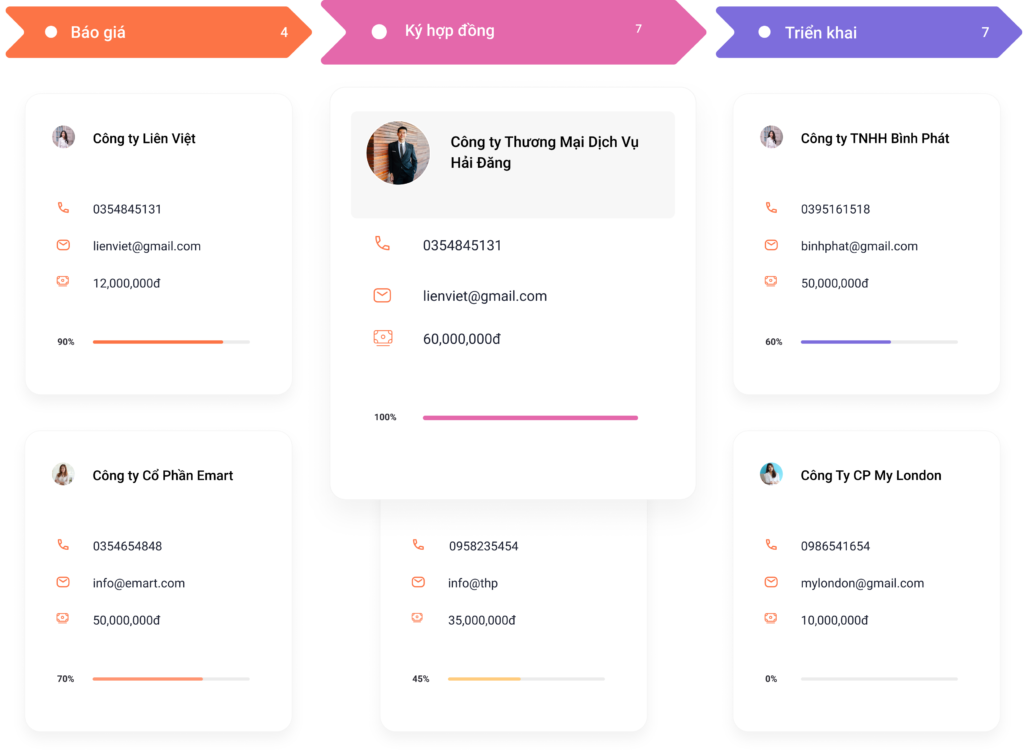
Here are some useful features that help businesses provide effective customer care, such as:
- Store and manage customer information scientifically, helping Sales staff easily find customer information when needed.
- Automate the customer care process, helping employees save time and effort to focus on other tasks.
- Integrate with the business’s sales channels such as websites, social media, etc., helping the business provide effective customer care across various channels.
In summary, 1Office CRM is an effective customer care solution for Sales. By implementing the software, businesses can enhance customer care efficiency, increase employee productivity, retain existing customers, and attract new ones.
Customer care is a broad and complex field, but it is also crucial for a business’s success. To provide good customer care, businesses need to build a professional customer care department with a team of highly qualified and skilled employees. Additionally, businesses also need to invest in tools and technologies that support customer care.
















