12/05/2026
  346 views
Maslow’s hierarchy of needs is one of the most famous models when it comes to human behavioral motivation. But what is Maslow’s hierarchy of needs, what are its levels, and why is this model still widely used in business administration, marketing, and human resources? This article will help you quickly understand everything from the concept to its practical applications.
Mục lục
- 1. What is Maslow’s Hierarchy of Needs?
- 2. The Significance of Maslow’s Hierarchy of Needs
- 3. The 5 Levels of Maslow’s Hierarchy of Needs
- 4. The 8-Level Maslow’s Hierarchy of Needs (Expanded)
- 5. Applying Maslow’s Model in Business Management
- 6. Considerations When Applying Maslow’s Hierarchy of Needs
- 7. FAQ: Frequently Asked Questions
1. What is Maslow’s Hierarchy of Needs?
According to Wikipedia, Maslow’s hierarchy of needs is a famous psychological theory proposed by psychologist Abraham Maslow in 1943. This theory describes 5 levels of human needs, from lowest to highest, including: physiological needs, safety needs, social needs, esteem needs, and self-actualization needs.

Maslow’s hierarchy of needs is depicted as a pyramid, with the most basic needs at the bottom and higher-level needs at the top. Maslow argued that people will only focus on higher-level needs once their basic needs have been met.
Today, Maslow’s hierarchy of needs is a useful tool for understanding human motivation and is applied in many different fields such as education, marketing, and business administration.
>> See more: Application of Maslow’s Hierarchy of Needs in Business 4.0
2. The Significance of Maslow’s Hierarchy of Needs
Maslow’s hierarchy of needs plays an important role for businesses, specifically:

1. Understanding human motivation: Maslow’s hierarchy of needs helps us understand what drives people to act, why they work, and why they pursue different goals. From there, business managers can build effective strategies to motivate people to achieve their goals.
2. Application in various fields: The Maslow model can be applied to many different fields such as business operations, marketing, and more broadly, business administration. By understanding customer needs and creating suitable marketing strategies, businesses can effectively attract and retain customers.
3. Creating an effective work environment: In business, Maslow’s theory of needs can help managers understand employee needs and create a suitable work environment to meet those needs. This will help employees feel valued and motivate them to work more effectively.
4. Improving work efficiency: When employees’ needs are met, they will feel satisfied with their jobs and be motivated to work more efficiently. This helps the business achieve its business goals.
5. Personal development: Maslow’s hierarchy of needs can also be applied to personal development. Understanding your own needs will help you set goals and create a plan to achieve them.
3. The 5 Levels of Maslow’s Hierarchy of Needs
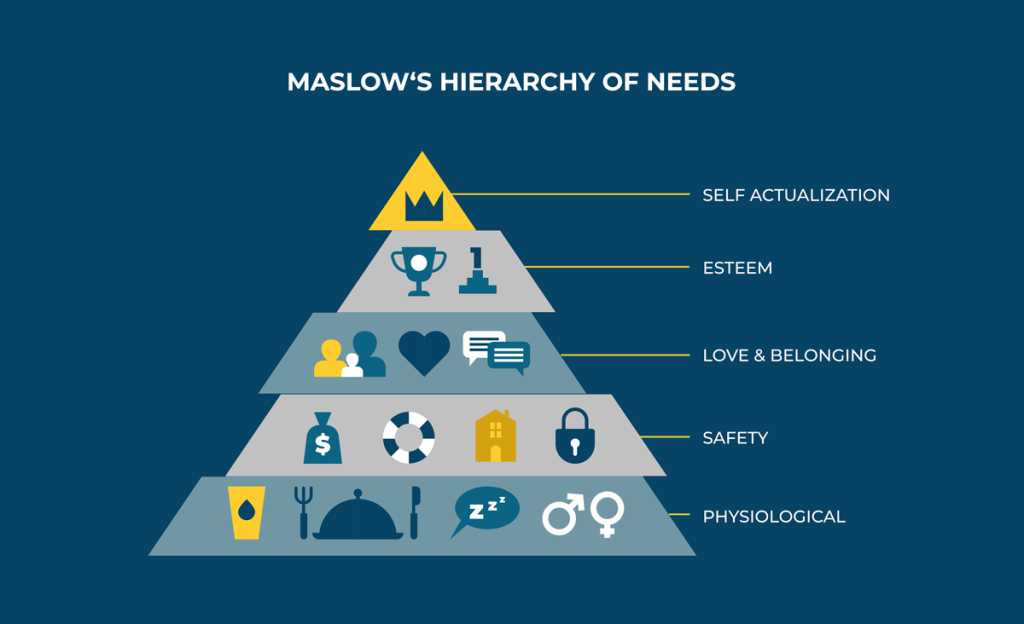
Maslow’s hierarchy of needs is a useful tool for understanding human motivation and can be applied in many different contexts, such as the workplace, the classroom, and personal relationships. The five levels of needs in Maslow’s Hierarchy are:
- Physiological needs: These are the most basic needs essential for survival, such as food, water, air, shelter, and sleep.
- Safety needs: These needs relate to safety and protection from danger, including the need for a safe place to live, job stability, and healthcare.
- Social needs (relationships, affection): These needs relate to the feeling of being connected to others, such as the need for love, friendship, and belonging.
- Esteem needs: These needs relate to the feeling of being valued and respected, such as the need for self-esteem, confidence, and achievement.
- Self-actualization needs: This is the highest need in the hierarchy and relates to the need to realize one’s full potential and achieve what one desires in life.
4. The 8-Level Maslow’s Hierarchy of Needs (Expanded)
The expanded Maslow’s hierarchy of needs model (also known as the 8-level Maslow’s hierarchy) was proposed by several psychologists and management scholars, based on the traditional 5-level model. In addition to the 5 tiers representing the 5 basic human needs, the Maslow hierarchy has 3 expanded levels: cognitive, aesthetic, and self-esteem. Specifically:
- Cognitive needs: This need relates to the desire to learn, explore, and understand the world around us, including the need to seek knowledge, truth, and meaning.
- Aesthetic needs: This need relates to the desire to experience beauty and harmony in life, such as the need for art, music, nature, and balance.
- Self-esteem needs: This need relates to the desire to be highly regarded and trusted, including self-respect and self-confidence.
5. Applying Maslow’s Model in Business Management

5.1. Applying Maslow’s Hierarchy of Needs in Marketing
Maslow’s hierarchy of needs helps managers understand customer needs at different levels, allowing businesses to develop suitable products and services to meet those needs. Maslow’s theory is also applied to build strategies for attracting potential customers. For example, marketers can target customers at the safety needs level with insurance products or security services.
Additionally, Maslow’s hierarchy of needs helps businesses craft marketing messages that align with customer needs. For instance, marketers can use messages that evoke feelings of safety and comfort to attract customers at the safety needs level.
5.2. Applying Maslow’s Hierarchy of Needs in Human Resource Management
Maslow’s hierarchy of needs helps HR managers understand the motivations and desires of employees at each need level. This enables them to create appropriate policies and programs to meet employee needs and foster a work environment that attracts and retains talent.
Analyzing Maslow’s model helps HR managers understand the factors that drive employees to work effectively and apply suitable methods to boost employee motivation, thereby reducing turnover rates within the company.
>> See more: 10 great tips to boost employee morale
5.3. Applying Maslow’s Hierarchy of Needs in Business
Maslow’s hierarchy of needs is a useful tool that helps businesses understand customer needs and build effective business strategies. Here are some ways businesses can apply Maslow’s hierarchy of needs in their business strategy:
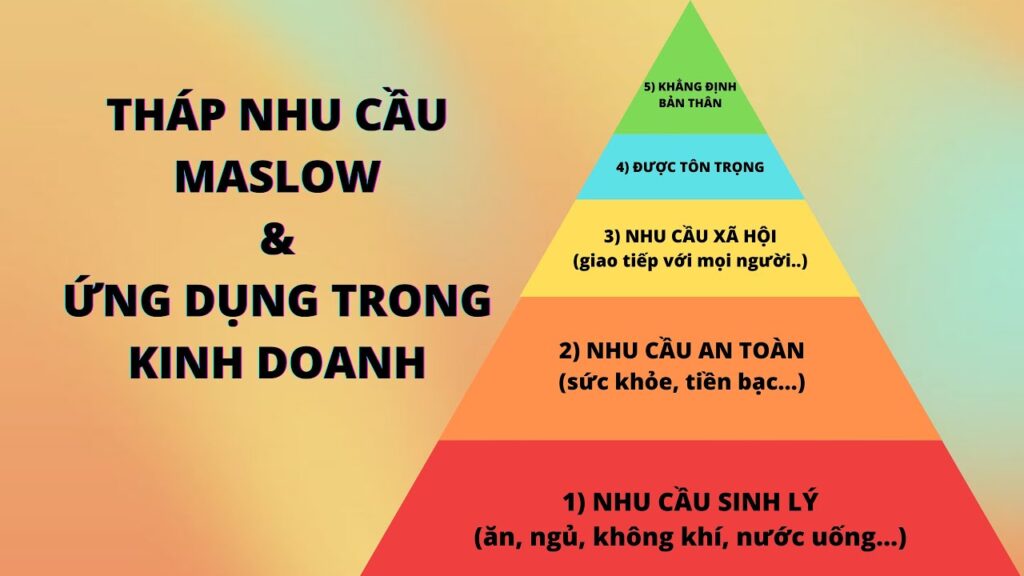
- Market and customer analysis: Clearly understanding customer needs at each level of Maslow’s hierarchy can help businesses create suitable products and services.
- Building a marketing strategy: Customize marketing messages and advertising strategies to address specific customer needs.
- Developing customer relationships: Create a shopping or service environment where customers feel safe, trusted, and a sense of belonging.
- Building a brand image: Create a brand where customers feel they are not just buying a product, but are part of a community or a larger value.
- Developing HR policies and a work environment: Provide a work environment where employees feel safe, respected, and have opportunities for self-development.
- Employee policies and benefits: Provide bonus and benefit policies to meet safety needs and motivate employees.
6. Considerations When Applying Maslow’s Hierarchy of Needs
Maslow’s hierarchy of needs is a useful tool for businesses to understand the needs of customers and employees, thereby building appropriate strategies. However, businesses should be aware of the limitations of this model and apply it flexibly to achieve the best results.
- Maslow’s hierarchy of needs is a theoretical model and is not always true in every real-world situation; each person’s needs are different and can change over time.
- People do not always satisfy lower-level needs before moving on to higher-level needs. For example, a person might be willing to sacrifice safety needs to pursue esteem or self-actualization needs.
- Human needs can change due to many factors such as culture, living circumstances, and personal experience. Businesses need to be flexible in applying this model to suit specific cases.
- The levels of needs are not completely separate but can be related and influence each other. Additionally, each person’s level of need satisfaction is subjective and difficult to measure accurately.
7. FAQ: Frequently Asked Questions

7.1. Does Maslow’s Hierarchy of Needs have limitations?
Maslow’s model does have limitations, raising many questions about its accuracy and application. Specifically:
- The theoretical model is not always true in every real-world situation.
- The hierarchy of needs is not fixed; people do not always satisfy lower-level needs before moving on to higher-level needs.
- Human needs can change due to many factors such as culture, living circumstances, and personal experience.
- The levels of needs are not completely separate but can be related and influence each other.
- Each person’s level of need satisfaction is subjective and difficult to measure accurately.
- Maslow’s hierarchy of needs is just a simple model and cannot explain all human behaviors.
7.2. Is every need at a single, specific level on Maslow’s hierarchy?
No, human needs can change and overlap. For example, a person might be at the safety needs level but simultaneously have a need for esteem.
7.3. Is Maslow’s hierarchy of needs still relevant today?
Yes, Maslow’s hierarchy of needs is still a useful model for understanding human needs; however, it needs to be applied flexibly to be relevant in the modern era.
7.4. How can Maslow’s hierarchy be applied to motivate employees?
To motivate employees by applying Maslow’s hierarchy of needs, you can take the following measures:
- Provide a safe and comfortable work environment, ensuring that employees have adequate conditions regarding salary, bonuses, insurance, and other welfare policies.
- Create a work environment where employees feel a sense of belonging, respect, and support.
- Build an open and positive work environment that encourages collaboration and connection among employees.
- Recognize employee results through rewards, praise, and ceremonies to acknowledge achievements.
- Create opportunities for employees to foster their personal potential and develop new skills through training courses and development programs.
By focusing on meeting the different needs of employees according to Maslow’s hierarchy, you can create a positive work environment where employees feel motivated and willing to contribute to the organization’s success. Wishing your business success