


 10/05/2026
  177 views
What is the 4P model? This is one of the fundamental marketing strategy frameworks that helps businesses effectively strategize their product, price, place, and promotion. A clear understanding of each element in the 4P model will help marketers build suitable strategies, optimize sales, and create a sustainable competitive advantage. In this article, let’s join 1Office to explore the components, strategy implementation, and notable case studies in detail.
Mục lục
- 1. What is the 4P Model in Marketing?
- 2. The Components of the 4P Marketing Model
- 3. The Significance of the 4P Marketing Strategy
- 4. Advantages and Disadvantages of the 4P Marketing Model
- 5. How to Build a 4P Marketing Mix Strategy
- 6. Steps to Develop a 4P Strategy in the Marketing Mix (4Ps)
- 7. Case Studies of the 4P Strategy in Marketing
- 8. Combining the 4P and 4C Strategies in the Marketing Mix
- 9. Frequently Asked Questions about the 4P Model
- 10. Conclusion
1. What is the 4P Model in Marketing?
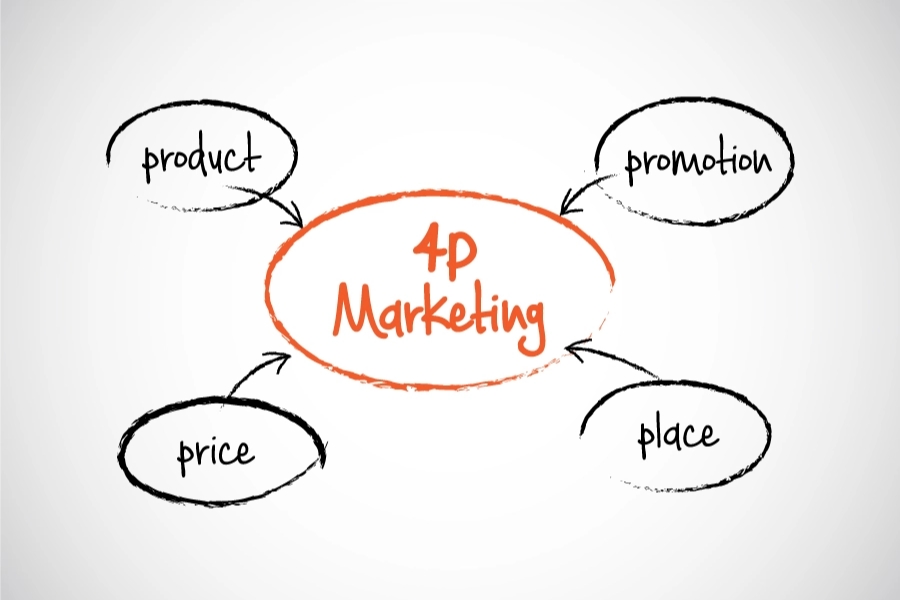
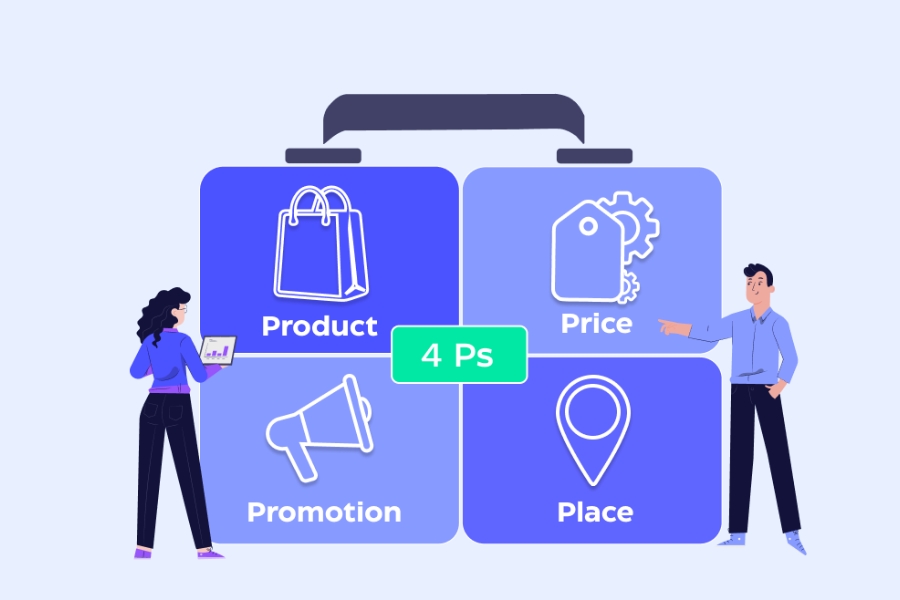
The 4Ps in Marketing describe the key decisions a business needs to make to bring a product to market: what to offer (Product), what to charge for it (Price), where to distribute it (Place), and how to promote it (Promotion). These four elements, also known as the Marketing Mix, form a strategic framework that helps businesses successfully bring their products or services to customers. The 4P model was developed in the 1950s and became the foundation of early marketing strategies.
Over time, to meet the demands of modern marketing, marketers have expanded this model by adding three new elements: People, Process, and Physical Evidence, making the model more comprehensive for today’s marketing aspects.
The 4P model in Marketing describes the key decisions a business needs to make to bring a product to market
2. The Components of the 4P Marketing Model
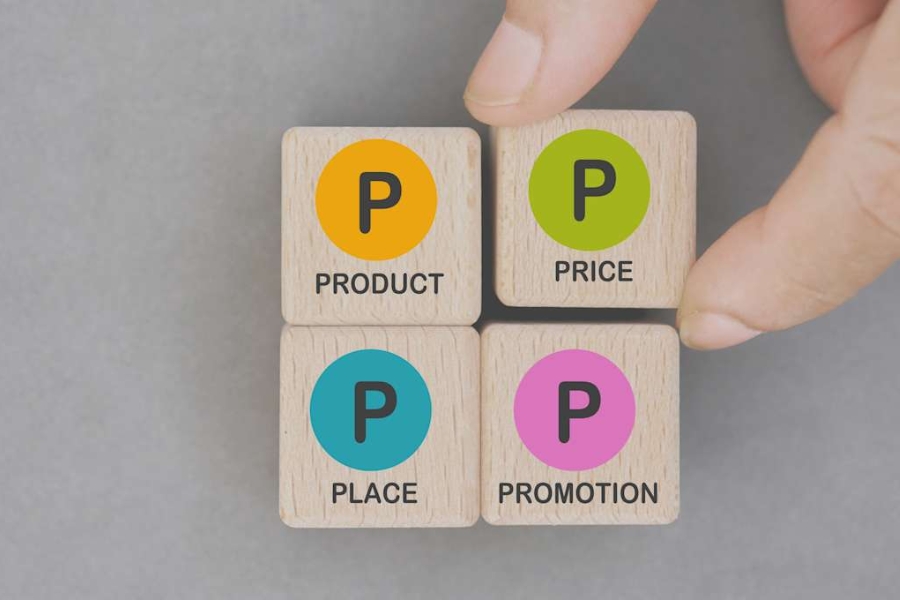
Below are the basic components of the 4P model, including:
2.1. Product (Product/Service)
The product or service is the core element of any marketing strategy. Before launching any campaign, a business needs to clearly understand what its product is, who needs it, and why customers would choose it over a competitor’s product. A successful product often solves a real need, possesses unique features, or offers a new experience that makes customers want to own it immediately.
Marketers need to clearly define the product and its characteristics, then communicate its value to the target audience. Understanding the product helps shape pricing, distribution, and promotion strategies that are appropriate for the product type and its lifecycle.
Many of the most successful products on the market are often pioneers in their field. For example, Apple was the first company to create a touchscreen smartphone that could play music, browse the web, and make calls. This product became a global sensation, helping Apple sell billions of iPhones and generate hundreds of billions of dollars in revenue annually.
A deep understanding of the product not only helps a business meet customer needs but also serves as the foundation for developing comprehensive marketing strategies, from pricing and distribution to effective promotion.
2.2. Price
Price is the amount of money a customer is willing to pay to own a product or service. When setting a price, a business needs to link it to the product’s real and perceived value, while also considering production costs, operating expenses, seasonal promotions, competitor pricing, and the desired profit margin.
A business can increase the price to create a premium, exclusive image or lower it to attract customers to try the product. Marketers also need to choose the right time and method for discounts, as discounting, while attractive to customers, can lead to the product being perceived as less valuable than it actually is.
A prime example is UNIQLO, a global casual wear brand headquartered in Japan. Unlike competitors such as Gap or Zara, UNIQLO maintains high-quality products with modern designs at reasonable prices. This is achieved by purchasing raw materials in large quantities, selecting quality materials at low costs, negotiating directly, and forming strategic partnerships with manufacturers. A flexible production process combined with strict quality control helps UNIQLO ensure consistent product quality, worthy of the price customers pay.
Thus, price is not just the number customers see but also a strategic tool for positioning the product, creating appeal, and optimizing profits for the business.
2.3. Place (Distribution)
Place refers to determining where the product will be sold—both in physical stores and on online platforms—and how it will be displayed to attract customers. This decision is crucial, as the product needs to be available in channels that are appropriate for the target audience.
For example, a luxury cosmetic product should be sold at Sephora or Neiman Marcus rather than in discount retail chains. Similarly, promoting the product on suitable media channels also helps reach the right potential customers. A classic example is the BMW Z3’s appearance in the 1995 film GoldenEye: although the car was only released after the movie premiered, BMW received 9,000 orders in the month following the film’s release, demonstrating the effectiveness of placing a product in the right ‘place’ at the right ‘time’.
2.4. Promotion (Promotion Mix)
Promotion refers to the activities that help businesses convey product messages to customers, create awareness, stimulate demand, and drive purchasing decisions. Promotion includes advertising, public relations, sales promotions, online marketing, and overall communication strategies.
Nowadays, promotion is often closely linked with distribution (Place), meaning businesses are concerned not only with where their product appears but also how it appears across online/offline channels, from websites and social media to search advertising targeted at the right audience.
A prime example is Absolut Vodka’s advertising campaign. In 1980, the company sold only 10,000 cases, but thanks to its unique visual campaigns from 1981-2005, they had sold 4.5 million cases by 2000. This campaign demonstrates the effectiveness of promotion in enhancing brand recognition, attracting customers, and increasing sales.
| After fully implementing the 4P strategy—from developing the right product, setting a strategic price, and choosing optimal distribution channels to running effective promotional activities—a crucial element for truly optimizing every marketing decision is customer data management. This is where CRM 1Office demonstrates its strength.
With CRM 1Office, businesses can store and analyze customer behavior, track campaign effectiveness, personalize the shopping experience, and optimize decisions regarding product, price, distribution, and promotion. As a result, the 4P strategy moves beyond theory to become a practical tool, helping businesses target customers accurately, increase revenue, and build a sustainable competitive advantage. |
3. The Significance of the 4P Marketing Strategy
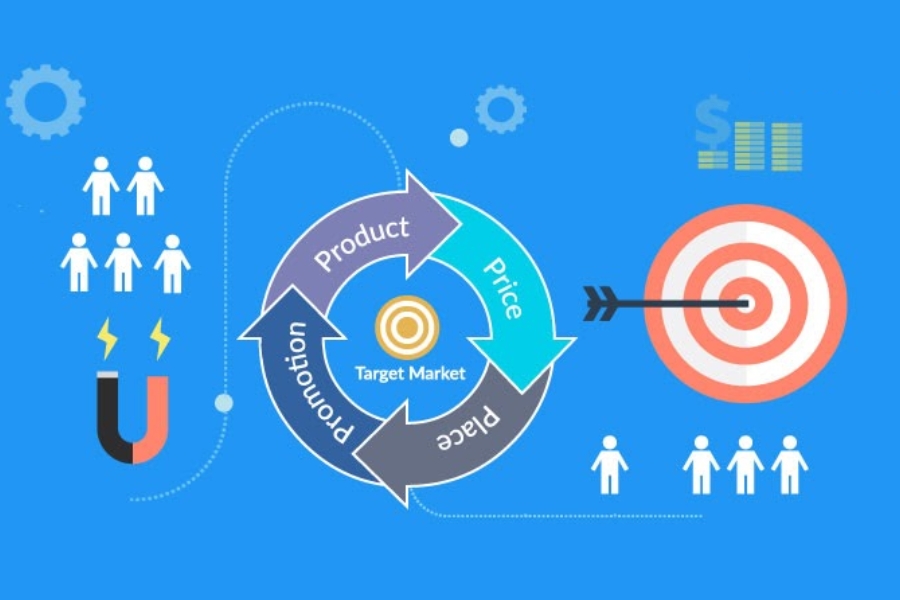
Here are the key benefits that the 4P Marketing strategy brings to a business:
- Creates synergy: When the four elements—Product, Price, Place, and Promotion—work together harmoniously, businesses can implement effective marketing strategies, enhance product recognition, and increase sales.
- Builds loyalty and brand value: High-quality products, reasonable prices, convenient distribution, and effective promotion lead to customer satisfaction, repeat purchases, and increased brand loyalty.
- Supports business decision-making: The interconnection between the 4P elements helps businesses make sound strategic decisions, such as adjusting the target audience based on the product’s price point.
- Drives new product innovation: Analyzing customer feedback and market trends from the 4Ps helps businesses develop new products that meet ever-increasing demands and expectations.
- Enhances sustainable brand value: The 4P strategy provides a comprehensive roadmap for building, promoting, and developing a brand, creating credibility and long-term scalability.
4. Advantages and Disadvantages of the 4P Marketing Model
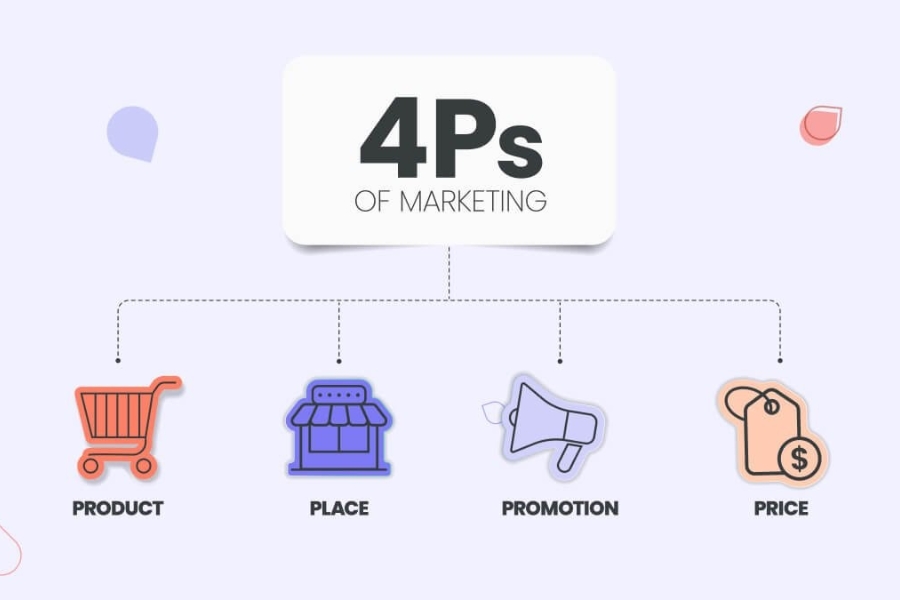
Advantages of the 4P marketing model:
- Comprehensive view of products/services: The 4Ps compel businesses to fully consider all elements: product, price, place, and promotion. This ensures a holistic strategy, reducing the risk of over-focusing on one element while neglecting others.
- Enhances inter-departmental coordination: The 4Ps create a common language among Marketing, Sales, Production, and Finance departments, helping to unify and clarify decisions, thereby optimizing business performance.
- Integrates and creates strategic consistency: When the 4P elements are well-coordinated, businesses can build their brand and products consistently, making it easier for customers to recognize them and perceive higher value.
- Customer-oriented: This model helps businesses focus on the actual needs and behaviors of customers, rather than relying on internal assumptions.
- Supports structured strategic planning: The 4Ps provide a framework for evaluating options, prioritizing investments, and testing scenarios before implementation, reducing risk and optimizing resources.
- Flexible for various industries and development stages: The 4P model can be applied to everything from goods to services, from startups to large enterprises, helping to assess pricing, distribution channels, and market expansion.
- Accelerates decision-making and trade-off assessment: The model clarifies the consequences of decisions regarding price, distribution channels, or promotions, enabling faster, more confident decision-making.
- Measures commercial effectiveness: The 4Ps help define KPIs for each element—product, price, place, and promotion—making it easier to measure and optimize performance.
- Effective resource allocation: By separating decisions for each element, businesses can allocate budgets and personnel appropriately, increasing ROI.
- Helps create competitive differentiation: The 4Ps encourage businesses to optimize each element to create differentiation, from the product and price to distribution and communication messages.
Disadvantages of the 4P model in marketing:
- Overly product-focused: The original model considers the product as the center. However, today, customer experience, service, and relationship value are often more important.
- Limited for the service industry: The 4P model is insufficient for services, where people, processes, and physical evidence play crucial roles (which is why the 4P model was expanded to the 7Ps).
- Lacks focus on customer relationships: The model concentrates on broad promotion and does not fully cover activities related to retention, personalization, and customer community development.
- Inadequate for the digital environment: It does not inherently reflect digital channels, real-time analytics, two-way interaction, and continuous optimization.
- Ignores external market factors: The 4Ps are internally focused and do not adequately consider legal, sustainability, technological, cultural, and macroeconomic factors.
- Limited in creating strategic differentiation: Because it is widely used, it can easily lead to strategies similar to competitors’, requiring supplementary frameworks to achieve true differentiation.
- Limited integration of brand and mission: Brand strategy and corporate objectives significantly influence customer perception, but the 4Ps do not fully address them.
- Static view in a dynamic market: The 4Ps provide a fixed-point snapshot and do not support continuous iteration in a rapidly changing environment, requiring combination with Agile methods and constant testing.
5. How to Build a 4P Marketing Mix Strategy
(1) Product Strategy
Product strategy is a core element of marketing, helping businesses understand their products in the market. For new products, differentiation is the deciding factor in attracting customers. For existing products, the focus is on improvement and innovation to increase competitiveness.
Building a brand based on product quality is crucial, through design, color, and the feeling the product evokes. For example, TH True Milk’s “True Happiness” message suggests happiness and purity from fresh milk.
Naming a product also requires careful consideration. An effective method is to combine the general brand name with the specific product name, which helps increase recognition and credibility in the market.
(2) Price Strategy
Product pricing needs to balance value and the market. High-quality products can be priced higher, but not too low to avoid raising doubts about their quality.
The price should also be appropriate for the customer segment: premium products can have high prices, while mass-market products need reasonable pricing. Supplementary strategies like combos, discounts, or sales also help increase consumer appeal.
(3) Distribution Strategy
The distribution strategy determines where customers can buy the product, which can be direct stores, agents, supermarkets, or e-commerce websites. Combining multiple distribution channels helps businesses reach a diverse customer base, create a convenient shopping experience, and increase sales opportunities.
(4) Promotion Strategy
Multi-channel promotion helps the product reach customers comprehensively. Businesses can use:
- Traditional advertising: TV, newspapers, magazines
- Online advertising: social media, websites
- Events, exhibitions, press conferences
- Flyers at the point of sale
An effective promotion strategy helps increase product awareness, generate interest, and boost sales.
6. Steps to Develop a 4P Strategy in the Marketing Mix (4Ps)

Below are the basic steps to help businesses build and implement an effective 4P strategy, from defining the USP to combining and testing the elements of Product, Price, Place, and Promotion:
6.1. Step 1: Define the Product’s USP
The USP (Unique Selling Proposition) is the core factor that differentiates a product from its competitors in the market. A USP can come from superior quality, competitive pricing, unique design, advanced technology, or better after-sales service.
Clearly defining the USP helps businesses shape their communication message, clarify the value the product offers, and create a foundation for building a sustainable competitive advantage.
6.2. Step 2: Listen to and Understand Customers
Businesses need to collect data from various sources such as surveys, interviews, social media, and purchase behavior analysis to clearly understand users’ needs, wants, and “pain points.”
From there, build a target customer persona with characteristics regarding demographics, behavior, goals, and purchasing motivations. This will serve as a guide for product development and the implementation of effective marketing activities.
6.3. Step 3: Research Competitors
Businesses should start by conducting a comprehensive analysis of competitors, including the products they offer, their current pricing, their distribution methods, and the communication strategies they use.
Next, perform a SWOT analysis to identify internal strengths and weaknesses, while also recognizing opportunities and threats from the market. This data helps businesses see untapped gaps, define a distinct direction, and build a suitable competitive advantage.
6.4. Step 4: Review Distribution Channels and Purchase Locations
Evaluate and select suitable distribution channels such as direct stores, e-commerce websites, agents, supermarkets, or online marketplaces. The goal is to ensure the product is available where customers search for and shop.
In parallel, businesses need to optimize the customer journey: fast delivery, good customer support, and a clear return policy to enhance the experience and increase the likelihood of repeat purchases.
6.5. Step 5: Develop a Promotion Strategy
Businesses need to build a multi-channel communication plan, combining advertising, PR, digital marketing, social media, promotional programs, and events. All activities must revolve around the USP, ensuring the message is delivered consistently across all platforms. Additionally, businesses can implement membership programs, personalized offers, or after-sales care to increase customer engagement and boost sales.
6.6. Step 6: Integration and Testing
Once Product, Price, Place, and Promotion have been defined, the business needs to integrate them into a comprehensive strategy, ensuring synchronization and consistency. During implementation, it’s necessary to monitor KPIs such as sales volume, market share, conversion rate, brand awareness, and customer satisfaction.
Based on results and market feedback, the business should flexibly adjust its strategy to maintain effectiveness and competitiveness in a constantly changing environment.
7. Case Studies of the 4P Strategy in Marketing
Below are practical examples of how major brands apply the 4P Marketing model to create a competitive advantage and achieve impressive business results:
7.1. Case Study 1: Coca-Cola’s 4P Model
Coca-Cola is much bigger than you think. In 2024, the company achieved $47.1 billion in net revenue, a 12% increase in organic revenue, and a 22% increase in operating profit compared to the previous year. They sold 33.7 billion unit cases of products globally, with sparkling soft drinks accounting for 69%, and Trademark Coca-Cola making up 47% of the total global volume.
Founded in Atlanta in 1892, Coca-Cola has grown from a single syrup into one of the world’s largest beverage corporations. Every day, the company serves more than 2.2 billion servings of its drinks in over 200 countries and territories.
Coca-Cola is not just a soda brand—it’s a global beverage empire with impressive numbers. Here are a few highlights of Coca-Cola’s 4P model:
Product
Coca-Cola started with its iconic drink in a red can, but today its product line extends far beyond a single formula. The company owns over 200 brands and thousands of products: sparkling soft drinks, mineral water, juices, teas, coffees, energy drinks, and more.
Coca-Cola constantly introduces new flavors like Cherry, Vanilla, and Zero Sugar, as well as limited editions, to keep the brand fresh and generate curiosity. The company also customizes products for specific countries—like Thums Up in India or Lemon-dou in Japan—making the global brand feel more local.
The “healthy” trend is also a focus: Coca-Cola Zero Sugar is now a top-selling product, alongside functional beverages containing vitamins, prebiotics, etc., catering to young consumers who prefer a healthy lifestyle.
Price
Coca-Cola combines several different pricing strategies:
- Value-based pricing: customers are not just buying a soft drink, but also an experience and the emotions associated with the brand.
- Psychological pricing: prices often end in an odd number (e.g., $7.99) to create the perception of being cheaper—very effective for quick purchase decisions.
- Competitor-based pricing: always maintaining a competitive price point with Pepsi while still upholding its brand value.
Prices also vary by packaging:
- Small bottles/cans are aimed at customers seeking convenience at a lower price.
- Large bottles and multipacks are for families, often with bundle deals.
- Premium versions (limited edition, special packaging) have a higher price point due to their exclusivity.
Place (Distribution)
Coca-Cola’s greatest strength is its global reach. The product is available in over 200 countries thanks to a system of local bottling partners, ensuring consistent quality and flexible distribution.
You can find Coca-Cola everywhere:
- Small grocery stores, supermarkets, convenience stores
- Restaurants, hotels, fast-food chains
- Vending machines at train stations, schools, and shopping malls
The company invests heavily in cooling systems, displays, and logistics to ensure the product is always “up to standard.”
Coca-Cola also adapts to the consumption habits of each market: where single purchases are popular, it focuses on small cans/bottles; where bulk buying is common, it focuses on larger packs. E-commerce has also become an important distribution channel in recent years.
Promotion
Coca-Cola is famous for its iconic advertising campaigns—which have almost become a part of pop culture.
Notable campaigns:
- “Share a Coke”: printing names on bottles, turning the purchase into a personal experience.
- “Taste the Feeling”: focusing on the emotions and everyday moments associated with Coca-Cola.
The company is also a leader in event sponsorship: the Olympics, FIFA World Cup, major concerts, etc., putting its logo in front of millions of people. In the digital age, Coca-Cola is pushing:
- Social media
- Influencers
- Interactive campaigns
- Limited-edition flavors in collaboration with KOLs, games, and youth culture
Beyond advertising, Coca-Cola invests heavily in community activities: recycling, environmental programs, and social initiatives—helping to build a responsible brand image.
7.2. Case 2: McDonald’s 4P Model
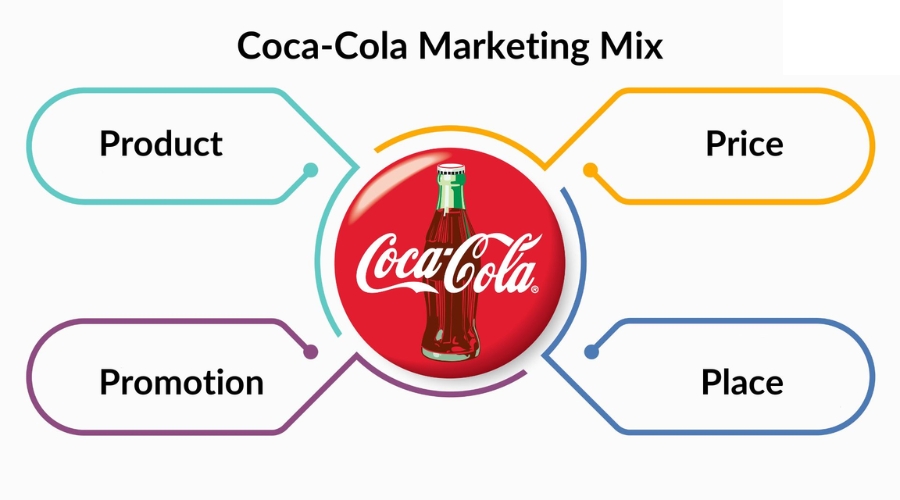
McDonald’s builds its marketing mix based on business objectives in each global market. The 4P model (Product, Place, Promotion, Price) is the foundation that helps the brand reach its target customers. Although a standard framework is applied across the entire system, McDonald’s flexibly adjusts it to the specific characteristics of each country. For example, some markets prioritize online advertising, while others still consider TV the primary channel. Optimizing each element of the 4Ps helps McDonald’s implement a cohesive marketing strategy and drive chain growth.
The ability to effectively operate its marketing mix also helps McDonald’s maintain its leading position in the global fast-food industry, ahead of competitors like Burger King, Wendy’s, and Starbucks (in the beverage segment). Thanks to an optimized 4P system, the brand maintains its global strength despite high levels of competition.
Product
McDonald’s product portfolio mainly consists of food and beverages, including: Burgers & sandwiches, Chicken & fish, Salads, Snacks & sides, Beverages, Desserts & shakes, Breakfast, and McCafé.
Product is the core element that shapes the brand image. From being known for its burgers and fries, McDonald’s has continuously expanded its menu to cater to more diverse tastes. The company’s competitive and growth strategies drive the development of new products, helping to increase revenue and reduce the risk of relying on a single customer group. This shows that McDonald’s is constantly innovating to attract more users and strengthen long-term stability.
Price
McDonald’s objective is to optimize profit and sales volume through two main pricing strategies:
- Bundle pricing: selling in combos to create a sense of greater savings (e.g., Happy Meal).
- Psychological pricing: using prices like $___.99 to create a “cheaper” perception.
These two strategies encourage customers to buy more by perceiving good value. Pricing is also based on cost-effectiveness criteria in the operation of its global system.
Place
The “Place” element refers to where customers can purchase and experience products. McDonald’s main channels include:
- Restaurants
- Kiosks
- McDonald’s website & app
- Food delivery apps (like Postmates)
Restaurants remain the primary source of revenue. Some locations have additional kiosks for desserts or mobile kiosks at events. The McDonald’s app allows customers to view the menu, place orders, make payments, and receive special offers. Additionally, food delivery platforms help the company reach a wider audience. All these channels support the goal of serving more customers globally.
Promotion
McDonald’s uses various communication methods to connect with and persuade customers. The main tools include:
- Advertising (the most important)
- Sales promotions
- Public relations (PR)
- Direct marketing
Advertisements appear on TV, radio, print media, and digital platforms. Sales promotions like coupons, combo deals, and gifts help increase restaurant visits. PR activities—such as the Ronald McDonald House Charities—contribute to strengthening brand goodwill and value. In some cases, McDonald’s also implements direct marketing for businesses and communities. Focusing on advertising and brand advantages helps McDonald’s optimize its communication effectiveness.
8. Combining the 4P and 4C Strategies in the Marketing Mix
Unlike the 4P model, 4C Marketing places the customer and their needs at the center. Each “C” corresponds to a “P,” reminding businesses to always focus on customer value.
- Customer Solutions: The product/service must meet the real needs of the customer. Businesses need to conduct thorough research to create suitable solutions.
- Customer Cost: Corresponding to Price, the cost must be reasonable, reflecting the value the customer receives.
- Convenience: Corresponding to Place, ensuring the product/service is easily accessible to customers through appropriate distribution channels.
- Communication: Corresponding to Promotion, building a two-way relationship, sharing information, and providing effective consultation and support to customers.
9. Frequently Asked Questions about the 4P Model
9.1. In the 4Ps, which is the most important?
In the 4P model, no single element is absolutely the most important because Product, Price, Place, and Promotion must work in sync to create an effective marketing strategy. Each element plays a different role depending on the product, target market, and business objectives.
However, Product is often considered the foundation because it is what the customer directly uses. If the product does not meet their needs, activities related to price, distribution, or promotion are unlikely to be effective.
The remaining Ps:
- Price affects competitiveness and revenue.
- Place determines the level of customer reach.
- Promotion builds awareness and stimulates purchasing demand.
Depending on the stage and market, businesses may prioritize different Ps. For example, a new product needs to focus on Product and Promotion, while a market with strong price competition will prioritize Price.
In summary, the most important element in the 4Ps depends on the business’s context and strategy, but the product remains the core foundation of all marketing activities.
9.2. What is the 7P model?
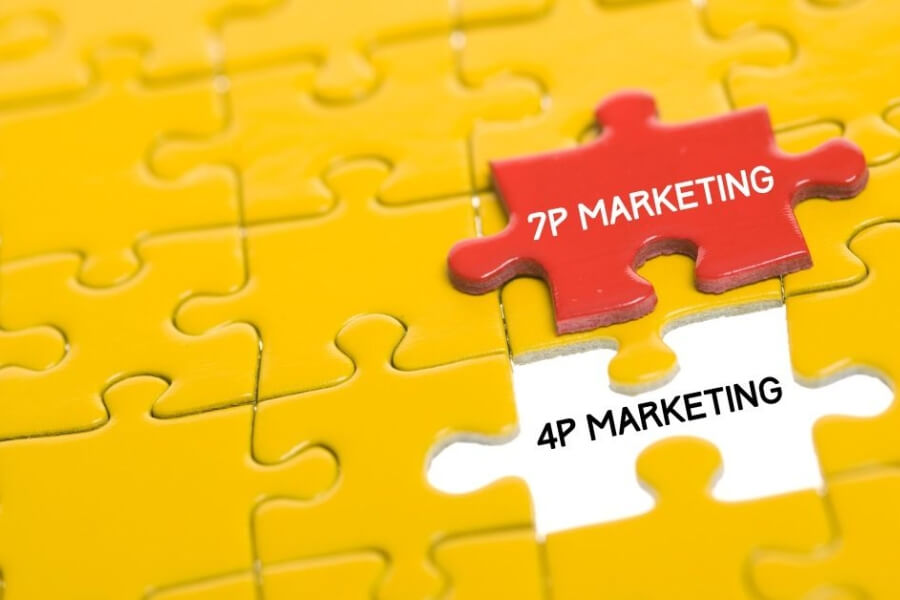
The 7P model in Marketing is an extension of the traditional 4Ps, developed to be more suitable for the service industry and the modern market context. This model includes seven core elements:
- Product: What the business offers – from tangible products to services.
- Price: A pricing strategy that aligns with value, the market, and the target audience.
- Place: The channel system that helps products/services reach customers most conveniently.
- Promotion: Communication and advertising activities aimed at increasing awareness and stimulating demand.
- People: The staff who directly interact with customers, determining the quality of the experience.
- Process: The operational and service processes that ensure the service is delivered smoothly and consistently.
- Physical Evidence: Tangible elements such as space, packaging, and facilities that help customers perceive and trust the quality of the service.
The 7P model provides a comprehensive perspective for marketing strategy, especially in the service industry where experience and the human element have a significant impact. By effectively leveraging the 7Ps, businesses can improve service quality, increase satisfaction, retain customers, and create a sustainable competitive advantage in the market.
9.3. Differentiating the 4P and 7P models
Below are the differences between the traditional 4P model and the extended 7P model, which help businesses manage marketing more comprehensively, especially in the service industry and the modern market:
| Criteria | 4P Model | 7P Model |
| Components | Includes 4 elements: Product, Price, Place, Promotion | Expanded from the 4Ps, adding People, Process, and Physical Evidence |
| Scope of Application | Suitable for tangible products, especially traditional consumer goods | Optimized for the service industry – where customer experience and the human element play a key role |
| Focus | Focuses on the product and direct sales factors | Has a more comprehensive focus, including product, service, people, and the overall experience |
| Human & Service Element | Less mentioned or not a primary priority | Emphasizes the role of personnel, service processes, and the physical environment in creating satisfaction |
| Adaptability | Limited when applied to services or complex business models | Flexible, suitable for modern marketing trends and the growing service market |
10. Conclusion
Overall, the 4P model provides a solid foundation for businesses to manage and develop a comprehensive marketing strategy. When the elements of product, price, place, and promotion are harmoniously coordinated, businesses not only improve their operational efficiency but also create a valuable experience for customers. Flexibly applying the 4P model along with lessons from practical case studies will help brands achieve sustainable growth in a competitive market.
















