


 13/05/2026
  232 views
Currently, digital signatures and e-invoices are two widely used transaction methods, helping businesses conduct electronic transactions and manage documents more conveniently. So, what role do digital signatures and e-invoices play for businesses, and how are these two transaction methods applied? Let’s find out the answers in the article below.
Mục lục
1. Definitions of digital signatures and e-invoices
1.1 What is a digital signature?
A digital signature (also known as a USB Token) is a type of electronic signature used to replace a regular handwritten signature on digital electronic devices, digital texts, and documents. Typically, these documents are used for online tax declaration and payment, electronic customs declaration, and other digital transactions.
A digital signature is used to verify the authenticity and integrity of digital data. It can be considered a digital version of a conventional handwritten signature, but with a higher level of complexity and security.
1.2 What is an e-invoice?
An e-invoice is a collection of electronic data messages about the sale of goods and provision of services that is created, issued, sent, received, stored, and managed by electronic means. This can be considered a comprehensive solution for organizations and businesses, helping them issue, distribute, process transactions, and store e-invoices as a replacement for paper invoices. An e-invoice is created, issued, and processed on the computer system of an organization that has been issued a tax code when selling goods and services, and is stored on the computers of the parties in accordance with the law on electronic transactions.
It’s clear that digital signatures and e-invoices have become an e-office trend in the digital age. It is considered an inseparable part that helps authenticate which entity issued the e-invoice, ensures full legal validity, and confirms that the e-invoice has been encrypted and cannot be modified after signing. So, what is the relationship between the roles of digital signatures and e-invoices? Let’s find out in the content below.
2. How to apply digital signatures and e-invoices?
In reality, many businesses are often confused when customers ask whether the buyer needs a digital signature to issue an invoice with the seller, and whether the legal validity is guaranteed if the invoice does not have the seals and signatures of both parties. The answer to these questions is: an e-invoice does not require the buyer’s digital signature.
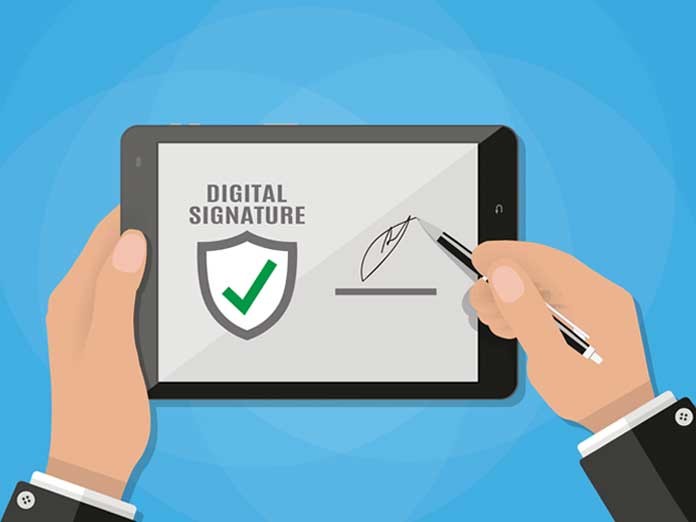
Specifically, in the following cases, the buyer is not required to digitally sign the invoice
- Economic contracts
- The buyer is an accounting unit, but has complete records and documents proving the provision of goods and services between the seller and the buyer, such as:
- Goods delivery records
- The buyer is not an accounting unit
- Warehouse issue slips
- Payment receipts
- Cash receipts
Thus, it can be seen that in all cases, issuing an e-invoice does not require the buyer’s digital signature. An e-invoice does not need the seller’s seal, except when converting an e-invoice to a paper invoice, which requires the seller’s signature and seal.
3. Some regulations to know when using digital signatures on e-invoices
3.1 Regulations on the seller’s digital signature on e-invoices
According to the provisions of Circular 68/2019/TT-BTC regarding the seller’s digital signature on e-invoices:
- In cases where the seller is a business or organization, the seller’s digital signature on the invoice must be the digital signature of that business or organization.
- In cases where the seller is an individual, use the digital signature of the individual or
- In cases where the seller is an individual, the digital signature of the individual or an authorized person is used.
At the same time, business accountants need to note the following regarding the time of digital signing on e-invoices:
– The issuance time of an e-invoice is determined by the time the seller digitally signs the invoice, except for specific sectors such as electricity, water, television, telecommunications, information technology services, etc., which have separate guidelines from the General Department of Taxation. Therefore, accountants should be careful when choosing a reputable e-invoice provider to ensure compliance with regulations where the Invoice Date and the Digital Signing Time match, avoiding cases of invalid invoices.
3.2 Regulations on the buyer’s digital signature on e-invoices
According to Circular 68/2019/TT-BTC, in cases where the buyer is a business establishment or an accounting unit, and both the buyer and seller have agreed that the buyer meets the technical conditions to digitally sign the e-invoice issued by the seller, then the buyer shall digitally sign the invoice.
However, in some cases, the buyer is not required to have a digital signature on the invoice:
– The buyer is not an accounting unit, and both parties have not agreed to require the buyer’s digital signature on the e-invoice.
– The buyer is an accounting unit but has records and documents proving the provision of goods and services between the seller and the buyer, such as: economic contracts, inventory delivery notes, goods delivery records, payment receipts, cash receipts, etc. The buyer’s digital signature is not required in these cases.
In cases where the buyer and seller have an agreement that the e-invoice requires the digital signatures of both parties, the law prioritizes and respects this agreement.
4. 1CA – The superior digital signature solution by 1Office – Integrating digital signatures into workflows
1Office has launched a digital signature software integrated into workflows to help businesses completely overcome the limitations of traditional paper-based signing.
With this feature, businesses can save up to 80% on costs for printing, shipping, and storing documents, as well as eliminate barriers of time and space, allowing them to sign anytime, anywhere. This helps businesses ensure timely signing and maintain continuity across all aspects, from administration, finance, and sales to human resources.
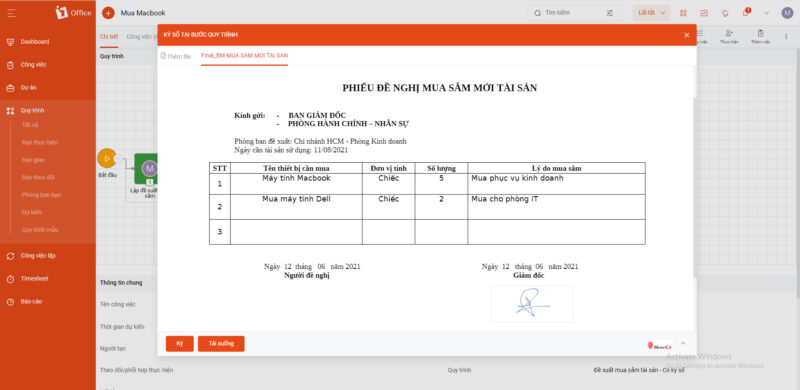
- Sign on any workflow: Integrating digital signatures into workflows helps businesses build a comprehensive management ecosystem. This allows departments to operate smoothly and continuously, promoting effective business operations.
- Centralized storage and management: The 1Office business management software helps businesses store documents centrally on a cloud platform, minimizing the risk of scattered documents and ensuring absolute information security. Additionally, documents are linked to specific related entities, making management and searching by execution time, department, or operation easy. Businesses can also extract documents conveniently.
- Sign multiple documents at once: With 1CA, you can easily sign up to hundreds of documents simultaneously. This allows leaders to resolve internal operations quickly, in just 1/10th of the time compared to manual processing, freeing them up to focus on business strategies.
Thus, the article above has shared useful information about digital signatures and e-contracts for the most effective application. It also introduces an effective digital signing solution with the 1Office digital signature application, helping businesses sign all documents and contracts anytime, anywhere, without needing to meet in person. Adopting digital signatures will help any business operate smoothly and consistently without interruption, regardless of the working model. To register for the 1CA digital signature service, please leave your phone number, and the 1Office team of experts will contact you for a consultation today.
















