09/05/2026
  667 views
Mục lục
- What is AI Automation?
- Benefits of AI Automation for Businesses
- How is AI Automation Different from Traditional Automation?
- How to Implement AI Automation: A Step-by-Step Process
- Key Factors to Consider When Implementing AI Automation
- AI Automation đang thay đổi ngành nghề nào?
- Popular AI Automation Tools and Platforms by Field
- Frequently Asked Questions about AI Automation
- Discover the AI Agent solution for businesses from 1Office
What is AI Automation?
AI Automation (automation powered by artificial intelligence) is the application of AI technology to automatically perform or optimize business processes, helping systems operate faster, more accurately, and with reduced manual human intervention. This technology can be deployed in various forms, such as software for data analysis and decision support, or robots for automating processes in production and operations.
In this context, AI (Artificial Intelligence) is the technology that enables machines to learn from data, analyze information, and make decisions similar to humans. Automation, on the other hand, is the use of technology to perform repetitive or complex tasks automatically, instead of requiring manual processing.
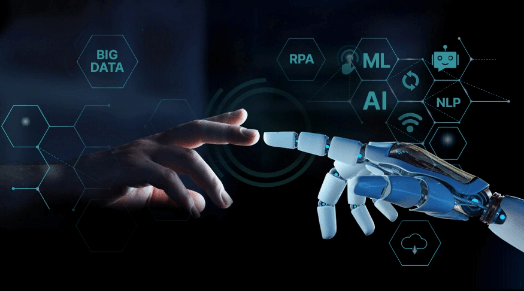
By combining these two elements, AI Automation allows systems to leverage technologies like Machine Learning, Natural Language Processing, and Computer Vision to process large volumes of data. After being trained on real-world data, the AI system can identify trends, analyze situations, and make intelligent decisions, helping businesses optimize processes and improve operational efficiency.
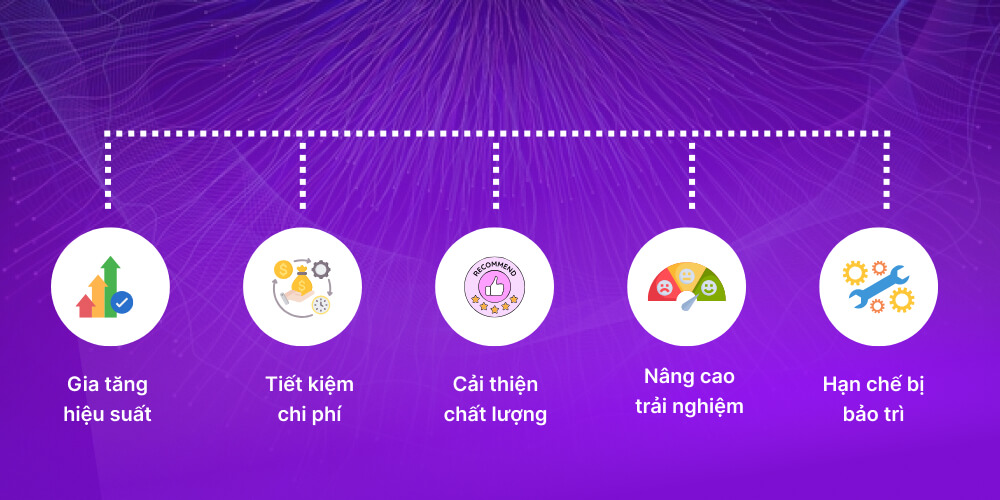
Benefits of AI Automation for Businesses
How is AI Automation Different from Traditional Automation?
How to Implement AI Automation: A Step-by-Step Process
Key Factors to Consider When Implementing AI Automation
Although AI Automation offers many benefits to businesses, its implementation requires careful preparation. Without a clear strategy, businesses may face issues related to data, system governance, or personnel adaptability. Therefore, before implementing AI Automation, businesses need to consider several important factors.
Data Security and Privacy
AI Automation often processes large amounts of data, including customer data, internal information, and important business documents. Therefore, ensuring data security and privacy is a top priority.
Businesses need to establish clear data management policies, apply security measures such as data encryption, access control, and comply with data protection regulations. This helps minimize the risk of information leaks and ensures the AI system operates securely.
Ethical AI and Mitigating Algorithmic Bias
One of the challenges of AI is the potential for algorithmic bias if the training data is incomplete or unbalanced. This can lead to inaccurate or unfair decisions in some cases, especially in areas like recruitment or customer assessment.
Therefore, businesses need to ensure that the AI system is designed and trained with diverse data, and has mechanisms for testing and evaluation to minimize bias in the decision-making process.
Human-in
AI không phải là hệ thống hoạt động tốt mãi mãi sau khi được triển khai. Khi dữ liệu và môi trường kinh doanh thay đổi, mô hình AI cũng cần được cập nhật và huấn luyện lại để duy trì độ chính xác.
Doanh nghiệp cần thường xuyên theo dõi hiệu suất của hệ thống, cập nhật dữ liệu mới và cải tiến các mô hình AI để đảm bảo hệ thống luôn hoạt động hiệu quả.
Nhìn chung, việc triển khai AI Automation không chỉ là áp dụng công nghệ mới mà còn đòi hỏi chiến lược quản trị, quản lý dữ liệu và đào tạo nhân sự phù hợp. Khi các yếu tố này được chuẩn bị tốt, doanh nghiệp có thể tận dụng tối đa tiềm năng của AI trong việc tự động hóa và tối ưu vận hành.
AI Automation đang thay đổi ngành nghề nào?
AI Automation không chỉ là một xu hướng công nghệ mà đang dần trở thành yếu tố cốt lõi trong quá trình chuyển đổi số của nhiều ngành nghề. Nhờ khả năng tự động hóa quy trình, phân tích dữ liệu lớn và hỗ trợ ra quyết định, AI giúp doanh nghiệp cải thiện hiệu suất làm việc, giảm chi phí vận hành và tạo ra các mô hình kinh doanh mới. Dưới đây là những lĩnh vực đang được AI Automation thay đổi rõ rệt.

Chăm sóc khách hàng và dịch vụ
Trong lĩnh vực dịch vụ khách hàng, AI Automation giúp doanh nghiệp phản hồi khách hàng nhanh hơn và nâng cao chất lượng hỗ trợ. Trước đây, các trung tâm chăm sóc khách hàng phải dựa hoàn toàn vào nhân viên để trả lời điện thoại, email hoặc tin nhắn. Điều này khiến doanh nghiệp khó đáp ứng nhu cầu hỗ trợ liên tục, đặc biệt khi lượng khách hàng tăng cao.
Nhờ AI Automation, nhiều doanh nghiệp đã triển khai:
-
Chatbot AI trên website, ứng dụng và mạng xã hội để trả lời câu hỏi thường gặp.
-
Trợ lý ảo có thể hỗ trợ đặt lịch, tra cứu thông tin hoặc xử lý các yêu cầu cơ bản.
-
Hệ thống phân tích cảm xúc khách hàng, giúp doanh nghiệp hiểu khách hàng hài lòng hay không hài lòng.
-
Hệ thống phân loại ticket tự động, giúp chuyển yêu cầu hỗ trợ đến đúng bộ phận.
Những công nghệ này giúp doanh nghiệp duy trì dịch vụ 24/7, giảm thời gian chờ đợi và cải thiện trải nghiệm khách hàng.
Tài chính – ngân hàng
Ngành tài chính và ngân hàng là một trong những lĩnh vực ứng dụng AI Automation mạnh mẽ nhất. Các tổ chức tài chính thường phải xử lý khối lượng lớn dữ liệu giao dịch, hồ sơ khách hàng và các quy trình kiểm soát rủi ro. AI giúp tự động hóa nhiều quy trình phức tạp và tăng độ chính xác trong phân tích dữ liệu.
Một số ứng dụng phổ biến gồm:
-
Phát hiện gian lận tài chính: AI phân tích dữ liệu giao dịch để phát hiện các hành vi bất thường.
-
Đánh giá rủi ro tín dụng: hệ thống AI phân tích hồ sơ khách hàng để hỗ trợ quyết định cho vay.
-
Xử lý hồ sơ vay vốn tự động: giảm thời gian phê duyệt khoản vay.
-
Phân tích dữ liệu tài chính: hỗ trợ ngân hàng đưa ra các chiến lược kinh doanh phù hợp.
Nhờ AI Automation, các tổ chức tài chính có thể giảm rủi ro, tăng tốc xử lý giao dịch và cải thiện trải nghiệm khách hàng.
Marketing và bán hàng
Trong lĩnh vực marketing và bán hàng, AI Automation giúp doanh nghiệp hiểu rõ hành vi khách hàng và tối ưu chiến lược tiếp cận thị trường. Thay vì dựa hoàn toàn vào kinh nghiệm hoặc phỏng đoán, doanh nghiệp có thể sử dụng AI để phân tích dữ liệu khách hàng và dự đoán xu hướng tiêu dùng.
Một số ứng dụng nổi bật gồm:
-
Chấm điểm khách hàng tiềm năng (Lead Scoring): AI xác định khách hàng có khả năng mua hàng cao.
-
Cá nhân hóa chiến dịch marketing: hệ thống đề xuất nội dung hoặc ưu đãi phù hợp với từng nhóm khách hàng.
-
Tạo nội dung marketing tự động: AI hỗ trợ viết email, bài quảng cáo hoặc nội dung mạng xã hội.
-
Dự báo doanh số: phân tích dữ liệu bán hàng để dự đoán nhu cầu thị trường.
Nhờ AI Automation, doanh nghiệp có thể tăng tỷ lệ chuyển đổi khách hàng và tối ưu chi phí marketing.
Nhân sự và quản trị doanh nghiệp
Bộ phận nhân sự thường phải xử lý nhiều công việc hành chính như tuyển dụng, quản lý hồ sơ nhân viên và tính lương. AI Automation giúp tự động hóa nhiều quy trình này, từ đó giảm khối lượng công việc thủ công.
Các ứng dụng phổ biến gồm:
-
Sàng lọc hồ sơ ứng viên: AI đọc và phân tích CV để tìm ứng viên phù hợp.
-
Tự động hóa onboarding: hệ thống hướng dẫn nhân viên mới và cung cấp tài liệu cần thiết.
-
Quản lý bảng lương và chấm công: tự động tổng hợp dữ liệu và tính toán lương thưởng.
-
Chatbot nội bộ: hỗ trợ nhân viên tra cứu thông tin về chính sách hoặc phúc lợi.
Nhờ AI Automation, bộ phận HR có thể tập trung nhiều hơn vào phát triển nhân sự và xây dựng văn hóa doanh nghiệp.
Sản xuất và công nghiệp
Trong ngành sản xuất, AI Automation giúp tối ưu dây chuyền sản xuất và nâng cao chất lượng sản phẩm. Các hệ thống AI có thể phân tích dữ liệu từ máy móc và phát hiện vấn đề trước khi xảy ra sự cố.
Một số ứng dụng tiêu biểu gồm:
-
Kiểm soát chất lượng bằng AI: sử dụng camera và Computer Vision để phát hiện lỗi sản phẩm.
-
Robot tự động hóa quy trình: thực hiện các công việc lặp lại như lắp ráp, đóng gói hoặc vận chuyển.
-
Bảo trì dự đoán: AI phân tích dữ liệu máy móc để dự đoán thời điểm cần bảo trì.
Những ứng dụng này giúp doanh nghiệp giảm lỗi sản phẩm, tăng năng suất và giảm chi phí vận hành.
Chuỗi cung ứng và logistics
Trong lĩnh vực logistics, AI Automation giúp doanh nghiệp quản lý hàng tồn kho và tối ưu quy trình vận chuyển. Việc phân tích dữ liệu lớn giúp doanh nghiệp dự đoán nhu cầu thị trường và lập kế hoạch vận hành hiệu quả hơn.
Một số ứng dụng phổ biến gồm:
-
Quản lý tồn kho thông minh: AI đề xuất lượng hàng cần nhập hoặc xuất.
-
Dự báo nhu cầu thị trường: phân tích dữ liệu bán hàng và xu hướng tiêu dùng.
-
Tối ưu tuyến vận chuyển: AI tìm tuyến đường giao hàng nhanh và tiết kiệm chi phí nhất.
-
Bảo trì dự đoán trong logistics: phát hiện sớm lỗi thiết bị vận chuyển.
Nhờ đó, doanh nghiệp có thể giảm chi phí logistics và nâng cao hiệu quả chuỗi cung ứng.
Y tế và chăm sóc sức khỏe
AI Automation cũng đang tạo ra những thay đổi lớn trong lĩnh vực y tế. Các bệnh viện và cơ sở y tế sử dụng AI để xử lý dữ liệu bệnh nhân, hỗ trợ chẩn đoán và cải thiện quy trình chăm sóc sức khỏe.
Một số ứng dụng nổi bật gồm:
-
Xử lý hồ sơ bệnh án điện tử: AI tự động đọc và quản lý dữ liệu bệnh nhân.
-
Tạo bản tóm tắt lâm sàng: hệ thống tổng hợp thông tin quan trọng từ hồ sơ bệnh án.
-
Hỗ trợ chẩn đoán bệnh: AI phân tích hình ảnh y tế hoặc dữ liệu xét nghiệm.
-
Chatbot y tế: hỗ trợ trả lời các câu hỏi cơ bản và hướng dẫn bệnh nhân.
Nhờ AI Automation, các cơ sở y tế có thể tăng hiệu quả quản lý dữ liệu và cải thiện chất lượng chăm sóc bệnh nhân.
Nhìn chung, AI Automation đang thay đổi cách nhiều ngành nghề vận hành. Khi công nghệ tiếp tục phát triển, phạm vi ứng dụng của AI sẽ ngày càng mở rộng, giúp doanh nghiệp tối ưu quy trình, nâng cao năng suất và tạo ra lợi thế cạnh tranh trong thị trường hiện đại.
Popular AI Automation Tools and Platforms by Field
AI Automation is becoming more widely adopted across various business sectors. In particular, understanding what AI marketing is will help businesses leverage AI to optimize advertising campaigns, personalize content, and enhance the effectiveness of customer outreach. Currently, many AI tools have been developed to support marketing, sales, customer care, and data management activities. Below is a summary of some popular AI tools by field, along with a brief description, pros, and cons of each platform.
| Tool Name | Field | Short Description | Pros | Cons |
|---|---|---|---|---|
| ChatGPT + Zapier | Marketing | Automatically generates content and connects with various other applications | Easy to use, integrates with many tools | Requires internet connection, cost increases with usage |
| Jasper AI | Marketing | An AI-powered tool for creating marketing content | High-quality content, supports multiple languages | Relatively high cost for small businesses, content requires editing |
| Intercom | Customer Support | AI chatbot combined with live chat for customer support | Good CRM integration, detailed data analysis | Complex initial setup, high cost |
| Freshdesk AI | Customer Support | A system for managing and automatically classifying support tickets | Intelligent ticket classification, detailed reports | Requires time to train the AI, limited integration capabilities |
| Zoho AI (Zia) | CRM / Sales | An AI assistant for customer management and sales support | Predicts potential customers, integrates with Zoho Suite | Some features are only available in higher-tier plans |
| Apollo.io | Sales | A tool for finding potential customers and automating email outreach | Large database, effective email automation support | Requires time to get familiar, may have data compliance issues |
Frequently Asked Questions about AI Automation
Will AI Automation replace humans?
AI Automation is designed to help people work more effectively, not to completely replace them. This technology typically handles repetitive tasks, processes large amounts of data, or performs complex calculations. This allows humans to focus on more important work such as creativity, strategy development, and customer interaction.
Many studies show that the application of AI not only changes the way we work but also creates many new job opportunities, especially in fields related to technology, data, and system management.
Do small businesses need to adopt AI Automation?
AI Automation is not just for large corporations. In fact, small and medium-sized enterprises can benefit greatly from this technology. By automating processes such as customer care, marketing, data management, or order processing, businesses can increase productivity without expanding their workforce.
Today, many AI Automation platforms are designed to be user-friendly for small businesses, with reasonable costs and no requirement for deep technical knowledge. This helps SMEs easily implement AI into their business operations.
What is AI process automation?
AI process automation is the use of artificial intelligence to automatically perform steps in a business process – tasks that previously required manual handling by humans.
Unlike traditional automation that operates based on fixed rules, AI systems can learn from data, analyze situations, and make appropriate decisions for each specific case. For example, in customer care, an AI chatbot can understand various ways customers ask questions and provide suitable answers instead of just responding with a rigid script.
Discover the AI Agent solution for businesses from 1Office
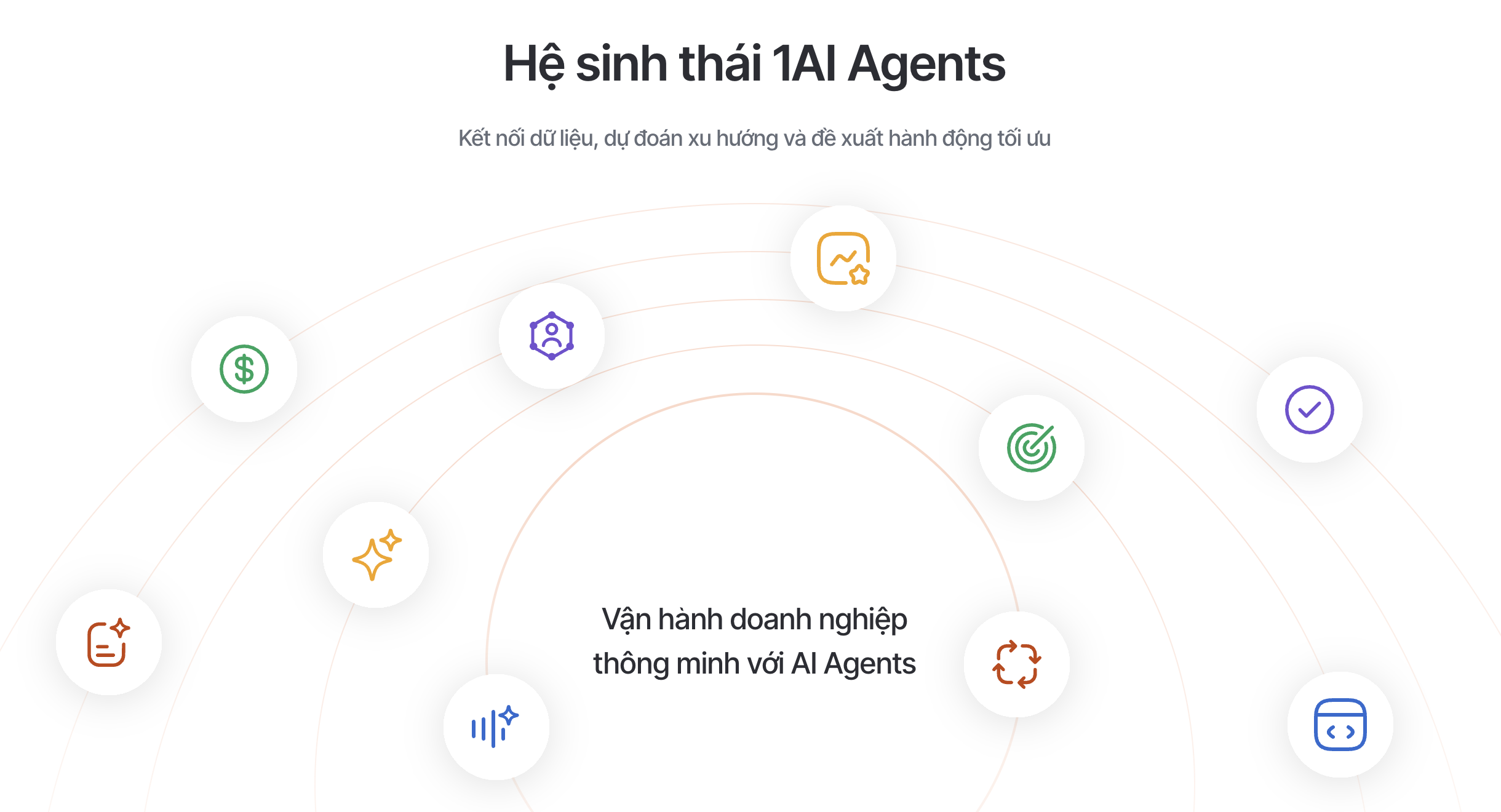
As businesses increasingly handle more data and complex processes, applying AI to operations is becoming an inevitable trend. 1Office’s AI Agent is built to help businesses automate repetitive tasks, support data processing, and optimize workflows within the management system. The 1Office AI Agent ecosystem is designed to help businesses automate various operations, from data and HR management to process execution. Each AI Agent takes on a specific role in the system to help optimize each particular activity.
If you are learning how to apply AI Agent to business management and operations, contact the 1Office consulting team now for detailed support. You can call the hotline 083 483 8888 for a direct consultation or visit the official ZALO of 1Office to get more knowledge and new solutions on business management and AI application in work.