


 09/05/2026
  162 views
In this article, we compile the latest standard field report templates for 2026 and provide detailed instructions on how to create them for common situations such as construction site inspections, incident confirmations, workplace accidents, site handovers, and scene examinations. The content is presented clearly, is easy to apply, and is suitable for direct use by businesses, technical staff, administrative personnel, and legal professionals.
Mục lục
- I. What is a Field Report? Its Role and Legal Significance
- 1. What is a Field Report? (Detailed Definition)
- 2. The Important Role of a Field Report
- 3. The Legal Significance of a Field Report
- 4. Classification of Common Types of Field Reports
- 3. Số hiệu biên bản
- 4. Thời gian, địa điểm lập biên bản
- 5. Thành phần tham gia lập biên bản
- 6. Nội dung kiểm tra / xác nhận / mô tả sự việc
- 7. Kết luận hoặc kiến nghị (nếu có)
- 8. Chữ ký, họ tên và xác nhận
- 9. Số lượng bản và giá trị pháp lý
- III. Hướng dẫn chi tiết cách lập Biên bản hiện trường ĐÚNG CHUẨN
- IV. Các mẫu Biên bản hiện trường phổ biến & hướng dẫn sử dụng chi tiết
- V. Legal Regulations Related to Site Reports
- VI. Frequently Asked Questions (FAQs) about Field Reports
I. What is a Field Report? Its Role and Legal Significance
1. What is a Field Report? (Detailed Definition)
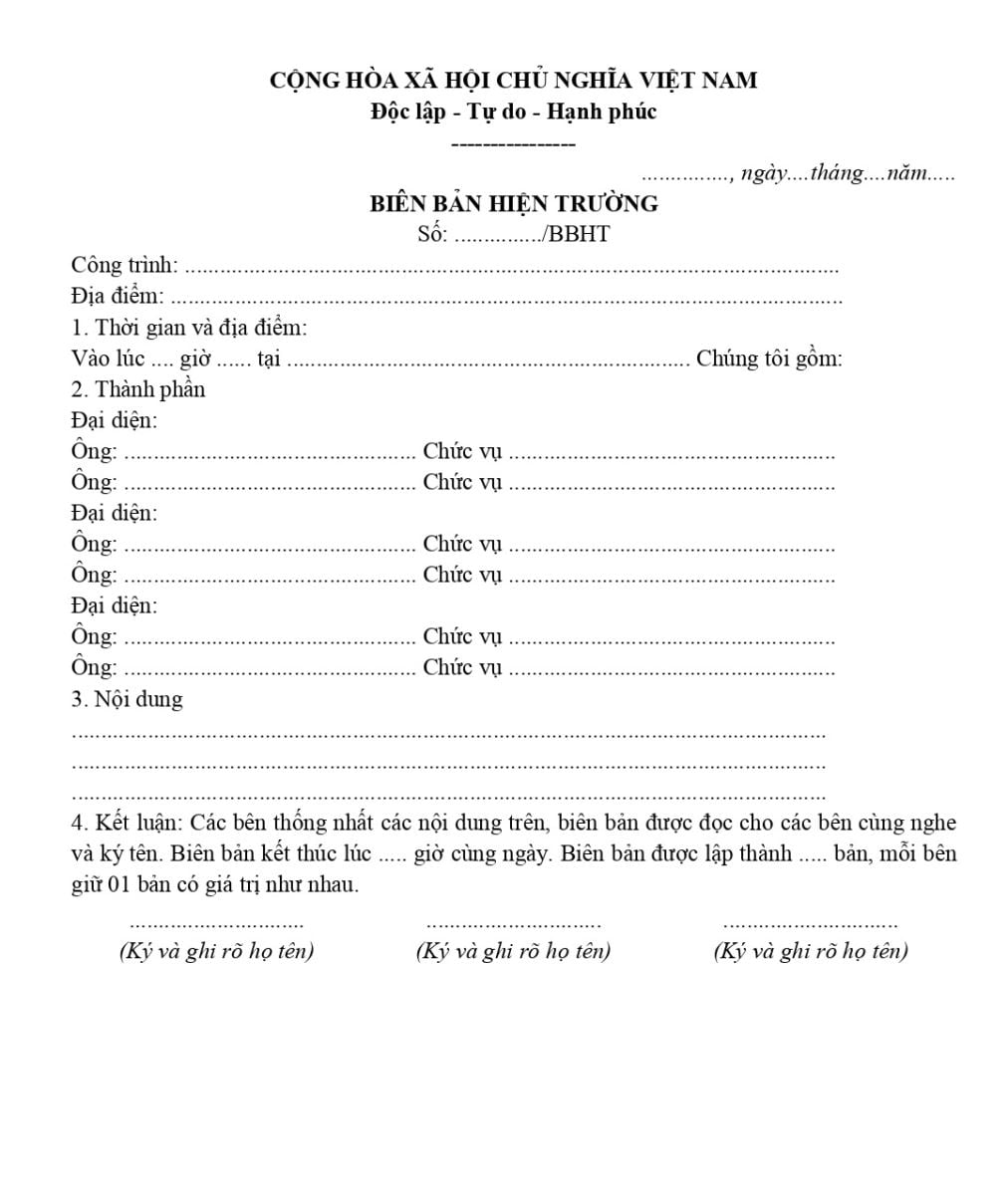
A field report is a document created to objectively, truthfully, and directly record the actual condition of an event, property, person, or space at a specific time and location. This report is usually prepared on-site where the event occurred by an authorized person or related parties, with the purpose of serving as a basis for verification, handling, or resolving arising issues.
Unlike many administrative records that are summary or retrospective in nature, a field report has the following distinctive features:
-
Records the actual conditions at the time of the event or inspection
-
Reflects what currently exists, without speculation or premature conclusions
-
Includes confirmation from relevant parties or witnesses (if any)
In practice, field reports are not only used in the construction sector but are also common in many other contexts, such as:
-
Confirming incidents and workplace accidents
-
Recording the scene of an administrative violation
-
Examining the scene of an incident
-
Inspecting, handing over, and accepting assets
-
Recording damage caused by natural disasters, fires, explosions, or technical failures
Simply put: a field report is a “legal photograph in words” of an event at the moment it occurs.
2. The Important Role of a Field Report
In legal and management practice, the field report plays a particularly important role, as it is often the first original document reflecting the event, serving as the foundation for all subsequent assessments and decisions.
Specifically, a field report has the following roles:
-
Serves as legal evidence
It is a crucial basis for resolving disputes, complaints, accusations, or determining the liability of the parties involved. -
Records the event objectively and truthfully
It accurately reflects the situation at the time of inspection or when the event occurred, minimizing the possibility of subsequent alteration, concealment, or distortion of information. -
Provides a basis for competent authorities and organizations to make decisions
A field report is the foundation for:-
Preparing subsequent handling reports
-
Issuing administrative decisions
-
Assessing the extent of violation, damage, or consequences
-
-
Ensures transparency in work and supervision processes
Creating the report on-site in the presence of all parties helps ensure publicity, transparency, and reduces disputes.
In many cases, the field report is decisive for the outcome of the case. If the report is incomplete, inaccurate, or improperly formatted, the entire subsequent handling process can be severely affected.
3. The Legal Significance of a Field Report
Legally, a field report is not always the final decision, but it is crucial evidence in the case resolution process. The legal validity of a field report depends on:
-
The party preparing the report
-
The procedure and formalities of its creation
-
The recorded content
-
The confirmation signatures of the involved parties
In different legal fields, a field report has different meanings:
-
In the civil field
It serves as a basis for determining factual events, damages, and property conditions to resolve contract disputes, compensation claims, and complaints. -
In the administrative field
It is the foundational document for creating an administrative violation report, issuing a penalty decision, or requiring remediation of consequences. -
In the criminal field
A field report (scene examination report) is one of the most important pieces of evidence for determining the course of events, causes, and signs of a crime.
Therefore, the more accurately and truthfully a field report is prepared, the higher its legal value and the more beneficial it is for the subsequent handling process.
4. Classification of Common Types of Field Reports
Depending on the purpose and context of use, field reports are divided into various types. Correctly identifying the type of report helps in selecting the appropriate template and preparation method.
Some common types of field reports today include:
-
Site Inspection Report
-
Status Confirmation Report
-
Scene Examination Report
-
Incident/Accident Scene Report
-
Violation Scene Report
-
On-site Handover and Acceptance Report
-
Actual Damage Assessment Report
Each type of report will have different content and presentation requirements, but all must adhere to the general principles of being: objective – truthful – complete – and prepared by the proper
3. Số hiệu biên bản
Số hiệu biên bản giúp:
-
Quản lý, lưu trữ hồ sơ
-
Tra cứu khi phát sinh tranh chấp
-
Làm căn cứ viện dẫn trong các văn bản tiếp theo
Cách đánh số phổ biến:
-
Theo thứ tự thời gian: 01/BBHT-2025
-
Theo dự án/vụ việc: 03/BBHT-CTXYZ/2025
-
Theo đơn vị lập biên bản
Không có mẫu số hiệu “cứng”, nhưng phải thống nhất trong cùng một hệ thống hồ sơ.
4. Thời gian, địa điểm lập biên bản
Đây là thông tin cốt lõi xác định giá trị thời điểm của biên bản hiện trường. Việc ghi mơ hồ, thiếu chính xác có thể khiến biên bản bị nghi ngờ tính khách quan.
Cần ghi rõ:
-
Ngày, tháng, năm
-
Giờ lập biên bản (đặc biệt quan trọng với sự cố, tai nạn)
-
Địa điểm cụ thể:
-
Địa chỉ chi tiết
-
Khu vực, hạng mục, vị trí trong công trình (nếu có)
-
Ví dụ:
“Hôm nay, vào hồi 14 giờ 30 phút, ngày 12 tháng 5 năm 2025, tại công trình ……”
5. Thành phần tham gia lập biên bản
Biên bản hiện trường chỉ có giá trị khi xác định rõ ai là người lập và ai là người tham gia chứng kiến/xác nhận.
Thành phần tham gia thường bao gồm:
-
Chủ thể lập biên bản:
-
Cơ quan Nhà nước
-
Doanh nghiệp
-
Cá nhân có thẩm quyền
-
-
Các bên liên quan:
-
Chủ đầu tư
-
Nhà thầu
-
Tư vấn giám sát
-
Đại diện chính quyền địa phương
-
Người chứng kiến
-
Người bị thiệt hại / người vi phạm
-
Thông tin mỗi người cần ghi rõ:
-
Họ và tên
-
Chức vụ (nếu có)
-
Đơn vị công tác
-
Số CCCD/CMND/Hộ chiếu (trong trường hợp cần thiết)
Việc ghi thiếu thông tin người tham gia là lỗi rất thường gặp và dễ khiến biên bản bị tranh chấp.
6. Nội dung kiểm tra / xác nhận / mô tả sự việc
Đây là phần quan trọng nhất của biên bản hiện trường, quyết định trực tiếp giá trị pháp lý của văn bản.
Nội dung cần thể hiện rõ:
-
Mục đích lập biên bản (kiểm tra, xác nhận, ghi nhận sự cố…)
-
Mô tả chi tiết hiện trường:
-
Tình trạng thực tế
-
Diễn biến sự việc (nếu có)
-
Dấu vết, hư hỏng, hiện trạng
-
-
Các phát hiện, ghi nhận cụ thể:
-
Chất lượng công trình
-
Mức độ thiệt hại
-
Hành vi vi phạm (nếu có)
-
-
Tài liệu, vật chứng kèm theo:
-
Hình ảnh
-
Video
-
Hồ sơ kỹ thuật
-
-
Ý kiến của các bên:
-
Ghi rõ từng ý kiến
-
Trường hợp có mâu thuẫn phải ghi nhận đầy đủ, không lược bỏ
-
Nguyên tắc quan trọng: chỉ ghi nhận – không suy đoán – không kết luận thay thẩm quyền.
7. Kết luận hoặc kiến nghị (nếu có)
Tùy mục đích biên bản, phần kết luận có thể:
-
Tổng hợp các nội dung đã thống nhất
-
Đưa ra kiến nghị, đề xuất hướng xử lý
-
Làm căn cứ cho bước xử lý tiếp theo
Phần này không bắt buộc với mọi biên bản, nhưng rất cần thiết trong:
-
Biên bản sự cố
-
Biên bản kiểm tra
-
Biên bản xác nhận vi phạm
8. Chữ ký, họ tên và xác nhận
Chữ ký là yếu tố xác lập giá trị pháp lý cuối cùng của biên bản hiện trường.
Yêu cầu:
-
Tất cả các thành phần tham gia phải:
-
Ký
-
Ghi rõ họ tên
-
-
Trường hợp có cơ quan/tổ chức:
-
Đóng dấu (nếu cần hoặc theo quy định)
-
-
Nếu có người từ chối ký:
-
Phải ghi rõ lý do trong biên bản
-
9. Số lượng bản và giá trị pháp lý
Cuối biên bản cần ghi rõ:
-
Biên bản được lập thành bao nhiêu bản
-
Mỗi bên giữ bao nhiêu bản
-
Các bản có giá trị pháp lý như nhau
Ví dụ:
“Biên bản được lập thành 03 (ba) bản, mỗi bản gồm … trang, có giá trị pháp lý như nhau.”
III. Hướng dẫn chi tiết cách lập Biên bản hiện trường ĐÚNG CHUẨN
Việc lập biên bản hiện trường không chỉ đơn thuần là ghi chép lại sự việc, mà là một quy trình nghiệp vụ có tính pháp lý cao. Nếu thực hiện sai trình tự, thiếu kỹ năng hoặc ghi nhận không đúng cách, biên bản có thể mất giá trị chứng cứ, thậm chí gây bất lợi cho chính người lập. Dưới đây là hướng dẫn chi tiết từng bước giúp bạn lập biên bản hiện trường đúng chuẩn – đúng thực tế – đúng pháp luật.
1. Quy trình lập biên bản hiện trường tổng quát
Bước 1: Chuẩn bị trước khi lập biên bản
Trước khi tiếp cận hiện trường, người lập biên bản cần xác định rõ mục đích của việc lập biên bản, bởi mục đích sẽ quyết định cách ghi nhận nội dung và phạm vi thông tin cần thu thập. Việc chuẩn bị tốt giúp tránh tình trạng lập biên bản thiếu trọng tâm hoặc phải lập lại nhiều lần.
Các nội dung cần chuẩn bị bao gồm:
-
Xác định rõ mục đích lập biên bản (kiểm tra, xác nhận, ghi nhận sự cố, tai nạn, vi phạm…)
-
Xác định thành phần tham gia lập biên bản và người chứng kiến (nếu có)
-
Chuẩn bị công cụ hỗ trợ:
-
Máy ảnh, điện thoại chụp hình
-
Thiết bị đo đạc (nếu cần)
-
Giấy bút, mẫu biên bản dự thảo
-
Nguyên tắc quan trọng: chỉ ghi nhận những gì thuộc phạm vi mục đích lập biên bản, tránh lan man hoặc vượt thẩm quyền.
Bước 2: Tiến hành ghi nhận tại hiện trường
Đây là bước quan trọng nhất, quyết định trực tiếp đến giá trị pháp lý của biên bản. Mọi thông tin phải được ghi nhận trực tiếp tại hiện trường, không dựa trên suy đoán hoặc kể lại.
Khi tiến hành tại hiện trường, cần:
-
Ghi nhận thời gian, địa điểm chính xác
-
Mô tả hiện trạng thực tế đang tồn tại:
-
Vị trí
-
Tình trạng
-
Dấu vết, hư hỏng (nếu có)
-
-
Ghi nhận diễn biến sự việc (nếu xảy ra trước đó và có căn cứ xác thực)
-
Chụp ảnh, quay video làm minh chứng kèm theo
Lưu ý:
Không đưa ra kết luận thay cho cơ quan có thẩm quyền, biên bản hiện trường chỉ ghi nhận sự việc, không phán đoán nguyên nhân nếu chưa đủ căn cứ.
Bước 3: Soạn thảo biên bản hiện trường
Sau khi ghi nhận đầy đủ thông tin, người lập tiến hành soạn thảo biên bản theo mẫu có sẵn hoặc tự soạn nhưng phải đảm bảo đầy đủ các thành phần bắt buộc.
Khi soạn thảo cần:
-
Điền chính xác thông tin hành chính (quốc hiệu, tên biên bản, số hiệu)
-
Ghi rõ thành phần tham gia
-
Trình bày nội dung theo trình tự logic:
-
Mục đích
-
Hiện trạng
-
Ghi nhận
-
Ý kiến các bên
-
-
Đính kèm danh mục tài liệu, hình ảnh minh chứng (nếu có)
Biên bản nên được viết rõ ràng, mạch lạc, tránh viết tắt, ưu tiên câu ngắn, dễ hiểu.
Bước 4: Đọc lại, rà soát và thống nhất nội dung
Trước khi ký, biên bản bắt buộc phải được đọc lại công khai cho tất cả các bên tham gia cùng nghe. Đây là bước nhằm đảm bảo:
-
Nội dung ghi nhận đúng sự thật
-
Không có sai sót về thông tin cá nhân, thời gian, địa điểm
-
Các bên hiểu và thống nhất nội dung biên bản
Nếu có ý kiến khác nhau:
-
Phải ghi nhận đầy đủ từng ý kiến
-
Không được tự ý lược bỏ hoặc chỉnh sửa theo ý chủ quan
Biên bản không cần các bên phải “đồng ý với sự việc”, mà chỉ cần đồng ý rằng nội dung đã được ghi nhận đúng.
Bước 5: Ký tên và đóng dấu hoàn tất thủ tục
Sau khi thống nhất nội dung, biên bản được ký để xác lập giá trị pháp lý.
Yêu cầu:
-
Tất cả thành phần tham gia phải ký và ghi rõ họ tên
-
Trường hợp có cơ quan/tổ chức thì đóng dấu theo quy định
-
Nếu có người từ chối ký:
-
Phải ghi rõ họ tên
-
Ghi rõ lý do từ chối ký trong biên bản
-
2. Những lưu ý quan trọng khi lập biên bản hiện trường
Bên cạnh việc tuân thủ đúng quy trình, người lập biên bản cần đặc biệt chú ý đến các nguyên tắc nghiệp vụ sau để tránh sai sót.
Về ngôn ngữ và cách diễn đạt
-
Sử dụng ngôn ngữ rõ ràng, ngắn gọn, dễ hiểu
-
Tránh dùng từ mang tính cảm xúc, suy diễn như:
-
“có vẻ”, “nghi ngờ”, “theo cảm nhận”
-
-
Chỉ mô tả những gì quan sát được
Về tính khách quan và chính xác
-
Ghi nhận đúng sự thật, không thêm thắt ý kiến cá nhân
-
Đảm bảo thông tin về:
-
Thời gian
-
Địa điểm
-
Nhân sự
-
Sự việc
là hoàn toàn chính xác
-
Về tính đầy đủ và kịp thời
-
Không bỏ sót các chi tiết quan trọng dù nhỏ
-
Lập biên bản càng sớm càng tốt sau khi sự việc xảy ra hoặc kiểm tra xong
Về minh chứng kèm theo
-
Ảnh, video, bản vẽ, tài liệu liên quan nên:
-
Được đánh số
-
Mô tả rõ trong biên bản
-
-
Ghi rõ: “kèm theo … ảnh/… tài liệu”
Về xử lý sai sót trong biên bản
Nếu phát hiện lỗi khi đã ghi:
-
Gạch bỏ phần sai (không tẩy xóa)
-
Ghi nội dung đúng bên cạnh
-
Người lập và các bên ký nháy xác nhận tại chỗ sửa
IV. Các mẫu Biên bản hiện trường phổ biến & hướng dẫn sử dụng chi tiết
Trong thực tế, mỗi loại hiện trường phát sinh sẽ kéo theo mục đích lập biên bản, nội dung trọng tâm và yêu cầu pháp lý khác nhau. Việc sử dụng đúng mẫu biên bản hiện trường cho đúng tình huống không chỉ giúp ghi nhận sự việc chính xác, mà còn đảm bảo biên bản được chấp nhận khi làm việc với cơ quan Nhà nước, tòa án hoặc các bên liên quan.
Dưới đây là các mẫu biên bản hiện trường phổ biến hiện nay, kèm hướng dẫn sử dụng chi tiết cho từng loại.
1. Mẫu Biên bản kiểm tra hiện trường xây dựng
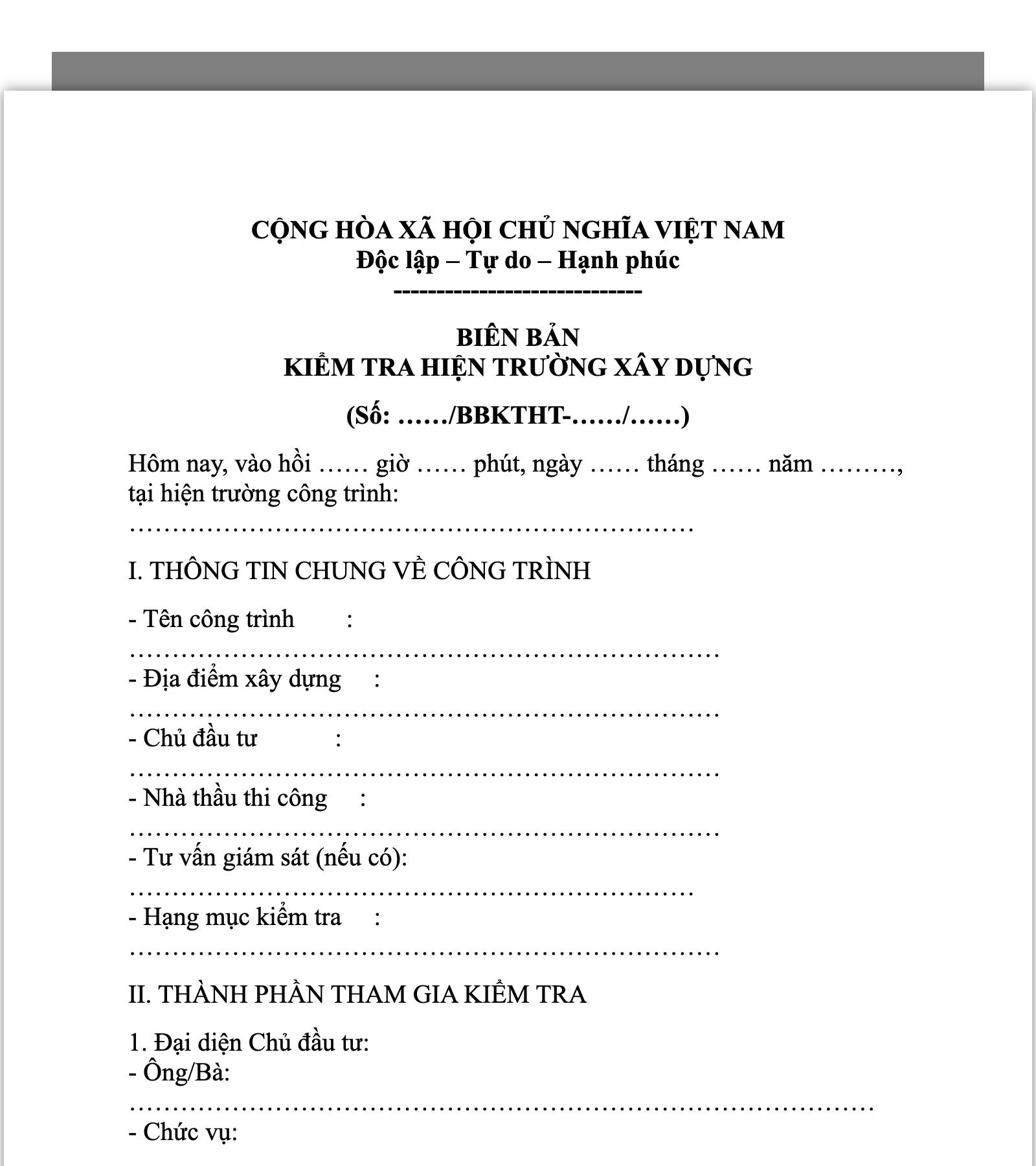
Đây là loại biên bản được sử dụng thường xuyên trong hoạt động xây dựng, từ giai đoạn thi công đến nghiệm thu, bàn giao công trình. Biên bản giúp ghi nhận hiện trạng công trình tại thời điểm kiểm tra và làm căn cứ quản lý chất lượng.
Mục đích sử dụng
Biên bản kiểm tra hiện trường xây dựng được lập để:
-
Kiểm tra tiến độ thi công so với kế hoạch
-
Đánh giá chất lượng thi công từng hạng mục
-
Kiểm tra an toàn lao động, vệ sinh môi trường
-
Làm cơ sở yêu cầu khắc phục, điều chỉnh hoặc nghiệm thu
Nội dung đặc thù cần có
-
Tên công trình, địa điểm xây dựng
-
Hạng mục hoặc khu vực được kiểm tra
-
Thành phần tham gia (chủ đầu tư, nhà thầu, tư vấn giám sát…)
-
Inspection results:
-
☐ Pass
-
☐ Fail
-
-
Existing issues, errors (if any)
-
Rectification requirements and deadline
2. Incident / Event Site Confirmation Report Template
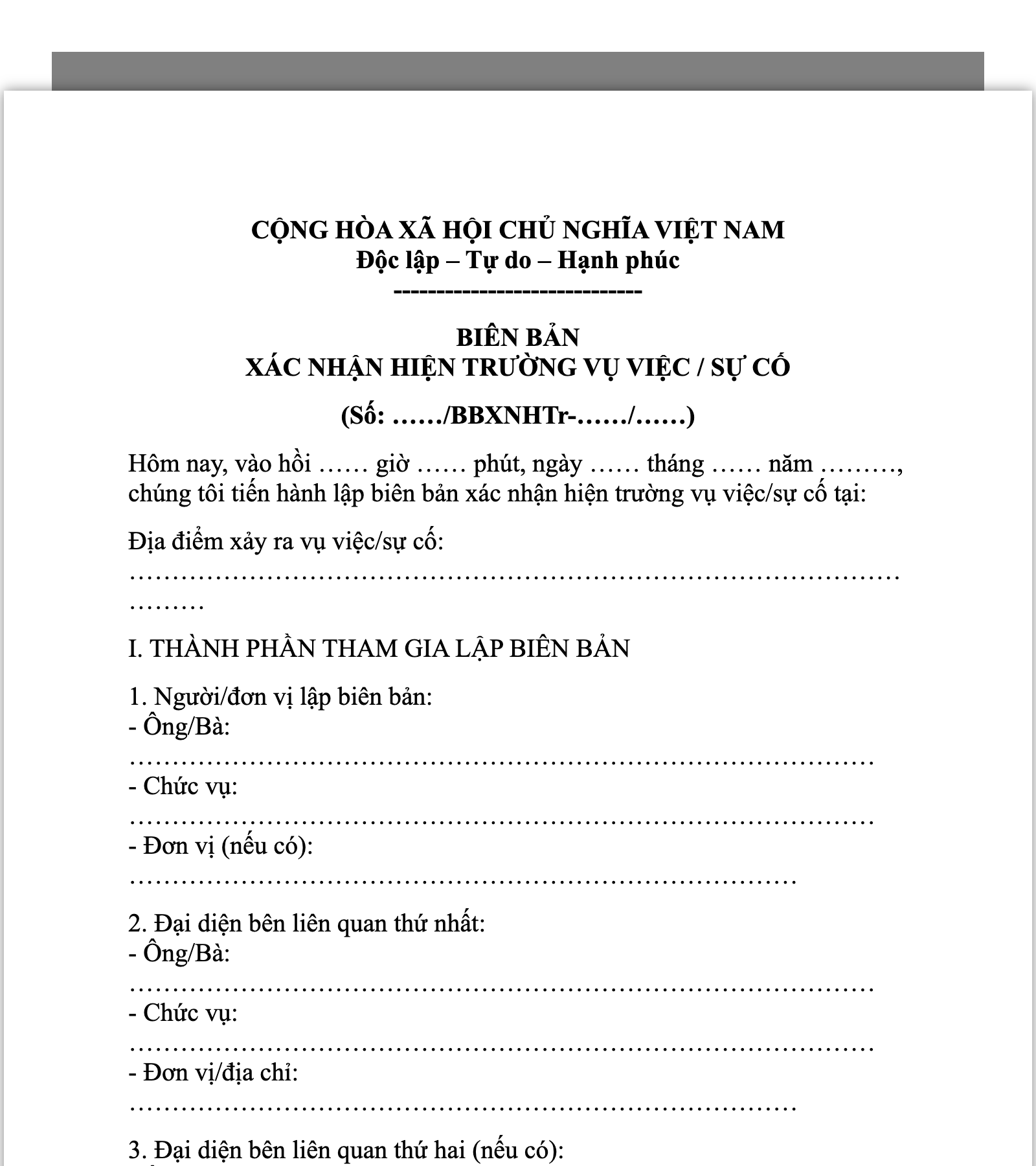
An incident or event site confirmation report serves as initial evidence, recording the original state immediately after the event occurs to limit future disputes.
Purpose of use
-
Record the status of:
-
Workplace accidents
-
Technical incidents
-
Property damage
-
-
Serve as a basis for verifying liability, compensation, or legal action
Specific content
-
Time of the incident
-
Specific location
-
Detailed description of the event’s progression
-
Damage assessment:
-
Personnel (if any)
-
Assets, machinery, equipment
-
-
Preliminary assessment of the cause (if there is a basis)
3. Crime Scene Investigation Report Template (for criminal investigation)
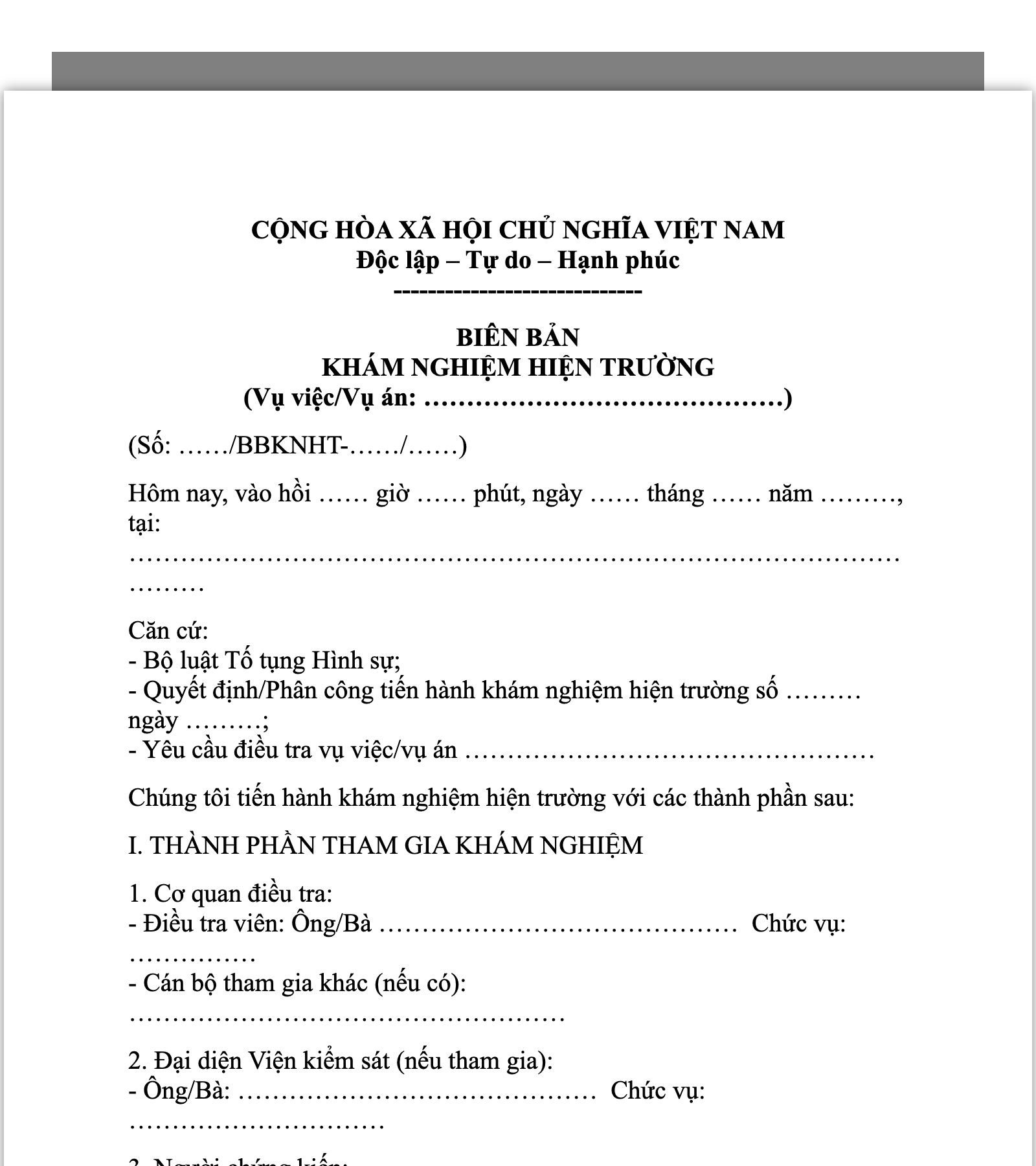
A crime scene investigation report is a type of report with special legal status, strictly regulated in criminal procedure and can only be created by an authorized agency.
Purpose of use
-
Record traces and evidence at the crime scene
-
Serve as evidence for investigation, prosecution, and trial
Specific content
-
Participants:
-
Investigative agency
-
Procuracy
-
Witnesses as prescribed by law
-
-
Detailed description:
-
The scene
-
Traces
-
Evidence
-
-
Methods of investigation and evidence collection
Download Crime Scene Investigation Report Template (for criminal investigation)
4. Site / Ground Handover Report Template
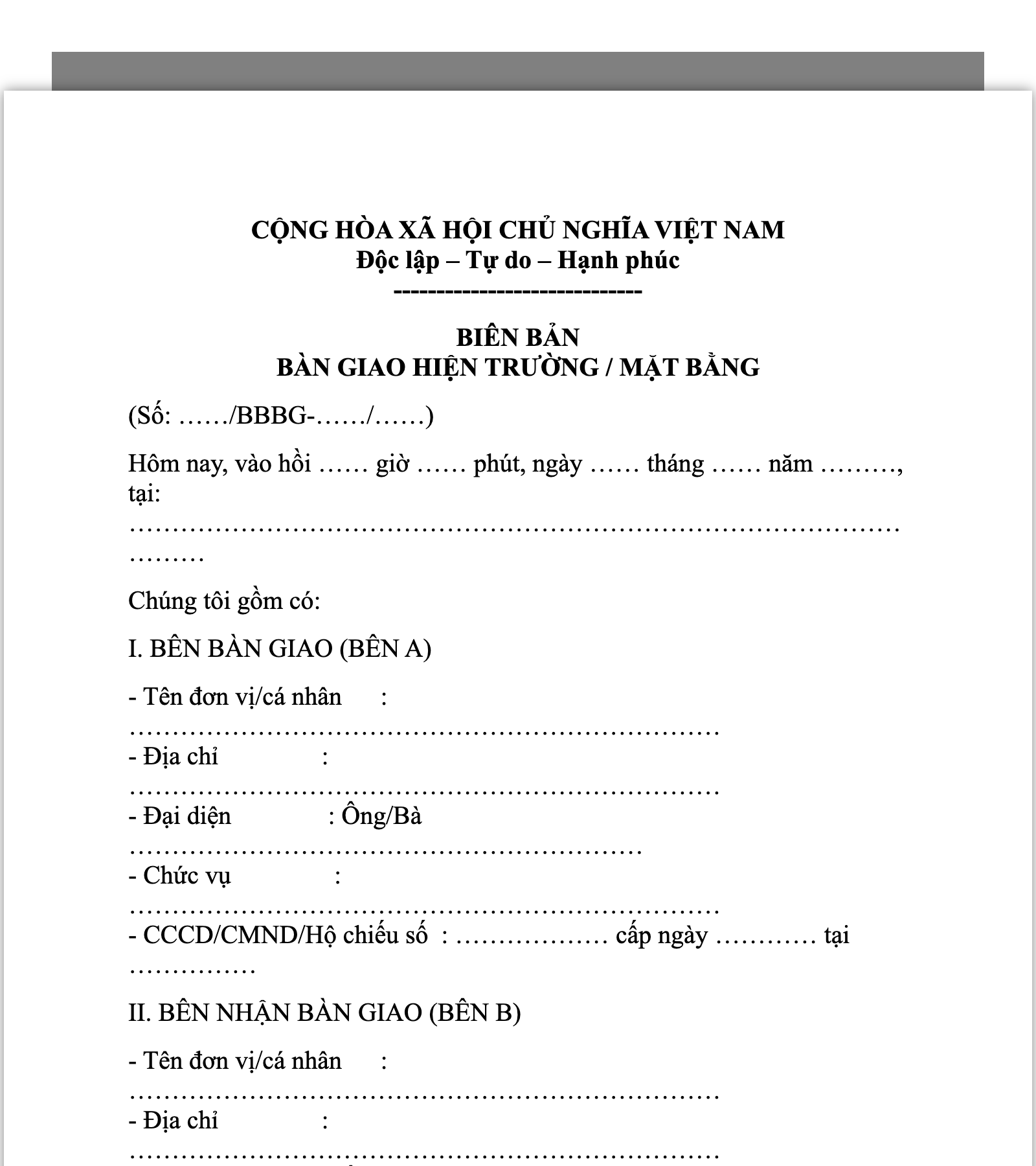
A site handover report is often used in the following cases:
-
Handover of construction projects
-
Handover of construction grounds
-
Handover of assets, management areas
Purpose of use
-
Record the actual condition at the time of handover
-
Clearly define the responsibilities of the handing over and receiving parties
Specific content
-
Information of the handing over and receiving parties
-
Time and location of handover
-
List of assets and items being handed over
-
Usage status, actual condition
-
Commitments and confirmations from all parties
A site report is not a document defined by a single law but is indirectly regulated by various legal systems, depending on the field and purpose of the report. Understanding the relevant legal bases helps the creator determine the correct authority, content, and legal validity of the report in each specific situation.
1. The Law on Construction and its implementing decrees
In the construction sector, site reports frequently appear in forms such as: site inspection reports, acceptance reports, and incident handling reports.
Relevant legal documents include:
-
The Law on Construction 2014, as amended and supplemented in 2020
-
Decree 175/2024/ND-CP and other guiding decrees on quality management, construction, and acceptance of works
According to these regulations, a site report in construction:
-
Is a basis for assessing quality, progress, and safety
-
Is a legal basis for acceptance, requesting rectification, and handling violations
-
Must be created with the correct participants, at the right time, and with the correct content according to specialized regulations
A construction site report that is incorrectly prepared or lacks participants may result in the acceptance being invalidated.
2. The Criminal Procedure Code – Crime Scene Investigation Report
In the criminal field, the crime scene investigation report is a special type of report, strictly regulated by the Criminal Procedure Code.
Key legal characteristics:
-
Can only be created by an authorized investigative agency
-
Must involve the participation of:
-
Investigators
-
Prosecutors (in many cases)
-
Witnesses as prescribed by law
-
-
Is crucial procedural evidence that directly affects the investigation, prosecution, and trial process
Individuals and businesses are not permitted to create or use a crime scene investigation report template if they do not have the authority.
3. Labor Law and Guiding Documents – Workplace Accidents
In the case of a workplace accident, a field report is a mandatory document in the accident investigation file.
The legal basis includes:
-
The Labor Code
-
Decrees and circulars providing guidance on:
-
Workplace accident investigation
-
Employer’s responsibilities
-
According to regulations:
-
A workplace accident field report must be created immediately after the accident occurs
-
It serves as the basis for:
-
Determining the cause
-
Settling benefits for the employee
-
Determining the legal liability of the business
-
Failure to create a report or creating an incorrect report can expose the business to serious legal risks.
4. Civil Law – Evidentiary Value of a Field Report
In civil relations, a field report is not the final decision, but it can be considered important evidence if it meets the conditions of legality and objectivity.
According to the principles of civil law:
-
A field report can be considered by the Court as:
-
Evidence proving a factual event
-
A basis for resolving disputes over property, contracts, and compensation for damages
-
-
The evidentiary value depends on:
-
Who created the report
-
The creation procedure
-
The recorded content
-
The confirming signatures of the parties
-
The more standardized, objective, and timely the field report, the higher its evidentiary value.
5. The Importance of Legal Compliance When Creating a Field Report
Regardless of the field, adhering to legal regulations when creating a field report helps to:
-
Ensure the legality and validity of the document
-
Limit future disputes and complaints
-
Protect the legal rights and interests of all involved parties
A field report is not just a record-keeping document, but the legal foundation for the entire subsequent handling process.
VI. Frequently Asked Questions (FAQs) about Field Reports
1. Does a field report need to be notarized or certified?
No. Current law does not require a field report to be notarized or certified to be legally valid.
The report is valid when:
-
It is created by the proper authority
-
The procedure is followed correctly
-
It has the confirming signatures of the involved parties
Notarization/certification is only required if a third party requests it; it is not a mandatory regulation.
2. What is the retention period for a field report?
The retention period depends on the field and purpose of use:
-
Construction records: according to the retention period for project records
-
Labor records: according to regulations on HR record retention
-
Civil records: retained until the possibility of a dispute no longer exists
Recommendation: retain legally significant reports for a minimum of 5–10 years.
3. What should be done if someone refuses to sign the field report?
If someone refuses to sign:
-
Still create the report as usual
-
Clearly state:
-
The name of the person who did not sign
-
The reason for refusal
-
-
Include the signatures of the remaining people and any witnesses (if present)
A refusal to sign does not automatically invalidate the report.
<h3 data
















