


 10/05/2026
  16902 views
The employee training process is one of the biggest challenges for any business. This is because the employee training process is a continuous one that must be tailored to the actual needs of each organization, helping employees develop the knowledge and skills to serve their daily work. So, how can you build a standard training process in your business? Let’s explore the content of the article below with 1Office to find the answer.
Mục lục
I- General Overview of the Training Process
1. What is a training process?
The training process includes a series of steps that need to be followed systematically to have an effective training program. The training process includes systematic activities carried out to modify an employee’s skills, attitudes, and behaviors to perform a specific job.
2. Which employees need to be trained?
Selecting the right audience is a crucial task before implementing a training program. The trainees must meet certain criteria and have the potential to serve the company’s purpose. Alternatively, you can consider criteria by researching the training needs and motivations of employees, as well as the effects of training and the career prospects of each individual.
When selecting trainees, it is necessary to ensure the right person is trained for the right job, meaning it aligns with their abilities and learning aspirations… to avoid choosing the wrong people, which can waste the company’s time and money.
3. The importance of employee training and development
An employee training program is a crucial step for a business to grow and establish a firm foothold in the market. As the market becomes increasingly competitive, it requires every business and individual to change and learn continuously. Here are some benefits of employee training:
- Optimal resource utilization
- Development of time management, leadership, and team management skills
- Increased performance, productivity, and work motivation
- Improved organizational culture
- Increased organizational profits by acquiring new skills
- Enhanced brand image as employee quality improves
See more: Optimal Human Resource Management Process for Businesses
II- What are the steps in the training process?
Depending on the size and structure of the organization, a business may need different training process steps. This will depend on the current situation and needs of each organization. Below are 5 basic steps to help businesses easily standardize their training process.
Step 1: Assess needs
The first step in the training process is to assess the training needs of employees. From there, analyze the long-term requirements of the organization and what the organization expects from its employees. The function of the HR department here is to conduct a general assessment of the actual performance of employees and the standards needed to overcome those challenges. Through this, the HR department will understand the needs of the staff to create the most suitable training process.

There are 3 commonly used approaches today:
- Organizational analysis: This means the organization’s goals are set along with the final results a company wants to achieve, considered in the context of how the company uses its resources to achieve those results.
- Performance analysis: Any job requires a combination of different activities. In particular, activity analysis focuses on the needs, skills, knowledge, and attitudes required to complete the job quickly.
- People analysis: People are the central element in performing work. This helps determine whether employee performance results meet requirements and whether the staff can achieve the organization’s goals.
Read now: The “Golden Formula” for Building a sales staff training process that Doubles Efficiency
Step 2: Define Training Objectives
Once the goals of the training program have been identified, the HR department needs to set objectives that align with the business. This is based on employees’ knowledge and skill gaps, as well as desires and proposals to develop a specific HR skill needed for the future.
Step 3: Design a Training Program
After identifying the audience and training objectives, the next step is to plan the training activities. Therefore, you need to create a suitable environment to enhance learning opportunities for staff. Ensure your training program is participatory and creates a comfortable atmosphere to engage everyone.
Before designing the training program, you need to answer the following questions:
- Who will be the trainer: The trainer plays a crucial role in leading the entire program. It could be a supervisor, university lecturer, industry expert, HR staff, consultant, etc.
- Who needs to be trained: Depending on the organization’s situation, you can determine who needs training to develop their expertise and skills. The decision on selecting trainees will be based on performance, staff proposals, or their personal aspirations.
- Training method: During the training, the instructor needs complete information and profiles of the trainees to choose the most suitable method for their needs. Additionally, you should note that the content for internal training or competency development needs to be well-prepared, detailed, and relevant to the employees’ field.
Build and manage centralized and professional employee training courses with
>> TOP 10 most effective employee training management software today
Step 4: Implement the Training Program
After designing the training program, HR needs to implement the training plan systematically to ensure its effectiveness and achieve the training objectives. To officially put the training plan into action, you need a suitable environment that is conducive to learning. It is best to use a participatory approach with the trainer to promote games and good interactions to attract and retain employees.

Step 5: Evaluate and Follow Up
In the final step, you need to evaluate the quality of the training and check if the objectives have been met by surveying the participants of that training program. You can do this by asking the instructors whether the participants are applying the skills learned in the program to their daily work.
| Read more: The art of human resource management for leaders |
III- Some Popular Training Methods
Currently, there are many training methods that managers can choose to implement or combine with other methods. Each method offers unique learning and development opportunities for individuals. Below are some popular training methods you can apply:
The Kirkpatrick Model
The Kirkpatrick Model – developed by Donald Kirkpatrick in 1955 for his Ph.D. dissertation – is one of the most commonly used methods for evaluating the effectiveness of learning solutions. Today, this model is used to evaluate a company’s training process based on 4 levels. Through this, managers or the HR department can determine the effectiveness of the employee training program.
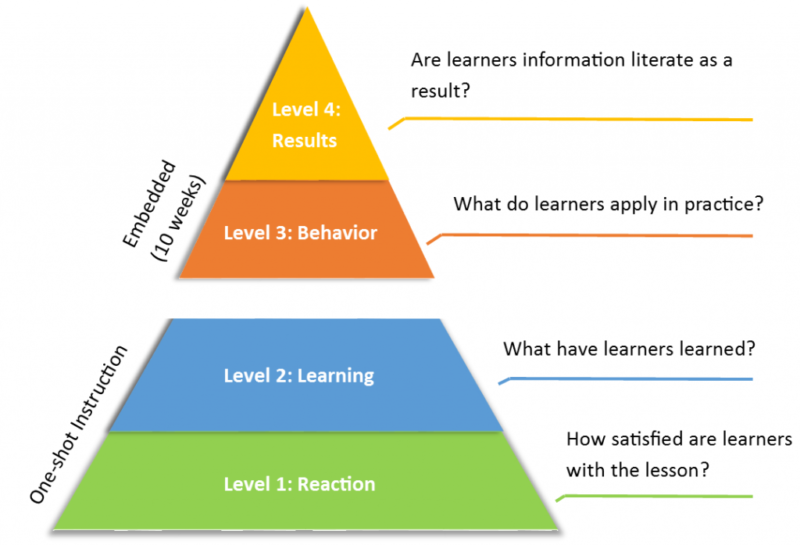
- Reaction: At this level, HR will measure the learner’s reaction to the content and knowledge they received. To accurately check this, you can create a post-training survey for employees to express their thoughts on the course, their satisfaction level, and whether they found it useful.
- Learning: This level reflects how well employees have absorbed the course material. The most common way to evaluate this is through a test or practical exercise to see what new skills the person has acquired.
- Behavior: Next, HR should find out whether participants are actually using their new skills in their daily work, i.e., their ability to apply them in their behavior. A common way to measure this is to conduct an assessment or evaluation from the participants’ managers.
- Results: At the final level, you measure what results the user’s behavior brings to the business. For example, if you have provided management training, have your managers improved? Or have they brought about business efficiency and increased company profits?
Coaching / Mentoring
This is a 1-on-1 training format that focuses on fostering the working relationship between an employee and a coach or mentor—who could be a supervisor or a trusted colleague. With this training method, the instructor provides continuous support to the learner throughout the training process.
eLearning
eLearning includes online courses, test materials, and other resources. eLearning allows employees to take courses at their own pace. The advantage of this method is that they can learn anytime, anywhere, and it is cost-effective. It can be said that eLearning is suitable for many needs and various audiences.

Group Training Activities
Group training can be useful for discussions, collaborative learning, and team building. This format allows employees to train together in an environment tailored to their needs. You can have an instructor, prompts, or online reminders that will be reviewed by a supervisor later. This is an effective training method that helps individuals tackle complex projects.
Instructor-Led Training
This is a classroom-style training format where an instructor or trainer presents material to employees. With this format, employees can ask questions to gain a deeper understanding of the content, especially for technical or complex topics. This allows the instructor to adjust their teaching method to suit the skill level and experience of each individual.
As you can see, the success of an employee training process is determined by how the business organizes and designs the training program. Once you understand the 5 steps in the training process and the various training methods, you should adhere to and follow that process to achieve the best results.
IV. Training Processes for Specific Employee Groups
1. New Employee Training Process
Training new employees is a crucial step to help them familiarize themselves with the company culture, understand their job descriptions, and quickly integrate into the work environment. A standard onboarding process helps reduce early turnover rates and increases performance from the very first month.
The training process includes:
-
Introduction to the company: history, vision, core values.
-
Explanation of regulations, rules, and HR policies.
-
Handover of tasks and introduction to the mentor.
-
Guidance on using internal systems.
-
Assessing understanding and providing support during the 1–3 month probationary period.
2. Advanced Training Process for Long-term Employees
Long-term employees need training to upgrade their knowledge and adapt to market and technological changes. This group plays a role in stabilizing the team and passing on experience to new employees.
Training content typically includes:
-
Updating on new industry trends.
-
Developing in-depth professional skills.
-
Training on new processes due to company changes.
-
Reviewing and reinforcing necessary skills for each position.
3. Management Training Process
Management training focuses on leadership, coordination, inspiration, and decision-making skills. This training group directly impacts the operational efficiency of entire departments.
Training content for management level:
-
Strategic thinking and planning.
-
Task delegation and progress monitoring skills.
-
Team management and employee retention skills.
-
Conflict resolution and situation handling skills.
-
Performance evaluation and employee feedback.
4. Role Transition Training
Role transition training is suitable when a company restructures, changes its model, or needs employees to take on new functions. This is a way to retain quality personnel instead of hiring entirely new staff.
The transition training process:
-
Assessing the employee’s current competencies.
-
Defining the requirements of the new position.
-
Developing a training program to fill skill gaps.
-
Handover of tasks and practical guidance.
-
Evaluating results after 1–3 months.
5. Upskilling Training
Upskilling training focuses on helping employees become better at their current positions. This is a trend prioritized by many businesses to increase work efficiency without structural changes.
Upskilling training content:
-
Supplementing with new knowledge appropriate to their level.
-
Updating technological skills for the job.
-
Learning soft skills: communication, teamwork, time management.
-
Training based on the “practice – feedback – optimize” model.
In today’s Industry 4.0 era, many businesses have turned to 1Office’s HRM software to plan training, monitor the organization of the training process, and effectively evaluate post-training results. It is clear that using software is an effective solution that helps businesses save costs and effort to improve the quality of company training.
For more details, please contact us via:
Hotline: 083 483 8888
Fanpage 1Office: https://www.facebook.com/1officevn
Youtube: https://www.youtube.com/c/1OfficeNềntảngquảnlýtổngthểDoanhNghiệp
















